The short version
Most rodent jobs in Richmond cost a few hundred dollars up to about $1,500. That usually covers inspection, trapping and sealing. Attic cleanup is extra.
- Most rodent jobs in Richmond cost a few hundred dollars to about $1,500.
- Inspections usually cost $75–$250.
- Sealing the gaps is what keeps rodents out.
- Attic cleanup is usually priced separately.
- Compare what each quote seals, not just the total.
Anyone in Richmond dealing with mice or rats, or hoping to keep them out.
What to look for
Rodents are mostly unseen. You hear them at night and find droppings by morning. A mouse fits through a gap the size of a dime. Across Richmond, mice usually start moving indoors in October and November, as nights get colder. Seeing one in daylight usually means there are more.
- 1Tracks or tail drag marks in dust or flour.
- 2Small dark droppings on top of the water heater.
- 3Droppings in drawers, pantries, under sinks, or along walls.
- 4Dead-animal odor that appears and slowly fades.
- 5Food scattered or hollowed-out fruit and nuts.
- 6Bait or pet food vanishing from bowls overnight.
Why it’s worth acting soon
- Mice breed fast, every few weeks.
- Droppings and urine contaminate food and insulation.
- Gnawed wiring can be a fire risk.
- Nests and odor get harder to clean the longer they stay.
🧮
Estimate rodent control cost in Richmond
Adjust for your situation to see a ballpark range.
Estimated range
A rough guide only. Your quote depends on your house and what the inspection finds.
Treatment options and typical costs
Inspection and Entry-Point Mapping
$75–$250
First, the pro maps where rodents get in. That map guides the traps and sealing.
- Time
- 60–90 minutes
- Best for
- Every job; nothing else works without it
Sealing and Rodent-Proofing
$200–$1,500, more for large or complex homes
Sealing the gaps is what separates a fix from a subscription. Once Richmond homes are properly sealed, trapping wraps up quickly and bait stations become optional rather than essential.
- Time
- 2–6 hours, sometimes a full day
- Best for
- Stopping re-entry for good; the lasting fix
Tamper-Resistant Exterior Bait Stations
$100–$300 setup, $40–$80 per service visit
Stations should be numbered and logged to show activity trends. A good pro shows you which stations get hit. Placement changes over time.
- Time
- 30–45 minutes per visit, ongoing
- Best for
- Outdoor rat pressure; ongoing perimeter protection
Follow-Up Monitoring
$50–$150 per visit, or included in a plan
Many include one or two follow-up visits. Beyond that, monitoring becomes a quarterly plan, which makes sense mainly for Richmond homes with steady outdoor pressure.
- Time
- 20–40 minutes per visit
- Best for
- Confirming the house stays clear after treatment
Prices are typical published ranges. Ask what’s included before you compare quotes.
 Under the sink is the first place to check: the hole where the pipe passes through the cabinet back is often cut much bigger than the pipe.
What rodent control costs in Richmond.
- Follow-Up Monitoring: $50–$150 per visit, or included in a plan - A typical home in Richmond is worth around $320k. Sealing the gaps protects that, and it's the part that lasts. Crawl-space homes need vents and doors sealed too. - Inspection and Entry-Point Mapping: $75–$250 - Sealing and Rodent-Proofing: $200–$1,500, more for large or complex homes - Tamper-Resistant Exterior Bait Stations: $100–$300 setup, $40–$80 per service visit
Which rodents live around Richmond.
They're small, curious and breed quickly. Norway rats are the other usual suspect. They burrow along foundations and enter low. Roof rats turn up in parts of Virginia. They climb and come in high, through attics and rooflines. House mice are the most common rodent in Richmond homes.
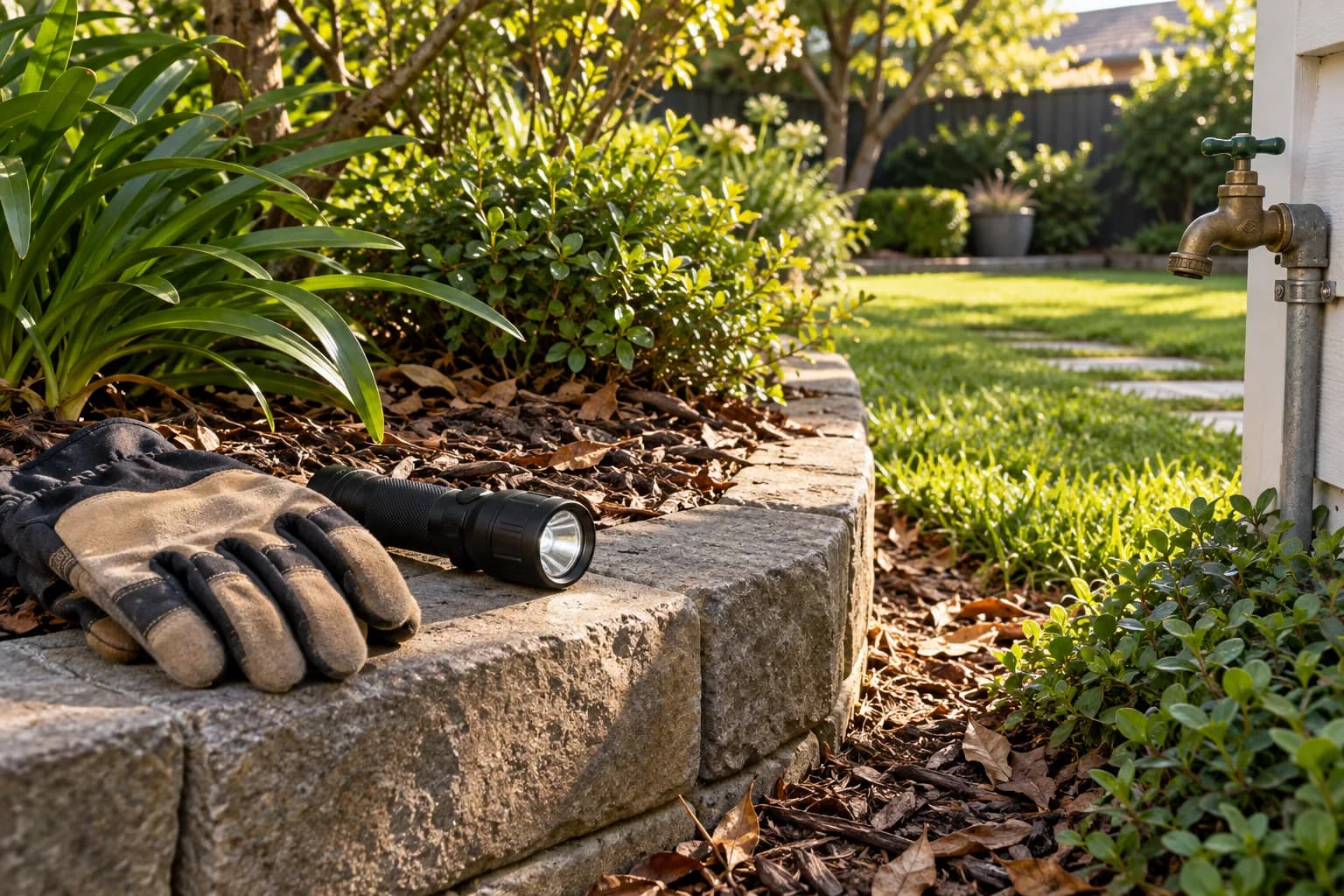 Dense shrubs against the house and a dripping hose bib give rodents cover and water. Trimming back and fixing drips makes the yard less inviting.
When they move in.
Spring is breeding season. Small problems grow fast. Check for gaps before then.
How they get into houses here.
Check that vent screens are intact. Make sure the crawl door closes tight. Look for gaps where pipes and wires pass through the floor. Homes from Richmond out to Petersburg share the same weak spots, so the checklist below works across the area. For roof rats, check soffit vents, gable vents and eaves. Trim branches back from the roof. A lot of houses around Richmond have crawl spaces, and crawl vents and access doors are the usual way in.
A year of rodents in Richmond.
- Summer: with highs around 89°F in Richmond, rodents look for water. Fix drips and leaks. - Fall: rodents look for shelter. Seal gaps before cold nights arrive. - Winter: with lows near 28°F in Richmond, check the attic, garage and pantry for droppings. - Spring: breeding season. Act on any sign quickly.
Mice or rats?
- Rub marks: rats leave greasy smudges along walls and beams. - Droppings: mouse droppings are rice-sized. Rat droppings are two or three times bigger. - Holes: mice chew dime-sized holes. Rats chew holes closer to quarter-sized. - Sounds: mice sound light and quick. Rats sound heavier. - Behavior: mice are curious about new traps. Rats avoid them for days.
Sealing small gaps yourself.
- Check your work: daylight through a gap means it isn’t sealed. - Steel wool or copper mesh: pack it into small gaps first. - Sealant or mortar: cover the mesh so it stays put. - Hardware cloth: use quarter-inch mesh over vents and larger holes. - Door sweeps: close the gap under garage and exterior doors. - Expanding foam: fine on top of mesh, useless on its own.
Cleaning up droppings safely.
- Wash your gloved hands, then your hands. - Air the room out for 30 minutes first. - Wear rubber or plastic gloves. - Spray droppings with a bleach solution, then wait five minutes. - Wipe up with paper towels and bag them. - Don’t sweep or vacuum droppings dry. It stirs up dust.
What happens at an inspection.
The inspector walks the outside first. They check the foundation, vents, rooflines and utility gaps. Inside, they check the kitchen, garage and attic. They'll also check the crawl space. You should come away with a list of entry points. Photos help. Most inspections take about an hour.
Rodents in the car.
Park in a closed garage when you can. Check the air filter box for nesting. Clear birdseed and pet food from the garage. Mice and rats nest in engine bays and chew wiring.
Bird feeders and rodents.
Use a seed tray and sweep up spills. If rodents show up, bring feeders in at night. Store seed in a metal can with a tight lid. Spilled seed feeds mice and rats.
Questions to ask before you sign.
- Will you use poison inside? (Ask them not to.) - Where are they getting in? - Which gaps will you seal, and with what? - How many trap visits are included? - What happens if they come back? - Is cleanup included, or extra?
Ways to keep the cost down.
- Compare what each quote seals, not just the price. - Clear clutter so gaps are easy to reach. - Store food and pet food in sealed bins. - Act early, before rodents spread to the attic.
Rodents by the numbers.
Across Richmond, what actually matters is a walk-through: where the droppings are, how the rodents are getting in, and how large the colony is. Across Richmond, those three findings — species, entry points, and scale — are what a quote should be built on, not a regional average. Across Richmond, ask any provider to show you the entry points and the plan before you compare numbers. National surveys set rough expectations but cannot diagnose one house.
What affects the price
- Number of trapping visits needed to reach zero.
- Whether sheds, garages or other outbuildings are included.
- Sewer line inspection if rats are entering underground.
- Outdoor pressure from creeks, alleys, or restaurants nearby.
- Exterior bait stations and ongoing service frequency.
- Attic access and how much insulation is contaminated.
- Local labor rates and licensing costs.
- Emergency or short-notice scheduling.
📊
What's your biggest concern about rodent control costs?
When to call for help
Call right away if you see rats. They take a longer, more careful approach. Attic cleanup is hard to do safely without training. Call if you hear them in the attic or walls. Droppings in several rooms are another sign. So is a dead-rodent smell.
What you can do yourself
Start tonight with snap traps along the walls. Bait them with peanut butter. Store food in sealed bins. Seal small gaps with steel wool and sealant. Rooflines, vents and attics are harder. That's where a pro's sealing work pays off.
Rodents in Richmond
With about 44 inches of rain a year, Richmond gives rodents plenty of water, so food and shelter are what you control. Winter lows average around 28°F in Richmond, and that cold is what sends mice looking for a way in. In denser parts of Richmond, rats travel along alleys, fences and utility lines, so neighbors often share the problem. A typical home in Richmond is worth around $320k, and chewed wiring or soiled insulation can get expensive.
Local research
Rodents in Richmond, VA: what the public record shows
Before you compare quotes, it helps to know which rodents actually live in Virginia, when they are busiest around Richmond, and what the state figures look like. Everything below links to the agency or university page it came from.
Norway rat weight
Rats destroy approximately ten times more food through urination and defecation than they actually eat.
Virginia Department of HealthRodent species recorded in Virginia
- House mouse (Mus musculus) — Enters at 1/4 inch; 5-10 litters per year; eats about 200 small meals a night.
- Norway rat (Rattus norvegicus) — Burrowing rat of basements, sewers and ground floors; tail shorter than head plus body.
- Roof rat (Rattus rattus) — Climber of attics and trees in warm and coastal regions; tail longer than head plus body.
When rodents are busiest around Richmond
Fall entry (Sept-Nov). Norway rats and house mice move indoors as temperatures drop.
Based on Richmond’s humid subtropical climate profile.
VDH Norfolk describes the house mouse, Norway rat (nests near floors and in foundation burrows) and roof rat (elevated areas, prefers seeds and fruit); the Norway rat is better suited to colder climates than the roof rat.
Rules that apply in Virginia
For context, nationally
- 1/4 inch (the width of a pencil) — Smallest gap a mouse can enter. CDC
- 890; 35% fatal; 94% west of the Mississippi — Hantavirus cases reported since 1993 (through 2023). CDC
Sources: Virginia Department of Health; CDC; Pest Notes: House Mouse; Pest Notes: Rats. Figures are quoted as the source prints them. How we check our sources
Simple ways to keep rodents away
- Cover dryer and exhaust vents with metal louvered covers.
- Check crawlspace doors and vents for chewed openings each fall.
- Keep ivy, shrubs, and firewood away from the foundation.
- Fix leaking hoses, faucets, and irrigation heads.
- Keep grass short and remove tall weeds along fences.
- Declutter garages and attics to remove nesting cover.
 After sealing, a few monitors or unset traps left along the walls tell you whether anything is still getting in before you hear it again.
Did you know?
Across Richmond, rats make ultrasonic chirps when they're tickled, which researchers compare to laughter.
Across Richmond, rodents make up about 40 percent of all mammal species on Earth.
Questions people ask
Why is rodent-proofing so expensive?
It's careful, slow work. Every gap needs metal mesh or sheet metal, then a seal. A typical house has dozens of small openings.
What do exterior bait stations cost?
Usually a setup fee plus a monthly or quarterly service charge. Ask how many stations they'll use and how often they're checked.
How much does rodent control cost in Richmond?
Most full jobs in Richmond run a few hundred to about $1,500. Attic cleanup costs extra.
Is a quarterly rodent plan worth it?
It can be, after repeat problems. Homes near fields or water benefit most. For a one-time issue, a single sealing job is often enough.
Do I need to replace attic insulation?
Only if it's heavily soiled or flattened by nesting. Light activity can often be cleaned up. Ask the inspector to show you before you agree to replacement.
What should be in a rodent control quote?
Entry points, sealing materials and the number of trap visits. It should say what happens if they return. Cleanup should be listed separately.
What does a rodent inspection involve?
The inspector checks the outside walls, roofline, vents and utility gaps. Inside, they look at the kitchen, attic, garage and under sinks. You should get a list of entry points.
How common are rodent problems in U.S. homes?
Very common. Forty-nine percent of U.S. homeowners told a September 2022 Harris Poll for the National Pest Management Association (NPMA) that they had encountered or had a problem with rodents at some point.
Are families with kids more likely to have rodents?
The survey evidence suggests they report them more often. Among parents of under-18s in the National Pest Management Association's (NPMA) September 2022 Harris Poll of more than 1,300 U.S. homeowners, 68% reported a rodent encounter at some point, well above the 49% of homeowners overall. Expect a good pro in Richmond to connect their plan to what they actually found at your home.
Are rodents a problem in Richmond?
They're common here, as almost everywhere. House mice cause most problems.
Nearby cities
Related guides
Sources (11)
The facts in this article come from the public sources listed above. Every home is different, so ask the company you talk to about pricing and what’s included. Published by Rodent Exterminator · Updated September 11, 2026 · How we write these guides