The short version
Rodent control in Alexandria, Virginia works best as exclusion first and trapping second. Norway rats and house mice push indoors from September through November as nights slide toward the 28F winter low, and a mouse needs only a quarter-inch gap. Have every opening sealed with metal or mortar, set traps inside, and keep any outdoor bait in locked stations along the walls.
- Fall is the main entry season in Alexandria, running September through November as temperatures drop.
- A quarter-inch gap admits a mouse, so sealing has to be thorough rather than cosmetic.
- Virginia health guidance puts a rat's home turf at 50 to 150 feet around its nest.
- Ask to see the company's VDACS pesticide business license, which expires every March 31.
- Clean droppings wet with diluted bleach after airing the room out, never with a broom.
This is for Alexandria homeowners and renters who have found droppings, gnaw marks or a live animal, and for landlords and condo boards comparing quotes. It also suits commuters who are rarely home in daylight and only notice activity at night, plus anyone who owns an older property and wants to understand what sealing it properly involves before signing a contract.
What to look for
House mice tend to show up first, arriving with the earliest cold snaps. Alexandria averages a winter low of 28F, which is cold enough to send both mice and Norway rats hunting for warm voids by late September. Norway rats are ground dwellers. The Virginia Department of Health office in Norfolk describes them nesting near floor level and in burrows along foundations, and notes they tolerate cold better than roof rats do. That is why Norway rat trouble tends to start in basements, crawlspaces and the soil beside a slab. Roof rats are the climbers. They favor high spots like attics and upper wall voids and prefer seeds and fruit, so bird feeders and fruiting trees draw them in. With 42 inches of rain a year and 66 percent average humidity, water is easy to find outdoors, so rodents come inside mainly for warmth and food. In practice, sealing the lower half of the house handles most mouse and Norway rat pressure, while roof rats call for a look at the roofline as well.
- 1Dark droppings the size of rice grains along baseboards, under the sink or behind the refrigerator.
- 2Larger capsule-shaped droppings near the foundation or in the basement, which point to Norway rats.
- 3Fresh gnaw marks on wooden door bottoms, stair treads or plastic pipe, with pale wood showing.
- 4Scratching or scurrying inside ceilings and walls after dark that goes quiet by morning.
- 5Greasy smudges along walls and pipes where rats brush past on the same route every night.
- 6Fist-sized burrow openings in soil beside the foundation, under a stoop or beneath shrubs.
- 7Shredded paper, insulation or fabric balled into a nest inside a drawer, box or wall void.
Why it’s worth acting soon
- A female Norway rat can raise four to six litters a year, according to UC IPM, so a few rats in October can be dozens by spring.
- Virginia health officials say rats ruin about ten times more food through urine and droppings than they eat.
- Gnawed wiring in walls and attics can become a fire hazard that stays hidden until something fails.
- Droppings and urine can spread illnesses on the CDC list, including leptospirosis, salmonellosis and rat-bite fever.
- The longer a colony stays, the more insulation and stored belongings it soils, which raises cleanup costs.
Treatment options and typical costs
Exclusion and sealing
Quoted after inspection
A provider walks the exterior and basement, lists every opening a quarter inch or larger, and closes each one with packed steel wool under sealant, hardware cloth, sheet metal or mortar. On older Alexandria masonry this includes loose joints, abandoned pipe and cable holes, and gaps under exterior doors. This is the step that keeps the problem from returning next fall.
- Time
- Usually one visit, longer on large or older homes
- Best for
- Every infestation, and homes where mice return each fall
Interior snap trapping
Quoted after inspection
Snap traps are baited and set along walls where droppings and rub marks show the travel routes. Virginia Department of Health guidance spaces interior devices every 8 to 12 feet for mice and every 15 to 30 feet for rats. Trapping removes animals already inside, and it works best after entry points are closed so new ones stop arriving.
- Time
- Several weeks of scheduled checks
- Best for
- Mice or rats already living indoors
Exterior tamper-resistant bait stations
Quoted after inspection
Locked stations along the outside walls, placed every 30 to 50 feet per the Norfolk health office guidance, intercept rats before they reach the building. The bait stays outdoors inside the station, out of reach of children and pets. Ask which active ingredient is used, how the stations are anchored and how often someone checks them.
- Time
- Ongoing, with regular station checks
- Best for
- Lots with Norway rat burrows or heavy pressure from next door
Cleanup and sanitation
Quoted after inspection
Once the animals are gone, nesting material, soiled insulation and droppings are removed and surfaces disinfected the way the CDC describes: air the space out for 30 minutes, wet everything with a 1-to-9 bleach solution, let it soak 5 minutes, then wipe up. This matters most in attics and crawlspaces where activity went unnoticed for months.
- Time
- Often a single day for one attic or crawlspace
- Best for
- Heavy or long-running infestations
Prices are typical published ranges. Ask what’s included before you compare quotes.
 Crawl spaces are where rats and mice get comfortable. Vent screens, the sill plate and any gap around pipes are worth a careful look.
Which rodent is in my Alexandria house?
Start with where the evidence is. In Alexandria, droppings and noise low in the house, in a basement, crawlspace or behind kitchen base cabinets, usually point to house mice or Norway rats. Activity overhead, in an attic or near the top of a wall, raises the odds of roof rats, which the Virginia Department of Health describes as preferring high spots off the ground. Size helps too. A house mouse is small enough to slip through a quarter-inch gap and leaves droppings like grains of rice. A Norway rat is a heavy animal; the same health department puts adults at 12 to 16 ounces, and its droppings are capsule shaped and far larger. Roof rats are slimmer, with tails longer than their bodies. Habits are the third clue. Norway rats dig, so burrows along the foundation or under a stoop mean rats are living outside and commuting in. Roof rats go after seeds and fruit and will raid a bird feeder. Mice nest close to food and rarely travel far, so a cluster of droppings in one cabinet often means the nest is within a few feet.
What September through November looks like for rodents here.
Rodent pressure in Alexandria follows the thermometer. Through summer, with highs around 88F, rats and mice breed outdoors in yards, alleys and planting beds, and you may never see them. Once nights start cooling in September, they begin probing foundations for warmth. September is the month to walk the exterior and finish sealing. In October, mice that found a gap start nesting in wall voids and the scratching begins at night. By November, as temperatures fall toward the 28F winter low, Norway rats that spent the summer in outdoor burrows push into basements and crawlspaces. December through February brings fewer new arrivals but plenty of breeding by animals already inside. Spring is the time for cleanup and for confirming every hole is still closed, because mortar cracks and weather stripping take a beating over winter. Summer is when to deal with outdoor burrows, overgrown beds and stacked wood before the cycle starts again.
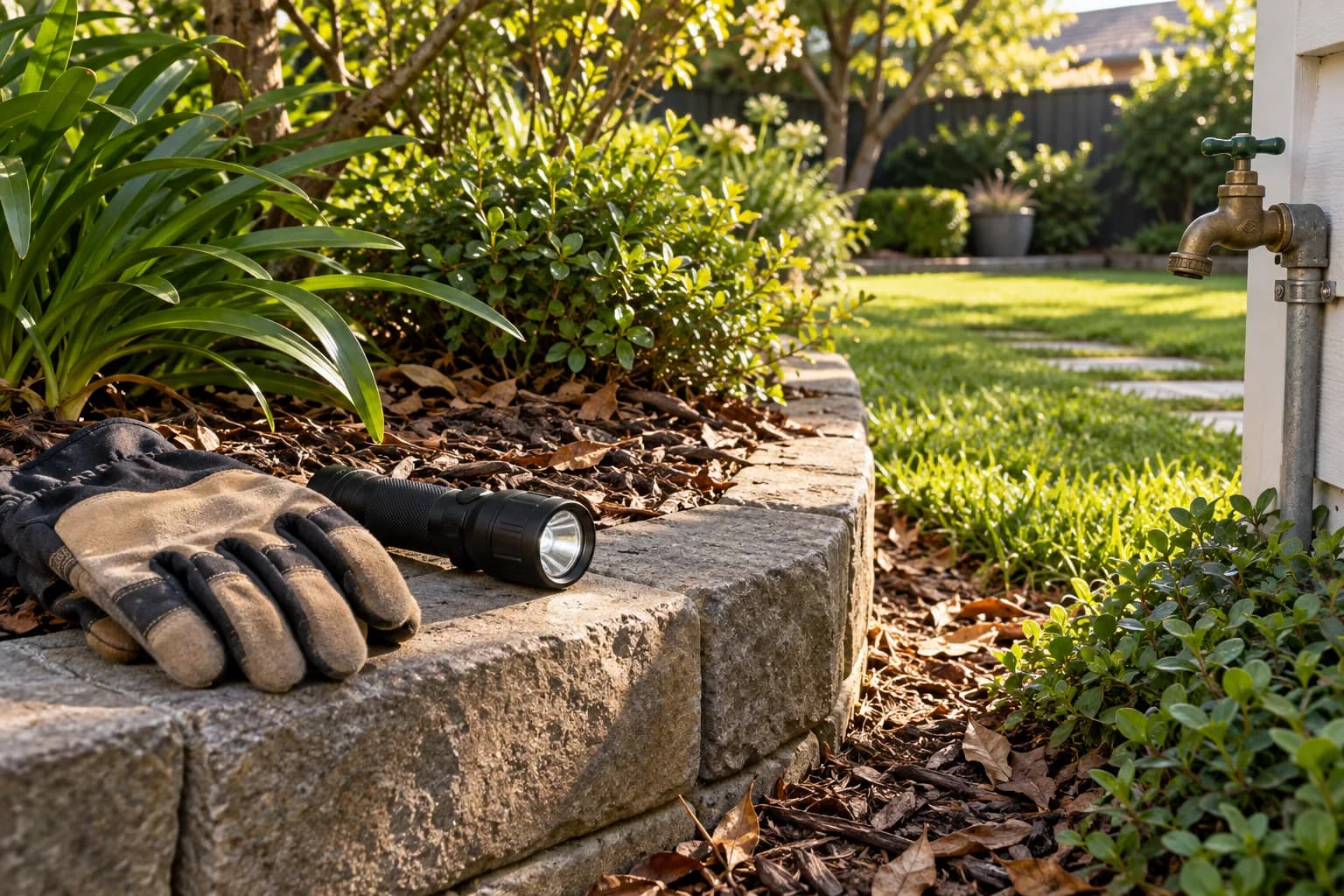 Dense shrubs against the house and a dripping hose bib give rodents cover and water. Trimming back and fixing drips makes the yard less inviting.
Sealing a historic home without damaging it.
Exclusion in an older Alexandria building takes more care than in a new subdivision house. Original masonry and woodwork are worth protecting, for their history and because the median home value in the city sits around $630,000. Ask how the provider plans to close gaps in brick or stone. Mortar repairs should use a mix compatible with the existing joints, and flashing or hardware cloth can often be fitted without permanent changes to visible surfaces. The gaps tend to be in predictable places: where utility lines and pipes enter, under exterior basement doors, around old window wells, along sill plates, and at the roofline where trim has pulled away. Steel wool alone is a stopgap, because rodents can tug it loose. It holds when it is packed into a hole and then covered with sealant, mortar or metal. Request a written list of every opening found and what closed it. That list protects you if activity returns, and it gives a future buyer or home inspector a record of the work.
How to check a provider's Virginia license and insurance.
Virginia regulates pest control as a business, so you can vet a company before it touches your house. The Virginia Department of Agriculture and Consumer Services issues pesticide business licenses that lapse every year on March 31, so a license showing an earlier expiration is out of date. VDACS also sets insurance floors: at least $100,000 in liability coverage for property damage and $300,000 per occurrence. That matters for exclusion work on an Alexandria home, where a crew may be on ladders, opening soffits or crawling beside plumbing and wiring. Licensed businesses must keep application records for two years, which gives you a fair request. Ask for a written record of any rodenticide or other pesticide used at your property, with the product name, where it went and the date. If a company is reluctant to show a license or explain what it is applying, keep looking. The provider you are matched with should be comfortable answering all of this before the first visit.
Comparing two rodent control quotes for the same house.
Two quotes for rodent work can look very different, and the cheaper one often leaves out the part that matters most. Line them up on four points. Exclusion comes first. Does the quote name the openings to be sealed and the materials? A plan built only on bait stations will need repeating every fall. Interior control is second. Count the traps or stations and compare them with Virginia Department of Health spacing: every 8 to 12 feet for mice, every 15 to 30 feet for rats. Follow-up is third. Ask how many return visits are included and what happens if activity continues after the last one. Cleanup is fourth. If an attic or crawlspace has droppings, does either quote cover removing soiled insulation and disinfecting? For an attached home in Alexandria, ask whether the plan accounts for shared walls, since an unsealed basement next door can keep feeding mice into yours. A somewhat higher quote that spells out sealing, follow-up and cleanup in writing is usually the better buy.
What affects the price
- The number of openings to seal, which climbs on older brick and frame homes with decades of utility changes.
- How easy it is to reach crawlspaces, basements and attics, since cramped historic spaces take longer.
- Whether rats, mice or both are present, because rats need larger traps and wider coverage.
- Sealing materials, especially when mortar or metal has to blend with a historic exterior.
- How many follow-up visits the plan includes to check traps and remove catches.
- Insulation removal and disinfection if droppings have built up overhead or underfoot.
- Shared walls in attached homes, where lasting results may depend on what the neighbors do.
📊
What's your biggest concern about rodents?
When to call for help
Call a professional when you see rats rather than mice, when droppings turn up in more than one room, or when two weeks of your own trapping has not slowed things down. Rats are warier than mice and roam much farther. The Virginia Department of Health says they will cover 1,300 feet or more in a day when food and water are scarce, so the source may not be on your lot at all. Bring in help as well if you hear activity in an attic you cannot easily reach, find burrows along the foundation, or own a historic Alexandria home where sealing means mortar work and care with original materials.
What you can do yourself
The first is rats, which avoid unfamiliar objects and usually need traps and stations spread across a wider area. The second is the entry point you cannot find: if mice keep coming back, an opening has been missed, and someone who does this daily, with a ladder and a flashlight, tends to find it faster. The third is a dirty attic or crawlspace, where cleanup kicks up contaminated dust and has to follow CDC wet-cleaning steps. Keep in mind that anyone applying pesticides for hire in Virginia needs a VDACS business license, which gives you a simple way to screen whoever you bring in. A single mouse in the kitchen is a fair DIY job. Set several snap traps baited with peanut butter along the wall where droppings appear, check them every day, and close the obvious gap under the sink or behind the stove with steel wool covered by caulk. Plenty of people stop a problem that way. DIY falls short in three situations.
Rodents in Alexandria
Alexandria is a dense, historic city of about 155,000 people, founded in 1749 and known for Old Town and for its role as a Washington, DC suburb. That mix shapes rodent problems in a few ways. Old buildings offer more gaps in foundations and masonry, and close spacing between homes lets rats move from lot to lot easily; a nest two doors down is well inside the 50 to 150 foot territory Virginia's health department describes. The city sits just 39 feet above sea level and gets 42 inches of rain a year, so soil stays soft enough for burrowing most months. Summer highs near 88F keep outdoor populations breeding through the warm season, and then the slide toward a 28F winter low drives them indoors. With a median home value around $630,000, protecting the structure, not just catching animals, is usually worth paying for.
Local research
Rodents in Alexandria, VA: what the public record shows
Before you compare quotes, it helps to know which rodents actually live in Virginia, when they are busiest around Alexandria, and what the state figures look like. Everything below links to the agency or university page it came from.
Norway rat weight
Rats destroy approximately ten times more food through urination and defecation than they actually eat.
Virginia Department of HealthRodent species recorded in Virginia
- House mouse (Mus musculus) — Enters at 1/4 inch; 5-10 litters per year; eats about 200 small meals a night.
- Norway rat (Rattus norvegicus) — Burrowing rat of basements, sewers and ground floors; tail shorter than head plus body.
- Roof rat (Rattus rattus) — Climber of attics and trees in warm and coastal regions; tail longer than head plus body.
When rodents are busiest around Alexandria
Fall entry (Sept-Nov). Norway rats and house mice move indoors as temperatures drop.
Based on Alexandria’s humid subtropical climate profile.
VDH Norfolk describes the house mouse, Norway rat (nests near floors and in foundation burrows) and roof rat (elevated areas, prefers seeds and fruit); the Norway rat is better suited to colder climates than the roof rat.
Rules that apply in Virginia
For context, nationally
- 1/4 inch (the width of a pencil) — Smallest gap a mouse can enter. CDC
- 890; 35% fatal; 94% west of the Mississippi — Hantavirus cases reported since 1993 (through 2023). CDC
Sources: Virginia Department of Health; CDC; Pest Notes: House Mouse; Pest Notes: Rats. Figures are quoted as the source prints them. How we check our sources
Simple ways to keep rodents away
- Keep a bare strip at least three feet wide around the foundation, as Virginia health guidance recommends.
- Store firewood and building materials at least six inches off the ground and away from the siding.
- Fit door sweeps on exterior and garage doors, because a pencil-width gap is enough for a mouse.
- Pack steel wool into gaps around pipes and cables, then cover it with caulk or mortar so it stays put.
- Keep bird seed and pet food in metal bins, since roof rats go out of their way for seeds.
- Pick up fallen fruit from yard trees promptly through late summer and fall.
- Do a full walk around the outside of the house in early September, before the fall push starts.
 After sealing, a few monitors or unset traps left along the walls tell you whether anything is still getting in before you hear it again.
Did you know?
Rats spoil roughly ten times more food through urine and droppings than they actually eat.
The Norway rat copes with cold better than the roof rat, which is one reason it dominates basements while roof rats stick to higher, warmer spots.
Roof rats produce three to five litters a year, each with up to eight young.
Questions people ask
When do mice usually show up in Alexandria homes?
Most Alexandria households notice mice between September and November. As nights cool toward the city's average winter low of 28F, mice and Norway rats look for heated spaces, and that window is when most people first hear them in the walls. Once inside they keep breeding through winter, so sealing in late summer is the best timing.
How far from my house could the rats be nesting?
Probably close. The Virginia Department of Health's Norfolk office describes a rat's territory as a 50 to 150 foot radius around the nest. On a tightly built Alexandria block, that radius takes in several neighboring yards, so the nest may sit under a shed or stoop next door. Traps and stations should cover your whole lot, not just the kitchen.
How do I check that a pest control company is licensed in Virginia?
Ask for the company's pesticide business license from the Virginia Department of Agriculture and Consumer Services, and check the date, since these licenses expire every March 31. VDACS also requires $100,000 of liability coverage for property damage and $300,000 per occurrence, plus two years of application records, so you can reasonably ask to see proof of both.
Are roof rats found in Alexandria, or only Norway rats?
Both are on the Virginia species list. Health officials in Norfolk note the Norway rat is better suited to cold than the roof rat, which matters in Alexandria's cooler winters. Roof rats still show up in attics and trees, particularly where bird feeders or fruit trees supply seeds and fruit, so noise overhead should not be written off as squirrels.
Is it safe to vacuum up mouse droppings?
No. The CDC warns against sweeping or vacuuming droppings because it lifts contaminated dust into the air you breathe. Open windows and doors for 30 minutes, spray the droppings with 1.5 cups of bleach per gallon of water, let that soak for 5 minutes, then wipe up with paper towels while wearing gloves.
How many traps does a house need?
More than most people set. Virginia Department of Health guidance places interior devices every 8 to 12 feet for mice and every 15 to 30 feet for rats, with exterior stations every 30 to 50 feet around the building. In an Alexandria basement with storage along every wall, those spacings add up quickly, which is why two or three traps rarely finish the job.
Why do rodents keep coming back to an older house?
Usually because an entry point is still open. Buildings in a city founded in 1749 have been patched, replumbed and rewired many times, and every old pipe hole or crumbling mortar joint is a candidate. The CDC says a mouse needs only a quarter-inch gap, so a repeat problem in Alexandria almost always means a missed opening rather than a bad trap.
Nearby cities
Related guides
Sources (6)
The facts in this article come from the public sources listed above. Every home is different, so ask the company you talk to about pricing and what’s included. Published by Rodent Exterminator · Updated October 11, 2026 · How we write these guides