The short version
Rodent control in Flint, MI means sealing holes with metal flashing or hardware cloth before fall, trapping mice that already got in, and cleaning droppings wet, never dry. Mice and Norway rats push inside as winter lows near 16F arrive. Michigan's first hantavirus case in 2021 came from cleaning an empty, infested dwelling, so treat cleanouts with care.
- Michigan DNR recommends metal flashing or hardware cloth for sealing rodent holes.
- Flint's mouse season starts in fall and runs through a long, cold winter.
- Michigan's first hantavirus case, in 2021, followed cleanup of an empty infested dwelling.
- MDHHS puts the hantavirus fatality rate at about 40 percent.
- Garden fencing with holes of 1/2 inch or smaller keeps rodents out of beds.
Flint homeowners, renters dealing with mice in a rented house or apartment, landlords, people buying or rehabbing houses that sat vacant, and gardeners who are losing crops to rodents. If you are about to clean out a basement, garage or shed with droppings in it, read the cleanup sections before you start.
What to look for
Four rodents matter in Flint homes. House mice nest in walls, kitchens and basements and breed through the winter. Norway rats burrow in yards, under garages and along foundations, then come into basements for food and warmth. Deer mice and white-footed mice are the outdoor species, common around wooded edges, sheds and garages, and they carry the hantavirus strain behind Michigan's first confirmed case. Flint's weather sets the timing. Summer highs average about 83F with humidity near 72% and around 32 inches of yearly rain, which grows plenty of cover and food outdoors. Winter lows average around 16F, and that deep cold drives rodents into any structure they can reach from fall onward. The city's long history, dating to 1819, means a lot of older housing where foundations have settled, chimneys lack caps, and trees hang close to roofs, all of which Michigan DNR lists as rodent access points.
- 1Rice-sized droppings in kitchen drawers, cabinets or along basement walls.
- 2Larger, blunt droppings and burrows by the foundation, which point to Norway rats.
- 3Scratching in walls or ceilings at night once the heat comes on.
- 4Gnawed food packaging, chewed pet food bags or nibbled garden produce.
- 5Nests of shredded paper or insulation in storage boxes or behind appliances.
- 6Greasy rub marks along a wall, pipe or rafter that rodents travel daily.
- 7Strong urine odor in a closed room, garage or vacant house.
Why it’s worth acting soon
- Mice breed indoors through the winter, so a few arrivals in October can become many by spring.
- Chewed wiring in walls and basements can start fires.
- Contaminated droppings and urine build up, raising the risk when someone finally cleans.
- Norway rats can undermine garage slabs, porches and steps with their burrows.
- Rodents damage insulation, which raises heating costs in a cold climate.
Treatment options and typical costs
Exclusion using DNR-recommended materials
Quoted after inspection
Michigan DNR recommends sealing holes with durable materials like metal flashing or hardware cloth, capping and screening chimneys, and cutting tree limbs back from the roof. A provider walks the foundation, sill, vents and roofline and closes the gaps. In older Flint houses with settled foundations, this is the step that stops the yearly return.
- Time
- One to two visits
- Best for
- Homes with a recurring fall mouse problem
Snap trapping indoors
Quoted after inspection
Snap traps placed along walls, behind appliances and in basements remove mice already inside. They avoid poisoned mice dying in walls, and you can see the progress. Rat traps are larger and set along runways. Expect a few follow-up visits to check and reset traps.
- Time
- Two to four weeks
- Best for
- Active mice after sealing
Exterior rat program
Quoted after inspection
Norway rats call for traps or locked bait stations along the foundation, fence lines and garages, plus attention to burrows and food sources like compost, trash and pet food. Ask for a station map, how each box is locked or anchored, and what keeps dogs and kids away from it.
- Time
- Monthly visits for several months
- Best for
- Burrows in yards, under garages and along alleys
Cleanout and decontamination
Quoted after inspection
For vacant houses, basements, garages and sheds with heavy droppings, the CDC wet method applies: ventilate for 30 minutes, soak with a 1:9 bleach solution for 5 minutes, then wipe and bag. Heavy contamination may call for protective equipment and insulation removal. Ask whether cleanup is included or quoted separately.
- Time
- A few hours to several days
- Best for
- Houses that sat empty and long-term infested spaces
Prices are typical published ranges. Ask what’s included before you compare quotes.
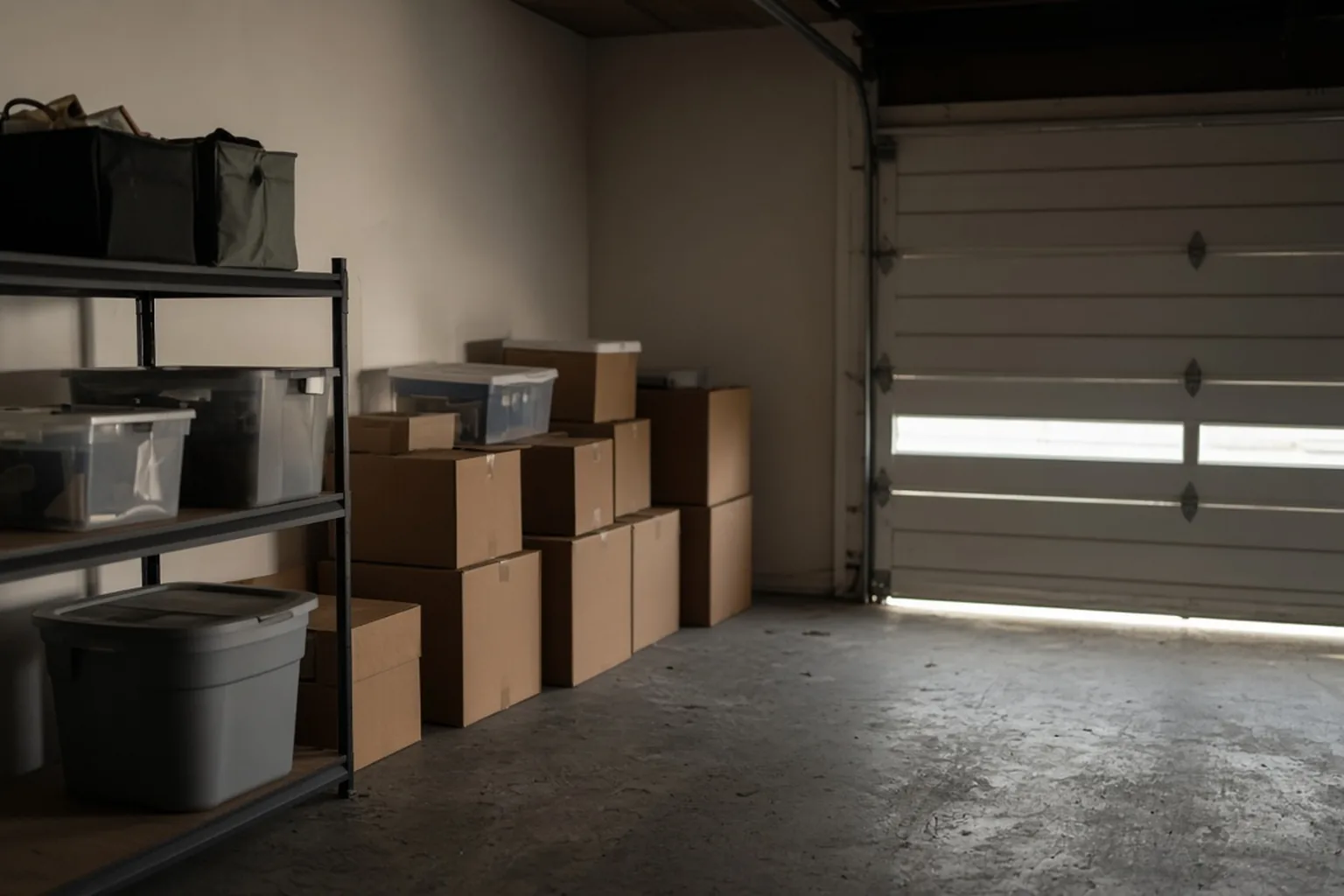 Cardboard boxes make easy nests and the gap under an overhead door makes an easy entrance. Plastic bins and a fresh door seal fix both.
Cleaning out a Flint house that sat empty: the Michigan hantavirus lesson.
The adult who got sick had been cleaning an unoccupied dwelling with an active rodent infestation. That is the exact job many Flint residents take on when they buy, inherit or rehab a house that sat empty. People catch it by breathing dust from dried droppings, urine or nests that gets kicked up during cleanup. MDHHS says illness starts one to five weeks after exposure, and about 40 percent of pulmonary cases are fatal. Most U.S. cases cluster in spring and summer, when people open and clean structures. The fix is technique. Prop the doors and windows open and walk away for half an hour. Put on gloves. Soak droppings and nests with 1.5 cups of bleach in a gallon of water and give it 5 minutes. Lift the wet material with paper towels and bag it. A broom or shop vacuum is the one tool to leave in the garage. If the house has heavy contamination, hire a provider with protective equipment. It costs less than a hospital stay. Michigan's first confirmed hantavirus case, reported by MDHHS in 2021, came from Washtenaw County.
House mouse, deer mouse or white-footed mouse?
House mice are uniform gray-brown with a mostly hairless tail. They live comfortably indoors, nest in walls and cabinets, and breed through the winter. They are the most common indoor mouse in Flint kitchens. Deer mice and white-footed mice look similar to each other: brown on top, white underneath, with white feet. Deer mice have a sharply two-toned tail. Both live outdoors around wooded edges, fields and gardens, and they move into sheds, garages and basements in fall. These are the species linked to hantavirus. If you find mice in a shed, garage or cabin rather than the kitchen, assume they may be deer or white-footed mice and clean up accordingly. Wet-clean droppings with bleach, wear gloves, and do not sweep. Norway rats are the fourth rodent in the mix. They are much larger, dig burrows outside, and need a different approach entirely. Flint homes can host three kinds of mice, and knowing which one you have changes the plan.
 A good inspection starts outside at ground level: door thresholds, the joint between siding and foundation, and anywhere a pipe or cable enters.
Sealing a Flint home the way Michigan DNR recommends.
Seal holes with durable materials like metal flashing or hardware cloth. Cap and screen chimneys. Each of those matters in Flint's older housing. Foundations settle over decades and open gaps at the sill and around utility entries. A mouse needs only about a quarter inch, so a crack you can slip a pencil into is enough. Metal flashing and hardware cloth hold up where foam and caulk alone get chewed through. Chimneys without caps give rodents and other animals a straight path into the house. Tree limbs touching the roof let mice and rats reach soffits, vents and gaps at the roofline that you would never think to check from the ground. Start at ground level and work up. Check the foundation, sill, door sweeps, dryer vent and utility lines. Then look at the roof: vents, soffits, chimney and overhanging branches. A provider with ladders can handle the upper work safely. Michigan DNR keeps its advice practical.
Keeping Norway rats out of Flint yards and gardens.
They burrow under garages, sheds, porches and woodpiles, and they feed on whatever is easy: garden produce, compost, pet food, bird seed and trash. Gardens are a big draw in Flint's warm, humid summers. Michigan DNR recommends solid sheeting or fencing with holes 1/2 inch or smaller around beds, with the bottom edge buried so rats cannot dig under. Pick ripe produce promptly and clean up fallen fruit. Compost belongs in a closed bin, not an open pile. Trash cans need tight lids. Pet food should come inside at night. Bird feeders should be placed away from the house, with spilled seed cleaned up regularly. If you see burrows, do not just fill them with dirt. Rats will dig out again. A provider can confirm activity, set traps or locked stations along the runways, and seal the structure so rats cannot move from the yard into the basement. Rats need a property-wide plan, not a few traps by the back door. Norway rats in Flint usually start in the yard.
Where to start when the budget is tight.
The good news is that the most effective rodent control is also the most basic. Sealing comes first. Hardware cloth, metal flashing and steel wool are inexpensive, and closing the gaps stops new mice from coming in. A single afternoon at the foundation and around utility lines can make a big difference. Trapping comes next. Snap traps are cheap, reusable and effective along walls where droppings appear. They also avoid the smell of poisoned mice dying inside walls. Sanitation follows. Keep food in sealed bins, take out trash often, and remove clutter where mice nest. Save professional help for the jobs that are hardest to do safely or well on your own: roof and chimney work, Norway rat burrows, and cleanouts with heavy droppings. When you get quotes, ask for an itemized plan so you can decide which parts to do yourself and which to hand off. With a median home value near $50,000, many Flint homeowners and landlords are working with limited money.
What affects the price
- How many entry points the inspection finds, which tends to rise with older foundations and rooflines.
- Whether Norway rats are present outside in addition to mice inside.
- Chimney caps, vent screens and tree trimming that may be needed to close roof access.
- The size and condition of a cleanout, especially in a house that sat empty.
- Insulation removal and replacement where nests have soiled it.
- How many follow-up visits the plan includes through Flint's long winter.
📊
What's your biggest concern about rodents?
When to call for help
Call a provider before you clean out a house, basement or garage with heavy droppings or several nests. Michigan's first hantavirus case came from exactly that kind of cleanup, and the protective steps matter. Across Flint, it also makes sense to bring in help when mice keep turning up after two weeks of trapping, when you see a rat or a burrow near the house, or when chewed wiring shows up. Landlords should act quickly on tenant reports, since mice spread between units in shared buildings. A provider can find roof and chimney gaps that are hard to reach yourself.
What you can do yourself
You can handle a lot on your own. For a couple of mice in a tight house, seal visible gaps with hardware cloth or metal flashing as Michigan DNR recommends, set snap traps along walls, and remove food sources. Many Flint households end a small fall invasion that way within a few weeks. DIY gets harder in three situations. Burrowing Norway rats are wary of anything new in their path, so a couple of traps by the basement stairs seldom finish them off. Older houses with roof gaps, uncapped chimneys and overhanging trees need ladder work and a careful inspection. And heavy contamination, especially in a house that sat empty, raises the risk of breathing in contaminated dust. In those cases a provider brings the equipment, the protective gear and the experience to finish the job, plus follow-up visits through the cold months when mice keep testing the house.
Rodents in Flint
Flint was founded in 1819 and grew into an industrial city known as the birthplace of General Motors. Today it is an urban city of about 79,000 people, recovering from the water crisis and working through the upkeep of an older housing stock. That history matters for rodents. Older foundations settle and crack, chimneys lose their caps, and trees grow close to rooflines, all access points Michigan DNR flags. With a median home value near $50,000, many residents are buying, rehabbing or cleaning out houses on a tight budget, which makes cheap, durable sealing materials and safe cleanup practices especially important. At 751 feet in the Midwest's humid continental zone, Flint gets warm, humid summers with about 32 inches of rain that build outdoor rodent numbers, then winter lows near 16F that send them inside. Michigan's first hantavirus case in 2021 is a reminder that cleanup technique matters.
Local research
Rodents in Flint, MI: what the public record shows
Before you compare quotes, it helps to know which rodents actually live in Michigan, when they are busiest around Flint, and what the state figures look like. Everything below links to the agency or university page it came from.
Rodent species recorded in Michigan
- House mouse (Mus musculus) — Enters at 1/4 inch; 5-10 litters per year; eats about 200 small meals a night.
- Norway rat (Rattus norvegicus) — Burrowing rat of basements, sewers and ground floors; tail shorter than head plus body.
- Deer mouse (Peromyscus maniculatus) — Primary U.S. hantavirus carrier; lives throughout Washington and the interior West.
When rodents are busiest around Flint
Rodents push into Michigan structures in fall; hantavirus exposure clusters in spring and summer cleanouts.
Michigan had no confirmed human hantavirus case until 2021, so the routine risk is contamination and structural damage.
For context, nationally
- 1/4 inch (the width of a pencil) — Smallest gap a mouse can enter. CDC
- 890; 35% fatal; 94% west of the Mississippi — Hantavirus cases reported since 1993 (through 2023). CDC
Sources: Michigan Department of Health and Human Services; CDC; Pest Notes: House Mouse; Pest Notes: Rats; Hantavirus. Figures are quoted as the source prints them. How we check our sources
Simple ways to keep rodents away
- Seal holes with metal flashing or hardware cloth rather than foam alone.
- Cap and screen the chimney, a common entry Michigan DNR points out.
- Cut tree limbs back so they are not within a few feet of the roof.
- Fence garden beds with solid sheeting or mesh with holes 1/2 inch or smaller.
- Store pet food, bird seed and grass seed in metal or hard plastic bins.
- Keep firewood off the ground and away from the foundation.
- Use lidded trash cans and keep compost in a closed bin.
- Check the basement and garage monthly from fall through spring.
 Before you call, sketch where you have seen droppings or heard noise and measure any gaps you found. It makes the first visit faster and the quotes comparable.
Did you know?
Michigan had no confirmed human hantavirus case until 2021, when a Washtenaw County adult fell ill after cleaning an empty, infested dwelling.
Michigan DNR advises cutting tree limbs back so they are not within a few feet of the roof, because rodents use them as bridges.
A Norway rat can have 4 to 6 litters a year and wean 20 or more young.
Questions people ask
Has Michigan had hantavirus cases?
Yes, but very few. Michigan's first confirmed case came in 2021 in Washtenaw County, according to MDHHS. An adult was hospitalized after cleaning an unoccupied dwelling with an active rodent infestation. Deer mice and white-footed mice live around Flint, so the lesson applies here: clean droppings wet and air out the space first.
When do mice move into Flint homes?
Mostly in October and November. Flint's winter lows average around 16F, and mice that spent the summer outdoors look for warm shelter before the hard cold sets in. Once inside, they nest and breed through the winter. Sealing in late summer keeps them out before the rush.
What should I use to seal holes against mice?
Michigan DNR recommends durable materials like metal flashing or hardware cloth. Foam alone is easy for rodents to chew through. The DNR also suggests capping and screening chimneys and trimming tree limbs so they are not within a few feet of the roof, since rodents use both to reach upper levels.
How can I tell if I have rats or mice?
Size and droppings. Mouse droppings are small and pointed, about the size of a grain of rice. Rat droppings are larger and blunt. Norway rats also dig burrows by foundations and garages and leave greasy rub marks. If you see burrows or large droppings, plan for an outdoor rat program, not only indoor traps.
Is it safe to clean out a Flint house that sat empty?
It can be, if you follow the right steps. Air the space for 30 minutes, wear gloves, soak droppings and nests with a 1:9 bleach solution for 5 minutes, then wipe and bag. Never sweep or vacuum. For heavy contamination in a Flint rehab or inherited house, a provider with protective gear is the safer choice.
How soon would hantavirus symptoms show up?
MDHHS says illness starts one to five weeks after exposure to fresh rodent urine, droppings or saliva, and the fatality rate for the pulmonary syndrome is about 40 percent. Anyone in Flint who gets a fever, muscle aches and trouble breathing within that window after a cleanout should mention the rodent exposure to a doctor.
How do I keep rats out of my garden in Flint?
Michigan DNR recommends solid sheeting or fencing with holes 1/2 inch or smaller around garden beds. Bury the bottom edge so rats cannot dig under. Pick ripe produce promptly, keep compost in a closed bin, and avoid leaving pet food outside. In Flint's warm, humid summers, gardens are a major food source for rats.
Who is responsible for rodent control in a rental?
Check your lease, but in most cases the owner handles sealing and structural repairs while tenants keep food stored and trash managed. Report activity in writing with photos and dates. In shared buildings, mice move between units through walls and pipes, so treating one apartment rarely holds.
Nearby cities
Related guides
Sources (6)
The facts in this article come from the public sources listed above. Every home is different, so ask the company you talk to about pricing and what’s included. Published by Rodent Exterminator · Updated October 11, 2026 · How we write these guides