The short version
Rodent control in Johnson City, Tennessee, starts at the doors. House mice can't hibernate, so they move indoors each fall as lows head toward 27F, and University of Tennessee school data found gaps under and between exterior doors were a main way in. Add door sweeps, seal gaps of 1/4 inch, clear weeds and debris, and trap along walls.
- House mice can't hibernate, so Johnson City homes see them move in each fall.
- Gaps under and between exterior doors are a top entry point in Tennessee buildings.
- A house mouse runs 5 to 8 inches long including its tail.
- Tennessee pest companies need a state charter and certified applicators in category C07.
- Kentucky and West Virginia each logged one 2025 provisional hantavirus case; Tennessee logged none.
This is for Johnson City homeowners hearing scratching in walls, ETSU students and other renters finding droppings in a kitchen, and landlords who need to respond to a tenant's report. It's also useful if you're comparing pest control companies in the Tri-Cities and want to know which credentials to ask about.
What to look for
The area's 42 inches of yearly rain and 72% humidity keep yards green and weeds tall through summer, which gives mice and rats cover right up to the foundation. UT Extension's advice for schools applies at home too: seal entrances, remove debris piles, and keep weeds cut back. Two rodents cause most of the trouble in Johnson City. The house mouse is the one you're most likely to find indoors: a small animal, light brown, gray, or sometimes black with a lighter belly, measuring 5 to 8 inches from nose to tail tip according to the University of Tennessee. The Norway rat is larger and heavier and tends to burrow outdoors along foundations, under sheds, and near trash, coming indoors through basements and crawlspaces. The climate sets the timing. Johnson City sits at 1,637 feet, with summer highs around 86F and winter lows near 27F. Mice can show up in any month, but UT's school IPM guidance points out that because house mice can't hibernate, they're far more likely to invade buildings in fall. That's when most homeowners first notice them.
- 1Droppings near exterior doors, along baseboards, or in kitchen drawers.
- 2Daylight visible under an exterior door, or a gap between double doors.
- 3Chewed food packages in the pantry or garage.
- 4Scratching in walls or ceilings at night once fall arrives.
- 5Small nests of shredded paper or fabric in a closet, drawer, or storage box.
- 6Burrows along the foundation or under a shed, which suggest Norway rats.
- 7A musty smell in a cabinet or under the sink.
Why it’s worth acting soon
- Mice that get in during fall keep breeding through winter indoors.
- Droppings and urine contaminate food, and CDC lists salmonellosis among illnesses rodents spread.
- Gnawed wiring in walls or attics creates a fire risk.
- Norway rats raise 4 to 6 litters a year, so a yard burrow grows fast.
- Every month of nesting means more droppings to clean and insulation to replace.
Treatment options and typical costs
Door and entry sealing
Quoted after inspection
Installing door sweeps and threshold seals on every exterior door, closing gaps between double doors, and sealing openings of 1/4 inch or more around pipes, vents, and the foundation. UT's school data pointed to door gaps as a key entry, so this is often the first and cheapest fix.
- Time
- Depends on how many doors and gaps need work
- Best for
- Stopping fall mouse entry
Snap trapping along walls
Quoted after inspection
Snap traps set against walls, behind appliances, and in basements and garages where droppings show activity. Traps remove mice already inside without leaving poisoned animals in walls. Ask how many traps the provider will place and how often they'll come back to check.
- Time
- Until captures stop, with return checks
- Best for
- Mice living indoors
Exterior cleanup and weed control
Quoted after inspection
Clearing debris piles, cutting high weeds near the foundation, and stacking firewood away from the house, following UT Extension's school IPM guidance. It takes away the cover mice and rats use to approach the building unseen.
- Time
- One cleanup, then seasonal upkeep
- Best for
- Yards with tall grass or clutter
Outdoor bait stations for rats
Quoted after inspection
Locked stations along the foundation for Norway rats burrowing in the yard, placed by a provider certified in Tennessee's C07 category. Ask what's in the stations, how often they're serviced, and how they're secured against pets and children.
- Time
- Ongoing, with periodic service
- Best for
- Norway rats outdoors
Prices are typical published ranges. Ask what’s included before you compare quotes.
 Clutter gives mice cover. Keeping stored fabric in lidded bins and off the floor takes away the nesting spots they like best.
Why house mice can't wait out a Johnson City winter.
The University of Tennessee's school IPM guidance notes that while mice can turn up in buildings at any time of year, their inability to hibernate makes them far more likely to invade structures in fall. Outdoors, a mouse has to keep eating and stay warm through every cold night. Across Johnson City, winter lows average about 27F. So mice go looking for heat. Basements, garages, wall voids near a furnace, and the space behind a refrigerator all qualify. Once inside, they stay through winter and keep breeding. That timing gives you a clear window. Mid to late summer is the best time to seal, because mice aren't yet pressing to get in. By October, you're trapping the ones that already found a way. By January, you're dealing with their offspring. If you only do one thing each year, walk around the house in August and close every gap you find. House mice don't hibernate, and that one fact explains most of Johnson City's fall rodent calls.
What Tennessee schools learned about where mice get in.
Pair the doors with what the schools also did: remove debris near the building and keep weeds cut back, so mice have less cover on the way in. The University of Tennessee ran IPM demonstration programs in schools, and in winter 2010, house mice topped the list of pests recorded in the log books. When staff looked at how the mice were getting in, the answer was simple: large gaps between and under exterior doors, often near the cafeteria where food was available. That lesson carries straight over to homes in Johnson City. Exterior doors are opened and closed constantly, thresholds wear down, and door sweeps get torn or never get installed. A gap under a door can easily exceed the 1/4 inch CDC says a mouse needs. Double doors and French doors often have a gap where they meet. Check yours at night. Turn on a light inside, go outside, and look for light leaking around the door. Anywhere you see light, a mouse can get through. Also check the door from the garage into the house and any basement door to the outside.
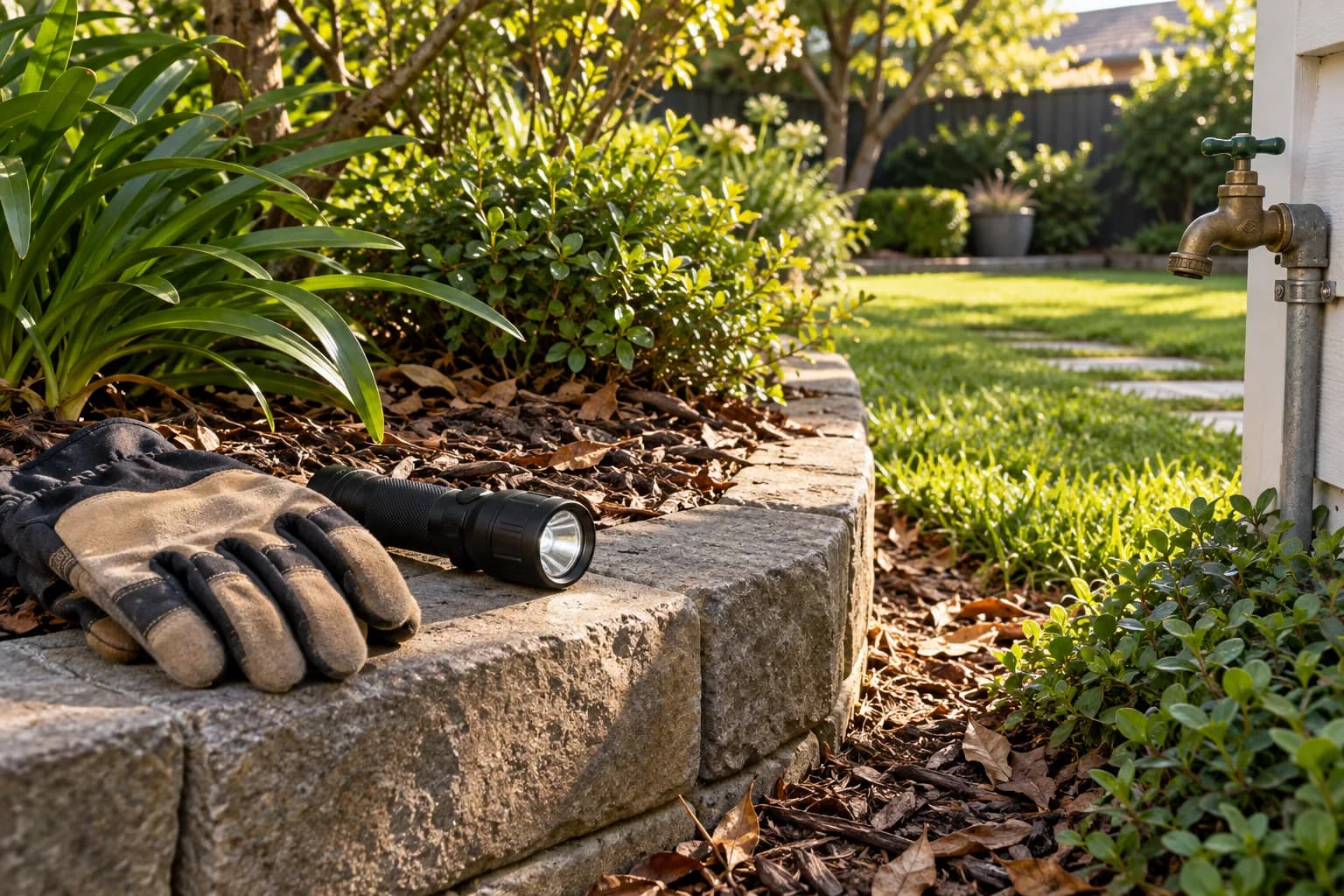 Dense shrubs against the house and a dripping hose bib give rodents cover and water. Trimming back and fixing drips makes the yard less inviting.
Mice in student rentals near ETSU.
Multiple roommates usually mean more food in more places, doors opened and closed constantly, and less clear responsibility for trash and cleanup. Mice take advantage of all of it. A bag of chips left on a desk or a trash can that doesn't get taken out for a few days can keep a mouse well fed. If you're renting, report what you're seeing to the landlord or property manager in writing, with photos and dates. Mention where you found droppings and whether there's a gap under the entry door. Ask whether other units in the building have reported the same thing, since mice move between apartments through shared walls. In the meantime, store food in sealed plastic or glass containers, keep counters clear overnight, and take trash out daily. Snap traps are inexpensive, but check your lease before setting anything. If you're a landlord in Johnson City, late summer is the time to check door sweeps and seals, before the fall move-in by mice begins. East Tennessee State University is in Johnson City, and if you share a rental with roommates, that setup creates its own rodent challenges.
Mouse or young rat? Sizing up what you saw.
A few details help. The University of Tennessee describes house mice as 5 to 8 inches long, including the tail, and light brown, gray, or sometimes black with a lighter belly. They have large ears relative to their head and a pointed nose. They move fast and stay close to walls. Norway rats are noticeably bigger and heavier even when young, with a blunt nose, small ears, and a thick, scaly tail shorter than the body. Adults are much larger than any mouse. Droppings help confirm it. Mouse droppings are small, about the size of a grain of rice. Rat droppings are much bigger and capsule-shaped. Location is another clue. In Johnson City homes, mice tend to show up in kitchens, pantries, and wall voids. Rats usually stay low, in basements, crawlspaces, and garages, and leave burrows outside. The difference matters for the plan. Mice call for close-set traps and door sealing. Rats need outdoor work, wider trap placement, and more patience. A quick look at a rodent running across the floor often leaves people unsure what it was.
Checking a Johnson City pest company's Tennessee credentials.
A legitimate provider will answer without hesitation. Tennessee regulates pest control at two levels, and it's worth knowing both before you hire. First, the company. Pest control businesses in Tennessee need a charter from the Tennessee Department of Agriculture. Ask for it. Second, the people. Applicators must be certified, and rodent work falls under category C07, which covers Industrial, Institutional, Structural, and Health Related Pest Control. Tennessee has 16 commercial certification categories in all, according to the University of Tennessee's Pesticide Safety Education Program. Earning certification means passing an exam with a score of at least 70%, and the state charges $25 for each attempt. Certifications run on a three-year cycle from July 1 to June 30. For a Johnson City homeowner, the practical questions are straightforward. Is the company chartered? Is the person coming to your home certified in C07, or working under someone who is? Is the certification current for this cycle? These matter most when bait is involved, since placing rodenticide around a home with kids and pets takes training.
What affects the price
- How many exterior doors need sweeps or threshold work.
- The number of gaps around pipes, vents, and the foundation.
- Basement or crawlspace access, which adds inspection and sealing time.
- Whether the problem is mice, rats, or both.
- The number of follow-up visits for trap checks.
- Droppings cleanup and any insulation replacement.
📊
What's your biggest concern about rodents?
When to call for help
It's also worth calling when you can't figure out how they're getting in, since gaps around basement windows, crawlspace vents, and utility lines can be hard to spot. Make sure whoever you hire is chartered with the Tennessee Department of Agriculture and certified for structural pest control. Call for help if you're still catching mice two weeks after sealing the doors, if you find droppings in several rooms, or if there are signs of rats such as burrows near the foundation or droppings much bigger than a mouse's. Rats need outdoor work and wider trap placement.
What you can do yourself
Many households split the work: a provider handles inspection, sealing, and any rat work, and the homeowner takes care of weeds, debris, and food storage. That keeps costs reasonable and makes the results last. Plenty of Johnson City mouse problems can be handled at home. Start with the doors: hold a flashlight outside at night and look for light leaking under or between doors from inside. Door sweeps are inexpensive and easy to install. Then pack steel wool into gaps around pipes under sinks and seal over it, clear clutter from basement and garage floors, and set snap traps along the walls where you've seen droppings. The point where a provider earns their fee is when the problem keeps coming back, when it's spread through several rooms, or when rats are involved. Norway rats burrow outside, avoid new objects, and need outdoor bait stations or carefully placed traps across the yard. Bait placement around a home is also a job for someone certified in Tennessee's C07 category.
Rodents in Johnson City
The city sits at 1,637 feet, and the climate is humid subtropical with a temperate pattern: summers average 86F, winters drop to about 27F, and rainfall totals around 42 inches a year with 72% average humidity. That's warm and wet enough for tall weeds and thick cover all summer, then cold enough in fall to send mice straight for the nearest heated building. With a median home value near $245,000, sealing doors and pipe gaps is a small expense next to repairing wiring or replacing insulation. Johnson City is a suburban city of about 73,000 people in the Tri-Cities area, founded in 1856 and home to East Tennessee State University. If you rent near campus, shared housing can mean doors propped open and food left out, both of which help mice.
Local research
Rodents in Johnson City, TN: what the public record shows
Before you compare quotes, it helps to know which rodents actually live in Tennessee, when they are busiest around Johnson City, and what the state figures look like. Everything below links to the agency or university page it came from.
Commercial certification exam fee
Structural and health-related pest control is category C07; certifications run on a three-year cycle from July 1 to June 30.
Tennessee Department of AgricultureRodent species recorded in Tennessee
- House mouse (Mus musculus) — Enters at 1/4 inch; 5-10 litters per year; eats about 200 small meals a night.
- Norway rat (Rattus norvegicus) — Burrowing rat of basements, sewers and ground floors; tail shorter than head plus body.
When rodents are busiest around Johnson City
Mice may infest buildings year round, but as the house mouse cannot hibernate it is more likely to invade structures in the fall.
Tennessee pest control companies need a TDA charter plus applicator licenses; UT Extension's school IPM guidance is to seal entrances, remove debris harborage and clear high weeds.
Rules that apply in Tennessee
For context, nationally
- 1/4 inch (the width of a pencil) — Smallest gap a mouse can enter. CDC
- 890; 35% fatal; 94% west of the Mississippi — Hantavirus cases reported since 1993 (through 2023). CDC
Sources: University of Tennessee Extension School IPM program; Tennessee Department of Agriculture; CDC; Pest Notes: House Mouse; Pest Notes: Rats. Figures are quoted as the source prints them. How we check our sources
Simple ways to keep rodents away
- Install door sweeps on every exterior door, including garage-to-house and basement doors.
- Close the gap between double or French doors with a weatherstrip seal.
- Pack steel wool into pipe and cable gaps of 1/4 inch or more, then seal over it.
- Cut high weeds back from the foundation, as UT Extension recommends.
- Remove debris piles, old lumber, and clutter that give rodents cover near the house.
- Store food, pet food, and bird seed in sealed containers.
- Seal up the house in late August, before the fall move-in starts.
 After sealing, a few monitors or unset traps left along the walls tell you whether anything is still getting in before you hear it again.
Did you know?
Tennessee offers 16 separate commercial pesticide certification categories, and rodent work falls under just one of them.
In Tennessee's school IPM programs, mice often got in near the cafeteria, where gaps around exterior doors met a steady food supply.
Rodents can spread disease indirectly too: plague, Lyme disease, and murine typhus reach people through fleas, ticks, or mites that fed on rodents.
Questions people ask
When do mice come indoors in Johnson City?
House mice can be found indoors any time, but the University of Tennessee notes they can't hibernate, so they're much more likely to invade buildings in fall. With Johnson City's winter lows averaging about 27F, the push indoors starts as soon as nights turn cold. Mostly between September and November.
Do mice hibernate in winter?
Across Johnson City, where winters reach the upper 20s, a warm basement, garage, or wall void near a heat source is where they'll settle. Once inside, they keep breeding through the cold months. No. House mice stay active all winter, which is exactly why they move into heated buildings in fall.
How do mice usually get into Johnson City homes?
In Johnson City homes, also check garage door corners, pipe and cable openings, and dryer vents. CDC notes a mouse needs only a 1/4-inch gap. Doors are a big one. In Tennessee schools tracked by UT Extension, mice entered through large gaps between and under exterior doors.
How big is a house mouse?
The University of Tennessee describes house mice as 5 to 8 inches long, counting the tail, and light brown, gray, or sometimes black with a lighter belly. If what you saw was noticeably bigger and heavier, with a blunt nose and thick tail, it was more likely a Norway rat.
Does Tennessee license pest control companies?
Rodent work falls under category C07, Industrial, Institutional, Structural, and Health Related Pest Control. Ask any Johnson City provider for their charter and certification details before they start. Yes. Tennessee pest control companies need a charter from the Tennessee Department of Agriculture, and their applicators must be certified.
What should ETSU students do about mice in an apartment?
Check under the entry door for a gap. In Johnson City student rentals, a door sweep alone can make a noticeable difference. Tell the landlord or property manager in writing, with photos and dates. Store food in sealed containers, take trash out daily, and don't leave pet food or snacks out overnight.
Is hantavirus a risk in East Tennessee?
CDC reports 94% of cases since 1993 were west of the Mississippi. Clean droppings wet anyway: ventilate 30 minutes, then soak with 1.5 cups of bleach per gallon for 5 minutes. It's rare. Tennessee wasn't on CDC's provisional 2025 list, though Kentucky and West Virginia each had one of the 17 cases.
Nearby cities
Related guides
Sources (6)
The facts in this article come from the public sources listed above. Every home is different, so ask the company you talk to about pricing and what’s included. Published by Rodent Exterminator · Updated October 11, 2026 · How we write these guides