The short version
In Lincoln, most rodent problems are house mice that move indoors as harvest ends and nights drop toward the 14F winter average. Nebraska Extension advises sealing any opening slightly larger than 1/4 inch with copper mesh or stainless steel fibers, then trapping heavily, about two dozen snap traps per 1,500 square feet, spaced no more than 10 feet apart.
- Lincoln's mouse season starts as Nebraska's fall harvest ends and temperatures fall.
- Mice rarely travel more than 50 feet from shelter, so traps belong right where signs appear.
- Nebraska Extension suggests about two dozen traps for a 1,500 square foot area.
- Store boxes 8 inches off the floor and a foot from walls so runways are easy to spot.
- Deer mice in garages and outbuildings call for wet, bleach-based cleanup.
This guide is for Lincoln homeowners who just saw a mouse run behind the fridge, renters dealing with droppings in an older apartment, landlords who get the same complaint every October, and anyone with a garage, shed or workshop at the edge of town. It also works for people who want to try DIY trapping first and need to know how many traps it actually takes.
What to look for
Rats burrow near foundations and outbuildings. Deer mice nest in garages, sheds and storage, and their droppings need careful cleanup. The house mouse is the main rodent problem in Lincoln homes. Nebraska Extension notes a mouse can get through an opening only slightly larger than 1/4 inch, and once it starts gnawing, it can widen a hole to about 1 1/2 inches. Mice nest in walls, insulation, cabinets and stored boxes, and they stay close to food. The Midwest calendar drives their behavior. Summers reach about 89F, and mice spend the warm months in fields, fencerows and yards. When harvest ends and temperatures drop, they lose food and cover at the same time, and they move into homes, garages and barns. That push usually peaks in October and November. Once inside, mice multiply quickly. Nebraska Extension says females have 5 to 10 litters a year of 5 to 6 young and can breed at 6 to 10 weeks old. A pair that slips in during October can mean dozens of mice by spring. Norway rats and deer mice add to the picture.
- 1Small, pointed droppings, 1/8 to 1/4 inch long, along baseboards and inside drawers.
- 2Fresh gnaw marks around holes in cabinet backs or where pipes come through the floor.
- 3A faint musty odor in a closed pantry or storage closet.
- 4Shredded paper, insulation or fabric balled up in a quiet corner or inside a box.
- 5Tracks or tail drags in dust along walls in the basement or garage.
- 6Scratching sounds in walls or ceilings that start after the house goes quiet.
- 7Chewed bags of birdseed, grass seed or dog food in the garage.
Why it’s worth acting soon
- Each mouse leaves 50 to 75 droppings a day, so contamination grows fast.
- Mice breed within weeks, so a small fall problem can be large by midwinter.
- Gnawed wiring in walls, garages and vehicles can cause expensive damage.
- Insulation fouled with urine and droppings may need to be removed.
- Stored food, seed and paper goods get ruined and must be thrown out.
Treatment options and typical costs
Sealing with mesh and stainless fibers
Quoted after inspection
Closing every gap mice can use, especially around pipes, wires, foundation cracks and garage doors. Nebraska Extension recommends copper woven-wire mesh or stainless steel fibers for gaps under 1/2 inch. Sealing is what keeps the next wave from coming in after harvest.
- Time
- Half a day to two days
- Best for
- Every Lincoln home with mice, especially those that see them each fall
Heavy trapping
Quoted after inspection
Placing enough snap traps to catch mice quickly, about two dozen for 1,500 square feet, spaced no more than 10 feet apart along walls and runways. Mice rarely travel more than 50 feet from shelter, so traps go where droppings are. Checks continue until catches stop.
- Time
- One to three weeks
- Best for
- Active mice inside homes and garages
Exterior rat and outbuilding service
Quoted after inspection
Bait stations and traps around foundations, sheds, garages and woodpiles where Norway rats or deer mice are active. Stations should be locked and anchored. Ask how pets, wildlife and children will be protected.
- Time
- Monthly service through fall and winter
- Best for
- Properties with sheds, outbuildings or rat burrows
Droppings and nest cleanup
Quoted after inspection
Disinfecting and removing droppings, nests and contaminated materials using bleach solution and protective gear, following CDC steps. Important in garages and sheds where deer mice may be present.
- Time
- One to two days
- Best for
- Heavy contamination in attics, garages and storage
Prices are typical published ranges. Ask what’s included before you compare quotes.
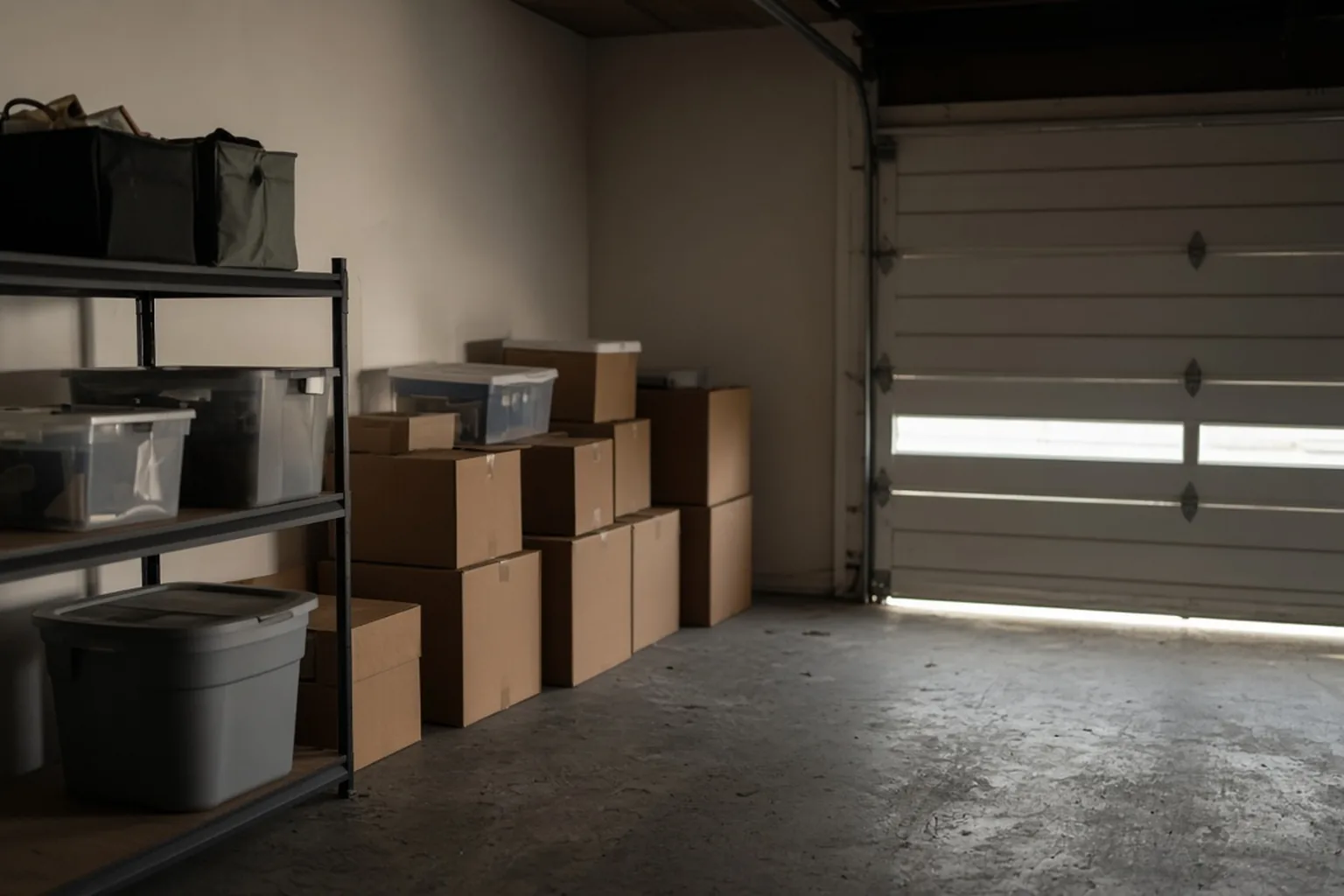 Cardboard boxes make easy nests and the gap under an overhead door makes an easy entrance. Plastic bins and a fresh door seal fix both.
Harvest's end and Lincoln's October mouse wave.
If you see the first droppings in October, act right away. A pair of mice can produce a litter within three weeks of settling in, and young mice can breed at six weeks, so delay matters. Nebraska's harvest calendar shapes Lincoln's mouse season. Through summer, house mice and deer mice live in fields, fencerows and grassy edges, eating seeds and insects. When harvest comes and fields are cleared, that food and cover disappears almost overnight. Nebraska Extension notes that mice move into structures as fall harvest ends and temperatures drop. In Lincoln, that usually means late September through November. Homes, garages, sheds and barns on the edge of town see the first push, but mice spread through neighborhoods quickly. The timing gives you a window. Late summer, before harvest, is the best time to seal gaps, check garage door seals and clear clutter. Once mice are inside, you are trapping instead of preventing.
Trap math: how many traps a Lincoln house really needs.
If your Lincoln home covers more than 1,500 square feet across the basement, kitchen and garage, scale the count up to match. It sounds like a lot, but it ends the problem faster. Most failed DIY mouse jobs come down to too few traps. One or two traps under the sink will catch a mouse or two, but not the whole group. Nebraska Extension's guidance is specific: about two dozen snap traps for a 1,500 square foot area, placed no more than 10 feet apart. Mice seldom travel more than 50 feet from their shelter and inspect their nest area up to 40 times a day, so traps placed along their routes get visited often. Put traps along walls, behind appliances, in cabinets and in corners where droppings appear. Set them perpendicular to the wall with the trigger facing the wall. Use a small amount of peanut butter or oats. Check daily, reset as needed, and keep going until a week passes with no catches. Then seal any gaps you found.
 This is what a proper seal looks like: metal mesh fastened with screws and sealed at the edges. Foam or caulk on its own gets chewed through.
Deer mice in garages, sheds and outbuildings.
To reduce deer mice, store items in sealed bins, keep things off the floor, seal gaps and trap regularly. Check outbuildings through winter. Deer mice are common in Nebraska and are the species linked to hantavirus. They have white bellies and feet and a sharply two-tone tail. In Lincoln, they often show up in garages, sheds, barns and outbuildings, especially on properties near open land. Hantavirus is rare. The CDC has recorded 890 cases nationally since 1993, mostly in western states, and Nebraska did not appear in the 2025 provisional count. But the illness is serious, so cleanup deserves care. Before cleaning a shed or garage with droppings, open doors and windows for 30 minutes. Wear rubber gloves. Spray droppings, nests and dead mice with a bleach solution of 1.5 cups per gallon of water and let it soak five minutes. Wipe with paper towels and bag everything. Do not sweep or vacuum.
Why mouse problems rebound so fast.
Mouse populations in Lincoln homes can seem to explode, and the biology explains it. Nebraska Extension says house mice have 5 to 10 litters a year, each with 5 to 6 young. Gestation takes only 18 to 21 days, and young mice can breed at 6 to 10 weeks old. Adults live only 9 to 12 months, but they produce many young in that time. That means the population turns over quickly. Removing most mice but leaving a few behind lets the population rebuild within weeks. It also means new mice from outside can replace the ones you caught if gaps stay open. The practical takeaway: trap heavily and quickly, then seal. Do not stop trapping after the first few catches. Keep traps out until a week passes with no activity. Then keep a few traps in the garage and basement through winter as an early warning. If mice keep showing up, look harder for entry points, or bring in a provider to find them.
Renters and landlords in Lincoln.
Lincoln rentals can see mice every fall, so clear communication helps. Landlords are often responsible for structural repairs, including sealing gaps around pipes, foundations and doors, and for infestations that come from the building. Tenants are often responsible for keeping food sealed, taking out trash and reporting problems quickly. If you rent, report mouse signs in writing with dates and photos. Keep food in hard containers and do not leave pet food out overnight. If you are a landlord, consider scheduling sealing and trapping in late summer, before harvest ends and mice move in. That costs less than responding to multiple complaints in October and November. In multi-unit buildings, treat all units at once, since mice move between them. Ask providers for written reports listing what they found, what they sealed and how many traps they set. That record helps if a tenant raises concerns later or if the same unit has problems again.
What affects the price
- Number and size of gaps found around foundations, pipes and doors.
- Square footage, since trap counts scale with area.
- Garages, sheds and outbuildings that also need treatment.
- Whether Norway rats or deer mice are present in addition to house mice.
- Amount of insulation or stored material that needs cleanup.
- How many follow-up visits are included.
📊
What's your biggest concern about rodents?
When to call for help
Call a professional if you are still catching mice after two weeks, find droppings on more than one floor, or see signs of rats or deer mice in outbuildings. Mice that keep showing up usually mean an entry point is still open, and a pro can find gaps you missed. Heavy droppings in a shed or garage should be cleaned carefully, and some homeowners prefer to have that done professionally. For Lincoln landlords, a provider can document the work, which helps when tenants report repeat problems each fall.
What you can do yourself
A pro makes sense when mice keep coming back, when you cannot reach the gaps, or when rats or deer mice are involved. A provider can inspect the whole property, seal hard-to-reach openings and set up exterior stations safely. Lincoln homeowners can handle a lot of mouse control themselves if they do it thoroughly. The mistake most people make is using too few traps. Nebraska Extension recommends about two dozen snap traps for a 1,500 square foot area, placed no more than 10 feet apart where mice travel. Bait them with peanut butter or oats and check them daily. Sealing is the other half. Use copper mesh or stainless steel fibers for gaps under 1/2 inch, and sealant to hold them in place. Store boxes at least 8 inches off the floor and a foot from walls so you can see runways.
Rodents in Lincoln
Nebraska Extension ties the mouse season to the state's farm calendar: when harvest ends in fall, mice that spent the summer in fields look for new food and shelter, often in homes, garages and sheds on the city's edge. With median home values near $260,000, many homeowners may want to handle small problems themselves and call in help when mice keep coming back. Nebraska Extension's house mouse guide, written for the state's homes and farms, offers detailed advice on trapping and sealing that applies directly to Lincoln. Lincoln is Nebraska's capital, founded in 1856, with about 294,000 residents and a strong identity around Huskers football. The city sits at about 1,176 feet in a humid continental climate: summer highs near 89F, winter lows around 14F, 68% humidity and roughly 28 inches of rain a year.
Local research
Rodents in Lincoln, NE: what the public record shows
Before you compare quotes, it helps to know which rodents actually live in Nebraska, when they are busiest around Lincoln, and what the state figures look like. Everything below links to the agency or university page it came from.
Opening a house mouse can squeeze through
Nebraska Extension notes mice gnaw openings out to about 1 1/2 inches once started.
Nebraska ExtensionHouse mouse reproduction
Gestation is 18-21 days and adults live only 9-12 months, so populations turn over quickly.
Nebraska ExtensionDroppings one mouse leaves per day
Dropping counts are how Nebraska Extension gauges infestation size.
Nebraska ExtensionRodent species recorded in Nebraska
- House mouse (Mus musculus) — Enters at 1/4 inch; 5-10 litters per year; eats about 200 small meals a night.
- Norway rat (Rattus norvegicus) — Burrowing rat of basements, sewers and ground floors; tail shorter than head plus body.
- Deer mouse (Peromyscus maniculatus) — Primary U.S. hantavirus carrier; lives throughout Washington and the interior West.
When rodents are busiest around Lincoln
Mice move into Nebraska structures as fall harvest ends and temperatures drop.
Nebraska Extension advises storing goods at least 8 inches off the ground and a foot from walls so runways are visible.
For context, nationally
- 1/4 inch (the width of a pencil) — Smallest gap a mouse can enter. CDC
- 890; 35% fatal; 94% west of the Mississippi — Hantavirus cases reported since 1993 (through 2023). CDC
Sources: Nebraska Extension; CDC; Pest Notes: House Mouse; Pest Notes: Rats; Hantavirus. Figures are quoted as the source prints them. How we check our sources
Simple ways to keep rodents away
- Seal gaps before harvest ends in early fall, while working outside is still comfortable.
- Use copper mesh or stainless steel fibers in gaps under 1/2 inch.
- Store boxes 8 inches off the floor and a foot from walls.
- Keep birdseed, grass seed and pet food in metal containers.
- Install tight door sweeps on garage and exterior doors.
- Stack firewood on a rack well back from the foundation so it stops sheltering mice.
- Trim weeds and grass near the foundation to remove cover.
- Check garages and sheds regularly through winter for fresh droppings.
 Before you call, sketch where you have seen droppings or heard noise and measure any gaps you found. It makes the first visit faster and the quotes comparable.
Did you know?
A house mouse checks its nest area up to 40 times a day, which is why traps placed close to the nest work so well.
Once a mouse starts gnawing, it can widen a small gap to about 1 1/2 inches.
Adult house mice live only 9 to 12 months, so populations turn over quickly.
Questions people ask
When do mice move into homes in Lincoln?
Nebraska Extension notes mice move into structures after harvest because they lose food and cover. Once in, they stay all winter, when lows average 14F. Mice usually move into Lincoln homes as harvest ends and temperatures drop, typically late September through November.
How many mouse traps do I need?
Nebraska Extension recommends about two dozen snap traps for a 1,500 square foot area, placed no more than 10 feet apart along walls and runways. Mice rarely travel more than 50 feet from shelter, so put traps where you see droppings. More than most people think.
What should I use to seal mouse holes?
For larger holes, use hardware cloth or sheet metal. Seal around pipes, wires, vents and garage doors. For gaps under 1/2 inch, Nebraska Extension recommends copper woven-wire mesh or stainless steel fibers. Mice can chew through foam and caulk alone.
How fast do mice multiply?
Young mice can breed at 6 to 10 weeks. That is why a few mice in a Lincoln home in October can become many by January. Very fast. Nebraska Extension says house mice have 5 to 10 litters a year of 5 to 6 young, with gestation of 18 to 21 days.
Are deer mice dangerous?
cases since 1993 were west of the Mississippi. Infection usually comes from breathing dust from droppings in closed spaces. Ventilate 30 minutes, wear gloves, soak with bleach solution, and never sweep. Deer mice can carry hantavirus. The CDC reports 94% of U.S.
Why do I keep getting mice every fall?
Each fall, new mice from nearby fields and yards find the same gap. Sealing with mesh and checking garage door seals before harvest helps stop the cycle. Usually because an entry point is still open. Mice can fit through gaps slightly larger than 1/4 inch and gnaw them wider.
Who handles mice in a Lincoln rental?
In Lincoln, where mice come in every fall, landlords often benefit from scheduled sealing and trapping before the season starts. Report problems in writing. Check your lease. Landlords often handle sealing and building-wide infestations, while tenants handle food storage and trash.
Nearby cities
Related guides
Sources (6)
The facts in this article come from the public sources listed above. Every home is different, so ask the company you talk to about pricing and what’s included. Published by Rodent Exterminator · Updated October 11, 2026 · How we write these guides