The short version
Rodent control in Livonia, Michigan comes down to sealing before fall and cleaning up safely afterward. House mice and Norway rats push indoors as nights fall toward an 18F winter low, so close gaps with metal flashing or hardware cloth, as Michigan DNR advises, and trap inside. Treat droppings in closed garages or vacant buildings with care, since deer mice live here too.
- Mice and rats move into Livonia homes in fall and often stay in the walls all winter.
- Michigan DNR recommends durable materials like metal flashing or hardware cloth for sealing.
- Cut tree limbs back a few feet from the roof and screen the chimney.
- Michigan confirmed its first hantavirus case in 2021, linked to cleaning an infested vacant home.
- Wet droppings with bleach before cleaning; never sweep or vacuum them dry.
This page is for Livonia homeowners hearing mice in the walls, landlords getting a rental ready between tenants, people cleaning out a relative's empty house, and managers of offices, shops and warehouses in the industrial parks. If you have a detached garage or shed that you only open in spring, the cleanup advice applies to you in particular.
What to look for
Michigan had no confirmed human hantavirus case until 2021, so the everyday concern is droppings, urine and chewing. Still, the state's first case is a reminder that how you clean up matters as much as how you catch. Four rodents turn up in Michigan buildings: the house mouse, the Norway rat, the deer mouse and the white-footed mouse. House mice are the main indoor pest, nesting in walls, cabinets and insulation. Norway rats burrow along foundations and come in at ground level, often around garages and commercial buildings. Deer mice and white-footed mice are native species that usually live outdoors but move into garages, sheds and quiet buildings. The climate sets the calendar. Humid continental weather brings warm summers, with 71% average humidity and about 34 inches of rain a year, so rodents breed well outdoors. Then the cold arrives, with winter lows near 18F. Rodents push into structures in fall and, once inside, many stay in walls and garages until spring. Health risk here is mostly about contamination and damage.
- 1Droppings in kitchen drawers, under the sink, or along garage walls.
- 2Scratching in walls and ceilings once the furnace starts running for the season.
- 3Nesting material made from insulation, paper or fabric tucked into boxes and drawers.
- 4Burrows with fresh dirt beside the foundation, slab or garage apron.
- 5Gnawed corners on garage doors, weatherstripping or stored bags of seed.
- 6Acorns or seed stashes in drawers, boots or stored furniture, a native mouse habit.
- 7A stale smell in a closed garage, shed or unused room.
Why it’s worth acting soon
- Mice that move in during fall keep breeding all winter inside heated walls.
- Gnawed wiring creates fire risk and expensive electrical repairs.
- Droppings and urine contaminate food, counters and stored belongings.
- Cleaning a heavily infested building without precautions risks hantavirus, which MDHHS puts at a 40 percent fatality rate.
- Norway rat burrows can damage slabs, walkways and garden beds.
Treatment options and typical costs
Exclusion with durable materials
Quoted after inspection
Sealing holes with metal flashing, hardware cloth and other durable materials, the approach Michigan DNR recommends. A full job also caps and screens the chimney and covers vents. Gaps of 1/4 inch matter for mice, so the inspection has to be close and thorough.
- Time
- Depends on how many openings the inspection finds
- Best for
- Homes with fall entry or recurring winter activity
Indoor trapping
Quoted after inspection
Snap traps set along walls, in basements and in garages, checked and moved over several weeks. Trapping indoors avoids dead rodents in walls and confirms which species is present, which matters in Michigan because native deer mice and white-footed mice call for more careful cleanup.
- Time
- Until catches stop; ask how many checks are included
- Best for
- Mice already inside walls, cabinets or garages
Exterior bait stations for rats
Quoted after inspection
Locked stations placed along foundations, garages and dumpster areas where Norway rats burrow and feed. They work best combined with sealing and trapping. Ask what product is used, how the stations are secured from pets and wildlife, and how often they are serviced.
- Time
- Ongoing service
- Best for
- Rat burrows near homes and commercial buildings
Safe cleanout of infested buildings
Quoted after inspection
Cleaning garages, sheds, vacant houses and rentals with ventilation first, a bleach soak, gloves and respirators. This is the kind of job that led to Michigan's first hantavirus case when done without precautions, so it is worth paying for when contamination is heavy.
- Time
- Depends on how much material is soiled
- Best for
- Vacant homes, long-closed garages and heavily soiled spaces
Prices are typical published ranges. Ask what’s included before you compare quotes.
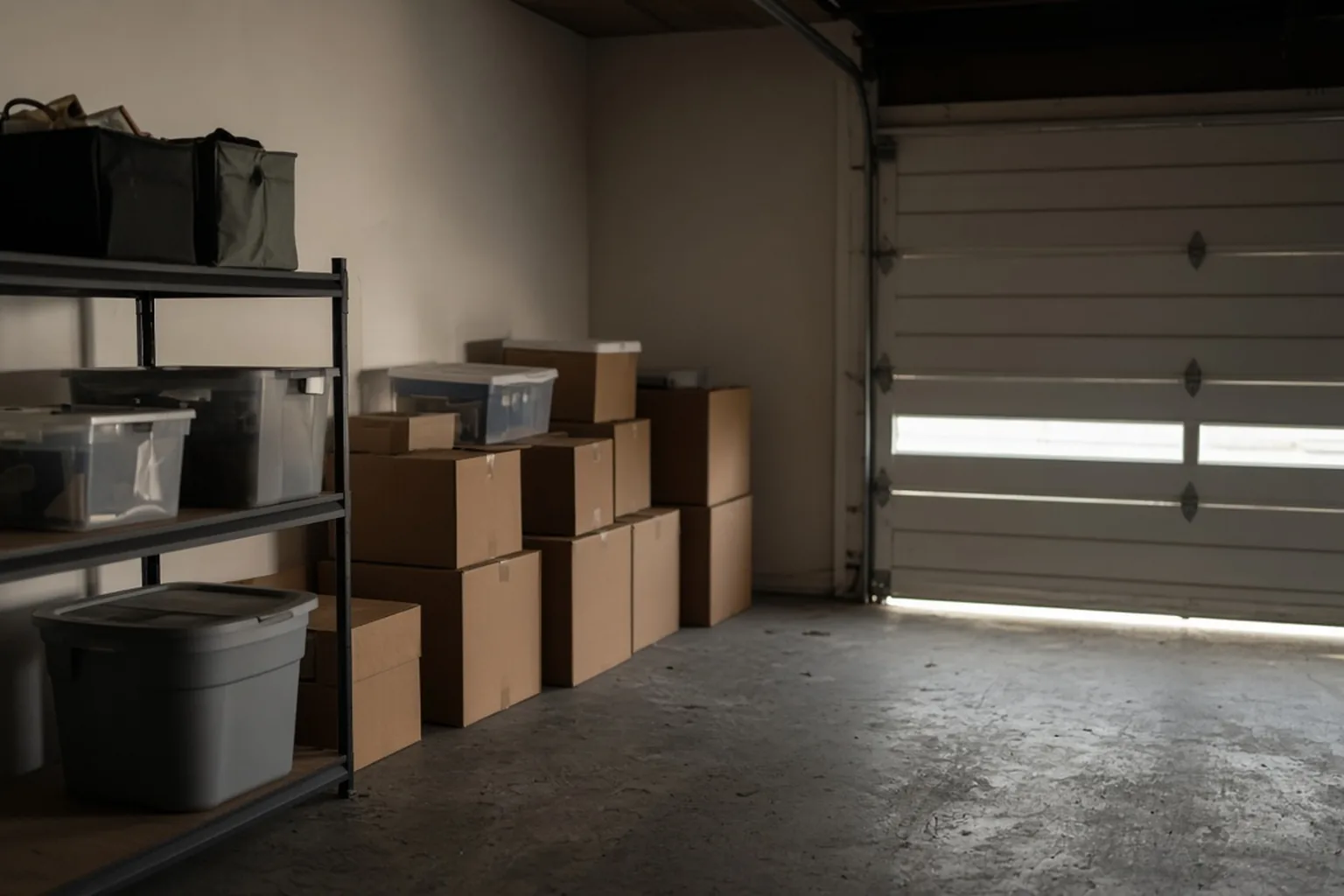 Cardboard boxes make easy nests and the gap under an overhead door makes an easy entrance. Plastic bins and a fresh door seal fix both.
What Michigan's first hantavirus case teaches Livonia homeowners.
Air out the space for 30 minutes, wet everything with diluted bleach, wear gloves and a respirator, and never sweep dry droppings. For heavy contamination, hire it out. Michigan went without a confirmed human hantavirus case until 2021. That year, MDHHS reported an adult in Washtenaw County who was hospitalized with Sin Nombre hantavirus after cleaning out an empty home that rodents had moved into. That detail is the lesson. The highest-risk activity, according to MDHHS, is entering or cleaning rodent-infested structures. That covers a lot of real Livonia situations: clearing out a parent's empty house, opening a detached garage in spring, or getting a rental ready after a vacancy. MDHHS notes that most U.S. cases are in adults and cluster in spring and summer, which is cleanout season. The disease is serious. MDHHS puts the fatality rate for hantavirus pulmonary syndrome at 40 percent, and symptoms start one to five weeks after exposure to fresh urine, droppings or saliva. That delay means people often fail to connect the illness to the cleanup. The fix is simple and cheap.
Deer mice, white-footed mice and house mice: which one do you have?
Deer mice are the main hantavirus carrier, so droppings in a closed Livonia garage or shed, where native mice are more likely, deserve the full bleach-soak routine. The fourth rodent, the Norway rat, is much larger and usually burrows outside along foundations. Michigan has four rodents that commonly turn up in buildings, and three of them are mice. Telling them apart helps you decide how careful to be. House mice are the classic indoor pest. They are gray-brown on top and only slightly lighter underneath, and once inside they live in walls, cabinets and insulation year-round. Deer mice and white-footed mice are native species that look more like small woodland animals. Both have brown backs, clean white bellies and white feet, with larger eyes and ears. They usually live outdoors in fields, woodlots and yards, but they move into garages, sheds and quiet rooms when it gets cold. They also stash seeds and acorns in drawers, boots and stored furniture. The difference matters most for cleanup.
 A good inspection starts outside at ground level: door thresholds, the joint between siding and foundation, and anywhere a pipe or cable enters.
Rodents in Livonia's industrial parks and commercial buildings.
Ask providers how often they visit, what they check, and how they document findings, since food handlers and some customers may want records. Michigan DNR's advice for homes applies here too: seal holes with durable materials like metal flashing or hardware cloth, not foam. Livonia is known for its industrial parks, and commercial buildings bring their own rodent challenges. Loading docks, roll-up doors, pallets, stored goods and break rooms give mice and rats plenty of food, shelter and entry points. Norway rats in particular take advantage of gaps around dock doors and utility entries. Control in these spaces is mostly about consistency. Dock doors need tight seals and should stay closed when not in use. Pallets and stock should sit off the floor and away from walls so you can see along the perimeter. Trash and recycling areas need lids and regular pickup. Most facilities do better with a scheduled program than one-time calls. That usually means exterior bait stations around the perimeter, interior traps along walls and in storage areas, and regular inspections with written reports.
Michigan DNR's sealing checklist, applied to a Livonia house.
Replace worn door seals and keep seed and pet food in metal cans. Do the work in late summer, before fall entry begins. Michigan DNR's guidance for homeowners boils down to a few clear steps, and they map neatly onto a typical Livonia house. First, seal holes with durable materials such as metal flashing or hardware cloth. Rodents chew through foam, plastic and wood, so those make poor permanent repairs. Mice fit through about 1/4 inch, so look closely around pipes, cables, dryer vents and the sill. Second, cap and screen the chimney. It is an easy entry point that many people forget, especially for climbing rodents and other wildlife. Third, cut back tree limbs within a few feet of the roof. Branches give rodents a bridge to the roofline, where gaps around vents and soffits are hard to see from the ground. Fourth, protect gardens with solid sheeting or fencing that has holes 1/2 inch or smaller. That keeps rodents from feeding there all summer and then moving into the house in fall. Finish in the garage.
What affects the price of rodent work in a Livonia home?
Ask how many visits are included and whether extra trips during the fall rush cost more. With a median Livonia home value around $245,000, it is worth getting two itemized quotes before deciding. The main driver is how much sealing the house needs. A provider has to find and close every opening a mouse or rat can use, from foundation gaps to roof vents and chimneys. A property with an attached garage, a detached garage and a shed has more to cover than one without. Height adds cost. If tree limbs reach the roof, trimming may come first, and roof-level work with metal flashing takes ladders and time. Chimney caps and vent screens are often priced as separate line items. Cleanup can be a large share of the bill. A garage or vacant house with heavy droppings needs ventilation, bleach soaking, protective gear and careful disposal, especially in light of Michigan's 2021 hantavirus case. Replacing soiled insulation adds more. Rats change the scope. Burrows near slabs and garages often mean exterior bait stations and follow-up visits.
What affects the price
- How many openings need flashing or hardware cloth, including chimneys and roof vents.
- Tree limbs near the roof that have to be trimmed before roof-level sealing will hold.
- Whether the job covers an attached garage, a detached garage or a shed as well as the house.
- Cleanup of heavy droppings, especially in vacant or long-closed buildings.
- Outdoor rat work, including burrows near slabs and bait station service.
- Commercial spaces in industrial parks with loading docks and large footprints.
📊
What's your biggest concern about rodents?
When to call for help
Call a professional when traps keep catching mice after a couple of weeks, when you see rat burrows, or when you hear activity in walls and ceilings. In Livonia, hire help before cleaning out a vacant house, a long-closed garage or a rental with heavy droppings. Michigan's first hantavirus case came from exactly that kind of job, and a provider with respirators and a proper cleanup routine lowers the risk. Businesses in industrial parks with dock doors and storage areas usually do better with an ongoing program than a single visit.
What you can do yourself
A sensible middle path: trap and store food carefully yourself, then hire help for exclusion and any heavy cleanup. And cleaning out a building full of droppings carries real risk; MDHHS names entering or cleaning rodent-infested structures as the highest-risk activity for hantavirus. Sealing at the roofline or chimney involves ladders and materials like metal flashing. Rats are wary of traps and travel farther, so control often means work across the whole property. Bring in a professional for rats, roof-level sealing, or heavy contamination. Michigan DNR adds a few simple steps: cut back tree limbs within a few feet of the roof and cap and screen the chimney so rodents cannot get in from above. Set snap traps along walls where you see droppings, store food in sealed containers, and close gaps around pipes and cables with steel wool and sealant. Small mouse problems are a reasonable DIY job.
Rodents in Livonia
At 682 feet with a humid continental climate, the city has warm summers near 83F, cold winters with lows around 18F, about 34 inches of rain a year and average humidity near 71%. Rodents spend summer outdoors and push indoors in fall, staying through winter. With a median home value around $245,000, sealing a Livonia house before fall usually costs less than repairing chewed wiring, insulation and stored belongings later. Livonia is a Detroit suburb of about 95,000 people, founded in 1835, with a mix of residential neighborhoods and industrial parks. That combination matters for rodents. Homes with yards, garages and sheds give mice and rats places to nest, while warehouses, loading docks and commercial buildings in the industrial parks offer food and shelter on a larger scale.
Local research
Rodents in Livonia, MI: what the public record shows
Before you compare quotes, it helps to know which rodents actually live in Michigan, when they are busiest around Livonia, and what the state figures look like. Everything below links to the agency or university page it came from.
Rodent species recorded in Michigan
- House mouse (Mus musculus) — Enters at 1/4 inch; 5-10 litters per year; eats about 200 small meals a night.
- Norway rat (Rattus norvegicus) — Burrowing rat of basements, sewers and ground floors; tail shorter than head plus body.
- Deer mouse (Peromyscus maniculatus) — Primary U.S. hantavirus carrier; lives throughout Washington and the interior West.
When rodents are busiest around Livonia
Rodents push into Michigan structures in fall; hantavirus exposure clusters in spring and summer cleanouts.
Michigan had no confirmed human hantavirus case until 2021, so the routine risk is contamination and structural damage.
For context, nationally
- 1/4 inch (the width of a pencil) — Smallest gap a mouse can enter. CDC
- 890; 35% fatal; 94% west of the Mississippi — Hantavirus cases reported since 1993 (through 2023). CDC
Sources: Michigan Department of Health and Human Services; CDC; Pest Notes: House Mouse; Pest Notes: Rats; Hantavirus. Figures are quoted as the source prints them. How we check our sources
Simple ways to keep rodents away
- Seal holes with metal flashing or hardware cloth, not foam or plastic, as Michigan DNR recommends.
- Cap and screen the chimney, and cover attic and foundation vents with metal mesh.
- Trim tree limbs so none reach within a few feet of the roof.
- Protect vegetable gardens with fencing or sheeting that has holes 1/2 inch or smaller.
- Replace garage door seals and add brush strips where light shows at the edges.
- Store birdseed, grass seed and pet food in metal cans with tight lids.
- Before opening a closed shed, garage or vacant house, let it air out for 30 minutes.
 After sealing, a few monitors or unset traps left along the walls tell you whether anything is still getting in before you hear it again.
Did you know?
Michigan did not appear among the 11 states in the CDC's provisional 2025 hantavirus count of 17 cases.
Lymphocytic choriomeningitis, or LCM, is a virus the CDC counts among the infections house mice and other rodents can pass straight to people.
Most U.S. hantavirus patients are adults, and cases tend to bunch up in spring and summer, according to Michigan health officials.
Questions people ask
When do mice get into houses in Livonia?
Once inside, mice often stay in the walls through winter. Sealing in late summer and trapping at the first sign of droppings keeps the problem small. Mostly in fall. As nights cool toward Livonia's average winter low of 18F, house mice and Norway rats look for gaps into homes and garages.
Has Michigan had hantavirus cases?
MDHHS puts the fatality rate at 40 percent. It is rare, but careful cleaning is worth the effort. Yes, but only recently. MDHHS reported the state's first confirmed case in 2021, in southeast Michigan's Washtenaw County, after an adult cleaned out a vacant dwelling that rodents had taken over.
What should I seal holes with?
Mice can fit through about 1/4 inch, according to the CDC, so small gaps matter. Also screen the chimney and cut back tree limbs within a few feet of the roof. Michigan DNR recommends durable materials such as metal flashing or hardware cloth. Rodents chew through foam, plastic and wood.
How do I clean up droppings in a Livonia garage or shed?
Never sweep or vacuum. In a Livonia building with heavy contamination, consider paying for a professional cleanup. Ventilate for 30 minutes first. Spray droppings and nesting material with a bleach solution of 1.5 cups per gallon of water, wait five minutes, and wipe up with paper towels while wearing gloves.
What is the difference between a deer mouse and a house mouse?
Deer mice and white-footed mice, both found in Michigan, have white bellies and feet and usually live outdoors or in outbuildings. The distinction matters because deer mice carry hantavirus, so their droppings call for extra care during cleanup. House mice are gray-brown all over and live mainly indoors.
How long after exposure does hantavirus illness start?
MDHHS says symptoms begin one to five weeks after exposure to fresh rodent urine, droppings or saliva. If you develop fever, aches or breathing trouble in the weeks after cleaning out an infested space, tell your doctor about the exposure so it can be considered.
Do businesses in Livonia's industrial parks need ongoing rodent service?
A scheduled program with regular inspections, exterior bait stations and interior trapping is easier to manage than a big infestation. Ask Livonia providers how often they visit and what their reports include. Many do. Warehouses and facilities with loading docks, stored goods and large footprints offer rodents plenty of entry points and food.
Nearby cities
Related guides
Sources (6)
The facts in this article come from the public sources listed above. Every home is different, so ask the company you talk to about pricing and what’s included. Published by Rodent Exterminator · Updated October 11, 2026 · How we write these guides