The short version
Loveland, CO rodent problems peak from September through November, when house mice, deer mice and Norway rats look for shelter ahead of winter lows near 16F. Close gaps down to a quarter inch, trap mice inside, and wet-clean droppings because deer mice can carry hantavirus. Bring in a provider for nests in closed spaces, rats near irrigation, or mice that keep coming back.
- Fall is entry season in Loveland, roughly September through November.
- Deer mice carry hantavirus; Colorado logged 2 provisional cases in 2025.
- In a town with 16 inches of rain a year, irrigation draws rodents close.
- A quarter-inch gap is enough for a mouse, the CDC says.
- Droppings get soaked with bleach solution, never swept or vacuumed.
Loveland homeowners with garages, sheds or crawl spaces, anyone who keeps a camper, boat or classic car in storage, people buying or selling a house who found droppings during an inspection, and landlords with rental homes. If you have seen a mouse and are unsure whether it is the harmless-looking kind or the one to worry about, start here.
What to look for
House mice, deer mice and Norway rats all live around Loveland, and each brings a different issue. House mice are the classic indoor pest, nesting in walls, cabinets and storage and breeding inside through winter. Deer mice, with their white bellies and two-toned tails, favor garages, sheds, crawl spaces and stored vehicles, and they are the hantavirus carrier in the West. Norway rats are larger, burrow near water and food, and show up most around irrigation, compost, chicken coops and trash. Climate explains the pattern. Loveland gets about 16 inches of precipitation a year with average humidity near 52%, so natural water is scarce, and watered lawns, gardens and leaking spigots become rodent magnets. Summer highs reach about 87F, building up outdoor populations. When fall arrives and lows trend toward 16F, mice head for the nearest warm structure, and the garage is usually first.
- 1Droppings along the garage wall where the floor meets the foundation.
- 2Nests of shredded paper or fabric in storage tubs, boxes or a camper's cabinets.
- 3Acorns, seeds or dog kibble stashed in a boot, a vent or a drawer.
- 4Chewed wire insulation under the hood of a car that has not been driven in a while.
- 5Small tracks in the dust of a crawl space or on top of a stored appliance.
- 6Burrows near a garden bed, irrigation box or compost bin, a Norway rat sign.
- 7A musty, ammonia smell when you open a closed shed or storage room.
Why it’s worth acting soon
- Droppings pile up through the winter, raising the hantavirus risk when the space is finally cleaned.
- The CDC says 35% of reported U.S. hantavirus cases since 1993 have been fatal.
- Mice nesting in vehicles can chew wiring and cause expensive repairs.
- House mice keep breeding indoors, so a few arrivals in fall can become a colony by spring.
- Rats near irrigation can burrow under slabs, patios and garden walls.
94%Share of U.S. hantavirus cases west of the Mississippi, 1993 to 2023CDC 1/4 inchSmallest gap a house mouse can enterCDC Treatment options and typical costs
Garage and foundation sealing
Quoted after inspection
Sealing focuses on the gaps the CDC says matter, anything a quarter inch or larger. In a Loveland home that often means the garage door bottom seal and side stops, the door into the house, utility and AC line entries, dryer vents and crawl space vents. Ask for a written list of what was sealed and with what material.
- Time
- Set after the inspection
- Best for
- Homes with garage mice every fall
Trapping inside and in storage
Quoted after inspection
Snap traps along garage walls, inside sheds and in crawl spaces remove mice without poison in the walls or bait that pets and wildlife could reach. Traps get checked on a schedule and catches are handled with gloves and the wet-cleaning method. This is usually paired with sealing so new mice stop arriving.
- Time
- Until traps stay empty
- Best for
- Active mice after entry points are closed
Deer mouse nest cleanup
Quoted after inspection
Following CDC steps, the space is ventilated for 30 minutes, droppings and nests are soaked with a 1.5-cups-per-gallon bleach solution for 5 minutes, then picked up and bagged. For a camper, shed or crawl space with heavy contamination, ask what protective gear the crew uses and whether soiled insulation is removed.
- Time
- Depends on how many nests are found
- Best for
- Sheds, campers and crawl spaces after winter
Rat control near water and food
Quoted after inspection
Norway rats near irrigation, gardens, coops or compost need traps or locked stations along their routes and changes to the food and water that drew them. Ask how stations will be placed to keep them away from pets and wildlife, and how burrows will be monitored and closed.
- Time
- Ask how often stations are serviced
- Best for
- Yards with burrows, gardens or backyard chickens
Prices are typical published ranges. Ask what’s included before you compare quotes.
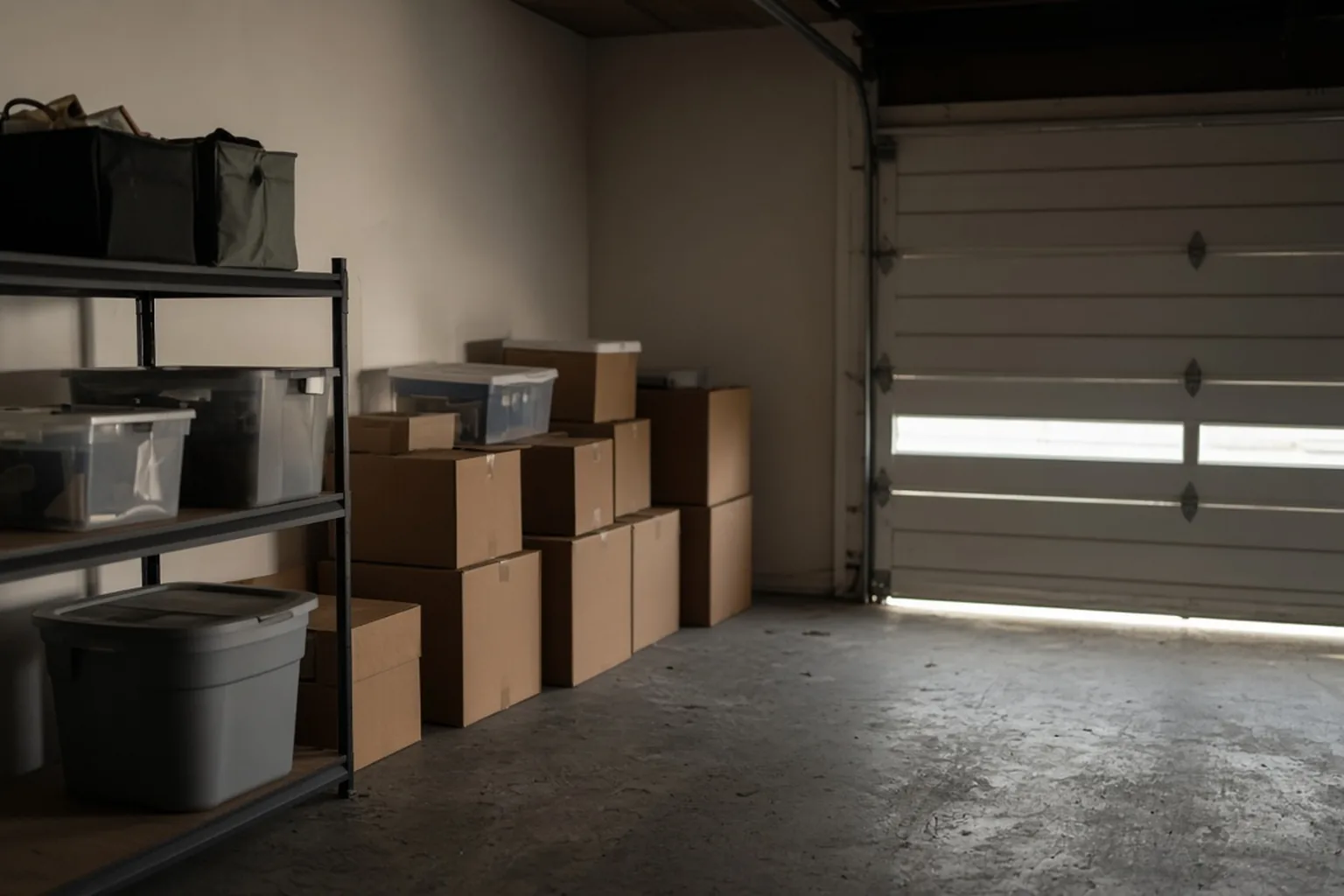 Cardboard boxes make easy nests and the gap under an overhead door makes an easy entrance. Plastic bins and a fresh door seal fix both.
Why does Loveland's mouse season start in September?
Replace the garage door bottom seal, close gaps around pipes and lines, and set a few traps along the garage walls in September to catch any early arrivals. The practical response is to seal in August, before the push. From the garage, mice move through gaps around the house door, the water heater closet or utility lines. Door seals wear out, side gaps open, and a quarter-inch space is enough for a mouse. An attached garage, if the house has one, takes the first hit. When the cold arrives, all of those animals need shelter at the same time. Highs near 87F, irrigated yards and gardens give mice plenty of food and water, so populations build from June through August. The summer before sets the size of the wave. In Loveland that usually means the first wave of garage mice shows up in September, and activity peaks through November as winter lows head toward an average of 16F. In Colorado's semi-arid climate, fall nights cool quickly even when afternoons are still warm, and mice respond to the cold nights, not the warm days. Temperature drives it.
Which mouse is in the garage, and does it matter?
It matters, mainly for cleanup. Deer mice are the native mice of the West. They are brown above with bright white undersides and feet, large dark eyes, and a tail that is sharply dark on top and white underneath. They live outdoors in grass, shrubs and fields and move into garages, sheds, campers and crawl spaces in fall. They are the main carrier of the hantavirus strain behind most U.S. cases. House mice came with people and stay close to people. They are an even gray-brown with a mostly hairless tail, and they nest in walls, kitchens and storage. They are a contamination and damage problem but not the hantavirus carrier. In practice, you should clean up after any mouse as if it might be a deer mouse. Give the space half an hour with the doors open, pull on gloves, and wet the droppings and nests with a bleach mix, waiting 5 minutes before you wipe them up and bag them. Leave the broom and vacuum out of it. The species also hints at where they are getting in. Deer mice in a shed suggest an outdoor nest nearby; house mice in a kitchen point to a gap in the house itself.
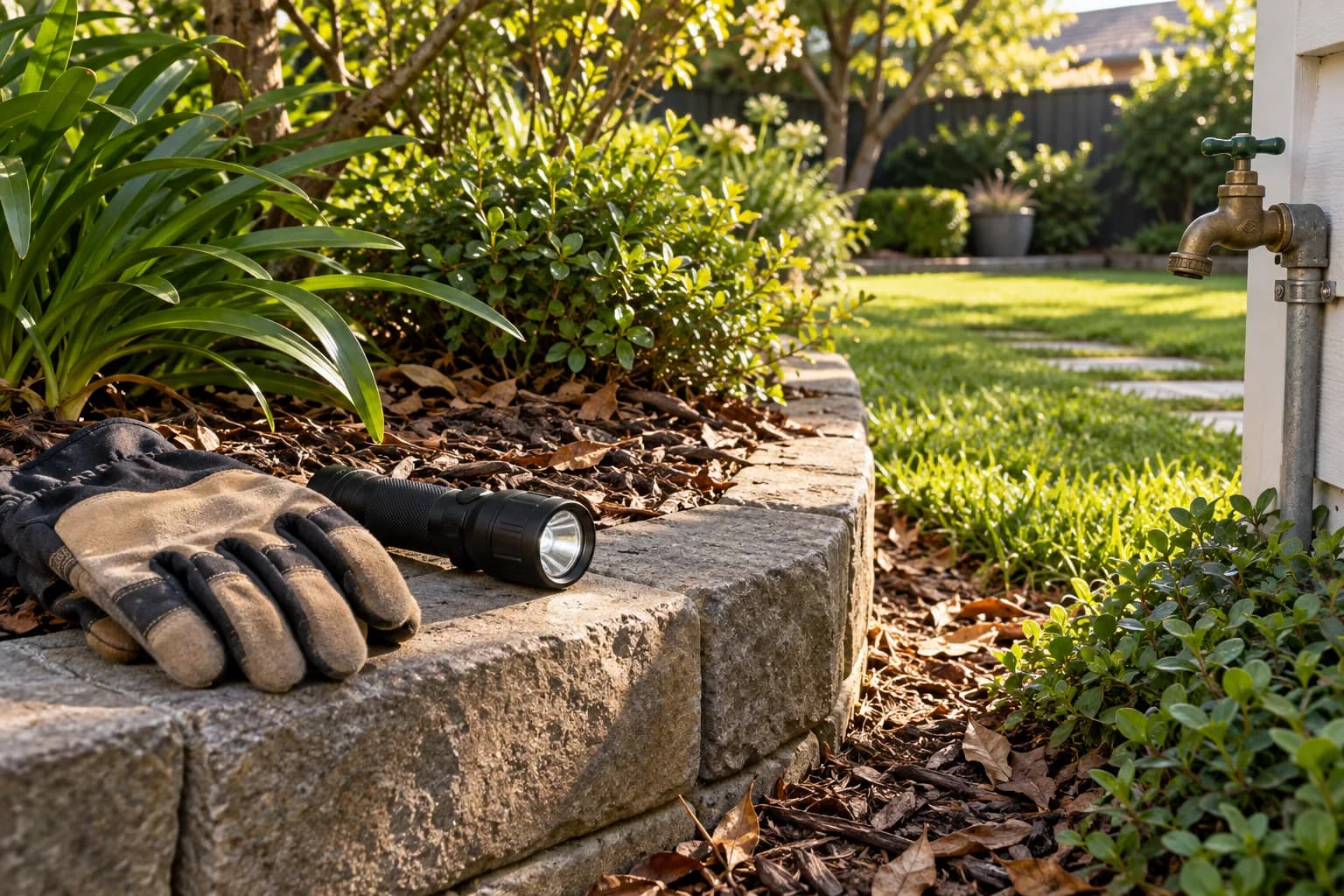 Dense shrubs against the house and a dripping hose bib give rodents cover and water. Trimming back and fixing drips makes the yard less inviting.
Irrigated yards in a dry town.
Less water and cover next to the house means fewer rodents testing it. Trim plantings away from the walls. Move compost and feed into sealed bins. Repair leaks, water early in the day, and keep a gravel strip along the foundation rather than mulch. The fixes are simple. Burrows tend to show up in soft, watered soil near those features. Norway rats in particular need water daily, so a yard with irrigation, a vegetable garden, compost and backyard chickens can support a colony. Together, those create a staging area a few feet from the gaps rodents use to get in. Lush plantings and mulch beds next to the foundation give them cover. Sprinkler heads, drip lines, garden beds, leaking spigots, pet water bowls, bird baths and the condensate line from an AC unit all give rodents water. Very often, that is the area right around your house. For a mouse or rat, natural water is hard to come by, so the greenest, wettest spots in town draw them in. Loveland gets roughly 16 inches of precipitation a year, and average humidity sits near 52%.
Buying or selling a Loveland home with mouse signs.
Those are where deer mice concentrate, and where cleanup calls for the most care. In either case, pay attention to the garage and crawl space. A written list of what was sealed and cleaned gives buyers confidence. Have entry points sealed, set traps, and clean up droppings using the CDC wet method. If you are selling, get ahead of it. With Loveland's median home value around $520,000, knowing that before closing helps you plan. If there is more than a light sprinkling, a rodent inspection can tell you whether you are looking at a simple seal-and-trap job or a cleanup with insulation removal. If you are buying, ask the home inspector to note where droppings were found: garage, attic, crawl space or kitchen. What matters is how much activity there is and whether it reached insulation, ducts or living areas. Droppings found during a home inspection are common, and they do not have to derail a sale.
What should a first visit in Loveland include?
In Loveland homes with an attached garage, that is often where mice come in, so the inspection should spend real time there. If the visit is quick and stays inside the kitchen, ask for more. If deer mouse nests are part of the job, ask how they will be cleaned and what protective gear will be used. You should leave with a written plan: the entry points to seal and the materials, the trap or station placement, the number of follow-up visits, and whether cleanup is included. The goal is to find droppings, nests, gnaw marks and runways, and to identify whether you have house mice, deer mice, rats or a mix. Inside, expect a look at the garage, crawl space, attic, kitchen and laundry. They should note irrigation, gardens and feed storage that could be drawing rodents. The provider should walk the foundation, check the garage door seals and side gaps, look at vents, AC and gas line entries, and the dryer vent, and check the roofline if mice may be climbing. A good first visit begins outside.
What affects the price
- How many gaps the inspection finds around the garage, utility lines and foundation.
- Whether deer mouse cleanup requires protective equipment or insulation removal.
- Storage spaces such as sheds, campers and detached garages that need separate work.
- Norway rats around irrigation or coops, which add exterior visits.
- Crawl space size and access.
- Whether the plan ends after one season or includes spring checks.
📊
What's your biggest concern about rodents?
When to call for help
Bring in a provider when you face a shed, camper or crawl space with many nests or a thick layer of droppings. That is where the risk of breathing contaminated dust is highest, and protective gear and careful handling make sense. In Loveland it is also worth calling if mice keep turning up in the garage after you replaced the door seal, if you find chewed wiring in a vehicle, if droppings appear inside living areas, or if you see burrows near the garden or irrigation lines. A provider can find the small gaps that are easy to miss from the driveway.
What you can do yourself
Light activity is a fair DIY job. Replace a worn garage door seal, plug gaps with steel wool and sealant, set snap traps along the garage walls, and clean up the CDC way: let the space air for 30 minutes, soak with bleach solution, wait 5 minutes, then wipe and bag. Plenty of Loveland homeowners handle a few fall mice like that. It stops being a good idea when the contamination is heavy or the space is tight and closed, like a camper that sat all winter or a crawl space lined with nests. Those are the conditions where hantavirus exposure is most likely, so protective gear and experience help. Rats are also a step up, since they avoid new objects and range farther. A provider brings a full inspection, the right gear for cleanup, and return visits through the cold months if mice keep testing the house.
Rodents in Loveland
With median home values around $520,000, protecting insulation, wiring and stored vehicles is worth some effort each fall. hantavirus cases in 2025. Deer mice are part of the local mix, and Colorado recorded 2 of the 17 provisional U.S. Summer highs near 87F build outdoor populations, and winter lows around 16F push them inside from September on. At 4,982 feet in Colorado's semi-arid zone, Loveland gets about 16 inches of precipitation a year and average humidity near 52%, so watered yards and leaky spigots pull rodents toward houses. The real drivers, though, are climate and elevation. Fittingly, mice love paper too, and cardboard boxes of stored decorations and papers in a garage make ideal nesting material. Loveland was founded in 1877 and is a suburban city of about 80,000 people, best known as the Sweetheart City for its valentine re-mailing program.
Local research
Rodents in Loveland, CO: what the public record shows
Before you compare quotes, it helps to know which rodents actually live in Colorado, when they are busiest around Loveland, and what the state figures look like. Everything below links to the agency or university page it came from.
Rodent species recorded in Colorado
- House mouse (Mus musculus) — Enters at 1/4 inch; 5-10 litters per year; eats about 200 small meals a night.
- Norway rat (Rattus norvegicus) — Burrowing rat of basements, sewers and ground floors; tail shorter than head plus body.
- Deer mouse (Peromyscus maniculatus) — Primary U.S. hantavirus carrier; lives throughout Washington and the interior West.
When rodents are busiest around Loveland
Fall entry (Sept-Nov). Norway rats and house mice move indoors as temperatures drop.
Based on Loveland’s semi-arid climate profile.
For context, nationally
- 1/4 inch (the width of a pencil) — Smallest gap a mouse can enter. CDC
- 890; 35% fatal; 94% west of the Mississippi — Hantavirus cases reported since 1993 (through 2023). CDC
Sources: CDC National Notifiable Diseases Surveillance System; CDC; Pest Notes: House Mouse; Pest Notes: Rats; Hantavirus. Figures are quoted as the source prints them. How we check our sources
Simple ways to keep rodents away
- Swap out the garage door bottom seal every few years or when it cracks.
- Keep stored items on metal shelving off the garage floor so droppings are easy to spot.
- Fix leaking spigots, drip lines and sprinkler heads near the foundation.
- Store birdseed, chicken feed and dog food in metal cans with tight lids.
- Run stored vehicles and campers regularly and check under the hood each month.
- Seal where AC lines, gas lines and cables enter the house.
- Keep a gravel strip along the foundation instead of dense shrubs or mulch.
- Air out sheds and campers for half an hour before cleaning them in spring.
 After sealing, a few monitors or unset traps left along the walls tell you whether anything is still getting in before you hear it again.
Did you know?
Of the 17 provisional U.S. hantavirus cases in 2025, California reported the most with 4, followed by Arizona with 3.
Plague spreads to people mainly through the fleas of wild rodents, and U.S. cases have ranged from 0 to 17 a year.
Rats are a key urban carrier of leptospirosis, a bacterial disease that had 21 U.S. cases outside the territories through early April 2026.
Questions people ask
When do mice start coming inside in Loveland?
Sealing in August keeps most of them out. Loveland's nights cool quickly in fall, and with winter lows averaging around 16F, mice that spent the summer outdoors head for garages, crawl spaces and walls before the hard cold. Usually in September, with the peak running into November.
How dangerous is hantavirus in Colorado?
Around Loveland, that means deer mouse droppings deserve a wet cleanup with bleach, not a broom or a vacuum. cases in 2025. Colorado reported 2 of the 17 provisional U.S. cases from 1993 through 2023, about 35% of them fatal, and 94% west of the Mississippi. The CDC counted 890 U.S. Rare but serious.
What is the difference between a deer mouse and a house mouse?
Clean up after either one carefully. Deer mice prefer garages, sheds and campers; house mice prefer kitchens and walls. A house mouse is plain gray-brown all over, with a nearly naked tail. Deer mice have white bellies and feet and a tail that is dark above and white below. Color and habits.
Is plague a risk around Loveland?
Keep pets on flea control and pick up any dead rodent with gloves or a shovel. The CDC's national average is about 7 human cases a year, and they cluster far to the south and west: northern New Mexico, northern Arizona, southern Colorado and the Pacific states. Not in any practical sense.
Why do rodents gather near my sprinklers and garden?
Fix leaks, water in the morning, and keep compost and feed in sealed containers. Irrigated lawns, garden beds, leaking spigots and pet bowls give mice and rats what they need. Loveland averages about 16 inches of precipitation a year with humidity near 52%, so natural water is limited. Water.
Are Norway rats a problem in Loveland?
A few indoor traps will not handle rats that live outside, so ask a provider for a yard-wide plan. Signs include larger blunt droppings, burrows in soft soil and gnawed feed bags. They are present and tend to cluster where food and water meet: gardens, compost, backyard chickens, trash and irrigation.
Should I get a rodent inspection before buying a home in Loveland?
Ask for a written list of entry points and cleanup needs. With Loveland's median home value around $520,000, knowing whether you face a quick seal-and-trap job or contaminated insulation is useful before closing. If the home inspector notes droppings in the attic, crawl space or garage, a rodent inspection is worth it.
Nearby cities
Related guides
Sources (6)
The facts in this article come from the public sources listed above. Every home is different, so ask the company you talk to about pricing and what’s included. Published by Rodent Exterminator · Updated October 11, 2026 · How we write these guides