The short version
Rodent control in Santa Fe, New Mexico is as much about health as nuisance. Deer mice carry hantavirus, which New Mexico has linked to 142 cases and 55 deaths since 1975, and northern New Mexico is a CDC plague region. Seal gaps of 1/4 inch, trap indoors, keep pets on flea control, and clean droppings wet, especially during spring cleanup.
- New Mexico counted 7 hantavirus cases in 2025 and 142 since 1975.
- Northern New Mexico is one of two U.S. plague focal regions, per the CDC.
- Spring cleanup of sheds and outbuildings is the classic exposure event.
- Seal gaps of 1/4 inch, including where roof drains, parapets and beams meet walls.
- Keep pets on flea control and never handle dead rodents bare-handed.
It's for Santa Fe homeowners with sheds, garages or storage rooms that sit closed for months, renters who've found droppings, pet owners in areas where wild rodents are common, and anyone getting ready for spring cleaning. If you're deciding between handling it yourself and hiring a rodent exterminator, the sections below show where each fits.
What to look for
New Mexico's rodent list includes the deer mouse, the house mouse and the Norway rat, and in Santa Fe the deer mouse matters most. Deer mice live outdoors in brush and open ground but move into sheds, garages, outbuildings and homes, especially as winter lows near 18F set in. They carry hantavirus, and the New Mexico Department of Health has recorded 142 cases and 55 deaths since 1975, including 7 cases in 2025. People usually get sick by breathing dust from dried droppings while cleaning closed spaces, which is why spring cleanup is the classic exposure. Plague adds a second concern. The CDC names northern New Mexico as one of two U.S. focal regions, where fleas from wild rodents spread the disease. Dry conditions shape it all. With about 14 inches of precipitation and humidity near 45%, droppings dry fast and turn to dust easily, and rodents are drawn to any water near the house. House mice and Norway rats round things out, nesting indoors and in burrows near foundations.
- 1Small droppings on shelves, in drawers or along the walls of sheds, garages and storage rooms.
- 2Nests of shredded fabric, paper or insulation in stored boxes, furniture or vehicles.
- 3A brown mouse with a bright white belly and white feet, the deer mouse's look.
- 4Gnawed holes in bags of birdseed, pet food or grass seed.
- 5Dead rodents in the yard, which call for gloves or a shovel and never bare hands.
- 6Scratching in walls, ceilings or roof spaces at night.
- 7Burrows or worn runways near the foundation, woodpiles or garden beds.
Why it’s worth acting soon
- Disturbing dried deer mouse droppings can expose you to hantavirus, which New Mexico has tied to 55 deaths since 1975.
- Rodents near the house bring fleas, and northern New Mexico is a plague focal region.
- Mice that settle in for winter keep breeding until spring.
- Chewed wiring and nesting in insulation damage homes and vehicles.
- Contaminated food and counters can spread salmonellosis and other illnesses, according to the CDC.
Treatment options and typical costs
Exclusion for adobe and adobe-style homes
Quoted after inspection
Closing gaps of 1/4 inch or more around utility lines, doors, vents, roof drains, parapets and exposed beam ends with hardware cloth, sheet metal, steel wool and mortar or plaster patching. Flat-roof designs have their own entry points, so the inspection should include the roof. Sealing keeps mice from moving in when nights turn cold.
- Time
- Usually one or two visits
- Best for
- Homes with repeat mice or flat roofs
Indoor trapping
Quoted after inspection
Snap traps placed along walls in kitchens, garages and storage rooms and checked on a schedule. Snap traps avoid the problem of poisoned rodents dying inside walls. With deer mice, a crew should wet each catch with disinfectant and wear gloves to bag it. Ask how often traps are checked.
- Time
- A few weeks of checks
- Best for
- Mice in kitchens, garages and storage rooms
Outbuilding cleanout
Quoted after inspection
Removal of droppings, nests and contaminated items from sheds, garages and storage rooms, followed by disinfection and sealing. The crew should ventilate, soak with bleach solution and avoid sweeping. Ask about respirators and protective clothing when contamination is heavy.
- Time
- Depends on contamination and building size
- Best for
- Closed buildings with heavy deer mouse activity
Yard harborage and flea reduction
Quoted after inspection
Clearing brush, woodpiles and debris near the house, removing food sources and keeping pets on flea control, which the CDC advises in plague areas. A provider can point out harborage close to the house and suggest how far back to clear it, even if you do the yard work yourself.
- Time
- Initial clearing, then upkeep
- Best for
- Properties next to open ground or brush
Prices are typical published ranges. Ask what’s included before you compare quotes.
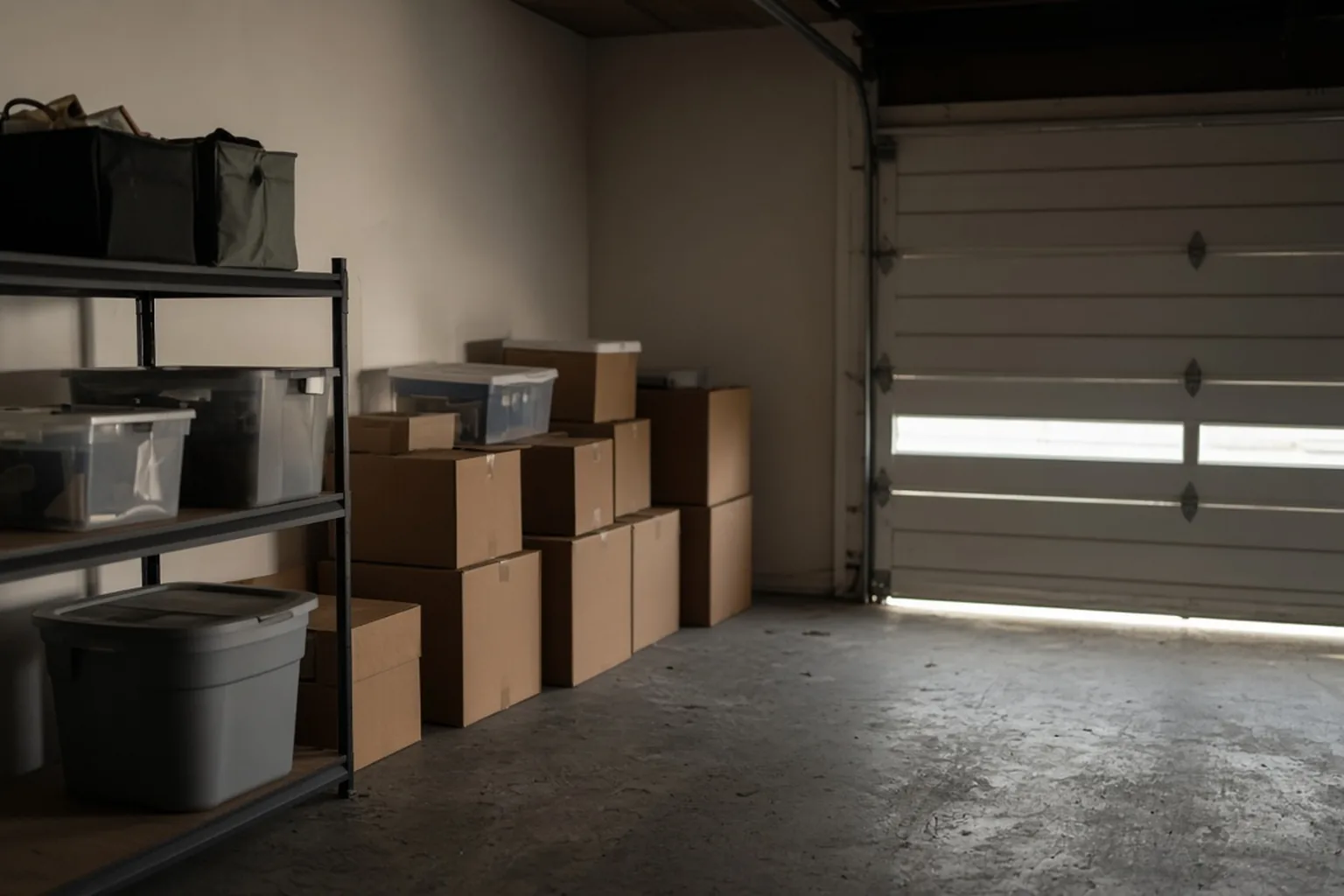 Cardboard boxes make easy nests and the gap under an overhead door makes an easy entrance. Plastic bins and a fresh door seal fix both.
What New Mexico's hantavirus numbers mean for Santa Fe.
Santa Fe's dry air turns old droppings to dust quickly, one more reason to wet everything before cleaning. For a Santa Fe household, the practical risk sits in sheds, garages, crawlspaces and storage rooms, especially ones that stay closed for months. Kitchens and living spaces matter too, but outbuildings are where deer mice concentrate. The answer is a routine, not panic: ventilate first, wear gloves, soak with bleach solution, wait, wipe and bag. For heavy contamination, hire a provider whose crew wears respirators and protective clothing. New Mexico takes hantavirus seriously because it sees more of it than most states. The New Mexico Department of Health reports 142 cases of hantavirus pulmonary syndrome from 1975 through 2025, with 55 deaths. Recent years have been steady: 3 cases in 2022, 7 in 2023, 6 in 2024 and 7 in 2025, with two confirmed so far in 2026. The virus comes from deer mice. People breathe it in when dried droppings, urine or nesting material get stirred into the air, usually while sweeping, vacuuming or moving stored items in a closed space.
Plague in northern New Mexico: fleas, pets and wild rodents.
Santa Fe households can take a few simple steps. Keep dogs and cats on flea control. Don't let pets hunt rodents or carry them home. Clear brush, woodpiles and junk near the house where rodents nest. Seal sheds, garages and homes so rodents don't move inside. Never pick up a sick or dead rodent bare-handed. If you notice several dead rodents in your yard or neighborhood without explanation, report it to the health department. A die-off like that can be an early warning. Plague is rare, but northern New Mexico is one of the places it still circulates. The CDC describes two U.S. focal regions: one centered on northern New Mexico, northern Arizona and southern Colorado, and another covering California, southern Oregon and far western Nevada. Nationally, the CDC averages about 7 human cases a year, with a range of 0 to 17. The disease lives in wild rodents and spreads mainly through their fleas. People are usually exposed when fleas move from rodents to pets or directly to people, or when someone handles an infected animal. Keeping rodents away from the house breaks that chain.
 Fall is when rodents head indoors. Leaf piles against the foundation hide burrows and gaps, so clear them and walk the wall before the first cold snap.
Spring cleanup: the riskiest rodent job of the year.
Mix 1.5 cups of bleach per gallon of water and spray droppings, nests and any dead mice until soaked. Put on rubber or plastic gloves; for heavy contamination, a properly fitted respirator adds protection. Open every door and window and leave the building alone for at least 30 minutes. Here's a safer routine. A shed, garage or storage room that sat closed through a winter of 18F nights may have hosted deer mice for months, and the first person to sweep it out breathes in what they left behind. It's spring cleanup of an outbuilding. In New Mexico, the classic hantavirus exposure isn't a mouse in the kitchen. If the job looks bigger than an afternoon, call a provider. When you're done, seal the openings that let mice in and store items in sealed plastic bins. Don't sweep, don't vacuum, and don't shake out nesting material. Wipe or mop hard surfaces with the same solution, and wash any soft items in hot water. Then pick everything up with paper towels, bag it, seal the bag and put it in the trash. Wait 5 minutes.
Sealing adobe and adobe-style homes against mice.
Then walk the base of the walls for cracks and gaps, especially at corners and where newer additions meet older walls. Inside, check where pipes and wires enter kitchens and bathrooms. Match materials to the house. Hardware cloth works for drains and vents. Steel wool or copper mesh packed into gaps, then covered with mortar or plaster patch, holds up and blends in better than foam. Because flat roofs and parapets are hard to inspect from the ground, ask a provider whether they'll go up on the roof and include it in their written list of entry points. Adobe and adobe-style homes are part of what makes Santa Fe distinctive, and they come with their own rodent entry points. Flat roofs drain through openings in the parapet. Exposed beam ends pass through walls. Stucco and plaster crack as a building settles, and utility lines often run through thick walls with gaps around them. The CDC says a mouse needs only about 1/4 inch, so each of those spots deserves a look. Start at the roof: check where drains pass through parapets, where beams meet the wall, and around vents and chimneys.
A year of rodent activity in Santa Fe.
Spring is the high-risk season for people. Warmer days bring cleanup projects, and opening sheds and storage rooms that sat closed all winter is the classic hantavirus exposure in New Mexico. Plan cleanup carefully and wet everything first. Summer, with highs near 87F and only about 14 inches of precipitation a year, sends rodents looking for water. Leaky hoses, drip irrigation, pet bowls and AC condensate drains become gathering spots. Keep pets on flea control through the warm months. Each season has its job: seal in late summer and fall, trap through winter, clean carefully in spring, and cut off water in summer. Rodent activity in Santa Fe follows the high-desert seasons. In fall, as nights drop toward winter lows near 18F, deer mice and house mice move into garages, sheds, storage rooms and walls. September through November is the time to seal. Winter is quiet outside but busy inside. Mice that moved in keep breeding, and closed buildings collect droppings and nests. Norway rats, where present, stick close to heated structures and food.
What affects the price
- Number of outbuildings and storage rooms to clean and seal.
- Roof access, since flat roofs and parapets add inspection time.
- Degree of contamination, which drives protective gear and labor.
- How many entry points need sealing in adobe, plaster or stucco walls.
- Norway rats active outdoors as well as mice inside.
- Follow-up visits after cleanup and sealing.
📊
What's your biggest concern about rodents?
When to call for help
Call a professional before tackling a heavily contaminated shed, garage or storage room, especially one that's been closed all winter. For Santa Fe homes, that's the classic hantavirus exposure, and a provider with protective equipment can do the job without putting you at risk. A pro also makes sense when mice keep returning after trapping, when you can't find entry points in an adobe or flat-roof home, or when you see signs of rats. If you find several dead rodents in your yard with no explanation, contact the health department as well. Ask any provider how they handle cleanup and disposal.
What you can do yourself
DIY is reasonable for a couple of house mice in the kitchen or a small amount of droppings in a room you use often. Set snap traps along the walls, seal small gaps with steel wool and caulk, and follow the CDC cleanup method: air out the room for 30 minutes, wear gloves, soak droppings with 1.5 cups of bleach per gallon of water, wait 5 minutes, then wipe up and bag. Hire help for large cleanups in closed spaces, for flat-roof and parapet inspections, and for repeat problems where you can't find the entry. The health stakes here are higher than in most places, with hantavirus and plague both on the map, so it's worth paying for gear and experience on the riskiest jobs. Many Santa Fe households handle their own yard cleanup and pet flea control and hand off the dirty work.
Rodents in Santa Fe
With a median home value around $530,000, sealing and safe cleanup are small costs next to the damage and health risks rodents bring. Adobe and flat-roof designs bring their own gaps at parapets, roof drains and beam ends. The state health department has tallied 142 hantavirus cases in New Mexico since 1975, and the CDC lists northern New Mexico as a plague focal region. The bigger story is health. For rodents, cold winters push deer mice and house mice indoors in fall, and dry conditions draw them toward any water around the house. The climate is semi-arid: summer highs near 87F, winter lows around 18F, humidity near 45% and only about 14 inches of precipitation a year. About 89,000 people live in this urban city at 7,199 feet. Santa Fe is New Mexico's state capital, founded in 1610 and known for its arts scene and adobe architecture.
Local research
Rodents in Santa Fe, NM: what the public record shows
Before you compare quotes, it helps to know which rodents actually live in New Mexico, when they are busiest around Santa Fe, and what the state figures look like. Everything below links to the agency or university page it came from.
Hantavirus pulmonary syndrome cases and deaths, 1975-2025
2025: 7 cases; 2024: 6; 2023: 7; 2022: 3; two confirmed in 2026 so far.
New Mexico Department of HealthPlague region
Rodent fleas from wild rodents; keep rodents out of structures and pets flea-treated.
CDCRodent species recorded in New Mexico
- House mouse (Mus musculus) — Enters at 1/4 inch; 5-10 litters per year; eats about 200 small meals a night.
- Norway rat (Rattus norvegicus) — Burrowing rat of basements, sewers and ground floors; tail shorter than head plus body.
- Deer mouse (Peromyscus maniculatus) — Primary U.S. hantavirus carrier; lives throughout Washington and the interior West.
When rodents are busiest around Santa Fe
Spring cleanup of outbuildings is the classic exposure event.
For context, nationally
- 1/4 inch (the width of a pencil) — Smallest gap a mouse can enter. CDC
- 890; 35% fatal; 94% west of the Mississippi — Hantavirus cases reported since 1993 (through 2023). CDC
Sources: New Mexico Department of Health; CDC; Pest Notes: House Mouse; Pest Notes: Rats; Hantavirus. Figures are quoted as the source prints them. How we check our sources
Simple ways to keep rodents away
- Keep dogs and cats on flea control year-round, as advised in plague areas.
- Clear brush, woodpiles and junk away from the house to cut rodent harborage.
- Seal gaps around roof drains, parapets, beam ends and utility lines with hardware cloth or mortar.
- Store birdseed, pet food and grass seed in metal cans with lids.
- Fix outdoor leaks and drips, which draw rodents in a dry climate.
- Keep stored items in sealed plastic bins rather than cardboard.
- Air out closed sheds and garages for 30 minutes before going in to clean.
- Discourage pets from hunting rodents, and pick up carcasses with gloves.
 Shared basements and utility rooms are where rodent problems in rentals usually start. Landlords should walk them each fall and after every tenant turnover.
Did you know?
New Mexico had already confirmed two hantavirus cases early in 2026, according to the state health department.
New Mexico's yearly hantavirus count ranged from 3 in 2022 to 7 in both 2023 and 2025.
Tularemia appears on the CDC's list of diseases rodents can pass directly to people.
Questions people ask
How common is hantavirus in New Mexico?
For Santa Fe homes, deer mice in sheds, garages and storage rooms are the main source, so wet cleanup matters. The New Mexico Department of Health counts 142 hantavirus pulmonary syndrome cases and 55 deaths from 1975 through 2025, with 7 cases in 2025 and 6 in 2024. More common than in most states.
Is plague a concern in Santa Fe?
For Santa Fe homes, keep rodents out of buildings, keep pets flea-treated, and never handle dead rodents bare-handed. Fleas from wild rodents spread it. plague focal regions, and the country averages about 7 human cases a year. The CDC names northern New Mexico as one of two U.S. It's worth taking seriously.
When is hantavirus risk highest?
Never sweep or vacuum. Ventilate the space for 30 minutes first, then soak droppings with a bleach solution before removing them. New Mexico's guidance points to cleaning out outbuildings in spring as the classic exposure event, when people sweep up droppings left over the winter. During spring cleanup.
How do mice get into adobe homes?
Patch with hardware cloth, sheet metal or mortar, and have the roof checked, since flat roofs can hide entry points. The CDC says a mouse needs only about 1/4 inch. Look around roof drains, parapets, exposed beam ends, utility lines, door frames and vents. Through small gaps where materials meet.
Do house mice carry hantavirus?
Since the two are hard to tell apart at a glance, treat all droppings in Santa Fe sheds and garages as if they came from deer mice, and clean them wet. House mice are mostly a contamination problem in kitchens and pantries. The deer mouse is the main carrier in New Mexico.
Why do rodents come inside in winter here?
Sealing gaps before October keeps more of them out. Once inside garages, walls and storage rooms, they stay and breed until spring, which sets up the spring cleanup risk. At 7,199 feet, Santa Fe's winter lows average around 18F, and mice look for warm shelter in fall. Cold nights.
What should I do with a dead rodent?
If you find several dead rodents with no clear cause, tell the health department. Put on gloves, spray it with disinfectant or bleach solution, let it soak 5 minutes, then pick it up with a plastic bag or paper towels and seal it inside another bag before throwing it out. Don't touch it bare-handed.
Nearby cities
Related guides
Sources (6)
The facts in this article come from the public sources listed above. Every home is different, so ask the company you talk to about pricing and what’s included. Published by Rodent Exterminator · Updated October 11, 2026 · How we write these guides