The short version
Rodent control in Waterbury, Connecticut means sealing openings just over 1/4 inch before mice move in each fall, trapping close to nests, and covering a wide area for rats, which roam 100 to 175 feet according to Connecticut DEEP. Hire a provider holding a DEEP pesticide certificate, and clean droppings wet even though the state has reported only one hantavirus case.
- Waterbury mice invade homes and sheds mainly in fall, as lows head toward 20F.
- House mice stay within 10 to 35 feet of their nest, per Connecticut DEEP.
- Rats range 100 to 175 feet, so treatment must cover the whole lot.
- Every professional pesticide user in Connecticut needs a DEEP certificate.
- Connecticut has reported just one hantavirus case since 1995, in 2014.
This guide is for Waterbury homeowners hearing scratching in walls or ceilings, renters in multi-family buildings dealing with mice, and landlords who want a straightforward plan. It also suits anyone with a garage, shed or basement that collects droppings over the winter, and people comparing quotes who want to know what to ask.
What to look for
Deer mice and white-footed mice favor sheds, garages and outbuildings. The climate drives the timing. Summers near 84F and about 51 inches of rain a year support healthy outdoor populations, and UConn notes mice often invade homes or sheds in fall. Winter lows near 20F keep them inside once they arrive. According to DEEP, rodents can breed 4 to 8 times a year with litters of 4 to 12, and reproduction speeds up when conditions are good, such as in a warm wall next to a pantry. Connecticut DEEP's rodent program names the Norway rat, the roof rat, the house mouse, the deer mouse and the white-footed mouse as the commensal rodents controlled in the state. Of these, house mice and Norway rats are the two most likely to move into the house itself. House mice nest in wall voids, ceiling spaces, cabinets and even inside appliances, close to food. DEEP notes they do not need daily water, getting most of their moisture from what they eat, which means a dry house is no defense. Norway rats burrow outside near foundations, trash and overgrown areas and enter basements at ground level.
- 1Scratching or scurrying in walls and ceilings in the evening, starting in fall.
- 2Small, dark droppings in cabinets, drawers or behind the stove.
- 3Nesting material such as shredded paper or insulation tucked behind appliances.
- 4Burrow holes by the foundation with thick, blunt droppings nearby, the calling card of a Norway rat.
- 5Gnawed food packaging, especially cereal, grains and pet food.
- 6Droppings or nests in sheds, garages or stored boxes, often from deer or white-footed mice.
- 7Grease marks along basement walls where rats travel.
Why it’s worth acting soon
- With 4 to 8 litters a year, a few mice in October can be many by spring.
- Gnawed wiring inside walls creates fire hazards that are hard to see.
- Droppings and urine contaminate pantry goods and countertops.
- Rats burrowing near foundations can undermine steps and walkways.
- In multi-family buildings, mice spread from unit to unit.
Treatment options and typical costs
Foundation and utility sealing
Quoted after inspection
The provider seals openings down to about 1/4 inch around foundations, sill plates, pipes, vents and doors using steel wool, hardware cloth, metal or mortar. UConn notes a mouse fits through an opening slightly larger than 1/4 inch. Ask for a written list of every gap sealed and what was used.
- Time
- Depends on how many gaps turn up
- Best for
- Homes with fall mice
Close-range mouse trapping
Quoted after inspection
Because DEEP puts a house mouse's range at only 10 to 35 feet, traps go close to where droppings are found: along walls, behind appliances and inside cabinets. Follow-up visits remove catches and adjust placement. Ask how many checks are included.
- Time
- Until checks come back empty
- Best for
- Mice in kitchens and walls
Property-wide rat program
Quoted after inspection
With rats ranging 100 to 175 feet from their nests, and farther when food is short, stations and traps need to cover the yard, foundation and nearby trash areas. Burrows are monitored and closed once inactive. Ask what products are used and how often stations are checked.
- Time
- As long as burrows stay active
- Best for
- Norway rats outdoors
Prices are typical published ranges. Ask what’s included before you compare quotes.
 Rats can travel plumbing, so a sink or floor drain with a missing strainer is worth fixing; a tight strainer or grate keeps them out.
Checking a provider's Connecticut DEEP certificate.
Connecticut requires all professional pesticide users to hold a certificate from the Department of Energy and Environmental Protection, and DEEP offers a specific rodent control certification. When you hire someone in Waterbury, asking for that certificate is one of the simplest ways to screen providers. DEEP's rodent program covers the Norway rat, roof rat, house mouse, deer mouse and white-footed mouse. A certified provider should know how each behaves and how to place traps or bait accordingly. DEEP also publishes a model integrated pest management plan for state agencies. While it is written for public buildings, its approach is a good benchmark for homes: inspect first, remove food and shelter, seal entry points, then trap or bait as needed, and monitor results. Questions to ask: What is your DEEP certificate number? What products do you plan to use, and where? How will you keep them away from children and pets? How many follow-up visits are included? What will you seal, and with what materials? A provider following an IPM approach should answer these easily.
Mice don't need a water bowl.
One fact in Connecticut DEEP's rodent plan surprises many people: house mice do not need daily water. They get most of their moisture from the food they eat. That changes how you think about prevention in a Waterbury home. Fixing leaks and drying out basements helps with rats, which do need water, but it will not starve out mice. For mice, the focus has to be food and access. Start in the kitchen. Move cereal, grains, flour, pet food and birdseed into glass, metal or thick plastic containers. Wipe crumbs from counters and floors. Do not leave pet food out overnight. Then look at where mice nest. DEEP notes they use wall voids, ceiling spaces, cabinets and appliances, close to food. Check behind and under the stove, refrigerator and dishwasher. Finally, close the doors. Seal gaps around pipes, vents and foundations. With food locked up and entry points sealed, mice in a Waterbury home have far fewer reasons to stay.
 A good inspection starts outside at ground level: door thresholds, the joint between siding and foundation, and anywhere a pipe or cable enters.
How far do rodents roam in a Waterbury neighborhood?
Connecticut DEEP puts numbers on how far rodents travel, and those numbers shape every good plan. House mice usually stay within 10 to 35 feet of their nest. In practice, a mouse living behind your kitchen cabinets may never visit the basement. That is why traps need to go close to droppings, along walls and near nesting spots. Rats range much farther, 100 to 175 feet from their nesting area, and even farther if food is limited. In Waterbury, that can mean a rat nesting under a neighbor's shed visits your trash cans, garden and foundation. Treating only your basement will not solve it. For rats, a property-wide plan works best: stations or traps along foundations and fences, attention to trash areas and burrow monitoring. In multi-family buildings or tight neighborhoods, coordinating with neighbors or building owners helps. When comparing providers, ask how they decide where to place traps and stations. The answer shows whether they are thinking about how far each rodent actually travels.
Connecticut's single hantavirus case: what it means.
Connecticut has reported only one hantavirus case since the disease became nationally notifiable in 1995, and that case was in 2014, according to the state health department. The risk in Waterbury is low. That does not mean zero. Deer mice and white-footed mice, the species linked to hantavirus in the East, are present in Connecticut. They favor sheds, garages, outbuildings and cabins, especially in fall and winter. Nationally, the CDC has counted 890 cases from 1993 through 2023, with about 94 percent west of the Mississippi. In 2025, CDC's provisional count listed 17 cases, none in Connecticut. The practical takeaway is to clean droppings safely, especially in sheds and garages. Ventilate for 30 minutes. Wear gloves. Soak droppings and nests with a bleach solution of 1.5 cups per gallon of water for 5 minutes. Wipe up with paper towels and bag everything. Never sweep or vacuum dry droppings. Those steps also reduce exposure to other germs rodents carry.
Sealing a Waterbury home from the foundation up.
Waterbury was founded in 1686 and grew into the Brass City through its industrial history, but sealing depends on your own house rather than the city's age. Any foundation can develop settling cracks, worn mortar, gaps at the sill plate and loose utility penetrations. UConn notes a mouse can squeeze through an opening slightly larger than 1/4 inch and can jump about a foot straight up. That means checking gaps above ground level too, such as around dryer vents, window wells and siding. Start at the foundation and work around the house. Look where wood meets masonry, where pipes and wires enter, and around basement windows and doors. Use steel wool with caulk for small gaps and hardware cloth, sheet metal or mortar for larger ones. Check unheated spaces as well. UConn says mice can survive temperatures as low as 14F, so garages and sheds still shelter them through a Waterbury winter. If the gaps are hard to reach, a provider can help. Ask for a list of every opening sealed.
What affects the price
- How many openings the foundation and sill plate have.
- Whether rats are present outside, which expands the treatment area.
- Basement and crawlspace access.
- The number of units in a multi-family building that need inspection.
- How many follow-up visits are needed for trap checks.
- Cleanup of contaminated insulation or stored items.
📊
What's your biggest concern about rodents?
When to call for help
Call a provider if mice keep showing up after a couple of weeks of trapping, which usually means there are still gaps. Call if you see burrows or larger droppings outside, since rats range well beyond your house and need a property-wide plan. Call if you live in a multi-family building in Waterbury and activity is in more than one unit. When you call, ask for the provider's DEEP certificate. Connecticut requires all professional pesticide users to hold one.
What you can do yourself
DIY works for many Waterbury homes with a few mice. Snap traps set close to droppings, within the 10 to 35 feet DEEP says mice usually travel, catch them quickly. Steel wool and caulk around pipes and under sinks close small gaps. Keep food sealed, since mice get moisture from food and do not need a water source. Where DIY falls short is finding every gap in a foundation and handling rats, which range 100 to 175 feet and need a wider plan. A provider with a DEEP certificate can apply products you cannot buy and knows how to place them safely. Many people trap mice themselves and bring in help for rats and hard-to-reach sealing.
Rodents in Waterbury
Waterbury, the Brass City, sits at about 269 feet in Connecticut's humid continental climate, with summer highs near 84F, winter lows around 20F, average humidity of about 67 percent and roughly 51 inches of rain a year. Founded in 1686 and shaped by its industrial history, it is an urban city of about 115,000 people. In any building with shared walls, mice travel between units. With a median home value around $195,000, sealing gaps is one of the most practical investments you can make. Mice often invade homes and sheds in fall here and stay through winter, and UConn notes they can survive temperatures as low as 14F, so unheated garages and sheds still shelter them.
Local research
Rodents in Waterbury, CT: what the public record shows
Before you compare quotes, it helps to know which rodents actually live in Connecticut, when they are busiest around Waterbury, and what the state figures look like. Everything below links to the agency or university page it came from.
Rodent species recorded in Connecticut
- House mouse (Mus musculus) — Enters at 1/4 inch; 5-10 litters per year; eats about 200 small meals a night.
- Norway rat (Rattus norvegicus) — Burrowing rat of basements, sewers and ground floors; tail shorter than head plus body.
- Roof rat (Rattus rattus) — Climber of attics and trees in warm and coastal regions; tail longer than head plus body.
- Deer mouse (Peromyscus maniculatus) — Primary U.S. hantavirus carrier; lives throughout Washington and the interior West.
When rodents are busiest around Waterbury
Mice often invade homes or sheds in the fall.
DEEP's rodent certificate and model IPM plan name the Norway rat, roof rat, house mouse, deer mouse and white-footed mouse as the commensal rodents controlled in Connecticut.
Rules that apply in Connecticut
For context, nationally
- 1/4 inch (the width of a pencil) — Smallest gap a mouse can enter. CDC
- 890; 35% fatal; 94% west of the Mississippi — Hantavirus cases reported since 1993 (through 2023). CDC
Sources: Connecticut Department of Public Health; Connecticut Department of Energy and Environmental Protection, Pesticide Management Program; CDC; Pest Notes: House Mouse; Pest Notes: Rats; Hantavirus. Figures are quoted as the source prints them. How we check our sources
Simple ways to keep rodents away
- Seal gaps just over 1/4 inch around pipes, wires and vents before fall.
- Use steel wool, hardware cloth or mortar instead of foam.
- Store food in glass, metal or thick plastic containers, since mice get water from food.
- Install door sweeps on basement and garage doors.
- Rack firewood and spare lumber a few feet out from the siding instead of against it.
- Clear clutter in basements and garages to reduce nesting spots.
- Keep trash in bins with tight lids.
- Check sheds and garages in fall, when mice often move in.
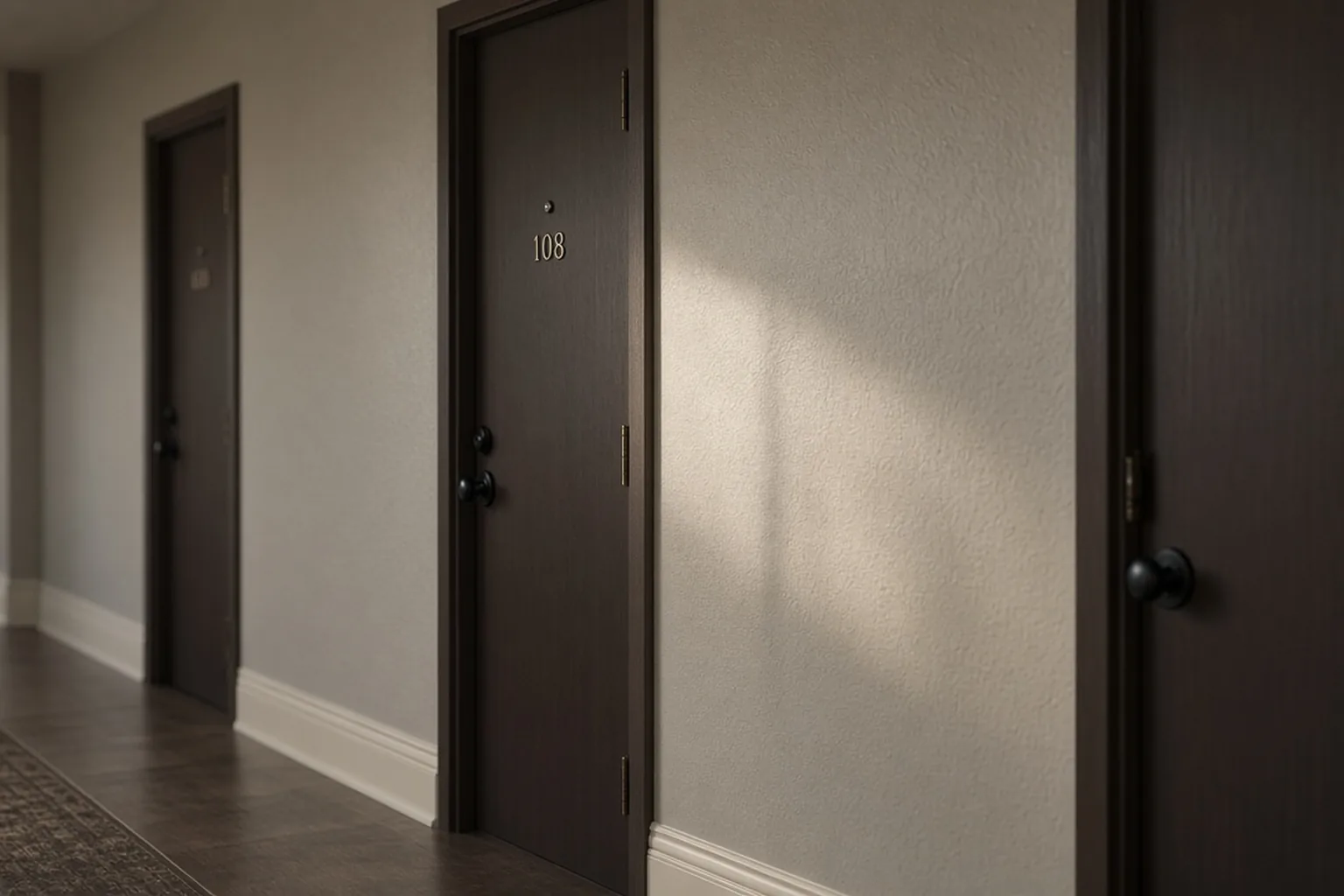 In a multi-unit building, mice move between apartments through shared walls and pipe chases, so treating one unit rarely solves it. Ask for a building-wide plan.
Did you know?
Mice can survive temperatures as low as 14F and jump about one foot straight up.
None of the 17 provisional US hantavirus pulmonary syndrome cases reported for 2025 came from Connecticut.
UC IPM counts 4 to 6 litters a year for a Norway rat female, adding up to 20 or more weaned pups.
Questions people ask
When do mice come into homes in Waterbury?
Mostly in fall. UConn notes mice often invade homes and sheds as the weather cools, and in Waterbury, where winter lows average about 20F, they stay inside through winter. August and early September are the months to close up the house.
How far do mice and rats travel from their nest?
According to Connecticut DEEP, house mice usually stay within 10 to 35 feet of their nest, while rats range 100 to 175 feet, and farther if food is scarce. That is why mouse traps go close to droppings and rat programs cover the whole property.
Does a pest control company in Connecticut need a license?
Yes. Connecticut DEEP requires all professional pesticide users to hold a DEEP certificate, and there is a specific rodent control certification. Ask any Waterbury provider for their certificate number before work starts, and ask which products they plan to use, since only certified users may apply pesticides for hire.
Is hantavirus a concern in Connecticut?
The risk is low. Connecticut has reported only one hantavirus case since 1995, in 2014, according to the state health department. Deer mice and white-footed mice are present, though, so clean droppings by soaking them with a bleach solution instead of sweeping.
Why do I still have mice if my house is dry?
Mice do not need daily water. Connecticut DEEP notes they get most of their moisture from food. Fixing leaks helps with rats, but for mice, sealed food storage and closing entry points matter more. In Waterbury homes, check pantries, pet food and birdseed.
What does rodent control cost in Waterbury?
Most Waterbury providers quote after an inspection. Cost depends on how many gaps the foundation has, whether rats are present and roaming the yard, how many units in a multi-family building are involved and how many follow-up visits are needed. Ask for sealing, trapping and any rat program listed separately.
How small a hole can a mouse get through?
UConn says a mouse can squeeze through an opening slightly larger than 1/4 inch, the same benchmark the CDC uses. Mice can also jump about a foot straight up, so in a Waterbury house check dryer vents, window wells and siding gaps above ground level as well as the foundation.
Nearby cities
Related guides
Sources (6)
The facts in this article come from the public sources listed above. Every home is different, so ask the company you talk to about pricing and what’s included. Published by Rodent Exterminator · Updated October 11, 2026 · How we write these guides