The short version
- Sealing every gap over a quarter inch is the only permanent fix.
- Remove the rodents inside before you seal them out.
- Re-check the exterior each fall before the cold season.
Anyone who has tried traps and still has rodents, and homeowners who want a permanent fix rather than an open-ended cycle of baiting and re-baiting. Property managers budgeting for multi-unit rodent control also benefit from sealing the whole building at once.
What to look for
Mice squeeze through dime-sized holes and rats through quarter-sized openings, and every house has gaps around pipes, vents, and foundation cracks. Traps catch individuals but the entry points stay open, so more rodents find them and the cycle never ends.
 Crawl spaces are where rats and mice get comfortable. Vent screens, the sill plate and any gap around pipes are worth a careful look.
What the numbers say before you hire rodent control.
In Exclusion Rodents, what actually matters is a walk-through: where the droppings are, how the rodents are getting in, and how large the colony is. National surveys set rough expectations but cannot diagnose one house. In Exclusion Rodents, ask any provider to show you the entry points and the plan before you compare numbers. In Exclusion Rodents, those three findings — species, entry points, and scale — are what a quote should be built on, not a regional average.
What rodent control costs.
A simple kitchen mouse job is at the low end; a multi-floor rat colony with a sanitation cleanup is at the high end. Rodent control is priced by the size of the job: how many entry points need sealing, how much baiting and trapping the colony needs, and whether a cleanup is involved. Ask for the sealing and the trapping as separate line items, and what the re-service covers. Most providers quote the sealing and the trapping separately, so ask for both line items.
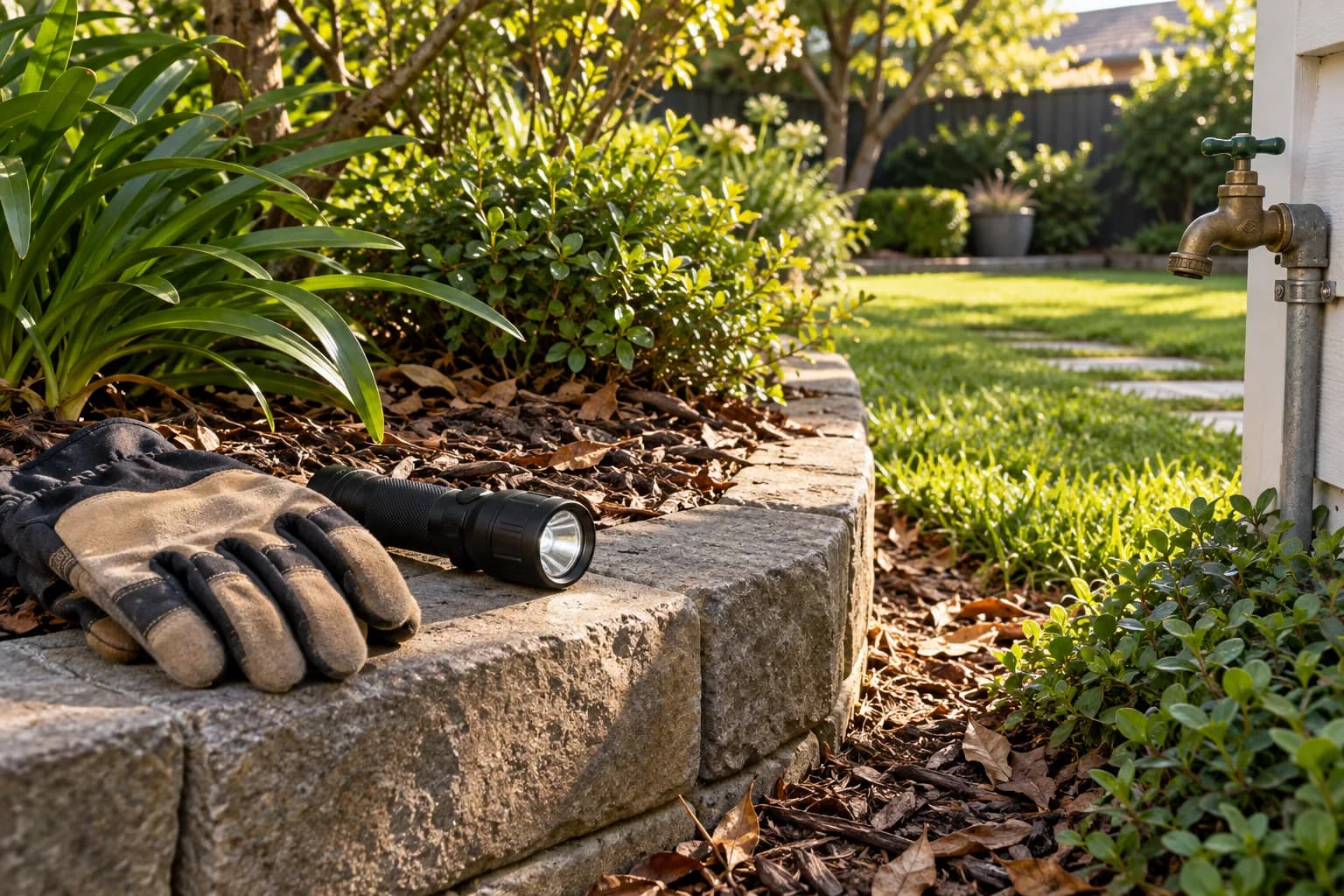 Dense shrubs against the house and a dripping hose bib give rodents cover and water. Trimming back and fixing drips makes the yard less inviting.
Mice vs. rats: why it changes the plan.
Mice are curious and enter through small openings, so many small traps placed along walls work well. The species changes the whole approach, because mice and rats behave differently. Knowing which rodent you are dealing with is what keeps the first treatment from being wasted, so a good inspection starts with identifying the droppings and the entry size. Rats are cautious — they avoid new objects and need larger openings, so the plan usually leans more on sealing and careful bait placement.
How to get ready for a rodent treatment.
Take note of where you have seen droppings or heard scratching, and share that at the start — it focuses the inspection on the active routes instead of guessing. Before the visit, clear the areas under sinks and behind appliances so the technician can see the entry points, and remove food sources so the bait and traps are what the rodents go to first. After treatment, keep the exterior sealed and re-check the entry points each season.
Why sealing beats trapping over time.
Mice and rats are constantly probing for gaps, and a home with a sealed perimeter simply stops being a candidate. A trap removes one rodent; sealing removes the route the next dozen would use. The math favors sealing even though it costs more up front, because the alternative is an open-ended cycle of bait and re-baiting that never ends while the gaps stay open.
What a rodent-proofing job actually covers.
The sealing work is priced per opening and per material, so ask for the opening-by-opening list and what materials will be used, and confirm the warranty covers a re-seal if new gaps appear. The goal is a building a rodent cannot physically enter, which is a different standard from simply setting traps. Inside, the technician checks the same penetrations around pipes, wiring, and the sill plate. A thorough rodent-proofing walks the full exterior and seals every opening larger than a quarter inch, with steel wool and copper mesh in voids, metal flashing at the foundation, door sweeps on exterior doors, and screening on vents.
What a good rodent inspection covers.
The technician checks the foundation, the sill plate, every pipe and vent penetration, the roofline, and the garage — then moves inside to the kitchen, attic, and crawlspace, looking for droppings, rub marks, and gnawed openings. A good inspection starts outside and works inward. The result should be a written list of entry points and a plan for sealing and trapping, not just a vague promise to set some traps.
Sealing is the part that lasts.
A mouse fits through a gap the width of a pencil, and a rat through a quarter-sized hole, so the inspection should map every opening — around pipes, under doors, and where utilities enter. Traps and bait remove the rodents you have; sealing removes the ones that would come in next. Check the exterior openings each season, because they reopen as the building settles.
What affects the price
- Home size and number of stories.
- Number of entry points found.
- Roof and soffit accessibility.
- Existing damage that needs repair.
- Whether attic insulation needs replacement.
When to call for help
Rodent-proofing without first removing the rodents can seal them inside. Call a professional after trapping has removed the active population, so the sealing happens after the rodents are out. A professional inspects the full perimeter and quotes the sealing and any repair separately.
Where you live matters
Both are most active in fall and winter, when dropping temperatures and the first cold nights push them indoors to nest, which is why the sealing work you do in late summer pays off all winter. In this area, the local climate means rodents activity tends to follow the warmer months, so scheduling the visit before the busy stretch usually means a faster response and a cleaner quote. In Exclusion Rodents, comparing written quotes side by side is the easiest way to see what is actually included, because the scope, prep steps, and follow-up terms vary a lot between providers. House mice and Norway rats are the two rodents that most often move into U.S. homes, with roof rats common across warmer, coastal regions. House mice are small, curious, and breed quickly; Norway rats are larger, cautious, and burrow along foundations.
 Before you call, sketch where you have seen droppings or heard noise and measure any gaps you found. It makes the first visit faster and the quotes comparable.
Questions people ask
How long does rodent-proofing last?
Annual inspection ($75-$200) catches new gaps early. Most rodent-proofing jobs include a 1-year warranty. Properly sealed points last years. Houses settle and new gaps form.
Is one mouse in the house a sign of an infestation?
homeowners said their rodent experience involved a single animal, while 14% described a multiple-rodent infestation. Because mice breed quickly and travel inside walls, check for droppings, gnawed packaging and grease marks along baseboards before concluding it was a one-off. Not necessarily, but it deserves a look. In a September 2022 Harris Poll for the National Pest Management Association (NPMA), 37% of more than 1,300 U.S.
Are families with kids more likely to have rodents?
homeowners with children under 18 said they had ever encountered or had a problem with rodents, compared with 49% of homeowners overall. The poll covered more than 1,300 homeowners and doesn't explain why. Busy kitchens and snacks left out are a plausible factor, so tighten up food storage first. The survey evidence suggests they report them more often. In a September 2022 Harris Poll for the National Pest Management Association (NPMA), 68% of U.S.
How do I know the sealing worked?
If none appear and the entry points stay sealed, the job held. An annual exterior check catches new gaps before the next cold season. Watch for new droppings and gnaw marks over the next two to three weeks.
Does rodent-proofing also remove the rodents already inside?
Usually not by itself — proofing seals the entries, but the rodents already inside still need trapping or baiting first. A good plan pairs removal with sealing so you are not closing anyone in.
What materials do professionals use to seal gaps?
Steel wool and copper mesh for small voids, metal flashing at the foundation, and door sweeps and vent screens for larger openings. These hold up against gnawing where consumer spray foam fails.
Sources (8)
The facts in this article come from the public sources listed above. Every home is different, so ask the company you talk to about pricing and what’s included. Published by Rodent Exterminator · Updated September 11, 2026 · How we write these guides