The short version
Rodent control in Arvada, CO is mostly about deer mice, which can carry hantavirus, plus house mice and Norway rats. Seal openings, trap indoors with snap traps, and clean droppings the CDC way: air the space for 30 minutes, soak with a 1:9 bleach mix for five minutes, and never sweep or vacuum.
- Deer mice are the hantavirus carrier, and Colorado reported 2 cases in 2025.
- Spring cleanup of closed sheds and garages is the riskiest moment.
- Wet droppings with bleach first; dry sweeping puts virus particles in the air.
- Colorado state data lists no roof rats, only Norway rats and two mice.
Arvada homeowners opening up a garage or shed after winter, renters finding droppings indoors, and anyone who wants to handle mouse cleanup without risking hantavirus exposure.
What to look for
Colorado state data lists three rodents: deer mice, house mice and Norway rats. Deer mice matter most for health, because the CDC counts 890 U.S. hantavirus cases since 1993, with 94 percent west of the Mississippi. In Arvada's semi-arid climate, with about 16 inches of rain a year, rodents seek any sheltered, dry corner with stored food, and closed outbuildings fit that perfectly.
- 1Small droppings scattered across shelves in a shed or garage after winter.
- 2Nests of shredded paper, fabric or insulation inside stored boxes.
- 3Chewed holes in bags of birdseed, grass seed or pet food.
- 4Scratching in walls or the attic once fall nights turn cold.
- 5A musty odor in a space that has been closed for months.
Why it’s worth acting soon
- Hantavirus has been fatal in about 35 percent of reported U.S. cases.
- Droppings pile up in closed spaces, raising exposure when someone finally cleans.
- Mice breed through winter once they settle in a warm wall.
- Nesting in insulation and stored items leads to costly cleanup.
890U.S. hantavirus cases reported since 1993CDC 52%Western U.S. homeowners who have ever encountered rodents, NPMA/Harris Poll, September 2022 (lifetime figure)NPMA and The Harris Poll 2Colorado hantavirus cases, 2025 (provisional)CDC NNDSS Treatment options and typical costs
Sealing and exclusion
Quoted after inspection
Closing gaps a quarter inch and larger around pipes, vents, garage doors and sill plates with steel wool, hardware cloth and sealant, so deer mice cannot move in.
- Time
- Depends on the openings found
- Best for
- Homes, garages and sheds
Snap trapping
Quoted after inspection
Snap traps along walls in garages, basements and sheds, checked often. Dead mice and soiled traps are handled with gloves and bleach, per CDC guidance.
- Time
- Until activity stops
- Best for
- Mice already inside
Contaminated area cleanup
Quoted after inspection
Ventilating, wetting and removing droppings and nests from heavily used spaces. Some households hand this off rather than risk breathing dust from a badly soiled shed.
- Time
- Depends on the space
- Best for
- Heavy droppings or nests
Prices are typical published ranges. Ask what’s included before you compare quotes.
 Clutter gives mice cover. Keeping stored fabric in lidded bins and off the floor takes away the nesting spots they like best.
Why is spring cleanup the riskiest rodent job in Arvada?
A broom or shop vacuum is the one tool to leave out. Gloves go on before you touch anything. Around Arvada, the safe routine follows CDC guidance: open the space and let it air for 30 minutes, wet droppings with a bleach mix of 1.5 cups per gallon, wait five minutes, then wipe and bag. Sheds, garages and cabins closed all winter collect deer mouse droppings and nests, and the first person in stirs up the dust. In Colorado's arid zone, hantavirus exposure peaks during spring cleanup.
How common is hantavirus in Colorado?
That one habit removes most of the risk. Treat any mouse droppings in a shed or garage as if they came from deer mice, and avoid stirring them up. For an Arvada household, those numbers argue for care, not alarm. In 2025, provisional data listed 17 cases nationwide, including 2 in Colorado. cases since 1993, about 35 percent of them fatal, and 94 percent were west of the Mississippi. The CDC has tallied 890 U.S. Hantavirus is rare but serious.
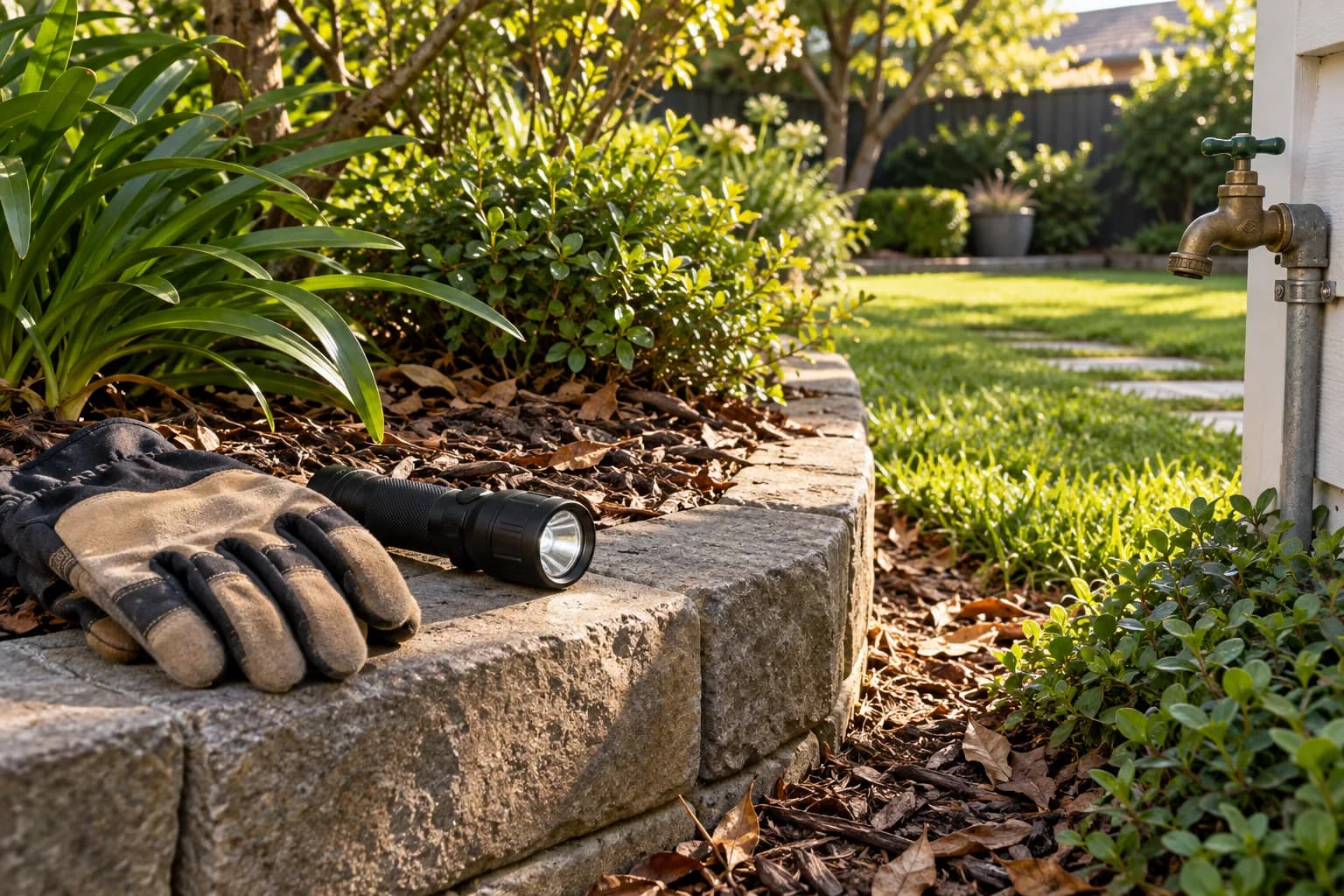 Dense shrubs against the house and a dripping hose bib give rodents cover and water. Trimming back and fixing drips makes the yard less inviting.
How do altitude and dry air shape rodent season here?
At 5,344 feet, nights get cold early in fall and stay cold into spring. With lows near 19F, mice that find a gap around a garage door or utility line settle into walls and stay. The semi-arid climate adds another pull: 16 inches of rain a year leaves outdoor food and water scarce. That makes sealing more valuable than trapping alone. Close gaps a quarter inch and larger, especially around garage doors, before fall, and keep stored food in sealed bins.
Sealing is the part that lasts in Arvada.
Around Arvada, CO, 16 inches of rain a year and 50% humidity keep exterior wood soft, so gaps open again seasonally and need re-checking. A mouse fits through a gap the width of a pencil, and a rat through a quarter-sized hole, so the inspection should map every opening — around pipes, under doors, and where utilities enter. Traps and bait remove the rodents you have; sealing removes the ones that would come in next.
What rodent control costs in Arvada.
Ask for the sealing and the trapping as separate line items, and what the re-service covers. Around Arvada, CO, the timing matters too — most activity starts in fall as 19°F winter lows push rodents indoors, which is when providers are busiest. A simple kitchen mouse job is at the low end; a multi-floor rat colony with a sanitation cleanup is at the high end. Rodent control is priced by the size of the job: how many entry points need sealing, how much baiting and trapping the colony needs, and whether a cleanup is involved.
What affects the price
- Number and type of outbuildings that need sealing.
- How much droppings and nesting material must be removed.
- Whether insulation in the attic or garage is contaminated.
- Trap checks included after the first visit.
- Access to crawlspaces and roofline vents.
📊
What's your biggest concern about rodents?
When to call for help
Call a professional before cleaning a building with heavy droppings or nests, especially one closed all winter. Around Arvada, deer mice make that cleanup a health task, not just a chore. A provider also helps when mice keep returning after you have sealed the obvious gaps, since the real entry is often higher up or hidden.
What you can do yourself
If you do it, follow CDC steps to the letter, wear gloves, and never sweep. If the space is heavily soiled, paying someone experienced is reasonable. You can trap a few house mice and seal visible gaps yourself. Where DIY gets risky is the cleanup: a garage or shed with lots of deer mouse droppings is exactly how hantavirus exposure happens.
Rodents in Arvada
With a median home value of $555,000, sealing work protects a significant investment. Humidity averages 50 percent and the semi-arid climate brings little rain, which keeps food and water around homes attractive. It sits at 5,344 feet, where winter lows near 19F and summer highs near 89F give rodents strong reasons to shelter indoors at both ends of the year. Arvada is a suburban Denver city of about 123,000 people, founded in 1904 and known for its Olde Town district. In Arvada, comparing a couple of written quotes side by side is the easiest way to see what is actually included, because the scope, prep steps, and follow-up terms vary a lot between providers. Most providers include a follow-up visit in the plan, but the terms differ, so ask exactly what is covered and for how long before you decide.
Local research
Rodents in Arvada, CO: what the public record shows
Before you compare quotes, it helps to know which rodents actually live in Colorado, when they are busiest around Arvada, and what the state figures look like. Everything below links to the agency or university page it came from.
Rodent species recorded in Colorado
- House mouse (Mus musculus) — Enters at 1/4 inch; 5-10 litters per year; eats about 200 small meals a night.
- Norway rat (Rattus norvegicus) — Burrowing rat of basements, sewers and ground floors; tail shorter than head plus body.
- Deer mouse (Peromyscus maniculatus) — Primary U.S. hantavirus carrier; lives throughout Washington and the interior West.
When rodents are busiest around Arvada
Spring cleanup exposure; summer. Deer mice and hantavirus in NM/AZ/CO/NV; plague fleas on wild rodents.
Based on Arvada’s semi-arid climate profile.
For context, nationally
- 1/4 inch (the width of a pencil) — Smallest gap a mouse can enter. CDC
- 890; 35% fatal; 94% west of the Mississippi — Hantavirus cases reported since 1993 (through 2023). CDC
Sources: CDC National Notifiable Diseases Surveillance System; CDC; Pest Notes: House Mouse; Pest Notes: Rats; Hantavirus. Figures are quoted as the source prints them. How we check our sources
Simple ways to keep rodents away
- Open sheds and garages for 30 minutes before cleaning in spring.
- Store seed, pet food and birdseed in sealed metal bins.
- Keep stored items in lidded plastic totes instead of cardboard boxes.
- Seal gaps around garage door edges and utility lines.
- Stack firewood away from the house and off the ground.
- Use snap traps, not glue boards, so you are not handling live mice.
 After sealing, a few monitors or unset traps left along the walls tell you whether anything is still getting in before you hear it again.
Did you know?
Of the 17 provisional U.S. hantavirus cases in 2025, nearly all were in western states.
U.S. human plague cases range from 0 to 17 a year, spread by rodent fleas.
The CDC advises against sweeping or vacuuming rodent droppings at all.
Questions people ask
Is hantavirus a real risk in Arvada, Colorado?
The risk comes from breathing dust from droppings, so wet cleaning matters more than anything else. Colorado reported 2 provisional hantavirus cases in 2025, and deer mice live around Arvada. Yes, though cases are uncommon.
How do I safely clean mouse droppings in my garage?
Never sweep or vacuum. Spray droppings with 1.5 cups of bleach per gallon of water, let them soak five minutes, then wipe up with paper towels. Around Arvada, start by opening doors and windows for 30 minutes.
Are there roof rats in Colorado?
Colorado state data lists deer mice, house mice and Norway rats, with no roof rats. A rat in Arvada is almost certainly a Norway rat, which nests near the ground and burrows rather than climbing into attics.
Is plague a concern near Denver?
The CDC averages about 7 human plague cases a year nationally, concentrated in southern Colorado, New Mexico, Arizona and the far West. The Denver suburbs are not in that named area, but rodent fleas are the vector.
When are mice most active in Arvada homes?
Exposure peaks in spring and summer, when people open buildings closed all winter. Cold also matters: with Arvada lows near 19F, mice move into walls and garages in fall and stay through winter.
Nearby cities
Related guides
Sources (6)
The facts in this article come from the public sources listed above. Every home is different, so ask the company you talk to about pricing and what’s included. Published by Rodent Exterminator · Updated October 11, 2026 · How we write these guides