The short version
Rodent control in Hillsboro, Oregon means working both levels of the house: roof rats that climb into attics and Norway rats that burrow under crawlspaces, plus deer mice in garages and sheds. Activity jumps from September through November as the wet season sets in. Seal gaps of 1/4 inch and up, trap at the right level, and clean droppings wet.
- Hillsboro has both climbing roof rats and burrowing Norway rats, so check high and low.
- The fall entry window runs September through November.
- Deer mice carry hantavirus; Oregon reported 1 provisional case in 2025.
- Mild winters near 36F let roof rats stay active and breeding.
- Ask for a plan that covers the attic, the crawlspace, and the garage.
This is for Hillsboro homeowners hearing noises in the attic or finding droppings in the crawlspace, families with sheds or garages full of stored items, renters wondering what their landlord should handle, and anyone who caught one rat and wants to know if there are more.
What to look for
Two rats and one mouse cause most of the trouble here. Roof rats are slim, dark climbers that travel along fences, tree limbs, and utility lines to reach rooflines and attics. Norway rats are heavier, brown-gray burrowers that dig along foundations and settle under houses, especially in crawlspaces. Deer mice live outdoors and move into garages, sheds, and stored items, and they are the main hantavirus carrier in the West. Hillsboro's Mediterranean climate sets the rhythm. Summers are dry with highs near 81F, but the area gets about 38 inches of precipitation a year, mostly in the cooler months, and average humidity runs near 73%. When the wet season starts in fall, rodents look for drier, warmer shelter, and the main entry window runs September through November. Winter lows near 36F are mild enough that roof rats keep breeding in attics. If your house sits over a crawlspace, this much rain can keep it damp, which gives Norway rats water and cover right under the floor.
- 1Scratching or running in the attic or ceiling at night.
- 2Burrow holes near crawlspace vents, foundations, or under decks.
- 3Droppings in the attic, crawlspace, or garage.
- 4Torn or displaced crawlspace vapor barrier or insulation.
- 5Gnawed fruit or nuts under trees in the yard.
- 6Dark grease marks on rafters, beams, or along the foundation.
- 7Chewed wiring or ductwork in the crawlspace or attic.
Why it’s worth acting soon
- Roof rats can have 3 to 5 litters a year with up to 8 young each, per UC IPM.
- Norway rats in crawlspaces damage ductwork, insulation, and vapor barriers.
- Chewed wiring in attics and crawlspaces creates fire risk.
- Deer mouse droppings in sheds raise hantavirus exposure during cleanup.
- Contaminated insulation often has to be removed and replaced.
52%Western U.S. homeowners reporting a rodent encounter at some point (Harris Poll for NPMA, September 2022, lifetime and self-reported)NPMA and The Harris Poll 35%Hantavirus cases fatal since 1993CDC Treatment options and typical costs
Full-height exclusion
Quoted after inspection
Sealing gaps of 1/4 inch and larger at both levels: roof vents, eaves, and roof junctions for roof rats, and crawlspace vents, foundation cracks, and utility entries for Norway rats. Hardware cloth, metal flashing, and mortar hold up. Ask for photos of each sealed point, high and low.
- Time
- Depends on how many gaps turn up
- Best for
- Homes with rats in the attic or crawlspace
Attic and crawlspace trapping
Quoted after inspection
Rat-sized traps along rafters for roof rats and along crawlspace runways for Norway rats, checked on a schedule until activity stops. Rats avoid new objects at first, so a provider may pre-bait traps. Ask how many checks are included and how access to the crawlspace is handled.
- Time
- Until checks show no new activity
- Best for
- Active rat infestations
Crawlspace restoration
Quoted after inspection
After rats are gone, a crawlspace may need soiled insulation removed, the vapor barrier replaced, and droppings cleaned using the CDC wet method. Some providers do this work, and others refer it out. Ask what is included and whether the crew wears respirators.
- Time
- Depends on how much needs replacing
- Best for
- Crawlspaces with heavy contamination
Exterior bait stations
Quoted after inspection
Locked, anchored stations along foundations or fences can reduce Norway rat populations outside. They should be tamper-resistant and placed away from children and pets. Ask which product is used and how often stations are serviced.
- Time
- Ongoing service
- Best for
- Burrows and heavy outdoor rat activity
Prices are typical published ranges. Ask what’s included before you compare quotes.
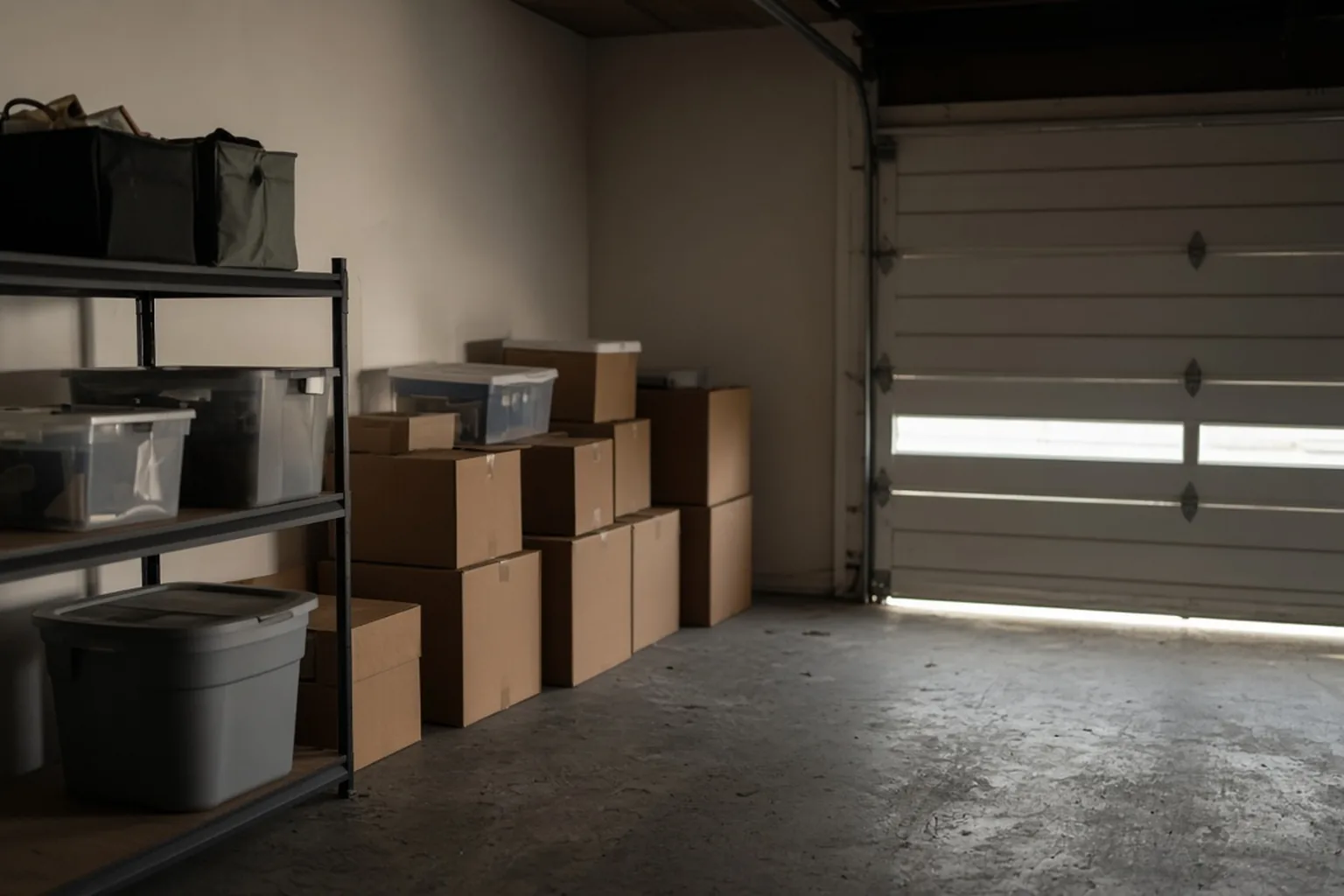 Cardboard boxes make easy nests and the gap under an overhead door makes an easy entrance. Plastic bins and a fresh door seal fix both.
Roof rats vs Norway rats in Hillsboro: up or down?
Knowing which you have changes the plan. Roof rats are climbers. They are slim and dark, with tails longer than their bodies, and they travel along fences, tree branches, and utility lines to reach the roof. They enter attics through gaps at roof vents, eaves, and roof junctions, and they nest in insulation. You hear them overhead at night. Norway rats are burrowers. They are heavier and brown-gray, with shorter tails, and they dig along foundations and under decks. They get into crawlspaces through vents and gaps, and they nest under the floor. You find burrows and torn vapor barriers. Some homes have both. A good inspection covers the roof and the crawlspace, and a good plan seals both levels. Traps need to go where each species travels: rafters for roof rats, crawlspace runways for Norway rats. UC IPM puts roof rats at 3 to 5 litters a year, so waiting lets them build up. Hillsboro has both main rat species, and they live at opposite ends of the house.
Wet winters, dry summers: Hillsboro's rodent calendar.
From June through August, summers are dry with highs near 81F. Rodents breed outdoors and feed on gardens, fruit, and seeds. This is the best time to seal the house, trim trees back from the roof, and inspect the crawlspace. September through November is the main entry window. As the wet season starts and nights cool, rodents look for dry, warm shelter. Roof rats move into attics and Norway rats into crawlspaces. Set traps early in the fall. From December through February, lows near 36F are mild. Roof rats keep breeding in attics, and Norway rats stay in crawlspaces. Keep traps checked and watch for new activity. In spring, people clean out sheds and garages, and deer mouse droppings mean hantavirus exposure risk. Use wet cleanup methods. Following this calendar keeps the yearly work small. Hillsboro's Mediterranean climate gives the rodent year a clear shape, with the busiest stretch arriving with the rain.
 A metal vent cover with a working flap keeps mice out all winter. Plastic flaps crack in the cold and get chewed open.
Damp crawlspaces and Norway rats.
That suits Norway rats. Norway rats burrow along foundations and get into crawlspaces through vents, gaps around utility lines, and cracks. Once inside, they find water from moisture and leaks, cover under insulation and vapor barriers, and a short trip to the kitchen through gaps around pipes. The damage adds up. Rats tear vapor barriers, chew ductwork and wiring, and soil insulation. Burrows near the foundation can undermine footings over time. The fix starts with exclusion. Screen crawlspace vents with 1/4-inch hardware cloth, seal utility entries, and repair foundation cracks. Keep the crawlspace dry by fixing leaks and directing downspouts away from the house. After rats are gone, the crawlspace may need cleanup: removing soiled insulation, replacing the vapor barrier, and cleaning droppings with the CDC wet method. Ask any provider what crawlspace work is included in their quote. If your Hillsboro home sits over a crawlspace, about 38 inches of precipitation a year and humidity near 73% can keep it damp.
Deer mice, hantavirus, and Oregon's numbers.
Across the West, this is the species most tied to hantavirus. Oregon's numbers are low. CDC provisional tables show 1 case in Oregon in 2025, out of 17 nationally. But the CDC reports 35% of U.S. cases since 1993 have been fatal, so cleanup technique matters. The risk comes from dried droppings and urine in closed spaces. Sweeping or vacuuming puts particles in the air. The CDC method avoids that: open the space and ventilate for 30 minutes, wear gloves, spray droppings with a bleach solution of 1.5 cups per gallon of water, let it soak 5 minutes, and wipe up with paper towels. Spring is the classic exposure time, when people clean out sheds and garages. If you find heavy droppings, consider having a crew with respirators handle the cleanup. Deer mice live around Hillsboro, in fields, gardens, and wooded edges, and they move into garages, sheds, and stored items when shelter looks good.
What affects the price of rodent control in Hillsboro?
Two levels cost more than one. A home with roof rats in the attic and Norway rats in the crawlspace needs sealing and trapping at both levels, which means more time, more materials, and more visits. Crawlspace work adds up. Tight access, damaged vapor barriers, and soiled insulation take time to address. Removal and replacement can be a significant part of the quote. The number of entry points matters. Older homes may have more gaps at the foundation, while newer homes may have fewer but harder-to-reach gaps at the roofline. Tree trimming may be needed to cut off roof rat access. With a median home value around $520,000, many Hillsboro owners want work done durably. Ask for itemized quotes that separate sealing, trapping, and cleanup, and compare materials, not just totals. Hardware cloth and metal flashing outlast foam. Rodent control quotes in Hillsboro vary mainly with how much of the house needs work.
What affects the price
- Whether both attic and crawlspace need work.
- The number of entry points at the roofline and foundation.
- Crawlspace access and how much of the vapor barrier is damaged.
- Insulation removal and replacement in attics or crawlspaces.
- How many follow-up visits are included.
- Tree trimming needed to cut off roof access.
📊
What's your biggest concern about rodents?
When to call for help
Bring in a provider when you hear rats in the attic more than a night or two, find burrows near crawlspace vents, or see damage to the crawlspace vapor barrier or insulation. Crawlspaces and attics are tight, dirty spaces, and inspecting and sealing them well takes experience. Across Hillsboro, call early in the fall, before the wet season pushes more rodents toward shelter. A pro also makes sense if you find heavy deer mouse droppings in a shed or garage, since cleanup carries hantavirus risk, or if DIY traps keep catching rats but the activity does not stop.
What you can do yourself
A fair split: yard cleanup and garage trapping yourself, and a provider for full-height sealing, attic and crawlspace trapping, and heavy cleanup. Crawlspace cleanup is another limit, since damaged vapor barriers and soiled insulation take time and protective equipment. Both places are hard to inspect without the right gear. Roof rats get in high, at vents and roof junctions, and Norway rats get in low, through crawlspace vents and foundation gaps. Where DIY falls short is reaching and sealing everything. You can also replace a worn door sweep or screen a vent. Trimming tree branches back from the roof, picking up fallen fruit and nuts, storing bird seed in metal cans, and setting snap traps in the garage all help. Some of the work is very manageable yourself.
Rodents in Hillsboro
Hillsboro was founded in 1842 and is known today for the Intel campus and its place in the Silicon Forest. About 108,000 people live in its suburban neighborhoods, where yards, trees, and sheds give all three local rodents somewhere to settle. The climate is Mediterranean, with dry summers near 81F, mild winters around 36F, about 38 inches of precipitation, and humidity near 73%. The wet season drives rodents toward shelter from September through November, and mild winters let roof rats keep breeding. Where a house has a crawlspace, dampness gives Norway rats water and cover. The median home value is about $520,000, and damage to wiring, ductwork, and insulation in attics and crawlspaces can be costly. CDC tables show Oregon with 1 provisional hantavirus case in 2025, a reason to handle deer mouse droppings carefully.
Local research
Rodents in Hillsboro, OR: what the public record shows
Before you compare quotes, it helps to know which rodents actually live in Oregon, when they are busiest around Hillsboro, and what the state figures look like. Everything below links to the agency or university page it came from.
Rodent species recorded in Oregon
- Norway rat (Rattus norvegicus) — Burrowing rat of basements, sewers and ground floors; tail shorter than head plus body.
- Roof rat (Rattus rattus) — Climber of attics and trees in warm and coastal regions; tail longer than head plus body.
- Deer mouse (Peromyscus maniculatus) — Primary U.S. hantavirus carrier; lives throughout Washington and the interior West.
When rodents are busiest around Hillsboro
Fall entry (Sept-Nov). Norway rats and house mice move indoors as temperatures drop.
Based on Hillsboro’s mediterranean climate profile.
For context, nationally
- 1/4 inch (the width of a pencil) — Smallest gap a mouse can enter. CDC
- 890; 35% fatal; 94% west of the Mississippi — Hantavirus cases reported since 1993 (through 2023). CDC
Sources: CDC National Notifiable Diseases Surveillance System; CDC; Pest Notes: Rats; Hantavirus. Figures are quoted as the source prints them. How we check our sources
Simple ways to keep rodents away
- Trim tree limbs so none touch or overhang the roof.
- Screen crawlspace vents with 1/4-inch hardware cloth.
- Keep the crawlspace dry by fixing leaks and directing downspouts away.
- Pick up fallen fruit and nuts in the yard.
- Store bird seed, pet food, and grass seed in metal cans.
- Keep firewood off the ground and away from the house.
- Inspect the crawlspace vapor barrier each fall for tears or burrows.
- Seal gaps around pipes and utility lines in late summer.
 After sealing, a few monitors or unset traps left along the walls tell you whether anything is still getting in before you hear it again.
Did you know?
Southern Oregon is part of one of the CDC's two main U.S. plague regions, along with California and far western Nevada.
A Norway rat female raises 4 to 6 litters a year, weaning 20 or more young, per UC IPM.
Leptospirosis, rat-bite fever, and hantavirus are among the diseases the CDC says rodents spread directly to people.
Questions people ask
Do roof rats live in Hillsboro?
Yes. Roof rats are on Oregon's rodent list along with Norway rats and deer mice. Across Hillsboro, they climb trees, fences, and utility lines to reach the roof and nest in attics. Scratching overhead at night is the most common sign. Mild winters near 36F let them keep breeding year-round.
Why do rodents show up when the rain starts?
When the wet season begins in fall, rodents look for drier, warmer shelter, and houses fit the bill. Across Hillsboro, the main entry window runs September through November. Sealing gaps in late summer, before the rains, is the best way to stay ahead of them.
Is hantavirus a concern in Oregon?
It is rare. CDC provisional tables show Oregon with 1 hantavirus case in 2025, out of 17 nationally. Deer mice carry the virus, and they live around Hillsboro. The main risk comes from cleaning closed spaces with droppings, so ventilate first and wet droppings with bleach solution instead of sweeping.
Is plague a risk from rodents near Hillsboro?
Very low. Southern Oregon is part of a CDC plague region, and the U.S. as a whole averages about 7 human plague cases a year. Sealing rodents out and keeping pets on a flea product covers most of what a Hillsboro household can do.
How do I tell a roof rat from a Norway rat?
Roof rats are slimmer and darker, with tails longer than their bodies, and they climb. Norway rats are heavier and brown-gray, with shorter tails, and they burrow. Where you find them helps: attics point to roof rats, crawlspaces and burrows point to Norway rats.
Do rats nest in Hillsboro crawlspaces?
They can. Norway rats burrow along foundations and get into crawlspaces through vents and gaps. With about 38 inches of precipitation a year, Hillsboro crawlspaces can stay damp, which gives rats water and cover. Torn vapor barriers and burrows near vents are signs.
How long does it take to get rid of rats?
That depends on how many there are and how many gaps are open. Rats avoid new traps at first, so it can take days before they start getting caught. A provider will typically seal entry points, trap in the attic or crawlspace, and return on a schedule until activity stops. Plan for follow-up visits through fall.
Nearby cities
Related guides
Sources (6)
The facts in this article come from the public sources listed above. Every home is different, so ask the company you talk to about pricing and what’s included. Published by Rodent Exterminator · Updated October 11, 2026 · How we write these guides