The short version
Rodent control in Kennewick comes down to water, entry gaps, and safe cleanup. In a city that gets about 8 inches of rain a year, Norway rats and house mice gather wherever irrigation, leaks, or pet bowls supply moisture, so fix those first, then seal 1/4-inch openings and trap. Deer mice in sheds and garages carry hantavirus, so clean their droppings wet, never by sweeping.
- Kennewick's dry climate pushes rodents toward irrigation, leaks, and pet water.
- Deer mice live throughout Washington and carry hantavirus; sheds and garages are the risk spots.
- Washington sees 1 to 5 hantavirus cases a year, and about 1 in 3 patients have died.
- Rats can have 6 to 10 young per litter and breed by 3 to 4 months old.
- Spring cleanouts of closed buildings deserve the full ventilate-and-bleach routine.
This page is for Kennewick homeowners finding droppings in the garage or pantry, anyone opening a shed, shop, or RV that sat closed over winter, and landlords handling rodent complaints in rental homes. It also fits people with property near orchards, vineyards, or fields, where deer mice are common and outbuilding cleanup comes up every spring.
What to look for
Four rodents show up in Washington homes, and in Kennewick the main players are house mice, Norway rats, and deer mice, while roof rats are mostly a Puget Sound attic problem on the wet side of the state. The house mouse lives indoors once it gets in, nesting in walls, cabinets, and garages. Norway rats burrow along foundations and under sheds, and the Washington Department of Fish and Wildlife notes they will chew a 1/4-inch gap larger to get inside. Deer mice are the health concern. The Washington State Department of Health says infected deer mice live throughout the state, and they nest in sheds, garages, campers, and other quiet buildings. Dry weather drives much of the behavior. With only about 8 inches of rain a year, every leaky hose bib, drip line, swamp cooler, and dog bowl becomes a water source rodents remember. Hot summers near 91F push them toward shade and moisture, and winter lows around 28F send them into heated spaces. Activity runs year-round, with a spike in exposure during spring cleanup.
- 1Droppings in garage corners, on shop shelves, or inside stored camping gear.
- 2Nests of shredded paper, fabric, or insulation in a shed, RV, or boat stored for winter.
- 3Footprints about 1/2 inch long in dust or dirt, which WDFW describes for rats.
- 4Burrows near irrigation lines, under sheds, or beside the foundation where soil stays damp.
- 5Gnawed drip tubing, sprinkler lines, or hose fittings in the yard.
- 6Chewed holes in bags of seed, feed, or pet food stored in the garage.
- 7Scratching in walls or ceilings on cold winter nights.
Why it’s worth acting soon
- Hantavirus from deer mouse droppings is rare, but Washington's health department reports about 1 in 3 diagnosed patients have died.
- Rats can have litters of 6 to 10 young and breed again within months, so a small problem grows fast.
- Rodents chewing irrigation and drip lines waste water in a place where it is already scarce.
- Mice and rats nesting in stored vehicles and equipment can chew wiring and hoses.
- Droppings left in a closed garage or shed get harder to clean safely the longer they sit.
Treatment options and typical costs
Water and harborage cleanup
Quoted after inspection
Fixing leaks, bringing pet bowls in at night, repairing drip lines, and clearing debris where rodents shelter near water. In a semi-arid city like Kennewick, removing water sources does more than it would in a wetter place, because rodents have few alternatives. A provider should point these out during the inspection.
- Time
- One walkthrough plus homeowner fixes
- Best for
- Rats and mice clustered near irrigation
Sealing 1/4-inch openings
Quoted after inspection
Closing gaps around pipes, vents, garage doors, and foundations with steel wool, hardware cloth, and metal flashing. WDFW notes rats can use a 1/4-inch hole and chew it larger, so sealing has to be tight and chew-resistant, especially on sheds and shops near fields.
- Time
- One or two visits
- Best for
- Homes, garages, and outbuildings with recurring rodents
Trapping indoors and in outbuildings
Quoted after inspection
Snap traps along walls and in garages, sheds, and shops, checked regularly. Trapping removes rodents without leaving poisoned carcasses in walls or stored gear. Washington does not regulate Old World rats, so killing them is unrestricted, but pets and native wildlife still need protecting.
- Time
- A few weeks
- Best for
- House mice, deer mice, and rats in structures
Hantavirus-safe cleanout
Quoted after inspection
Ventilating a closed building for 30 minutes, wetting droppings and nests with a 1:9 bleach mix for 5 minutes, then wiping and bagging, following CDC guidance. Ask whether the provider takes on heavy deer mouse contamination, since this is the job with the most health risk.
- Time
- One visit per building
- Best for
- Sheds, garages, RVs, and cabins opened in spring
Prices are typical published ranges. Ask what’s included before you compare quotes.
 Under the sink is the first place to check: the hole where the pipe passes through the cabinet back is often cut much bigger than the pipe.
Deer mice and hantavirus in Kennewick: where the risk really is.
If contamination is heavy, consider hiring the cleanup out. Ventilate for 30 minutes, wear gloves, soak droppings and nests with a 1:9 bleach mix for 5 minutes, and wipe them up. Treat any closed building with heavy droppings as a careful job. The CDC's provisional count for 2025 includes 1 case in Washington. Washington records 1 to 5 hantavirus cases a year, and about 1 in 3 people diagnosed have died. The numbers are small but serious. People open buildings that sat closed all winter and start sweeping, which stirs up exactly the particles that carry the virus. That is why spring is the key season in the arid West. The risk comes from breathing dust from dried droppings, urine, or nesting material. You can recognize them by the white belly and feet and a tail that is dark on top and white underneath. Deer mice prefer quiet places: sheds, detached garages, shops, campers, boats, and cabins. The deer mouse does, and the Washington State Department of Health says infected deer mice live throughout the state, Kennewick included. The house mouse in your pantry does not carry hantavirus.
Why rodents in a dry town follow the water.
With fewer water options around the house, rats are more likely to move on and less likely to keep testing your foundation. Then follow up with sealing and traps. In the hottest weeks, rodents cluster in shade near irrigation and in garages that stay cooler. Hot summers near 91F make water even more important. Fixing water alone often makes a visible difference. Fix leaks, water early in the morning so soil dries by night, bring pet bowls in, and keep the ground under faucets dry. That is good news, because it hands you a lever. A dripping hose bib, a leaking sprinkler head, drip tubing in a garden, a swamp cooler, a fountain, a pet's water bowl left outside, or a damp patch by the AC condensate line can each support a burrow nearby. Look at your property through a rat's eyes. Rats in particular need regular water, and in a semi-arid city they find it where people provide it. Kennewick averages about 8 inches of rain a year, which makes water the most valuable thing in a rodent's day.
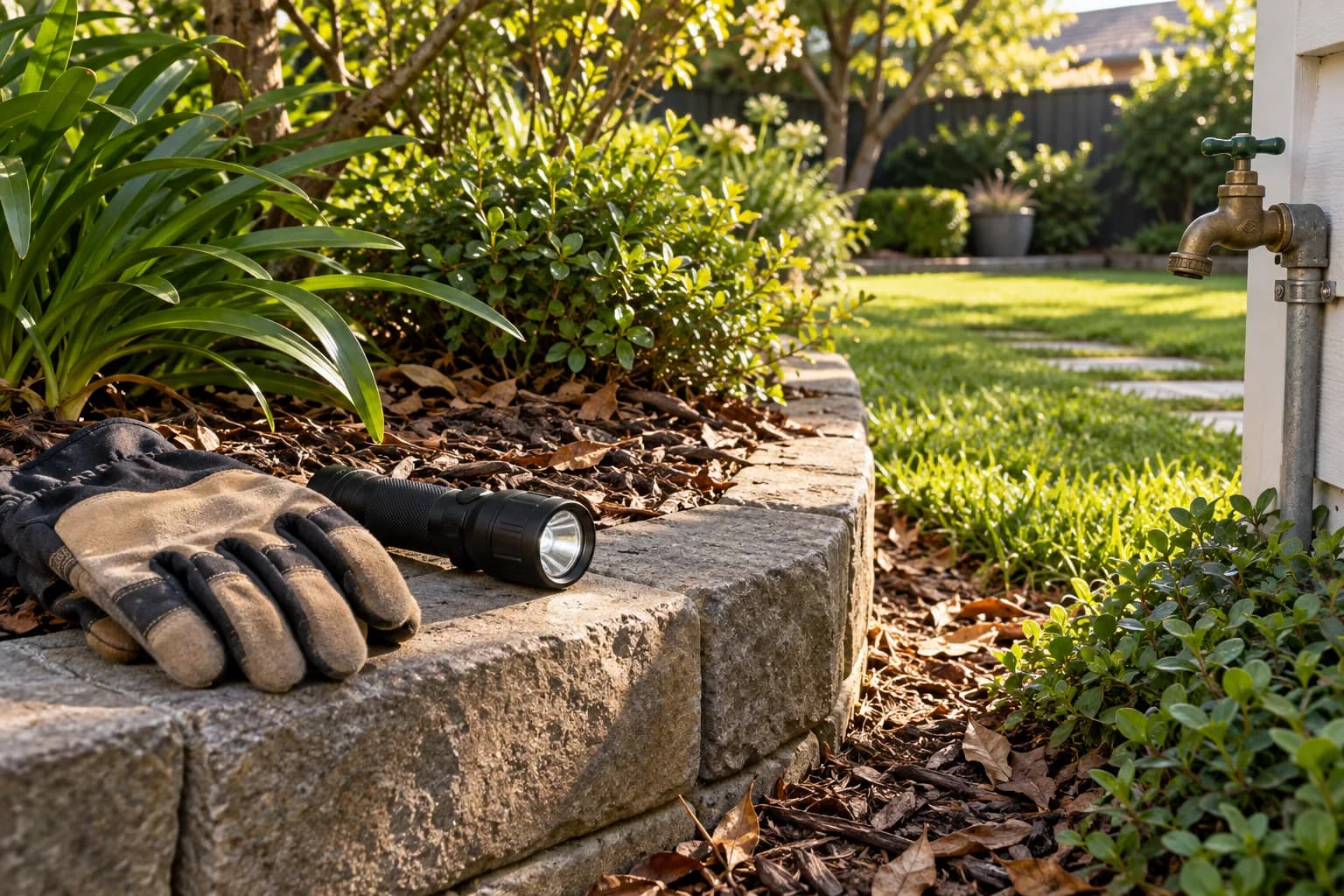 Dense shrubs against the house and a dripping hose bib give rodents cover and water. Trimming back and fixing drips makes the yard less inviting.
Sheds, shops, and outbuildings near fields and vineyards.
Treat an outbuilding cleanup with the same care you would give an attic. Before you clean a shed that sat closed all winter, open it for 30 minutes, then use the wet bleach method. Finally, plan for spring. Inside, store feed, seed, and pet food in metal bins with tight lids, and keep items on shelves off the floor so droppings are easy to spot early. WDFW notes rats can use a 1/4-inch opening and chew it larger, so soft fillers will not hold. Then work around the walls and roofline, closing gaps with hardware cloth or metal flashing. Fit them with tight sweeps or a strip of metal along the bottom. Start with the doors. Inside, rodents find seed, feed, cardboard, and quiet. Doors often have gaps at the bottom, walls may have unsealed corners, and stored items make perfect nesting material. A shed or shop is easier to get into than a house. Outbuildings are the first structures they reach. In a city known for wine and agriculture, a Kennewick property that backs onto fields, orchards, or open ground sits close to where deer mice and other wild rodents live.
A year of rodent activity in the Tri-Cities.
Across the year, the Kennewick pattern is simple: water draws rodents in summer, warmth draws them in winter, and spring is when cleanup carries the most risk. Keep traps checked and stored gear sealed. December: indoor activity climbs again. Seal gaps on the house and outbuildings in early fall, and set traps in the garage as an early warning. September through November: rodents look for shelter ahead of cooler nights. This is the time to fix irrigation problems and clear debris near the foundation. Rodents cluster near sprinklers, drip lines, gardens, and leaks. June through August: summer highs near 91F and almost no rain make water the main attraction. Rats become more active outdoors once irrigation starts. Ventilate first and use the wet bleach method. As people open sheds, shops, campers, and cabins, they disturb deer mouse nests from the winter. March through May: the season for careful cleanup. Indoor trapping is steady work, and stored vehicles and equipment are common nesting spots. January and February: winter lows around 28F keep house mice and rats close to heated homes and garages.
What changes the price of rodent work on a Kennewick property?
That way you pay for work on the structures that need it and skip the ones that do not. When comparing quotes, ask each company to list the buildings included, entry points, materials, cleanup, and follow-up visits. A provider who points out leaks and irrigation issues gives you fixes you can make yourself, which reduces how much trapping is needed. Water problems can lower the cost over time. Rats add cost if they are burrowing outside, since stations and repeat visits are often part of the plan. Heavy deer mouse droppings in an outbuilding take time and care to clean safely, and soiled insulation or stored goods may need to go. Contamination is the next factor. Add a detached garage, a shop, a shed, or a stored RV, and the work multiplies, since each building needs its own inspection, sealing, and possibly cleanup. A single house with mice in the kitchen is straightforward: an inspection, a few entry points to seal, and a couple of trap checks. Rodent control in Kennewick is priced after an inspection, and the biggest variable is usually how many structures are involved.
What affects the price
- The number of outbuildings, shops, or sheds included in the inspection.
- How much deer mouse contamination needs careful cleanup.
- Entry points that need metal sealing on worn shed or shop doors.
- Whether Norway rats are burrowing outside, adding stations and visits.
- Stored vehicles, RVs, or equipment that need inspection and cleanup.
- The number of follow-up trap checks included.
📊
What's your biggest concern about rodents?
When to call for help
Call a provider before cleaning a shed, garage, or RV with heavy droppings, especially if you see white-bellied deer mice or their nests. That is the activity tied to hantavirus, and in Washington about 1 in 3 people diagnosed have died. Call about rats when you see burrows near irrigation or under a shed, or when traps keep catching after a couple of weeks. Kennewick properties with several outbuildings or large lots near fields also benefit from a professional plan, because sealing and trapping every structure is a lot of ground for one homeowner to cover.
What you can do yourself
A lot of rodent work in Kennewick is within reach. Fixing a leaky hose bib, bringing the dog's water bowl in at night, sealing a garage door gap, and setting snap traps along walls will handle many house mouse problems. Rats are possible too if you find and remove the water and food drawing them in, then trap patiently. The place to be careful is cleanup. The Washington State Department of Health says infected deer mice, the hantavirus carriers, turn up all across the state. If a shed or camper has heavy droppings, nests, or a strong urine smell, follow the CDC routine exactly or hire it out. Professionals also make sense for big properties with several buildings, for rats that keep coming back, and for sealing work high on a structure.
Rodents in Kennewick
At 407 feet of elevation in the arid West, the city also falls in the region where the CDC reports the great majority of hantavirus cases, which is why careful cleanup matters here. That scarcity makes irrigated lawns, gardens, and leaky fixtures the most important water sources for rodents. Kennewick gets only about 8 inches of rain a year, with 56% average humidity, summer highs near 91F, and winter lows near 28F. The semi-arid climate is the defining factor. With a median home value around $385,000, a home represents a large investment, and gnawed wiring or soiled insulation is expensive to fix. That farm and vineyard setting matters for rodents, because fields, orchards, and rural edges support deer mice and other wild rodents that move into nearby garages, shops, and outbuildings. Kennewick is a suburban city of about 85,000 people, founded in 1904 and known as part of the Tri-Cities and for its wine and agriculture.
Local research
Rodents in Kennewick, WA: what the public record shows
Before you compare quotes, it helps to know which rodents actually live in Washington, when they are busiest around Kennewick, and what the state figures look like. Everything below links to the agency or university page it came from.
Rat litter size
Old World rats are not regulated; killing is unrestricted.
WDFWRat entry hole
Footprint about 1/2 inch long; incisors grow 5 inches a year.
WDFWRodent species recorded in Washington
- House mouse (Mus musculus) — Enters at 1/4 inch; 5-10 litters per year; eats about 200 small meals a night.
- Norway rat (Rattus norvegicus) — Burrowing rat of basements, sewers and ground floors; tail shorter than head plus body.
- Roof rat (Rattus rattus) — Climber of attics and trees in warm and coastal regions; tail longer than head plus body.
- Deer mouse (Peromyscus maniculatus) — Primary U.S. hantavirus carrier; lives throughout Washington and the interior West.
When rodents are busiest around Kennewick
Year-round; roof rats in Puget Sound attics.
Rules that apply in Washington
For context, nationally
- 1/4 inch (the width of a pencil) — Smallest gap a mouse can enter. CDC
- 890; 35% fatal; 94% west of the Mississippi — Hantavirus cases reported since 1993 (through 2023). CDC
Sources: Hantavirus; WDFW; CDC; Pest Notes: House Mouse; Pest Notes: Rats. Figures are quoted as the source prints them. How we check our sources
Simple ways to keep rodents away
- Fix dripping hose bibs, sprinkler heads, and swamp cooler lines so rodents lose easy water.
- Bring pet food and water bowls inside at night.
- Seal gaps of 1/4 inch or more on sheds, shops, and garages, not only the house.
- Store bird seed, livestock feed, and pet food in metal bins with tight lids.
- Keep woodpiles, pallets, and old equipment off the ground and away from buildings.
- Close RVs, boats, and campers tightly before winter and check them early in spring.
- Ventilate sheds and garages for 30 minutes before any spring cleaning.
- Trim weeds and grass along foundations and fence lines to reduce cover.
 Before you call, sketch where you have seen droppings or heard noise and measure any gaps you found. It makes the first visit faster and the quotes comparable.
Did you know?
A rat's incisors grow about 5 inches a year, which is why rats gnaw constantly to keep them worn down.
A rat's footprint is about 1/2 inch long, a handy clue when you find tracks in dust or mud.
Washington does not regulate Old World rats such as the Norway rat and roof rat, so killing them is unrestricted.
Questions people ask
Is hantavirus a risk in Kennewick?
Around Kennewick, the main exposure is cleaning sheds, garages, campers, or shops where deer mice nested, so ventilate first and use the wet bleach method. The Washington State Department of Health reports 1 to 5 hantavirus cases a year statewide and says infected deer mice live throughout Washington, with about 1 in 3 people diagnosed having died. It is uncommon but real.
Why do rodents show up in such a dry place?
Fixing leaks and removing standing water is one of the most effective steps you can take. Rodents settle near those sources and then look for shelter in garages and sheds. Kennewick gets only about 8 inches of rain a year, so irrigation lines, leaky faucets, pet bowls, and swamp coolers become magnets. Because people provide the water.
How fast do rats breed in Washington?
A couple of rats under a Kennewick shed in spring can become a colony by fall, which is why acting early matters. The Washington Department of Fish and Wildlife says rats have litters of 6 to 10 young after about three weeks of gestation and can start breeding at 3 to 4 months old. Quickly.
Are there roof rats in Kennewick?
If you hear activity in your attic, have it identified, since the right treatment depends on the species. Around Kennewick, Norway rats, house mice, and deer mice are the more common problems. Roof rats are found in Washington, but the state's data places them mainly in Puget Sound attics on the wet side of the Cascades.
Can I kill rats on my property in Washington?
Use traps or tamper-resistant stations that protect pets, children, and other animals. That does not cover native wildlife, and it does not make every method safe. WDFW states that Old World rats, the group that includes Norway rats and roof rats, are not regulated and killing them is unrestricted. Yes.
How do I clean deer mouse droppings safely?
This CDC routine matters most in Kennewick sheds and garages that sat closed all winter. Never sweep or vacuum. Then spray droppings and nests with a 1:9 bleach solution, let it sit 5 minutes, and wipe up with paper towels while wearing gloves. Start by propping every door and window open and giving the space 30 minutes of fresh air.
When are rodents worst in Kennewick?
Summer heat near 91F keeps rodents close to water. Then spring cleanup brings the highest hantavirus exposure, as people open sheds and campers that deer mice used over winter. Winter lows around 28F push mice and rats into heated garages and homes from fall through early spring. Activity runs all year, but two periods stand out.
Nearby cities
Related guides
Sources (6)
The facts in this article come from the public sources listed above. Every home is different, so ask the company you talk to about pricing and what’s included. Published by Rodent Exterminator · Updated October 11, 2026 · How we write these guides