The short version
For Yakima homes, Washington, rodent control means handling four animals: deer mice, house mice, Norway rats and roof rats. Deer mice matter most because they carry hantavirus, which Washington records 1 to 5 times a year. Seal gaps of 1/4 inch, trap indoors, and clean sheds and garages with the CDC wet-cleaning method, never a broom.
- Hantavirus-carrying deer mice live throughout Washington, Yakima included.
- Spring cleanup of sheds and garages is the riskiest rodent chore of the year.
- With only 8 inches of rain a year, leaky hoses and pet bowls draw rodents.
- Rats chew a 1/4-inch hole wider, so seal with metal, not foam.
- Washington's wildlife agency does not regulate Norway or roof rats.
This page is for Yakima homeowners with sheds, detached garages or crawl spaces, anyone opening a cabin, camper or storage room after winter, and renters or landlords sorting out a mouse complaint. It also helps business owners who store fruit, grain or feed and need rodents kept out of their product.
What to look for
Washington's species list names four rodents, and in Yakima the one to take most seriously is the smallest. Deer mice carry hantavirus, and the Washington State Department of Health says infected deer mice live throughout the state. House mice are the familiar indoor pest. Norway rats burrow along foundations and under outbuildings, and roof rats, which state data note in Puget Sound attics, are climbers. The local climate shapes how these animals behave. With about 8 inches of rain a year and average humidity of 57%, water is scarce, so rodents gravitate toward irrigation lines, dripping spigots, pet bowls and damp soil under a house. Summer highs of 89F send them looking for shade, and winter lows around 23F drive them indoors as fall cools. The arid-zone pattern peaks in spring, when people open sheds and garages and disturb a winter's worth of droppings, and activity stays steady through summer. That spring timing is why cleanup technique matters so much here.
- 1Small droppings in a shed, garage or camper that sat closed all winter.
- 2Nests of shredded insulation, cotton or paper tucked inside stored boxes.
- 3Seeds or bits of fruit stashed in a drawer, an old boot or a vent.
- 4Rat tracks about 1/2 inch long pressed into dust on a garage floor.
- 5Small holes around pipes and vents that have been chewed wider.
- 6Burrows at the base of a foundation, shed slab or woodpile.
- 7Gnawed drip irrigation tubing or garden hoses.
Why it’s worth acting soon
- About 1 in 3 people diagnosed with hantavirus in Washington have died, the state health department reports.
- WDFW says rats have 6 to 10 young per litter and begin breeding at 3 to 4 months old.
- Rodents chew wiring, insulation and irrigation lines, which adds repair bills.
- Every month a dirty shed sits, more droppings pile up for the next cleanup.
- Tularemia, salmonellosis and LCM are on the CDC's list of diseases that pass straight from rodents to people.
Treatment options and typical costs
Rodent-proofing the house and outbuildings
Quoted after inspection
Sealing the openings rodents use, from foundation cracks and pipe gaps to garage door edges and attic vents. WDFW notes rats enter through 1/4-inch holes and chew them bigger, so the work calls for hardware cloth, sheet metal and mortar. For Yakima homes, ask that sheds and detached garages be included, since deer mice often settle there.
- Time
- Depends on the number of structures
- Best for
- Homes and outbuildings with repeat mouse activity
Snap trapping
Quoted after inspection
Snap traps set along walls and in sheds catch mice and rats without poison. They suit deer mouse problems well, because each catch can be sprayed with disinfectant, bagged and removed with gloves instead of dying somewhere hidden in a wall or under a floor.
- Time
- Until catches stop
- Best for
- Mice in houses, garages and sheds
Professional decontamination
Quoted after inspection
For heavily soiled sheds, crawl spaces or attics, some providers remove nests and droppings using wet methods and bleach solution. Given the hantavirus risk in Washington, ask about this service when a building held mice all winter, and confirm the crew will not sweep, blow or dry-vacuum the area.
- Time
- Depends on the space
- Best for
- Sheds, cabins and garages closed for months
Exterior rat stations
Quoted after inspection
Tamper-resistant bait or trap stations set along foundations and outbuildings to reach Norway rats burrowing outdoors. Ask what goes inside each station, how it is anchored and locked so pets and children cannot reach it, and how often someone comes back to check and refill it.
- Time
- Ongoing, on a set schedule
- Best for
- Yards with active burrows
Prices are typical published ranges. Ask what’s included before you compare quotes.
 Bathroom vanities hide the same plumbing gaps as the kitchen. A quick look with a flashlight shows droppings or rub marks long before you see a mouse.
How serious is hantavirus for Yakima households?
Exposure comes from deer mouse droppings, urine and nests in places like sheds, cabins and garages. That is why risk in an arid climate peaks in spring, the season people open buildings that sat shut all winter. The protective steps are simple: ventilate, wet everything with bleach solution, wait, and wipe. Trapping and sealing reduce the number of mice around your home, but careful cleanup is what protects your lungs. Serious enough to change how you clean, though not common enough to panic over. The carrier is the deer mouse, and the department says infected deer mice live throughout Washington, so Yakima is no exception. Nationally, the disease clusters in the West. The CDC counted 890 cases from 1993 through 2023, with 94% west of the Mississippi, and Washington logged 1 of the 17 cases in the CDC's provisional 2025 tally.
Spring cleanup in a Yakima shed or garage, step by step.
Wait 5 minutes. Fourth, wipe everything up with paper towels and bag it, towels included. Seal dead mice in a bag as well. Fifth, wipe floors, shelves and work surfaces with the same solution, then wash your hands well once the gloves come off. What not to do matters just as much: no broom, no shop vacuum, no leaf blower. Each one turns dried droppings into dust. If the shed is badly soiled or you feel uneasy, this is a fair job to pay for. Spring is when most Yakima residents meet their winter mice, usually while hunting for the hose or the lawn mower. If you see droppings, stop and step back out before touching anything. First, prop open every door and window and let the building air out for 30 minutes. Stay outside while it airs. Second, put on rubber or plastic gloves before you go back in. Third, mix 1.5 cups of household bleach into a gallon of water, the 1:9 ratio the CDC recommends, and spray droppings, nests and any dead mice until they are soaked.
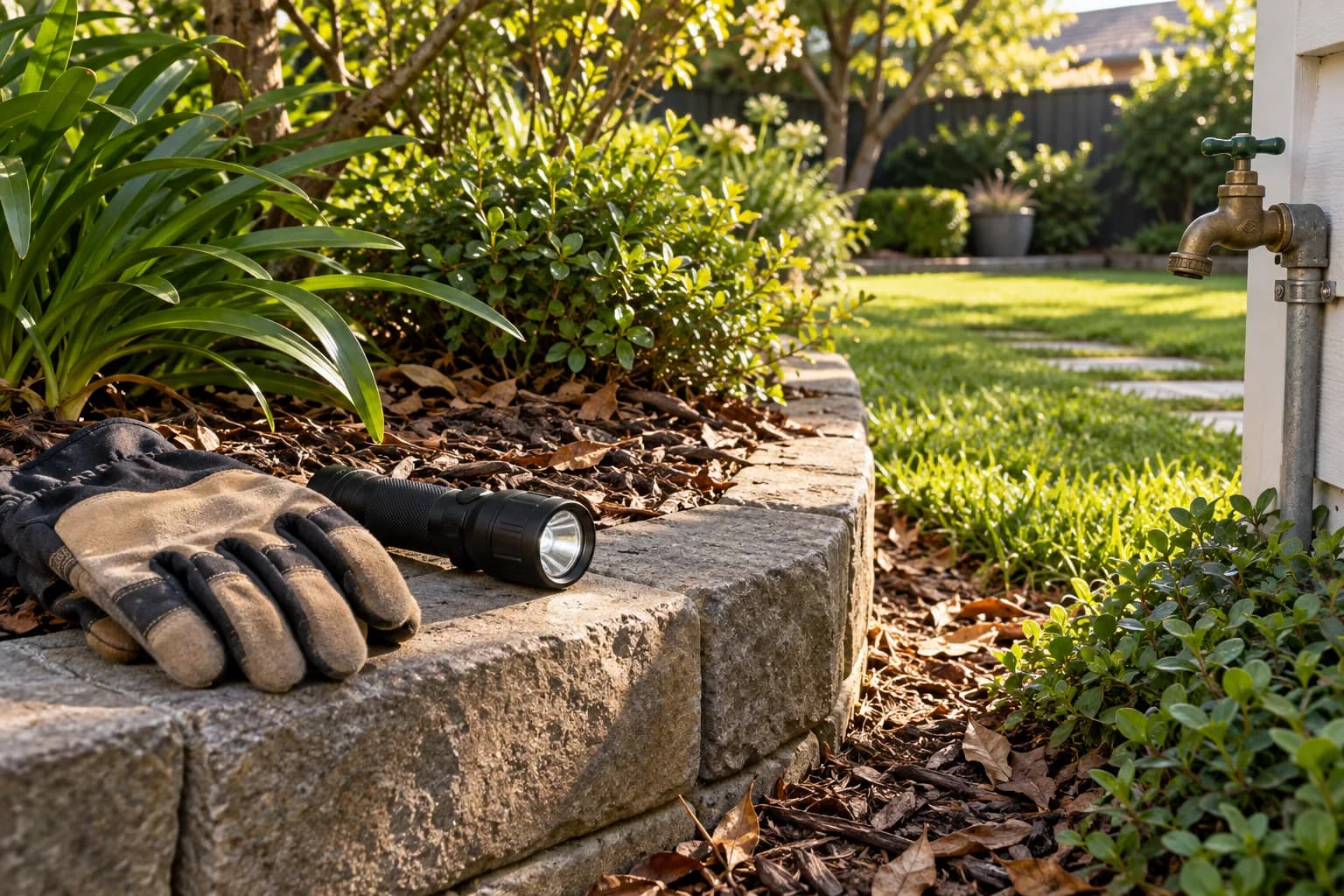 Dense shrubs against the house and a dripping hose bib give rodents cover and water. Trimming back and fixing drips makes the yard less inviting.
Water, shade and fruit: why do Yakima yards draw rodents?
Then there is food. Yakima is known as an apple capital, and fruit that drops in a backyard and sits for a week feeds rats and mice at exactly the time they are fattening up for fall. Seed from bird feeders and stored grass seed work the same way. Put those three together and the fix is clear. Repair leaks, thin out cover against the house, and pick up fruit promptly. A yard that offers less water, shade and food simply supports fewer rodents. In a place that gets about 8 inches of rain a year, water is the most valuable thing in a rodent's day. Average humidity sits near 57%, so dew and damp soil are scarce too. That sends mice and rats toward whatever moisture people provide: drip irrigation, leaky hose bibs, pet water bowls, wet soil under a crawl space, condensate lines. Summer heat adds a second pull. When highs reach 89F, rodents look for shade and cool cover, such as woodpiles, dense shrubs along the foundation, and the cooler air of a garage or crawl space.
Four rodents on Washington's list: which one do you have?
Norway rats are heavy burrowers. Look for holes along foundations or under slabs, and for tracks in dust; WDFW describes a rat footprint as about 1/2 inch long. Rats get in through holes as small as 1/4 inch and gnaw them wider, so sealing has to use metal. Roof rats climb and nest up high. State data single them out in Puget Sound attics, but they are on the statewide list, so overhead noises should still be checked. If you cannot tell which one you have, assume the worst during cleanup, use the wet method, and ask a provider to identify the species before choosing a treatment. Washington names four rodents, and each points to a slightly different plan. Deer mice are the priority because of hantavirus. Look for a two-tone coat with a white belly, and for droppings in sheds, garages, cabins and other spaces that sit closed for long stretches. House mice are the everyday indoor pest. They stay close to food in kitchens and pantries and move along walls. Trapping and sealing usually handle them.
What should a rodent plan for a Washington home include?
A good written plan names the species found, lists entry points on the house and each outbuilding, explains how droppings and nests will be cleaned, and states how many trap or station checks are included. In a semi-arid city, it should also mention water sources such as leaks or irrigation, because removing them changes how long rodents stick around. Then weigh the price against what is at stake. With median home values near $315,000, damage from chewed wiring or soiled insulation can outrun the cost of thorough sealing. When comparing two quotes, the one that seals sheds and garages and covers safe cleanup usually earns its higher price. Start with the rules, because they shape the plan. The Washington Department of Fish and Wildlife says Old World rats, the Norway and roof rats, are not regulated and that killing them is unrestricted. That makes trapping straightforward. Pesticide use is a different question, so ask how the provider applies any bait and who on the crew is licensed for it. Next, look at the scope.
What affects the price
- How many outbuildings, such as sheds, detached garages or barns, need sealing.
- Whether nests and droppings call for professional decontamination.
- Crawl space access and how much soiled insulation must come out.
- Which species is present, since rats need exterior work and house mice often do not.
- The number of return trips for trap checks.
- Leaks in irrigation or plumbing that must be fixed to cut off water.
📊
What's your biggest concern about rodents?
When to call for help
Call a professional if you find heavy droppings or nests in an enclosed space you need to clean, because deer mice in Washington can carry hantavirus and the state health department reports that about 1 in 3 diagnosed patients have died. Call as well if you see burrows, rat tracks or freshly gnawed holes, or if mice keep returning after you have trapped and sealed. For Yakima homes, spring is the riskiest season for exposure, so booking an inspection before you clear out a long-closed shed or garage is a sensible move.
What you can do yourself
A shed or cabin that sat closed all winter with deer mice inside is exactly the setting the CDC flags for hantavirus exposure. If you handle it yourself, follow the CDC method to the letter: air it out for 30 minutes, soak droppings with a 1:9 bleach mix for 5 minutes, and wipe instead of sweeping. If the mess is large, hand it off. Rats are the other hire-out case. Norway rats burrow, roam and breed fast, and outdoor control works best with a plan that covers the whole property rather than a trap or two by the back door. Trapping mice in the house is within reach for most people. Set snap traps along walls, check them daily, and spray each catch with disinfectant before bagging it with gloved hands. Seal small gaps with steel wool and caulk, and fix any leak that gives rodents a drink. The line to hire out is the cleanup, not the catching.
Rodents in Yakima
Yakima, founded in 1883, is known as an apple capital and for its wine and hops, and that farm identity shows up in the rodent picture: fruit and seed are rodent food, and fallen apples left in a yard are an easy meal. About 97,000 people live here at suburban density, with a median home value near $315,000. The city sits at roughly 1,066 feet in a semi-arid climate, with summer highs around 89F, winter lows near 23F and only 8 inches of rain a year. That mix creates two pressures, rodents seeking water and shade in summer and warmth as fall turns cold. Washington adds a third layer: hantavirus-carrying deer mice live statewide, so in this city cleanup deserves as much attention as control.
Local research
Rodents in Yakima, WA: what the public record shows
Before you compare quotes, it helps to know which rodents actually live in Washington, when they are busiest around Yakima, and what the state figures look like. Everything below links to the agency or university page it came from.
Rat litter size
Old World rats are not regulated; killing is unrestricted.
WDFWRat entry hole
Footprint about 1/2 inch long; incisors grow 5 inches a year.
WDFWRodent species recorded in Washington
- House mouse (Mus musculus) — Enters at 1/4 inch; 5-10 litters per year; eats about 200 small meals a night.
- Norway rat (Rattus norvegicus) — Burrowing rat of basements, sewers and ground floors; tail shorter than head plus body.
- Roof rat (Rattus rattus) — Climber of attics and trees in warm and coastal regions; tail longer than head plus body.
- Deer mouse (Peromyscus maniculatus) — Primary U.S. hantavirus carrier; lives throughout Washington and the interior West.
When rodents are busiest around Yakima
Year-round; roof rats in Puget Sound attics.
Rules that apply in Washington
For context, nationally
- 1/4 inch (the width of a pencil) — Smallest gap a mouse can enter. CDC
- 890; 35% fatal; 94% west of the Mississippi — Hantavirus cases reported since 1993 (through 2023). CDC
Sources: Hantavirus; WDFW; CDC; Pest Notes: House Mouse; Pest Notes: Rats. Figures are quoted as the source prints them. How we check our sources
Simple ways to keep rodents away
- Fix dripping spigots and drip lines, since water is scarce in an 8-inch-rain climate.
- Pick up fallen apples and other fruit every few days from late summer on.
- Keep birdseed, grass seed and pet food in metal bins with tight lids.
- Seal sheds and detached garages, not only the house, because deer mice favor them.
- Stack firewood and lumber off the ground and away from walls.
- Cover vents with hardware cloth, since rats gnaw through plastic screens.
- Wear gloves and wet down droppings before any spring cleaning job.
- Set a few traps in the garage each fall as nights head toward 23F.
 After sealing, a few monitors or unset traps left along the walls tell you whether anything is still getting in before you hear it again.
Did you know?
A rat's front teeth grow about 5 inches a year, which is why rats gnaw constantly to keep them worn down.
Rat footprints measure roughly 1/2 inch long, so a dusting of flour on a garage floor can reveal their travel route.
Washington was one of eleven states in the CDC's provisional 2025 hantavirus count, contributing 1 of 17 cases.
Questions people ask
Is hantavirus common in Yakima?
It is uncommon but serious. The Washington State Department of Health reports 1 to 5 cases a year statewide, and about 1 in 3 people diagnosed have died. Infected deer mice live throughout the state, so in Yakima any shed, garage or cabin with mouse droppings deserves careful, wet cleanup rather than a broom.
How do I tell a deer mouse from a house mouse?
Look at the coloring. Deer mice have a crisp two-tone look, brown or gray on top and white underneath, with a tail that is also two-toned. House mice are a more even gray-brown all over. Because deer mice carry hantavirus, treat any mouse you cannot identify as if it were one during cleanup.
When is rodent season in Yakima?
There are two peaks. Spring brings the highest exposure risk, when people open sheds, garages and campers and find a winter's worth of droppings. Fall is when mice move indoors, as Yakima winter lows head toward an average of 23F. Summer activity continues around water sources, since the city gets only about 8 inches of rain.
Do I need a permit to trap rats in Washington?
Not for Norway or roof rats. The Washington Department of Fish and Wildlife says Old World rats are not regulated and killing them is unrestricted, so homeowners can trap them around the house. Rodenticide applied for hire is a separate matter, so ask any provider how they handle pesticide use and who on the crew is licensed.
Why do rodents come to my yard when everything is so dry?
Your yard may be the wettest spot around. With about 8 inches of rain a year and 57% average humidity, Yakima rodents lean on irrigation, dripping spigots, pet bowls and damp crawl spaces for water. Fixing leaks and emptying standing water takes away one of their biggest reasons to stay.
How fast do rats multiply?
Fast. WDFW says a rat litter holds 6 to 10 young after about three weeks of pregnancy, and those young begin breeding at 3 to 4 months. UC IPM puts Norway rats at 4 to 6 litters a year. A pair that moves in during early summer can become a colony by winter.
How do I clean droppings out of a shed safely?
Open the doors and windows and leave the shed for 30 minutes. Put on gloves, soak droppings and nests with 1.5 cups of bleach per gallon of water, and let it sit 5 minutes before wiping with paper towels. The CDC says never to sweep or vacuum, since that puts particles in the air.
What should I ask a Yakima rodent company before hiring?
Ask which species they found and how they identified it, whether sheds and garages are part of the sealing, and how they handle nest cleanup given hantavirus in Washington. Ask what goes into outdoor stations and how pets are protected. For a Yakima property with several outbuildings, get the visit schedule in writing.
Nearby cities
Related guides
Sources (6)
The facts in this article come from the public sources listed above. Every home is different, so ask the company you talk to about pricing and what’s included. Published by Rodent Exterminator · Updated October 11, 2026 · How we write these guides