The short version
Around Lake Charles, LA, rodents are a year-round problem with a fall surge, and roof rats in attics lead the list. LSU AgCenter says to rat-proof by sealing every opening larger than half an inch, then trap or use tamperproof bait stations. Call an LDAF-licensed provider for attic rats, burrows, or activity that keeps returning after storms or heavy rain.
- Roof rats are the main attic rodent along the Gulf Coast, active all year.
- LSU AgCenter: seal every opening larger than half an inch to keep rats out.
- In heavy mouse infestations, place traps or bait every 5 to 10 feet.
- Rodenticides belong in tamperproof stations, per the LSU guide.
- Floodwater can carry rat urine and leptospirosis, so wear gloves during cleanup.
Lake Charles homeowners hearing noises overhead, renters finding droppings in the kitchen, landlords, and business owners in restaurants, hotels and warehouses. It also applies if you are repairing a house after storm damage and finding rodent activity in the attic, walls or crawl space.
What to look for
Three rodents matter in Lake Charles. Roof rats are the climbers: slim, with long tails, they run along limbs, fences and utility lines and nest in attics, which is why they dominate Gulf Coast attics. Norway rats burrow along foundations, under slabs and near drainage, and come into crawl spaces and garages. House mice nest inside walls, cabinets and even appliances, where LSU AgCenter notes they chew wiring and carry the same diseases as rats. The climate keeps all three active. Summer highs near 92F, average humidity around 76% and about 60 inches of rain a year mean constant food, water and cover. Winter lows average around 44F, rarely cold enough to slow rodents much, so there is no off-season. At just 15 feet above sea level, the city also deals with heavy rain and flooding, which pushes rats out of burrows and drains and into structures.
- 1Running or scratching in the attic at night, the classic roof rat sign.
- 2Droppings in the attic, on top of cabinets or along the tops of walls.
- 3Chewed wiring or droppings inside a stove drawer or behind the dishwasher.
- 4Burrows along the foundation, under slabs or beside drainage ditches.
- 5Greasy rub marks along rafters, beams or the top of a fence.
- 6Partially eaten fruit, nuts or pet food left outside.
- 7Shredded insulation pulled into nests in the attic or crawl space.
Why it’s worth acting soon
- Roof rats can have 3 to 5 litters a year of up to 8 young, per UC IPM.
- Rats and mice chew attic wiring, a real fire risk.
- Rat urine in floodwater or wet soil can spread leptospirosis.
- Attic insulation soiled by nests loses its value and may need replacement.
- Rodents in appliances can damage wiring and contaminate food prep areas.
Anything larger than 0.5 inchOpenings to seal when rat-proofing a buildingLSU AgCenter Every 5 to 10 feetTrap or bait spacing for heavy mouse infestationsLSU AgCenter Treatment options and typical costs
Rat-proofing the structure
Quoted after inspection
LSU AgCenter says to rat-proof all buildings by sealing every hole and opening larger than half an inch. A provider inspects the roofline, soffits, vents, foundation and utility lines and closes gaps with hardware cloth, metal flashing and sealant. Around Lake Charles, check soffits and roof edges after every major storm, since roof rats use any new gap.
- Time
- Set after the inspection
- Best for
- Homes with attic noise or repeat activity
Trapping indoors and in the attic
Quoted after inspection
Snap traps along rafters, walls and runways remove rats and mice already inside. LSU guidance places traps or bait every 5 to 10 feet in heavily infested areas for mice, and notes glue boards and traps work where baits are not acceptable. Expect several follow-up visits.
- Time
- Until catches stop
- Best for
- Active rats in attics and mice in kitchens
Tamperproof bait stations
Quoted after inspection
The LSU guide calls for all rodenticides to go in tamperproof bait stations, with at least 3 ounces of bait per placement. Stations along the foundation and fence lines reduce outdoor rat populations. Ask how many stations, where, how they are anchored, and how pets and children are protected.
- Time
- Ongoing; ask how often stations are serviced
- Best for
- Norway rats and roof rats outdoors
Attic and crawl space sanitation
Quoted after inspection
Once the rats are out, the CDC cleanup order applies: open the space up for 30 minutes, wet everything with a 1:9 bleach mix and let it sit 5 minutes, then wipe and bag. Soiled insulation may need removal. Ask whether cleanup is included in the plan or quoted separately.
- Time
- Depends on how much insulation is soiled
- Best for
- Attics with long-term roof rat activity
Prices are typical published ranges. Ask what’s included before you compare quotes.
 Crawl spaces are where rats and mice get comfortable. Vent screens, the sill plate and any gap around pipes are worth a careful look.
Roof rats in Lake Charles attics: why they stay all year.
After any storm, check the roofline and attic for signs of activity, and repair damage before rats find it. Loose soffits, damaged vents and gaps in the roofline give roof rats new openings. Storm damage makes it worse. UC IPM notes roof rats have 3 to 5 litters a year of up to 8 young, so a few can become many. Winter lows average around 44F, rarely cold enough to slow them, and summers bring highs near 92F with heavy humidity and rain. The climate keeps them going. Once inside, they nest in insulation and run the rafters at night. Gaps at soffits, vents, roof returns and the edges of fascia let them in. They are slimmer than Norway rats, with tails longer than their bodies, and they travel along tree limbs, fences and utility lines to reach the roof. Roof rats are climbers. Around Lake Charles, roof rats are in attics year-round, with a fall surge on top. In colder places, rats move into houses in fall and the problem peaks in winter.
Floodwater, rats and leptospirosis.
Rats that moved in during a flood may stay. After the water goes down, check for new burrows along the foundation and new gaps in the crawl space. If you find droppings or nests while cleaning, use the CDC wet method: ventilate, soak with bleach solution, wait 5 minutes, then wipe and bag. Wash hands thoroughly afterward. During flood cleanup, wear rubber boots and gloves, cover cuts and scrapes, and avoid wading in floodwater when you can. cases through early April 2026, compared with 22 at the same point in 2025. CDC weekly tables show 21 U.S. Leptospirosis is a bacterial infection people pick up from water or soil tainted by infected animal urine, and in cities, rats are a main source, the CDC notes. That raises a health concern. Heavy rain and flooding push Norway rats out of burrows and drains and into higher ground, including crawl spaces, garages and homes. Lake Charles sits just 15 feet above sea level and gets about 60 inches of rain a year.
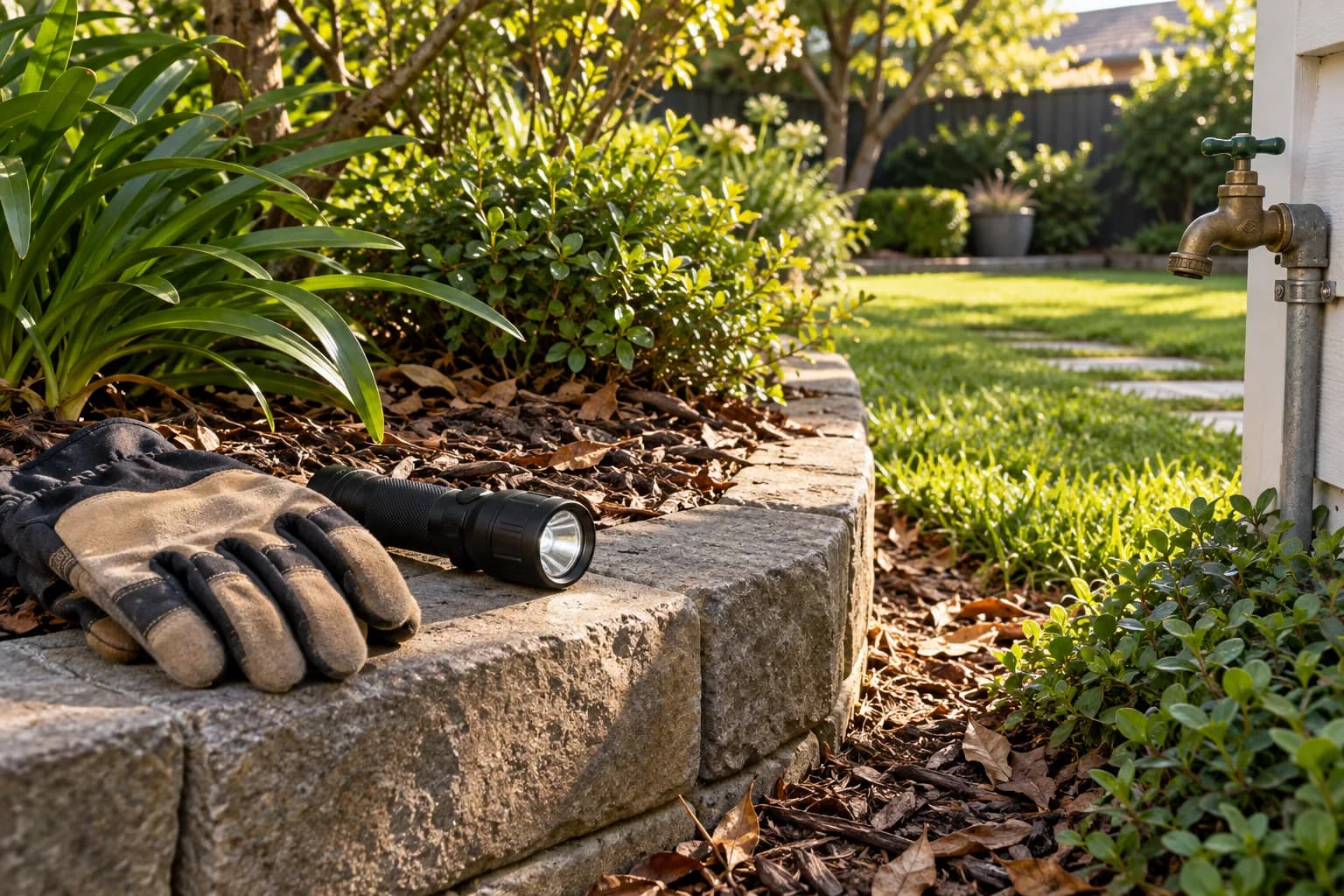 Dense shrubs against the house and a dripping hose bib give rodents cover and water. Trimming back and fixing drips makes the yard less inviting.
Mice in appliances, wiring and kitchens.
If mice keep showing up in appliances, have a provider look for entry points behind cabinets and under the sink. In kitchens, where baits are not acceptable, traps and glue boards are the tools. LSU guidance for heavy infestations is to place traps or bait every 5 to 10 feet, since mice hide anywhere and do not move far from nests. Set snap traps along walls nearby. Seal gaps around pipes and wires with steel wool and sealant. If you find droppings in a stove drawer or behind the dishwasher, pull the appliance out and clean behind it using the CDC wet method. Chewed wires can damage the appliance and create a fire hazard. Mice get in through gaps where pipes and wires enter the wall, then nest in insulation inside or behind the appliance. Stoves, dishwashers and refrigerators are warm, sheltered and right next to food. LSU AgCenter notes they nest in appliances and chew wiring, and they can carry the same diseases as rats. House mice in Lake Charles do not just live in walls.
Checking a Louisiana pest control license.
Holding a license is a floor rather than a promise of quality, but it means the state can step in if a job goes badly. The LSU guide calls for all rodenticides to go in tamperproof stations, so a good provider should explain how stations will be secured. Ask what products they plan to use, especially if bait stations will be placed outside. When you call a Lake Charles company, ask which license category it holds and whether the technician coming to your home is registered. Businesses must hold a place-of-business permit that expires June 30 each year. Each technician has to be registered within 30 days of being hired and log at least 4 hours of recertification training a year. Licensees must recertify every 3 years. The state has specific requirements. Rodent work falls under two categories: LP1 General pest control and LP2 Commercial vertebrate control. Louisiana regulates pest control through the Department of Agriculture and Forestry's Structural Pest Control Commission.
Comparing two quotes for a Lake Charles home.
Get each answer in writing. Some companies include it, some quote it separately. Attic insulation soiled by roof rats may need removal. Finally, ask about cleanup. Rodents stay active year-round here, so ask how many visits are included, how often, and what happens if activity continues. Then check the schedule. Ask about at least 3 ounces of bait per placement, which is the LSU minimum. If bait stations are included, ask how many, where, and whether they are tamperproof, as the LSU guide requires. Next, look at the control method. A plan without sealing will need to keep coming back. LSU AgCenter's standard is every opening larger than half an inch. Does the quote list the openings to be sealed, including roofline, soffits and vents, and the materials? Start with exclusion. Quotes from two Lake Charles companies rarely cover identical work, so compare the scope before the bottom line.
What affects the price
- Whether you have roof rats, Norway rats, mice or a mix.
- Roofline condition, including any storm damage to soffits, vents and fascia.
- Attic size and access, and how much insulation is soiled.
- Trees, vines and utility lines that let roof rats reach the roof.
- Ongoing monthly station service versus a one-time job.
- Commercial sites such as restaurants and hotels that need regular service.
📊
What's your biggest concern about rodents?
When to call for help
Bring in a provider once the attic noises become nightly, a rat shows up in the living space, burrows open along the foundation, or you spot chewed wires. Roof rats live at heights most homeowners cannot safely reach, and they need sealing along the roofline as well as trapping. Around Lake Charles, it also makes sense to call after storm damage or flooding if you notice rodent activity, since damaged soffits and soaked crawl spaces open new routes. Before hiring, confirm the company holds a Louisiana Department of Agriculture and Forestry license covering rodent work.
What you can do yourself
A few mice in the kitchen can be a DIY job. Seal visible gaps, set snap traps along walls every 5 to 10 feet in the areas with droppings, and keep food sealed. Many Lake Charles households handle an occasional mouse that way. Rats are different. Roof rats live in attics and travel along limbs and utility lines, so finding and sealing every entry at the roofline takes ladders, time and experience. Norway rats burrow outside and avoid new objects. Both often call for tamperproof bait stations outdoors, and the LSU guide is clear that any rodenticide belongs in those stations. A licensed provider brings the inspection, the equipment for roof work, and an ongoing service plan, which matters in a climate where rodents never really slow down. If you are hearing activity overhead, or trapping has not slowed things in two weeks, bring in help.
Rodents in Lake Charles
With a median home value near $180,000, keeping attic wiring and insulation intact is worth the work. LSU AgCenter's guidance is to rat-proof every opening larger than half an inch and keep any bait in tamperproof stations. Roof rats dominate Gulf Coast attics, and flooding and storm damage give them new routes in. Winter lows average around 44F, so rodents never get a real winter break. At only 15 feet above sea level in the humid subtropical South, Lake Charles gets about 60 inches of rain a year, summer highs near 92F and average humidity around 76%. The bigger factor for homeowners is the climate. Both bring large commercial and industrial properties with kitchens, warehouses and loading areas that need ongoing rodent service. Lake Charles was founded in 1861 and has grown into an urban city of about 81,000 people, known for its petrochemical industry and its casinos.
Local research
Rodents in Lake Charles, LA: what the public record shows
Before you compare quotes, it helps to know which rodents actually live in Louisiana, when they are busiest around Lake Charles, and what the state figures look like. Everything below links to the agency or university page it came from.
Rat-proofing gap size
LSU AgCenter: rat-proof all buildings by sealing all holes and openings larger than 0.5 inch.
LSU AgCenterBait or trap spacing for mice
Mice hide anywhere and do not move far from nests; glue boards and traps work where baits are not acceptable.
LSU AgCenterMinimum bait per placement
All rodenticides should go in tamperproof bait stations per the LSU guide.
LSU AgCenterRodent species recorded in Louisiana
- House mouse (Mus musculus) — Enters at 1/4 inch; 5-10 litters per year; eats about 200 small meals a night.
- Norway rat (Rattus norvegicus) — Burrowing rat of basements, sewers and ground floors; tail shorter than head plus body.
- Roof rat (Rattus rattus) — Climber of attics and trees in warm and coastal regions; tail longer than head plus body.
When rodents are busiest around Lake Charles
Year-round, fall surge. Roof rats dominate Florida, Texas and Gulf Coast attics.
Based on Lake Charles’s humid subtropical climate profile.
LSU AgCenter's guide treats Norway rats, roof rats and house mice together; mice nest in appliances and chew wiring and can carry the same diseases as rats.
Rules that apply in Louisiana
For context, nationally
- 1/4 inch (the width of a pencil) — Smallest gap a mouse can enter. CDC
- 890; 35% fatal; 94% west of the Mississippi — Hantavirus cases reported since 1993 (through 2023). CDC
Sources: LSU AgCenter; CDC; Pest Notes: House Mouse; Pest Notes: Rats. Figures are quoted as the source prints them. How we check our sources
Simple ways to keep rodents away
- Seal openings larger than half an inch for rats and a quarter inch for mice.
- Trim tree limbs and vines back from the roof and walls.
- Repair storm-damaged soffits, vents and fascia promptly.
- Keep gutters and downspouts clear so water drains away from the foundation.
- Store pet food and bird seed in metal bins with tight lids.
- Pick up fallen fruit and nuts regularly.
- Keep firewood and debris off the ground and away from the house.
- Use lidded trash cans and keep outdoor food areas clean.
 Shared basements and utility rooms are where rodent problems in rentals usually start. Landlords should walk them each fall and after every tenant turnover.
Did you know?
Roof rats have 3 to 5 litters a year, with up to 8 young in each.
Puerto Rico reported 46 leptospirosis cases through early April 2026, more than all other U.S. residents combined.
The CDC lists rat-bite fever among the diseases rodents can spread directly to people.
Questions people ask
Are roof rats or Norway rats more common in Lake Charles?
Many properties have both. Noises overhead point to roof rats; holes along the foundation point to Norway rats. Norway rats are here too, but they burrow at ground level. Roof rats are the usual attic rat along the Gulf Coast, Lake Charles included.
Is there a rodent season in Lake Charles?
Storms and flooding can also push rats into buildings at any time. That means sealing and monitoring should be year-round habits, not something you do once before winter. With winter lows around 44F, rodents stay active all year in Lake Charles, though there is a noticeable surge in fall. Not really.
What size hole do I need to seal for rats?
Use hardware cloth, metal flashing and sealant rather than foam alone, which rodents can chew through. Mice need even less room: the CDC says they can get through a gap of about a quarter inch. LSU AgCenter says to seal every opening larger than half an inch to rat-proof a building.
Can I get leptospirosis from floodwater?
Wear boots and gloves when cleaning up after flooding, and cover any cuts. cases through early April 2026, versus 22 by the same point in 2025. CDC tables show 21 U.S. The bacteria travel in water or mud fouled by infected animals' urine, and the CDC names rats as a main carrier in cities. Yes.
How do I check a pest control license in Louisiana?
Ask any Lake Charles company which license it holds. Licensees recertify every 3 years, and technicians must be registered within 30 days of hire. Rodent jobs sit under one of two categories, LP1 General pest control or LP2 Commercial vertebrate control. Louisiana licenses pest control through the Department of Agriculture and Forestry's Structural Pest Control Commission.
Why are mice in my stove or dishwasher?
Pull the stove and dishwasher out, clean behind them, seal gaps where pipes enter the wall, and set traps nearby. LSU AgCenter notes that mice nest in appliances and chew wiring, which can damage the appliance and create a fire risk. Appliances are warm, sheltered and close to food.
Are glue boards a good option?
Whatever you use, place traps along walls and runways, every 5 to 10 feet where activity is heavy. Snap traps are usually a better first choice because they kill quickly. They can be used where baits are not acceptable, according to the LSU guide, such as kitchens and food areas.
How do I clean droppings during storm cleanup?
Skip the broom and shop vac, which throw particles into the air. Per CDC guidance, mix 1.5 cups of household bleach into each gallon of water, saturate droppings and nesting, wait 5 minutes, then lift the mess with paper towels in gloved hands. Start by opening the house up for 30 minutes, which in Lake Charles humidity also helps wet materials dry.
Nearby cities
Related guides
Sources (6)
The facts in this article come from the public sources listed above. Every home is different, so ask the company you talk to about pricing and what’s included. Published by Rodent Exterminator · Updated October 11, 2026 · How we write these guides