The short version
Rodent control in Miami Gardens, FL is a year-round job aimed mostly at roof rats living in attics and fruit trees. With winter lows near 60F, there is no cold season to slow them, and Florida health officials say a roof rat can have up to 8 litters a year. Seal any quarter-sized hole with steel mesh or galvanized metal, then trap.
- Roof rats, Norway rats and house mice are the rodents Florida health officials track.
- Roof rats breed all year here, up to 8 litters of 6 to 8 young.
- A roof rat needs only a hole about the size of a quarter.
- Fruit trees and overhanging branches give rats a path to the roof.
- About 62 inches of rain a year raises leptospirosis concerns around standing water.
This is for Miami Gardens homeowners hearing scratching in the ceiling, families whose fruit trees keep getting gnawed, renters who found droppings in a kitchen cabinet, and landlords who want a rodent plan that holds. It also helps anyone who trapped rats before only to hear them again months later.
What to look for
The roof rat, which Florida health officials also call the fruit rat, is the main rodent in Miami Gardens homes. It is slim, agile and long-tailed, and it climbs trees, fences, power lines and vines to reach roofs, then slips into attics through gaps as small as a quarter. Once inside, it nests in insulation and comes down at night to feed on fruit, pet food and kitchen scraps. The Norway rat, sometimes called the sewer rat, lives lower, burrowing along foundations and around trash areas. House mice round out the list in kitchens, garages and storage rooms. The tropical climate removes the brakes. Winter lows average around 60F, so there is no seasonal die-off, and summer highs near 91F with humidity near 74 percent keep vegetation thick and fruit plentiful. Florida's health department notes roof rats can breed at 2 to 3 months and produce up to 8 litters a year, so an attic with open entry points refills within a season.
- 1Fruit gnawed open or hollowed out while still hanging on backyard trees.
- 2Scratching or running in the attic or ceiling after dark.
- 3Droppings in the attic, along the tops of walls, or in the garage.
- 4Dark rub marks along roof edges, soffits or where branches meet the house.
- 5Chewed AC line insulation or wire covering in the attic or along an exterior wall.
- 6Shredded insulation or nesting material piled in a corner of the attic.
- 7Rats running along fences, power lines or tree limbs at dusk.
Why it’s worth acting soon
- Florida officials say a roof rat can have up to 8 litters a year, so colonies grow quickly.
- Rats chew wiring and AC lines in hot attics, risking outages and fire.
- Florida health officials link rodents to leptospirosis, typhus, salmonella and rat bite fever.
- Urine and droppings foul attic insulation around ductwork and air handlers.
- Young rats breed at 2 to 3 months, so even one season of waiting matters.
Treatment options and typical costs
Roofline and attic exclusion
Quoted after inspection
Sealing every gap at soffits, roof vents, roof returns, AC line penetrations and gable vents. Florida's health department recommends heavy-gauge steel wool, galvanized metal or steel mesh, since roof rats chew through softer materials. Any opening the size of a quarter counts as a potential entry.
- Time
- Depends on the number of roofline openings
- Best for
- Any home with attic noise or droppings
Attic trapping
Quoted after inspection
Snap traps or enclosed traps along rafters, top plates and runways where droppings collect, checked and cleared on a schedule until catches stop. Trapping in the attic keeps rats from dying in wall voids, where Miami Gardens heat makes odor build fast.
- Time
- Until catches stop and the attic goes quiet
- Best for
- Roof rats already living in the attic
Tree and yard work
Quoted after inspection
Cutting back branches that touch or overhang the roof, removing fallen fruit and clearing vines from walls. This takes away the bridges roof rats use and the food that keeps them close. Ask whether the provider handles trimming or expects you to arrange it before sealing.
- Time
- Upfront trimming, then ongoing upkeep
- Best for
- Yards with fruit trees or heavy vegetation near the roof
Attic sanitation
Quoted after inspection
Removing droppings, nests and fouled insulation after rats are gone, using a wet cleanup method, with insulation replaced in heavy cases. Ask how the provider handles disposal and whether they clean around ductwork and the air handler.
- Time
- Set by how much insulation has to come out
- Best for
- Attics with long-term roof rat activity
Prices are typical published ranges. Ask what’s included before you compare quotes.
 Fall is when rodents head indoors. Leaf piles against the foundation hide burrows and gaps, so clear them and walk the wall before the first cold snap.
Fruit trees and fruit rats: the backyard side of Miami Gardens rodent control.
Florida's health department calls the roof rat the fruit rat for good reason. In Miami Gardens, backyard fruit trees are often the first stop for roof rats, and the trees themselves become ladders to the roof. The pattern is easy to spot once you know it. Fruit with neat holes gnawed into it, sometimes hollowed out while still hanging. Peels or seeds scattered under the tree. Rats moving along branches or fence tops at dusk. Then, a few weeks later, scratching in the attic. Breaking that pattern starts in the yard. Harvest fruit as it ripens and pick up anything that drops, daily if you can. Trim branches so none touch or hang over the roof, leaving a gap rats cannot jump. Clear vines from walls and fences that connect to the house. None of this removes rats already in the attic, but it cuts off the food that keeps them close and the routes that bring new ones. Paired with roofline sealing, yard work turns a recurring problem into a solvable one.
Up to 8 litters a year: how fast a Miami Gardens attic refills.
Roof rats in South Florida breed on a schedule that leaves little room for waiting. Florida's health department says a roof rat can have up to 8 litters a year, with 6 to 8 young in each, and those young are sexually active at 2 to 3 months. In a colder city, winter would interrupt that cycle. In Miami Gardens, winter lows average about 60F, so breeding runs all year. A pair that moves into an attic in spring can produce several litters before fall, and the first of those young will be breeding by summer. That is why health officials warn that an attic population rebuilds within a season if entry points stay open. Trapping a few rats without sealing just makes room for the next generation, whether it comes from inside the attic or from the trees outside. The takeaway is simple: treat the first sign as urgent, seal the roofline before or alongside trapping, and keep checking the attic for a few weeks after the last catch.
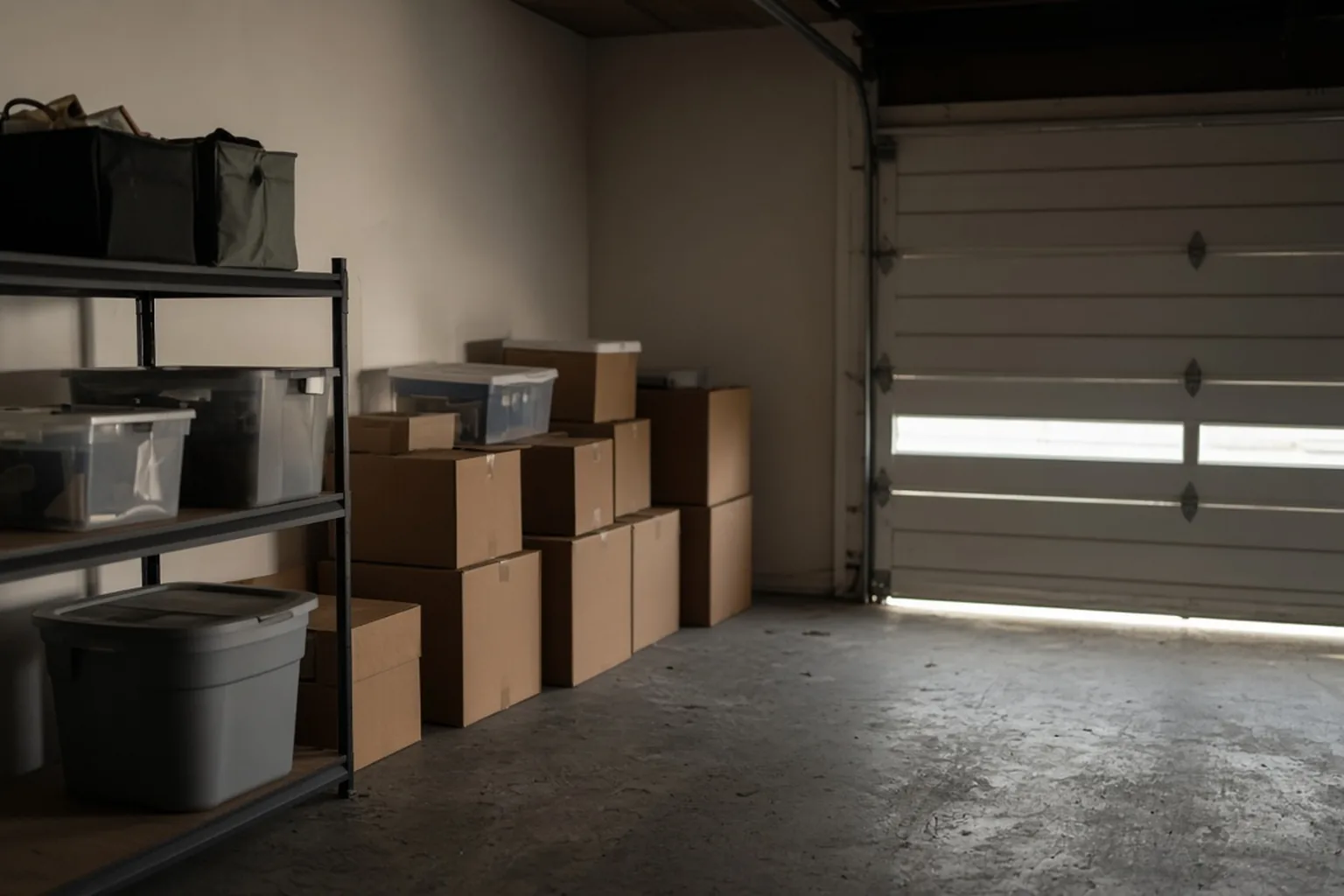 Cardboard boxes make easy nests and the gap under an overhead door makes an easy entrance. Plastic bins and a fresh door seal fix both.
Leptospirosis, typhus and a 62-inch rain year.
Florida health officials list several diseases tied to rodents: hantavirus, leptospirosis, plague, rat bite fever, salmonella and typhus. They note that leptospirosis and typhus matter most in Florida's warm, wet urban settings, which describes Miami Gardens well. Leptospirosis spreads through water or soil contaminated with rodent urine. With about 62 inches of rain a year and an elevation of just 7 feet, yards and low spots in Miami Gardens can hold standing water after storms, and rats moving through can contaminate it. Avoid wading through floodwater when you can, keep pets from drinking out of puddles, and wear gloves when cleaning areas with rodent activity. Typhus spreads through fleas that ride on rats and other animals. Keeping rats out of the attic and pets on flea prevention lowers that risk. For droppings, follow the CDC cleanup steps: air out the space for 30 minutes, soak droppings in a 1:9 bleach solution for 5 minutes, and wipe them up wet. Never sweep.
Sealing to the quarter: rat-proofing a South Florida roofline.
Florida's health department puts the roof rat's entry size at about the size of a quarter. That is smaller than most people expect, and it explains why sealing a Miami Gardens home takes a careful survey rather than a few patches. Start at the roofline, since roof rats come from above. Common entries include gaps where the soffit meets the fascia, roof returns, gable and ridge vents, plumbing vent boots, and the holes where AC lines enter the house. Look closely where additions or patio roofs join the main roof. Use materials rats cannot chew. The health department recommends heavy-gauge steel wool, galvanized metal and steel mesh. Foam, plastic and wood will not last. Then check ground level for Norway rats and mice: gaps under doors, around plumbing, and at garage door corners. After sealing, set traps in the attic to catch rats sealed inside, and listen for new noise. A week or two of silence and no catches usually means the seal is complete.
Is there a quiet season for rodents in Miami Gardens?
Not the way colder cities have one. Florida data notes roof rats stay active in attics and fruit trees all year, and Miami Gardens winter lows near 60F never force them indoors or slow their breeding. What changes through the year is mostly food and weather. Fruit trees ripen in waves, and roof rats follow the fruit. Heavy rains can flood burrows and push Norway rats toward higher ground, sometimes into garages and houses. Summer heat near 91F makes attics hot, but roof rats tolerate it and stay put. So the right time to act is whenever you notice signs, not after some season passes. Prevention should be ongoing too: keep trees trimmed back from the roof, check the attic now and then, and look over the roofline after storms, when damage can open new gaps. For landlords, a recurring inspection schedule makes more sense here than in most places, since a problem ignored in any month can become a full infestation.
What affects the price
- The number of roofline entry points, including soffits, vents and AC penetrations.
- Roof height and pitch, which affect how hard the sealing is.
- Trees and vines that need trimming away from the roof.
- Attic insulation that needs removal and replacement.
- How many trap checks it takes to clear the attic.
- Ongoing monitoring or exterior station service.
📊
What's your biggest concern about rodents?
When to call for help
Call a professional as soon as you hear rats in the attic. In Miami Gardens, roof rats breed all year, and a delay of a few months can mean several new litters. A pro is also the better choice when sealing calls for ladder work at the roofline, when you find chewed wiring or AC lines, or when trapping on your own has not stopped the noise. If you rent, tell your landlord in writing and include photos of droppings or damage.
What you can do yourself
Miami Gardens homeowners can handle much of the groundwork. Pick up fallen fruit daily, harvest ripe fruit promptly, trim branches back from the roof, and keep pet food in sealed containers. Snap traps in the garage or kitchen can take care of a stray mouse. The roofline is where most DIY efforts fall short. Roof rats can use a gap the size of a quarter, and a typical house has many possible entries at soffits, vents and roof returns. Finding and sealing every one with steel mesh or galvanized metal, often from a ladder, is skilled and sometimes risky work, and one miss lets the attic refill. Many homeowners keep the yard work and hire out sealing and attic trapping.
Rodents in Miami Gardens
Median home values around $370,000 make attic damage, chewed AC lines and insulation replacement costly, so sealing early in Miami Gardens pays off. Mild winters mean roof rats, Norway rats and house mice never get a seasonal break, and backyard fruit plus dense vegetation feeds roof rats and gives them a route to the roof. At just 7 feet of elevation, heavy rain can leave standing water in yards and low spots, which matters because leptospirosis is one of the diseases Florida officials connect to rodents. Summer highs average about 91F, winter lows about 60F, humidity runs near 74 percent, and the city gets around 62 inches of rain a year. For rodents, the climate is what counts. Miami Gardens is an urban city of about 112,000, founded in 2003 and known for Hard Rock Stadium, where the Dolphins and Hurricanes play.
Local research
Rodents in Miami Gardens, FL: what the public record shows
Before you compare quotes, it helps to know which rodents actually live in Florida, when they are busiest around Miami Gardens, and what the state figures look like. Everything below links to the agency or university page it came from.
Rodent species recorded in Florida
- House mouse (Mus musculus) — Enters at 1/4 inch; 5-10 litters per year; eats about 200 small meals a night.
- Norway rat (Rattus norvegicus) — Burrowing rat of basements, sewers and ground floors; tail shorter than head plus body.
- Roof rat (Rattus rattus) — Climber of attics and trees in warm and coastal regions; tail longer than head plus body.
When rodents are busiest around Miami Gardens
Roof rats stay active in attics and fruit trees year-round in Florida's climate.
Florida DOH guidance: store food and feed in metal or heavy plastic containers and keep stored material at least 12 inches off the ground.
For context, nationally
- 1/4 inch (the width of a pencil) — Smallest gap a mouse can enter. CDC
- 890; 35% fatal; 94% west of the Mississippi — Hantavirus cases reported since 1993 (through 2023). CDC
Sources: Florida Department of Health in Gadsden County; CDC; Pest Notes: House Mouse; Pest Notes: Rats. Figures are quoted as the source prints them. How we check our sources
Simple ways to keep rodents away
- Trim tree branches so none touch or overhang the roof.
- Pick up fallen fruit every day and harvest ripe fruit promptly.
- Seal soffit gaps, roof vents and AC line openings with steel mesh or galvanized metal.
- Keep pet food and birdseed in metal or heavy plastic containers.
- Pull vines and dense plantings off exterior walls.
- Use trash bins with lids and keep the lids closed.
- Drain standing water after storms to cut leptospirosis risk around the yard.
- Look through the attic twice a year for droppings and gnaw marks.
 After sealing, a few monitors or unset traps left along the walls tell you whether anything is still getting in before you hear it again.
Did you know?
Florida's health department uses the nicknames fruit rat for the roof rat and sewer rat for the Norway rat.
Puerto Rico reported 46 leptospirosis cases through week 13 of 2026, down from 82 at the same point in 2025, per CDC weekly data.
UC IPM describes roof rats as producing 3 to 5 litters a year in California, fewer than Florida's warm-climate estimate.
Questions people ask
Why are there rats in my attic in Miami Gardens?
Warm winters let them stay all year. They get in at soffits, vents and roof edges, and Florida health officials say a hole the size of a quarter is enough. Most attic rats in Miami Gardens are roof rats, which climb trees, fences and utility lines to reach the roof.
What is a fruit rat?
They nest in attics and trees and climb well, which is why trimming branches and picking up fallen fruit matter so much. Roof rats feed heavily on fruit, and you often find gnawed fruit still hanging on the tree. It is another name for the roof rat, used by Florida's health department.
How fast do roof rats breed in Florida?
With winter lows around 60F in Miami Gardens, breeding never pauses for cold weather. Florida's health department says roof rats can produce up to 8 litters a year with 6 to 8 young each, and the young are sexually active at 2 to 3 months. Very fast.
Is there a rodent season in South Florida?
Make roofline checks a habit through the whole year as well, especially after storms that can loosen soffits and vent covers. Activity may shift with fruit ripening and heavy rains, but rat signs deserve quick action in any month. Roof rats stay active in attics and fruit trees all year in Florida's climate. Not really.
Can rats make my family sick?
Clean droppings wet with a bleach solution after airing the space out, and keep children and pets away from rodent areas. The list from Florida health officials covers hantavirus, leptospirosis, plague, rat bite fever, salmonella and typhus, and they single out leptospirosis and typhus as the ones that matter most in warm, wet urban areas. They can.
What should I use to seal rat holes?
Look at each repair again a few weeks later; fresh gnawing tells you a rat is still testing that spot. Seal at the roofline as well as the ground, since roof rats come in from above. Roof rats chew through foam, plastic and wood. Florida's health department recommends heavy-gauge steel wool, galvanized metal or steel mesh.
How much does rat removal cost in Miami Gardens?
Ask providers to itemize sealing, trapping and sanitation so you can compare fairly, and ask how many follow-up visits are included. In Miami Gardens, the number of roofline entry points, roof height, tree trimming and attic cleanup drive the quote. It varies with the house.
Nearby cities
Related guides
Sources (6)
The facts in this article come from the public sources listed above. Every home is different, so ask the company you talk to about pricing and what’s included. Published by Rodent Exterminator · Updated October 11, 2026 · How we write these guides