The short version
Around North Las Vegas, rodent control is mostly about deer mice and house mice in garages, sheds, stored vehicles and empty homes, plus roof rats in yards with fruit and dense shrubs. With only about 4 inches of rain a year, rodents follow water. Seal gaps over 1/4 inch, trap where droppings show up, and clean droppings wet with bleach because deer mice carry hantavirus.
- Deer mice are the rodent Nevada's data flags, and they carry hantavirus.
- Nevada logged one provisional hantavirus case in 2025; spring cleanouts carry the most exposure.
- Stored RVs, trailers and cars make warm, quiet nests for mice.
- Water drives rodents here: irrigation, pools, pet bowls and AC drains.
- A home that sat empty should be checked for droppings before you unpack.
This is for North Las Vegas homeowners who found droppings in the garage, families moving into a house that sat vacant, military households unpacking after a move, and anyone who stores an RV, boat or classic car and keeps finding chewed wires. It also fits renters and landlords sorting out who handles rodents.
What to look for
Those chilly nights send mice indoors in fall and winter, and spring cleanout season is when people disturb the nests they left behind. Winters are cool for the desert, with lows around 39F at about 2,205 feet of elevation. Summer highs near 104F push them into shade and cool spaces, including garages, crawlspaces and parked vehicles. Humidity averages just 29%, and annual rainfall is about 4 inches, so rodents gather wherever water is available: drip irrigation, pool equipment, pet bowls, AC condensate lines and leaky hose bibs. The desert drives everything. Roof rats, slender climbers with long tails, show up in yards with fruit trees, palms and dense shrubs. House mice, the gray-brown indoor species, also move into garages and kitchens. They nest in sheds, garages, storage rooms, campers and empty homes, and they carry hantavirus in their droppings and urine. They have white bellies and feet, big eyes and ears, and a tail that is dark on top and white below. Deer mice are the rodent Nevada's state data calls out.
- 1Droppings on garage shelves, in storage boxes or inside cabinets that rarely get opened.
- 2Chewed wiring or nests of shredded material under the hood of a parked car or RV.
- 3Seed caches or shredded insulation inside a camper, boat or trailer.
- 4Small holes chewed through cardboard boxes stacked against a garage wall.
- 5Chewed drip lines or irrigation tubing in planters and garden beds.
- 6Scratching in walls or the attic, especially on cool nights in fall and winter.
- 7Fruit eaten on the tree or dropped fruit with gnaw marks under it.
Why it’s worth acting soon
- Deer mouse droppings build up in closed spaces, raising hantavirus risk at cleanup time.
- Chewed vehicle and RV wiring can lead to expensive repairs or breakdowns.
- Nests in stored boxes ruin clothing, papers and household items.
- Attic rodents chew AC wiring and ducts, which matters in 104F summers.
- Populations grow through mild months, so a small problem in spring gets bigger by fall.
Treatment options and typical costs
Garage and home sealing
Quoted after inspection
Closing gaps under garage doors, around pipes, vents and utility lines, and at the roofline with hardware cloth, metal and sealant. Mice need only 1/4 inch to get in, so door seals and pipe gaps matter most. Ask the provider for photos of what they sealed.
- Time
- One to two days
- Best for
- Mice in garages, kitchens and walls
Trapping and monitoring
Quoted after inspection
Snap traps along walls, in garages, sheds and attics, checked on a schedule. Monitoring stations around stored vehicles can show whether mice are still active. Trapping avoids rodents dying in walls, which matters in desert heat.
- Time
- Two to four weeks
- Best for
- Active mice or rats inside or around stored vehicles
Vacant home or storage cleanout
Quoted after inspection
Inspection and wet cleanup of a home, garage, shed or storage space that has been closed, using bleach solution and protective gear. Useful before moving in, unpacking or starting renovation.
- Time
- One to two days
- Best for
- Homes that sat empty, sheds and storage rooms
Exterior rat program
Quoted after inspection
Locked stations and traps along block walls, near fruit trees and dense shrubs. Ask what product is used and how stations are secured from pets and kids. Pair with tree trimming and fruit cleanup.
- Time
- Monthly or quarterly
- Best for
- Roof rats in yards with fruit trees and palms
Prices are typical published ranges. Ask what’s included before you compare quotes.
 Crawl spaces are where rats and mice get comfortable. Vent screens, the sill plate and any gap around pipes are worth a careful look.
Deer mice and the spring cleanout.
See a doctor if fever, aches and breathing trouble follow. If the space is heavily contaminated, consider professional cleanup. Do not sweep or vacuum dry droppings. Mop floors with the same mix. Paper towels go straight into a bag. Soak every dropping and nest with bleach solution, 1.5 cups per gallon of water, and give it five minutes before wiping. Put on rubber gloves. Before you clean, open doors and windows and let the space air out for half an hour. Infection usually happens when people breathe dust from dried droppings or urine in closed spaces. Nevada logged one case in the CDC's 2025 provisional count, and nationally the CDC has recorded 890 cases since 1993, about 35% of them fatal. Deer mice carry hantavirus. People open sheds, sort garages and clear storage rooms after a winter of disuse, and that is exactly when deer mouse droppings get stirred up. Spring is cleanout season in North Las Vegas.
Mice in stored RVs, trailers and cars.
Before a trip, air out the camper, check for droppings and clean with bleach solution if you find any. Set traps around tires and near the vehicle, not inside where you might forget them. Check under the hood and in storage areas every few weeks. Start and move vehicles regularly. Close vents and seal openings with mesh where you can. Remove all food and anything with scent, like pet food or snacks. Park away from shrubs and woodpiles when possible. Prevention starts with storage. Deer mice in campers add hantavirus risk when you open them up. They chew wiring, hoses and upholstery, and repairs can be expensive. Mice nest in engine compartments, air filters, cabin vents, storage bays and under seats. To a mouse, a parked camper is shelter, insulation and often food. If you park an RV, trailer, boat or project car beside your North Las Vegas home, treat it as part of the house.
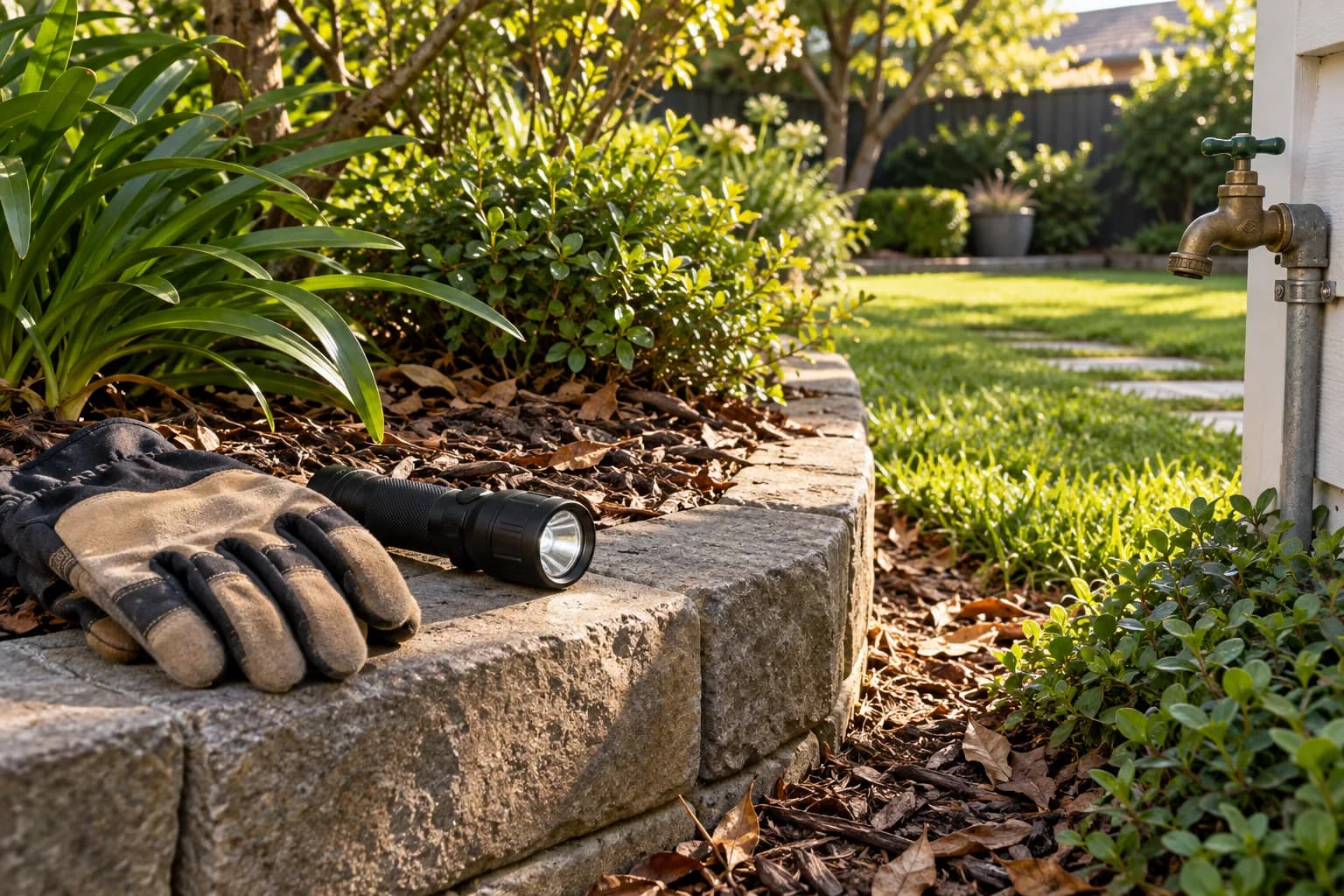 Dense shrubs against the house and a dripping hose bib give rodents cover and water. Trimming back and fixing drips makes the yard less inviting.
Moving into a home that sat empty.
A provider can inspect and clean before you move in, which is often easier than dealing with it after. If you are renting, report signs to the landlord in writing right away. Then seal gaps under doors and around pipes, and set snap traps along walls in the garage and kitchen. Do not sweep. If you find droppings, air out the house for 30 minutes, wear gloves, soak droppings with bleach solution, wait five minutes, then wipe up. Look for droppings, nests and chewed materials. Check kitchen cabinets, under sinks, closets, the garage and the water heater area. Before unpacking, walk through with a flashlight. Deer mice may be among them. Without people, noise or regular cleaning, mice settle into cabinets, closets, garages and attics. A vacant house gives mice quiet space. Military families stationed at Nellis Air Force Base, and anyone else relocating to North Las Vegas, may move into a home that sat empty for weeks or months.
Water in a 4-inch rain city.
But in this climate, water is the first thing to address. Food still matters, so pick up fruit, store pet food inside and avoid spilling birdseed. Trim shrubs so there is space underneath, and clear debris near pool equipment. Then reduce cover near water sources. Make sure AC condensate drains away from the house. Bring pet water bowls inside overnight. Fix leaks and replace chewed tubing. Walk the yard in the evening and look for drips, puddles and wet soil. Cutting off water is one of the most effective ways to make your yard less attractive. They chew through irrigation tubing to drink, which wastes water and creates more puddles. Rodents find water in drip irrigation, sprinkler heads, leaky hose bibs, pool equipment, fountains, pet bowls and AC condensate lines. North Las Vegas averages about 4 inches of rain a year and 29% humidity, so water is often more valuable to rodents than food.
Why plague is not a North Las Vegas worry.
For North Las Vegas households, the practical steps are the same: keep pets on flea control, do not handle wild rodents, clean droppings wet with bleach, and seal homes and garages so rodents stay outside. The CDC also lists diseases like salmonellosis, leptospirosis and rat-bite fever among those rodents spread directly. Hantavirus is the more relevant risk, carried by deer mice. That does not mean rodents are harmless here. Plague spreads through fleas on wild rodents, not typical house mice or roof rats. Nationally, human plague cases average about seven a year, with a range of zero to 17, according to the CDC. North Las Vegas, in the southern part of the state, is outside that region. The CDC places plague activity in northern New Mexico, northern Arizona, southern Colorado, California, southern Oregon and far western Nevada. Plague makes headlines in the West, but its geography matters.
What affects the price
- Garage size and the number of gaps around doors, pipes and vents.
- Whether stored RVs, trailers, boats or vehicles need inspection.
- How long the home or storage space has been closed up.
- Cleanup scope, including droppings in insulation, boxes and cabinets.
- Yard features like fruit trees, palms and dense shrubs.
- Follow-up visits included in the plan.
📊
What's your biggest concern about rodents?
When to call for help
Call a professional if you find heavy droppings in a garage, shed or empty house, since deer mice carry hantavirus and cleanup needs care. Bring someone in if mice keep chewing wiring in a vehicle or RV, if you hear rodents in the attic, or if trapping has not stopped activity after two weeks. A pro can seal entry points, clean safely and set up monitoring around stored vehicles. In North Las Vegas summers, also call quickly if you notice a dead-animal smell, since heat speeds up decay.
What you can do yourself
Roof rats in fruit trees and palms usually need professional help with exclusion at the roofline and well-placed traps. A provider can check and trap around stored vehicles and recommend storage changes. Mice nest in engine compartments, ducts and storage bays, and wiring repairs are expensive. Vehicles and RVs are tricky for DIY. If the space is large or heavily contaminated, a provider with protective equipment is a better choice. Never sweep. CDC steps call for opening the space for 30 minutes first, wearing gloves, wetting droppings with bleach solution, waiting five minutes, then wiping with paper towels. Cleanup is where caution matters. Store food, seed and pet food in sealed bins. Replace the garage door bottom seal, pack steel wool and sealant into pipe gaps, and set snap traps along the walls. A mouse or two in the garage is a reasonable DIY job.
Rodents in North Las Vegas
North Las Vegas was founded in 1946 and now has about 284,000 residents. It is known for Nellis Air Force Base and the Las Vegas Motor Speedway. Both can matter for rodents: military households relocate often, and any home or vehicle that sits unused for weeks makes a quiet nesting spot. The climate is hot desert, with summer highs near 104F, winter lows around 39F, only 29% humidity and about 4 inches of rain a year, at an elevation near 2,205 feet. That means water is the biggest draw for rodents, and cool winter nights push mice indoors. With median home values around $350,000, many homeowners want rodent control that protects garages, attics and vehicles. Nevada's state data highlights deer mice, the hantavirus carrier.
Local research
Rodents in North Las Vegas, NV: what the public record shows
Before you compare quotes, it helps to know which rodents actually live in Nevada, when they are busiest around North Las Vegas, and what the state figures look like. Everything below links to the agency or university page it came from.
Rodent species recorded in Nevada
- Deer mouse (Peromyscus maniculatus) — Primary U.S. hantavirus carrier; lives throughout Washington and the interior West.
When rodents are busiest around North Las Vegas
Spring cleanup exposure; summer. Deer mice and hantavirus in NM/AZ/CO/NV; plague fleas on wild rodents.
Based on North Las Vegas’s hot desert climate profile.
For context, nationally
- 1/4 inch (the width of a pencil) — Smallest gap a mouse can enter. CDC
- 890; 35% fatal; 94% west of the Mississippi — Hantavirus cases reported since 1993 (through 2023). CDC
Sources: CDC National Notifiable Diseases Surveillance System; CDC; Hantavirus. Figures are quoted as the source prints them. How we check our sources
Simple ways to keep rodents away
- Replace worn garage door seals so there is no gap at the bottom.
- Store items in lidded plastic bins instead of cardboard boxes.
- Run stored vehicles and RVs regularly and check under the hood for nests.
- Fix irrigation leaks and bring pet water inside at night.
- Trim shrubs and palms back from the house and roofline.
- Pick up fallen fruit and avoid leaving birdseed on the ground.
- Seal gaps around pipes and vents with steel wool and hardware cloth.
- Air out and inspect sheds before spring cleaning.
 Before you call, sketch where you have seen droppings or heard noise and measure any gaps you found. It makes the first visit faster and the quotes comparable.
Did you know?
Nevada's single provisional hantavirus case in 2025 was one of 17 reported across 11 states.
Roof rats can raise three to five litters a year, each with up to eight young.
The CDC's list of diseases rodents spread directly to people includes lymphocytic choriomeningitis, better known as LCM.
Questions people ask
What rodents are common in North Las Vegas?
Deer mice are the rodent Nevada's state data highlights, and they carry hantavirus. House mice also move into North Las Vegas garages and kitchens, and roof rats show up in yards with fruit trees, palms and dense shrubs. Each needs a slightly different approach.
Is hantavirus a risk in Nevada?
It is rare but real. Nevada had one hantavirus case in the CDC's 2025 provisional count. Deer mice spread it through droppings and urine. Risk rises when you clean closed spaces like sheds, garages and campers. Ventilate first, soak droppings with bleach solution, and never sweep.
Why do mice nest in my RV or car?
Parked vehicles are quiet, sheltered and often warm. Mice build nests in engine bays, air filters, vents and storage compartments, and chew wiring. If you store an RV, trailer or boat at a North Las Vegas home, check it regularly and trap around it.
What should I check before moving into a house that sat empty?
Look for droppings in kitchen cabinets, closets, the garage and under sinks. If you find them, air out the house for 30 minutes and clean with bleach solution before unpacking. Seal gaps and set traps. An empty North Las Vegas house gives deer mice and house mice quiet space, so check before boxes come in.
Is plague a concern in North Las Vegas?
Very unlikely. CDC data places Nevada's plague risk in the far western part of the state, not the Las Vegas Valley. Nationally, the CDC averages about seven human plague cases a year. Keep pets on flea control and avoid handling wild rodents.
How do I keep rodents out of my yard in the desert?
Cut off water first. With only about 4 inches of rain a year, North Las Vegas rodents depend on irrigation, pools and pet bowls. Fix leaks, bring water in at night, pick up fruit, and trim shrubs off the ground.
How small a gap can mice use?
The CDC says a mouse can get through a 1/4 inch opening, about the width of a pencil. Check garage door bottoms, pipe penetrations, dryer vents and gaps where the wall meets the foundation. Seal with steel wool and sealant or hardware cloth.
Nearby cities
Related guides
Sources (6)
The facts in this article come from the public sources listed above. Every home is different, so ask the company you talk to about pricing and what’s included. Published by Rodent Exterminator · Updated October 11, 2026 · How we write these guides