The short version
Rodent control in Oxnard, California is a year-round job, because coastal temperatures between about 45F and 74F let roof rats, Norway rats and mice stay active every month. The approach that works is sealing every hole over 1/4 inch, trimming ivy and palms away from the roof, and trapping, since California restricts most anticoagulant rat poisons.
- Mild coastal weather keeps Oxnard rodents active all year, with a fall peak.
- Roof rats nest in ivy, palms and fruit trees and travel 300 feet or more to feed.
- Seal every hole over 1/4 inch; rats slip under doors with a 1/2-inch gap.
- California restricts most anticoagulant poisons, so expect a trap-and-seal plan.
- Homes beside fields or the harbor face extra rodent pressure from outside.
This is for Oxnard homeowners and renters hearing noises in the attic or finding droppings, boat owners and harbor-area residents, families living beside strawberry fields or other farmland, and landlords and property managers who want a clear picture of what a California-compliant rodent job includes.
What to look for
What sets the local picture apart is the climate. Summer highs average only about 74F and winter lows average about 45F, so no hard season pushes rodents in or out. They breed and forage through every month, and fall simply adds a peak. Humidity averages 73 percent, which keeps gardens lush and crawl spaces damp, both helpful to rats. And California's restrictions on most anticoagulant baits mean the answer has to be exclusion and trapping. Three structural rodents and one native mouse share the area. Roof rats are the most visible: agile climbers that nest in ivy, palms, dense shrubs and attics and, according to UC IPM, travel 300 feet or more for food. Norway rats burrow along foundations, in damp soil and around waterfront structures, and they come in at ground level through garages and crawl space vents. House mice turn up in garages, kitchens and storage. Deer mice live in open and agricultural land and move into sheds and outbuildings.
- 1Rustling in the ivy at dusk, or rats crossing the top of a fence.
- 2Droppings on attic insulation or along roof framing, often near a vent.
- 3Avocados or citrus hollowed out while still on the tree.
- 4Burrows under decks, in planters or beside the foundation where soil stays damp.
- 5Chewed food packaging or gnawed wiring on a boat or in a dock box.
- 6Mouse droppings in a garage that backs onto open or farm land.
- 7Gray smudge marks along beams, pipes or the edge of a crawl space opening.
Why it’s worth acting soon
- With no cold season to slow them, a small roof rat colony keeps breeding through winter.
- Attic nesting soils insulation and chews wiring in homes where repairs are costly.
- Rodent urine can spread leptospirosis, and California logged cases in the opening weeks of both 2025 and 2026.
- Rats aboard boats chew wiring, upholstery and lines and foul stored gear.
- Deer mice in sheds near fields can expose people to hantavirus during cleanup.
Treatment options and typical costs
Roofline and foundation sealing
Quoted after inspection
A provider checks roof vents, eaves, gaps around utility and AC lines, crawl space vents, garage door corners and door bottoms, then closes every hole over 1/4 inch with hardware cloth, sheet metal, concrete or steel wool under sealant. UC IPM notes a rat can fit under a door with a 1/2-inch gap, so sweeps are part of the job.
- Time
- One or two visits
- Best for
- Every home with rodent signs
Year-round trap program
Quoted after inspection
Snap traps along attic rafters, garage walls and runways do the removal, with enclosed boxes outdoors to protect pets and birds. Because rodents never pause here, a good plan runs until captures stop and then leaves a few monitoring traps in place for early warning. Ask how often traps get checked.
- Time
- Several weeks, then periodic monitoring
- Best for
- Active roof rats and mice
Vegetation management
Quoted after inspection
Cutting ivy off fences and walls, thinning dense ground cover near the house, trimming palm fronds and limbs back from the roof, and picking fruit promptly removes the cover and food roof rats depend on. Some providers do this work themselves and others hand you a list.
- Time
- One cleanup, then seasonal trims
- Best for
- Yards with ivy, palms or fruit trees
Allowed baits in locked stations
Quoted after inspection
California prohibits most anticoagulant rodenticides in most areas, though some non-anticoagulant products such as bromethalin, cholecalciferol and zinc phosphide are still available. If trapping and sealing fall short, a licensed provider may use one in locked outdoor stations. Ask what it is and exactly where it will go.
- Time
- Ongoing, checked on schedule
- Best for
- Heavy outdoor pressure near fields or the harbor
Prices are typical published ranges. Ask what’s included before you compare quotes.
 Clutter gives mice cover. Keeping stored fabric in lidded bins and off the floor takes away the nesting spots they like best.
Why don't Oxnard rodents ever slow down?
But the baseline stays high all year. For homeowners, that changes the strategy. Instead of one big fall push, plan for steady upkeep. Seal the house thoroughly once, then check it a few times a year. Keep a couple of monitoring traps set in the garage and attic so new activity shows up early. Trim vegetation on a regular schedule rather than once. The upside is that a well-sealed house with trimmed landscaping tends to stay clear, because no seasonal surge here is strong enough to overwhelm good exclusion. Because the weather never forces them to. Oxnard's average summer high is about 74F and its winter low about 45F, a narrow band that suits rats and mice almost perfectly. In colder cities, freezing nights push rodents indoors in a rush and limit outdoor breeding. Here, roof rats can nest in ivy or palms in January and Norway rats can forage outside in any month. That does not mean there is no pattern. Fall still brings a peak, as young animals born over spring and summer look for territory and some move into attics, garages and crawl spaces.
What do rats around Channel Islands Harbor mean for nearby homes and boats?
After a boat has sat for a while, look for droppings and gnaw marks before heading out. For homes near the harbor, the pressure is simply higher. Rats feeding on waterfront scraps look for nesting sites nearby, and UC IPM notes roof rats can travel 300 feet or more for food. Thorough sealing matters more on these lots, and so do regular attic and garage checks. When you collect quotes for a harbor-area home in Oxnard, ask whether the provider will look at nearby food sources and suggest outdoor steps, not just indoor traps. Waterfronts concentrate rodent food and shelter. Around Channel Islands Harbor, any fish-cleaning station, trash enclosure, dock box or boat can offer meals and hiding places. Norway rats burrow in soil and rock along the water and shelter under docks, while roof rats climb into boats, palms and buildings. For boat owners, the main risks are chewed wiring, damaged cushions and contaminated gear. Keep all food and bait in sealed containers, clean up after every trip, close hatches and covers when you leave, and fit rat guards on mooring lines where you can.
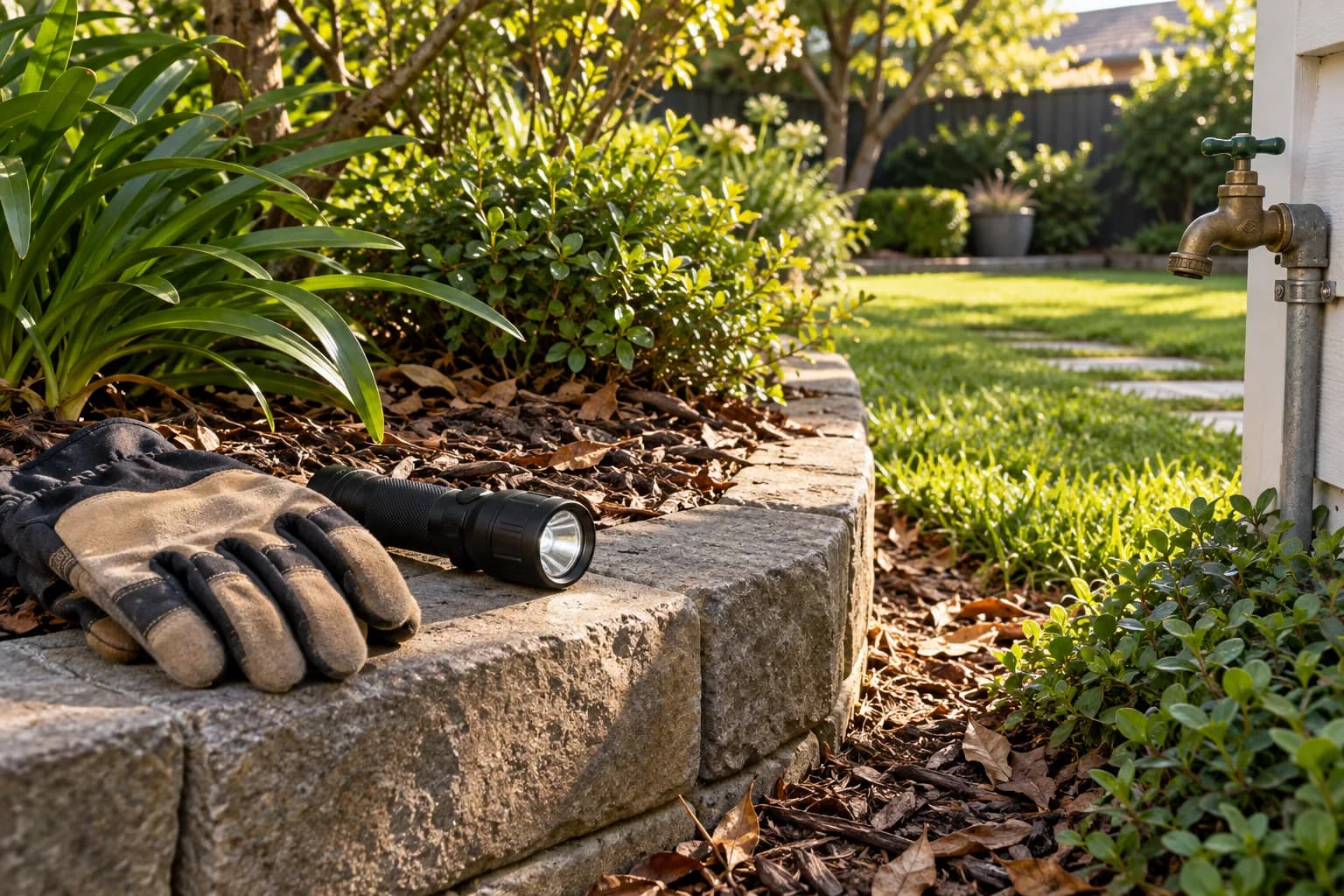 Dense shrubs against the house and a dripping hose bib give rodents cover and water. Trimming back and fixing drips makes the yard less inviting.
Living next to strawberry fields: what changes?
A few steps lower the odds. The risk comes from stirring up dried droppings and urine in a closed space, such as a shed or garage that has been shut for a while. They carry hantavirus, and California recorded 4 provisional cases in 2025, the highest of any state. Deer mice are the species to take seriously. Fields give house mice and deer mice plenty of food and cover through the growing season, and when fields are cleared, tilled or replanted, some of those animals scatter toward the nearest garages, sheds, barns and houses. Homes along agricultural land see a different rodent mix than homes in the city center. If activity is heavy, a provider can handle the cleanup and the sealing in a single job. Do not sweep or vacuum. When you clean, air the space for 30 minutes, wear gloves, soak droppings and nests with 1.5 cups of bleach per gallon of water for 5 minutes, then wipe up and bag it. Keep stored items on shelves rather than the floor, and skip cardboard boxes that turn into nests. Seal the garage and any outbuilding against gaps over 1/4 inch, door bottoms included.
Why is ivy the roof rat's favorite hiding place?
UC IPM notes roof rats travel 300 feet or more to eat, so a neighbor's avocado tree can feed rats living in your attic. Fruit trees add the food. Palm crowns make good nest sites, and fronds or limbs touching the roof give rats a direct path to vents and gaps at the eaves. Palms, dense hedges and fruit trees play similar roles. In a mild, humid coastal climate it stays thick all year, so the cover never thins out. Ivy gives roof rats nearly everything in one plant: dense cover from predators, a sheltered place to nest and a protected highway along fences and walls. Rats that lose their outdoor cover are easier to trap, and fewer of them will be testing your roofline at night. Do this before or alongside sealing and trapping. Pick fruit as it ripens and clear the drops. Trim palms and limbs so nothing touches the roof. Cut ivy off fences, walls and trunks, and consider swapping large ivy beds for lower plantings. Vegetation work is one of the most effective things you can do, and much of it is DIY.
What should a trap-and-seal plan include for an Oxnard home?
The trapping should put snap traps on runways in the attic and garage, with enclosed boxes outside, plus scheduled checks until catches stop. Because rodents stay active year-round here, ask about leaving a few monitoring traps afterward. Cleanup and repairs come last: removing droppings, sanitizing, and replacing soiled insulation if needed. With a median home value near $670,000 in Oxnard, wiring and insulation damage deserve a look. Ask each provider to price these pieces separately so the quotes line up. With most anticoagulant baits restricted in California, a good plan rests on inspection, exclusion and trapping. Here is what to expect and ask for. The inspection should cover the roof, eaves and vents, the gaps where AC lines, pipes and cables enter, the crawl space if there is one, garage doors and door bottoms, and the yard: ivy, palms, fruit trees and any burrows. You should receive a written list of entry points. The sealing should close every hole over 1/4 inch with durable materials, and door sweeps should be tight enough that no 1/2-inch gap remains, in line with UC IPM guidance.
What affects the price
- How much ivy and dense planting sits against the house and fences.
- Roof complexity and the number of vents, which drive sealing time.
- Attic cleanup and insulation replacement after long-term nesting.
- Crawl space access and condition.
- How long the trapping and monitoring program runs.
- Sheds or outbuildings near fields that need inspection and careful cleanup.
📊
What's your biggest concern about rodents?
When to call for help
Call a provider when you hear rodents in the attic, see rats regularly on fences or in the ivy, or keep finding droppings after a couple of weeks of trapping. Since Oxnard rodents stay active all year, there is no reason to wait for a particular season, though fall is when pressure peaks. Get help before cleaning out a shed or garage near farmland with heavy droppings, because deer mice may be involved. Boat owners with rats aboard should act quickly, before wiring is damaged. Renters should report activity to the landlord in writing.
What you can do yourself
For deer mouse droppings in a shed by the fields, hire out the cleanup if you are unsure. A provider brings ladders, hardware cloth and a trapping schedule, and can tell you which gaps matter most. Roof rats travel far, so a colony can keep sending animals into a partly sealed attic, and California's limits on most anticoagulant baits rule out a quick bait-only fix. The work that tends to need a professional is roofline sealing, attic trapping and anything involving a crawl space. For a mouse or two in the garage, snap traps along the wall and a sealed gap usually finish the job. Cutting ivy off fences and walls, trimming palms and limbs away from the roof, and picking fruit as it ripens take away most of what roof rats need. You can do a lot yourself here, and the yard is the place to start.
Rodents in Oxnard
With a median home value near $670,000, attic and wiring damage is costly, and California's limits on most anticoagulant baits put the emphasis on sealing and trapping. The city sits just 52 feet above sea level at urban density, with homes close together and rats able to move between yards. That narrow range means rodents never face a hard season, and coastal gardens stay green enough to hide them. The climate is mild and steady, with summer highs near 74F, winter lows around 45F, 73 percent humidity and about 15 inches of rain a year. Farmland around the city supports house mice and deer mice that can drift toward homes and outbuildings, while harbor docks and boats can offer food and shelter to Norway and roof rats. Oxnard is a coastal city of about 201,000 people, founded in 1903 and known for its strawberry fields and Channel Islands Harbor, and both shape the rodent picture.
Local research
Rodents in Oxnard, CA: what the public record shows
Before you compare quotes, it helps to know which rodents actually live in California, when they are busiest around Oxnard, and what the state figures look like. Everything below links to the agency or university page it came from.
Rodenticide restriction
Bromadiolone, brodifacoum, difethialone, diphacinone, chlorophacinone and warfarin cannot be applied in most areas; bromethalin, cholecalciferol and zinc phosphide remain.
UC IPMGap a rat can squeeze under a door
Roof rats travel 300+ feet for food.
UC IPMRodent species recorded in California
- House mouse (Mus musculus) — Enters at 1/4 inch; 5-10 litters per year; eats about 200 small meals a night.
- Norway rat (Rattus norvegicus) — Burrowing rat of basements, sewers and ground floors; tail shorter than head plus body.
- Roof rat (Rattus rattus) — Climber of attics and trees in warm and coastal regions; tail longer than head plus body.
- Deer mouse (Peromyscus maniculatus) — Primary U.S. hantavirus carrier; lives throughout Washington and the interior West.
When rodents are busiest around Oxnard
Rats active year-round; check periodically.
California's rodenticide law pushes work toward trapping and exclusion.
Rules that apply in California
For context, nationally
- 1/4 inch (the width of a pencil) — Smallest gap a mouse can enter. CDC
- 890; 35% fatal; 94% west of the Mississippi — Hantavirus cases reported since 1993 (through 2023). CDC
Sources: CDC National Notifiable Diseases Surveillance System; Pest Notes: Rats; CDC; Pest Notes: House Mouse; Hantavirus. Figures are quoted as the source prints them. How we check our sources
Simple ways to keep rodents away
- Cut ivy off fences, walls and tree trunks, and thin dense ground cover near the house.
- Trim palm fronds and limbs so nothing touches or hangs over the roof.
- Pick avocados, citrus and other fruit as it ripens, and clear drops promptly.
- Screen roof, eave and crawl space vents with hardware cloth.
- Add door sweeps so no exterior door leaves a 1/2-inch gap.
- On boats, keep food in sealed containers and fit rat guards on dock lines.
- Keep garages near open land tidy, with stored items off the floor.
- Check the attic every few months, since there is no off-season here.
 Shared basements and utility rooms are where rodent problems in rentals usually start. Landlords should walk them each fall and after every tenant turnover.
Did you know?
Roof rats typically raise three to five litters a year, each with as many as eight young.
The CDC has tracked hantavirus cases since 1993 and has counted 890 nationwide, the vast majority west of the Mississippi.
A rat needs only a 1/2-inch gap under a door to squeeze inside, roughly the width of two pencils laid side by side.
Questions people ask
Why are there rats in my ivy?
Cutting it back and keeping it off walls and trees is one of the most effective steps you can take. In Oxnard's mild, humid climate, ivy stays thick all year, so rats never lose that cover. It gives dense cover, nesting space and a protected route along fences and walls to your roof. Ivy is ideal roof rat habitat.
Is there a rodent season in Oxnard?
Check your attic and garage every few months rather than waiting for one season. Fall brings a peak as young animals look for shelter and some move indoors, but roof rats in attics and ivy keep going through winter. With summer highs near 74F and winter lows around 45F, rodents stay active every month. Not really.
Can I use rat poison?
For most homes, trapping and sealing every hole over 1/4 inch is the plan. A few non-anticoagulant baits remain, but they belong in locked outdoor stations placed by a licensed provider. California prohibits most uses of anticoagulant rodenticides, according to UC IPM, so the familiar products are largely unavailable for home use.
How do I keep rats off my boat?
Near Channel Islands Harbor, a rat can move between docks and boats, so check wiring and cushions for gnaw marks after the boat has sat. Rat guards on dock lines help stop climbers. Store all food and bait in sealed containers, clean up after fishing and meals, and keep the boat closed when you leave.
Do farm fields near my house bring more mice?
If you live near the strawberry fields around Oxnard, seal the garage, keep stored items off the floor, and clean sheds using the CDC wet method. Fields give house mice and deer mice plenty of food and cover, and when fields are cleared or tilled some of those rodents move toward nearby buildings. They can.
Are rodents a health risk in coastal California?
Clean droppings wet with a bleach solution, never sweep them, and wash up afterward. Salmonellosis from contaminated food is another. The main concerns are leptospirosis from rat urine, with California counting 2 cases in the first 13 weeks of 2026, and hantavirus from deer mice, with the state recording 4 provisional cases in 2025.
Why is my attic insulation ruined after rats?
Ask for that as a separate line item so you can compare quotes fairly. Heavily contaminated insulation is usually better replaced than cleaned. Roof rats nest in insulation and soak it with urine and droppings over time, and in a humid coastal climate damp, soiled insulation holds odor.
Nearby cities
Related guides
Sources (6)
The facts in this article come from the public sources listed above. Every home is different, so ask the company you talk to about pricing and what’s included. Published by Rodent Exterminator · Updated October 11, 2026 · How we write these guides