The short version
To control rodents in Springdale, Arkansas, close every gap a pencil could slip through, set snap traps a few feet apart along the walls rodents travel, and keep food and clutter away from the foundation. House mice, Norway rats and roof rats all live here, and September through November is when most of them move indoors.
- Springdale's household rodents are the house mouse, Norway rat and roof rat.
- The biggest indoor push runs September through November as nights cool toward 26F lows.
- Mice fit through 1/4-inch gaps and rats through 1/2 inch, so sealing must be thorough.
- Properly set snap traps are 75% to 88% effective, so use several, close together.
- Clean droppings with a bleach soak, never by sweeping or vacuuming.
- Commercial rodent work in Arkansas requires a Classification 2 license.
If you are comparing quotes from local companies, the sections on cost and licensing will help you ask sharper questions. It is also useful for small business owners who store or serve food, since rodents follow food wherever it sits. This guide is for Springdale homeowners, renters and landlords who have spotted signs of mice or rats, or who want to get ahead of the fall season before it starts.
What to look for
Roof rats are sleeker climbers that settle in attics and travel along fences and overhead lines after dark. The local weather keeps all three busy. Summers average about 89F with humidity near 70%, so shrubs, weeds and ground cover grow thick and give rodents shelter right against the siding. Winters are colder than many newcomers expect, with average lows near 26F. That seasonal drop is what sends mice and Norway rats indoors each fall, and once they find a warm wall cavity, they rarely leave on their own. Three rodents cause nearly all the trouble here. House mice are the small, gray-brown ones that turn up in kitchen drawers and behind stoves. According to the University of Arkansas Cooperative Extension Service, a female can produce as many as 13 litters in a year with 4 to 7 young in each, which is why one mouse in October can become a crowded wall by January. Norway rats are heavier burrowers that dig along foundations, under slabs and beneath woodpiles.
- 1Droppings about the size of a rice grain along baseboards, in drawers or under the sink usually mean house mice.
- 2Larger, capsule-shaped droppings near the garage, crawl space or attic point to rats.
- 3Scratching or quick footsteps overhead after dark is a classic roof rat clue.
- 4Dark, greasy rub marks along walls, pipes or sill plates show a route used night after night.
- 5Fresh holes in loose soil along the foundation or under shrubs suggest Norway rats are burrowing.
- 6Chewed food packaging, torn pet food bags or insulation pulled out of a wall.
- 7A musty, ammonia-like smell inside a closed cabinet or closet.
- 8A dog or cat suddenly fixated on one spot behind an appliance.
Why it’s worth acting soon
- House mice can produce up to 13 litters a year, so a small problem grows fast.
- Gnawed wiring inside walls and attics is a genuine fire hazard.
- Urine and droppings contaminate food and counters, and the CDC links rodents to salmonellosis and leptospirosis.
- Insulation that rats nest in loses its value and often has to be pulled out and replaced.
- Rats can chew small openings wider over time, which makes later sealing harder and costlier.
Treatment options and typical costs
Exclusion and sealing
Quoted after inspection
Closing every opening rodents can use, with hardware cloth, sheet metal flashing, steel wool and mortar. UA Extension sets the target at 1/4 inch for mice and 1/2 inch for rats. This is the step that stops the problem from coming back, and it should cover the roofline and utility entries as well as the foundation.
- Time
- Depends on how many openings the inspection finds
- Best for
- Every home with rodent activity, and as prevention before fall
Snap trapping
Quoted after inspection
Multiple snap traps set along walls and runways, spaced no more than 6 feet apart where activity is heavy. Traps let you confirm each catch and remove the body, which avoids the smell of a rodent dying inside a wall. They work for both mice and rats when placement is right.
- Time
- Checked regularly until catches stop
- Best for
- Active indoor infestations of mice or rats
Exterior bait stations
Quoted after inspection
Locked, tamper-resistant stations placed around the outside of a building to reduce rat numbers before they reach the walls. Since Norway rats roam an area 100 to 150 feet across, stations need to cover the whole yard, not just the corner where one was seen. Ask how the provider protects pets and other wildlife.
- Time
- Ongoing, with scheduled checks
- Best for
- Yards with active burrows or repeated rat sightings
Sanitation and contaminated material removal
Quoted after inspection
Removing food sources, nesting debris and soiled material, then disinfecting by the CDC method: air the space 30 minutes, spray a 1:9 bleach solution, soak 5 minutes, and wipe with paper towels. Some companies also remove and replace attic insulation when nesting has been heavy.
- Time
- Depends on how much area is contaminated
- Best for
- Attics, garages and storage rooms with heavy droppings
Prices are typical published ranges. Ask what’s included before you compare quotes.
 Crawl spaces are where rats and mice get comfortable. Vent screens, the sill plate and any gap around pipes are worth a careful look.
Mouse, Norway rat or roof rat: which one is in your Springdale home?
Where you find the evidence usually tells you which rodent you have. Small droppings in a kitchen drawer or behind the stove almost always mean house mice. Gnawing and burrows near the garage, a crawl space or the edge of a slab point to Norway rats. Noises in the attic or upper walls after dark tend to mean roof rats. The difference matters because each animal lives on a different scale. UA Extension says a house mouse spends its life in an area only 10 to 30 feet across, so a Springdale family with mice in the kitchen usually has the nest within a few steps of the droppings. Norway rats range much wider, and roof rats can cover 100 to 300 feet in a night, often running along fences and overhead utility lines to reach a roof. If you are unsure, photograph the droppings next to a coin and show the picture to the provider. Mouse droppings are roughly the size of a rice grain, while rat droppings are noticeably bigger.
How do you set snap traps so they actually catch something?
Placement beats bait. The University of Arkansas Cooperative Extension Service rates properly set snap traps at 75% to 88% effective, and the key word is properly. Set traps flat against the wall with the trigger end touching the baseboard, because mice and rats run along edges rather than across open floors. Where activity is heavy, put several traps no more than 6 feet apart. A pea-sized dab of peanut butter or oatmeal works, and a tuft of cotton can tempt a mouse gathering nest material. For rats, leave traps baited but unset for a couple of nights so the animals get used to them, then set them. In a Springdale house heading into October, check every trap each morning, wear gloves to empty them, and keep at it until a full week passes with no new catches. Glue boards are a poor fit for most homes. They hold rodents alive and stressed, which spreads urine and droppings, and they can snare pets and small birds. With kids or pets around, tuck traps inside a covered box or behind appliances.
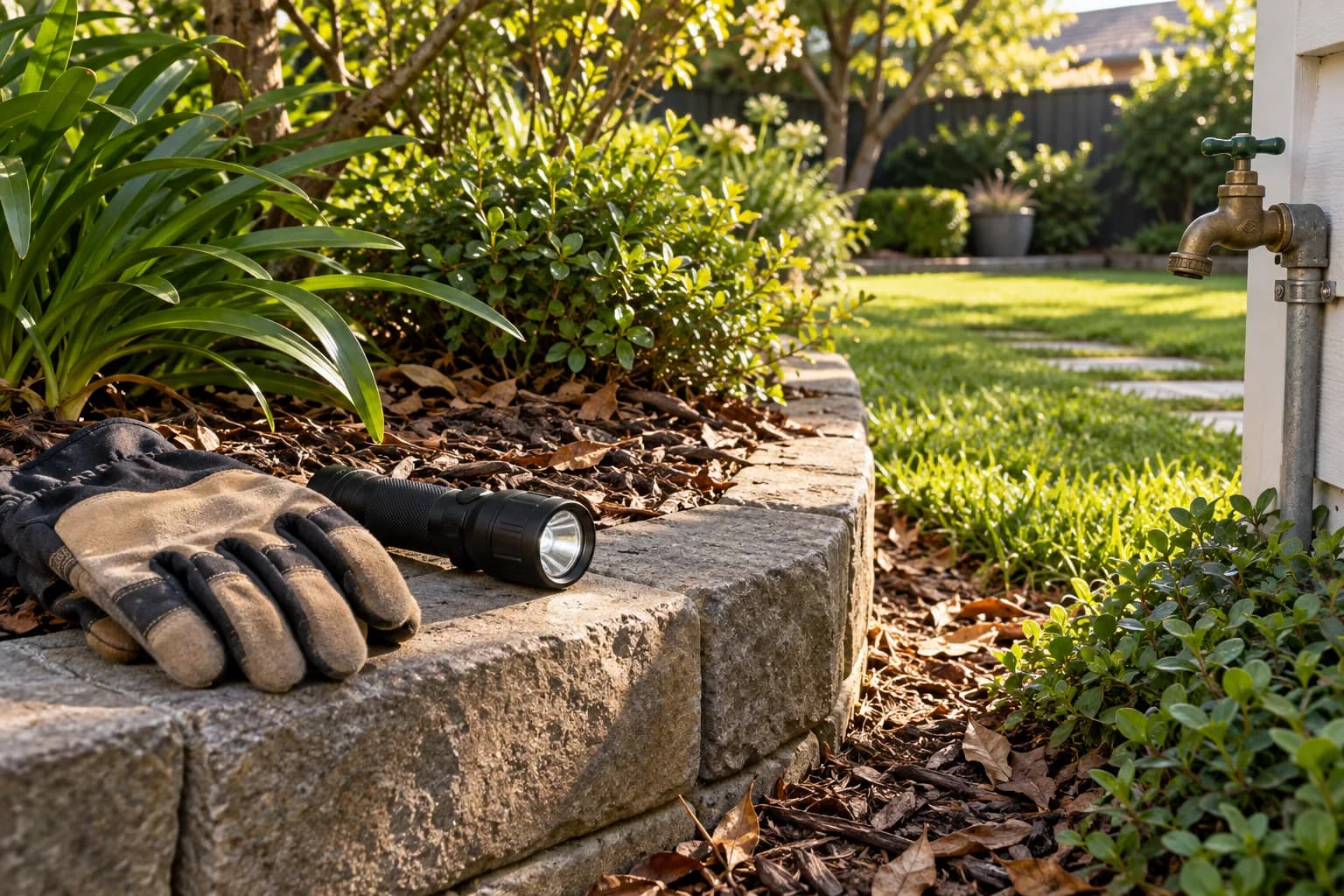 Dense shrubs against the house and a dripping hose bib give rodents cover and water. Trimming back and fixing drips makes the yard less inviting.
A Springdale rodent calendar, season by season.
Late summer is the best time to prepare. Outdoor populations peak after months of warm weather with highs near 89F, and sealing gaps before nights cool gives you a head start. September through November is the main entry season. As temperatures fall, house mice and Norway rats head for warm buildings, and this is when Springdale households most often find their first droppings. Traps set now catch early arrivals before they breed indoors. December through February brings average lows around 26F. Rodents already inside stay put and keep breeding, while those outside look for any warm gap, including garages and sheds. Check traps and stored boxes in those spaces. March through May is cleanup season. Clear nesting material from storage areas using the CDC bleach method, repair anything chewed, and walk the foundation looking for new burrows. June and July are quieter indoors, though roof rats can stay active in attics. Use these months to trim branches, fix torn screens and keep the 3-foot strip around the foundation clear.
What changes the price of rodent work on a Springdale house?
The number of openings drives most of the cost. A rodent job is largely labor: someone has to find every gap at the roofline, foundation, garage and utility entries, then close each one with metal, mortar or hardware cloth. A house with a handful of small openings costs less to seal than one with gaps at every vent. With Springdale's median home value around $230,000, many owners are weighing the cost of sealing against the cost of replacing chewed wiring, soiled insulation or damaged ductwork later. That comparison usually favors doing the exclusion work once and doing it well. A few other items move the number. Rats mean more yard to cover because of their wider range. Attic cleanup and insulation replacement add material and disposal. The count of follow-up trap checks changes labor. Exterior bait stations are often billed as a recurring plan. Ask each company to split its quote into inspection, exclusion, trapping and cleanup so you can compare like with like. A low price that skips sealing usually means paying again the next fall.
How should you clean up droppings and old nests?
Air the space out first, then wet everything down. The CDC's cleanup steps start with opening doors and windows for 30 minutes before you begin. Put on rubber or plastic gloves, spray droppings and nesting material with 1.5 cups of bleach per gallon of water, and let it soak 5 minutes. Wipe it up with paper towels, bag it, and then wipe the area again with the same solution. Skip the broom and the vacuum. Both kick dried particles into the air, where you can breathe them in. The caution comes from the list of illnesses the CDC ties directly to rodents, which includes leptospirosis, rat-bite fever, salmonellosis, tularemia, hantavirus and lymphocytic choriomeningitis. These are uncommon in Arkansas. Only one leptospirosis case turned up statewide in 2020, according to the state public health veterinarian's annual report, which also logged 36 tularemia cases that year. For a large Springdale attic or a garage full of nesting debris, ask whether the provider handles contaminated insulation removal as part of the job.
What affects the price
- How many entry points the inspection turns up, since each sealed gap adds labor and material.
- Whether you have mice, rats or both, because rat work covers more ground.
- Attic access and roof pitch, which decide how easily roofline gaps can be reached.
- How many follow-up trap checks are built into the plan.
- Cleanup scope, especially if soiled insulation has to come out.
- Whether exterior bait stations are part of a recurring service agreement.
- Home size and layout, since a garage, crawl space or finished basement adds places to inspect.
📊
What's your biggest concern about rodents?
When to call for help
Get help, too, when an attic or crawl space has heavy contamination, when someone in the household has a weakened immune system, or when you rent and the property owner handles repairs. Whoever does the work in Arkansas should hold a Classification 2 Household Pest and Rodent Control license from the Department of Agriculture. Bring in a professional if you are still catching mice after two weeks of steady trapping, if you see any sign of rats, or if you cannot find where they are getting in. Rats are wary of new objects and much harder to trap than mice, and their range usually extends beyond a single yard.
What you can do yourself
Be wary of loose poison bait indoors, since a rodent that dies inside a wall can leave an odor for weeks. Most of the value is in the inspection: finding openings you cannot see from the ground and sealing them with materials that last. A pro earns the fee when rats are involved, when gaps sit high on the roofline, or when catches keep coming after a couple of weeks. Seal what you can reach with steel wool, caulk or hardware cloth. UA Extension notes that mice stay within an area roughly 10 to 30 feet across, so traps belong right where the droppings are, not across the room. Pick up ten or twelve snap traps, bait them with a small dab of peanut butter, set them flat against the wall with the trigger end facing the baseboard, and check them every morning. DIY works well for a mouse or two in a house that is otherwise tight.
Rodents in Springdale
With a median home value around $230,000, protecting wiring, ductwork and insulation is worth the effort of sealing a house properly. Rainfall of about 46 inches a year keeps yards green and dense, which is good for gardens and good for rats looking for cover. Springdale is also known as the headquarters of Tyson Foods, and with food so central to the local economy, every restaurant, warehouse and break room that stores food needs its own rodent plan. Growth matters for rodents: when land is cleared for new building, the mice and rats living there move to the nearest structures. The city was founded in 1838 and has grown into a suburban community of about 87,000 people and a growing hub of Northwest Arkansas. Springdale sits about 1,332 feet above sea level, and winter nights here average near 26F, cold enough to send rodents hunting for shelter every fall.
Local research
Rodents in Springdale, AR: what the public record shows
Before you compare quotes, it helps to know which rodents actually live in Arkansas, when they are busiest around Springdale, and what the state figures look like. Everything below links to the agency or university page it came from.
Rodent species recorded in Arkansas
- House mouse (Mus musculus) — Enters at 1/4 inch; 5-10 litters per year; eats about 200 small meals a night.
- Norway rat (Rattus norvegicus) — Burrowing rat of basements, sewers and ground floors; tail shorter than head plus body.
- Roof rat (Rattus rattus) — Climber of attics and trees in warm and coastal regions; tail longer than head plus body.
When rodents are busiest around Springdale
Fall entry (Sept-Nov). Norway rats and house mice move indoors as temperatures drop.
Based on Springdale’s humid subtropical climate profile.
MP546 covers house mice, Norway rats and roof rats as Arkansas's commensal rodents; exclude mice at 1⁄4 inch and rats at 1⁄2 inch, keep a 3-foot weed-free band around foundations.
Rules that apply in Arkansas
For context, nationally
- 1/4 inch (the width of a pencil) — Smallest gap a mouse can enter. CDC
- 890; 35% fatal; 94% west of the Mississippi — Hantavirus cases reported since 1993 (through 2023). CDC
Sources: University of Arkansas System Division of Agriculture Cooperative Extension Service; CDC; Pest Notes: House Mouse; Pest Notes: Rats. Figures are quoted as the source prints them. How we check our sources
Simple ways to keep rodents away
- Keep a 3-foot band around the foundation clear of weeds, ivy and stacked items, as UA Extension advises.
- Trim tree limbs and shrubs so nothing touches the roof or siding.
- Cover vents and gaps around pipes and wires with hardware cloth or metal, not foam alone.
- Fit door sweeps on exterior and garage doors, and check them each August before the fall push.
- Store pet food, birdseed and grass seed in metal or heavy plastic bins with tight lids.
- Clean gutters and fix low spots so the area's 46 inches of yearly rain doesn't leave standing water for rats to drink.
- Stack firewood off the ground and well away from the house.
- Pick up fallen fruit, nuts and spilled birdseed promptly.
 A good rodent quote lists the inspection, the number of trapping visits, each opening to be sealed and the material for it, and any cleanup.
Did you know?
The United States averages about 7 human plague cases a year, mostly in the Southwest and far West, carried by rodent fleas.
Roof rats have 3 to 5 litters a year, with up to 8 young in each.
Rat-bite fever is on the CDC's list of diseases rodents can spread directly to people.
Questions people ask
When do mice start coming into houses in Springdale?
Doing the exclusion work in late summer puts you ahead of the rush. Some activity continues year-round, but fall is when sealing gaps and setting traps pays off the most. Most Springdale homes see mice and Norway rats move indoors from September through November, as nights cool toward the average winter low of 26F.
Are roof rats found in Northwest Arkansas?
They travel 100 to 300 feet for food and often use fences and utility lines as pathways. Roof rats climb, so they tend to show up in attics and upper walls rather than basements. The University of Arkansas Cooperative Extension Service lists the roof rat alongside the house mouse and Norway rat as the state's household rodents. Yes.
Does a rodent control company need a license in Arkansas?
Before hiring a Springdale company, ask for its license number and confirm the classification covers rodents. Commercial rodent work in Arkansas falls under the Classification 2 Household Pest and Rodent Control license issued by the state Department of Agriculture, and earning it takes a passing score of at least 75% on the exam. Yes.
Is hantavirus a concern in Springdale?
For Springdale households, ordinary contamination from droppings is the more realistic worry, and the CDC's wet bleach cleanup method protects you either way. A provisional CDC count of 2025 hantavirus cases showed 17 nationwide, mostly in western states such as California and Arizona, and Arkansas was not among them. The risk appears low.
If I see one mouse, how many are there?
One sighting in a Springdale kitchen during October often means a small group is already nesting in a wall, a cabinet base or under an appliance close by. A house mouse can produce as many as 13 litters a year with 4 to 7 young each, according to UA Extension. Usually more than one.
What is the safest way to clean up mouse droppings?
The CDC says never to sweep or vacuum, because that throws particles into the air. Wear rubber gloves, spray the droppings with 1.5 cups of bleach per gallon of water, let that soak 5 minutes, and pick everything up with paper towels. Open windows and doors and let the room air out for 30 minutes before you start.
How far from the house do rats travel?
Norway rats in Arkansas usually stay within an area 100 to 150 feet across and seldom go more than 300 feet from the burrow, per UA Extension. On a suburban Springdale lot, that range covers your yard and likely a neighbor's, so outdoor traps or bait stations need to cover the whole property line.
Should I put poison bait inside my home?
If bait is needed, it belongs in locked stations placed by someone holding Arkansas's Classification 2 license. Indoors, snap traps let you confirm and remove each catch. Poisoned rodents often die inside walls or ceilings, where the smell can linger, and loose pellets can reach children or pets. It's usually better not to.
Nearby cities
Related guides
Sources (6)
The facts in this article come from the public sources listed above. Every home is different, so ask the company you talk to about pricing and what’s included. Published by Rodent Exterminator · Updated October 11, 2026 · How we write these guides