The short version
Trap the ones inside, then seal the gaps. An inspection usually costs $75–$250.
- Look for droppings, gnaw marks and night-time scratching.
- Around Union City, mice usually start moving indoors in September and October, as nights get colder.
- Traps remove them; sealing keeps them out.
- Never sweep or vacuum droppings dry.
Anyone in Union City dealing with mice or rats, or hoping to keep them out.
What to look for
Seeing one in daylight usually means there are more. A mouse fits through a gap the size of a dime. You hear them at night and find droppings by morning. Rodents are mostly unseen.
- 1Shredded paper, fabric, or insulation gathered into a nest.
- 2Scratching or scurrying sounds in walls or ceilings at night.
- 3Fresh gnaw marks on door corners or garage weatherstripping.
- 4Small dark droppings on top of the water heater.
- 5Food scattered or hollowed-out fruit and nuts.
- 6Pets staring at or pawing at a wall or appliance.
Why it’s worth acting soon
- Mice breed fast, every few weeks.
- Droppings and urine contaminate food and insulation.
- Gnawed wiring can be a fire risk.
- Nests and odor get harder to clean the longer they stay.
Treatment options and typical costs
Inspection and Entry-Point Mapping
$75–$250
First, the pro maps where rodents get in. That map guides the traps and sealing.
- Time
- 60–90 minutes
- Best for
- Every job; nothing else works without it
Attic and Crawlspace Cleanup and Sanitation
$500–$3,000, higher if insulation is replaced
Soaked or matted insulation usually has to be replaced. That drives the top of the range in Union City, so ask for a separate line item for insulation.
- Time
- Half day to two days
- Best for
- Heavy contamination; odor, urine-soaked insulation, nesting
Tamper-Resistant Exterior Bait Stations
$100–$300 setup, $40–$80 per service visit
Stations should be numbered and logged to show activity trends. A good pro shows you which stations get hit. Placement changes over time.
- Time
- 30–45 minutes per visit, ongoing
- Best for
- Outdoor rat pressure; ongoing perimeter protection
Snap-Trap Program
$150–$400 per visit
Placement matters more than bait. Rodents run along edges, so traps in Union City attics and kitchens go perpendicular to walls, in the dark corners where droppings cluster.
- Time
- 30–60 minutes per visit, 2–4 visits
- Best for
- Active indoor infestations; fast results you can see
Prices are typical published ranges. Ask what’s included before you compare quotes.
 Clutter gives mice cover. Keeping stored fabric in lidded bins and off the floor takes away the nesting spots they like best.
Which rodents live around Union City.
They burrow along foundations and enter low. Norway rats are the other usual suspect. They're small, curious and breed quickly. House mice are the most common rodent in Union City homes.
When they move in.
Spring is breeding season. Check for gaps before then. Small problems grow fast.
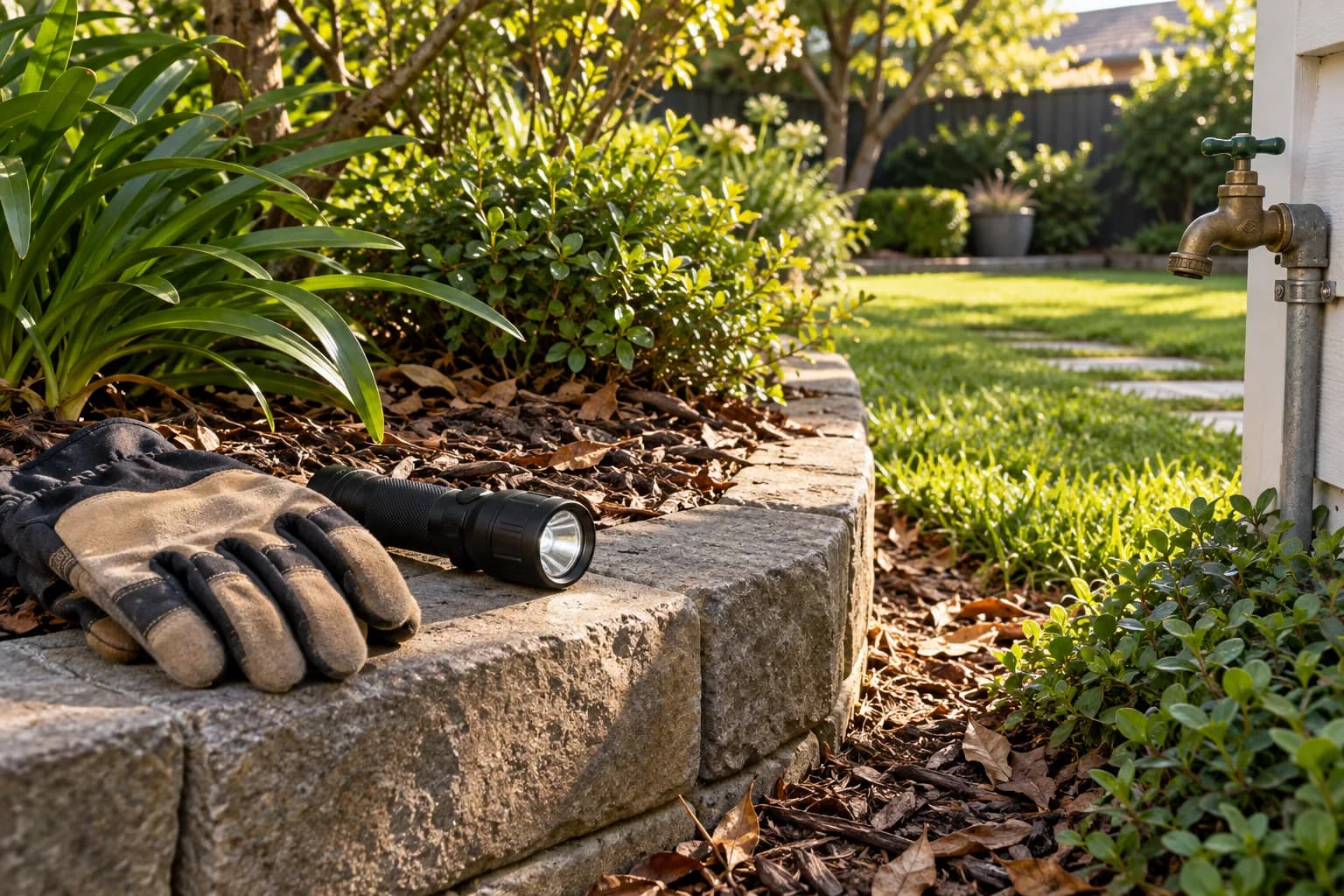 Dense shrubs against the house and a dripping hose bib give rodents cover and water. Trimming back and fixing drips makes the yard less inviting.
How they get into houses here.
Homes from Union City out to Hoboken and Jersey City share the same weak spots, so the checklist below works across the area. Window wells need covers or screens. Look at the dryer vent flap. Check where pipes and cables enter. Rodents use gaps around utility lines, dryer vents and window wells. Plenty of homes in Union City have basements.
A year of rodents in Union City.
- Fall: mice move indoors as nights cool. Seal gaps in September. - Summer: with highs around 85°F in Union City, rodents look for water. Fix drips and leaks. - Spring: breeding season. Act on any sign quickly. - Winter: with lows near 27°F in Union City, check the attic, garage and pantry for droppings.
Mice or rats?
- Droppings: mouse droppings are rice-sized. Rat droppings are two or three times bigger. - Rub marks: rats leave greasy smudges along walls and beams. - Behavior: mice are curious about new traps. Rats avoid them for days. - Sounds: mice sound light and quick. Rats sound heavier. - Holes: mice chew dime-sized holes. Rats chew holes closer to quarter-sized.
Sealing small gaps yourself.
- Steel wool or copper mesh: pack it into small gaps first. - Check your work: daylight through a gap means it isn’t sealed. - Expanding foam: fine on top of mesh, useless on its own. - Door sweeps: close the gap under garage and exterior doors. - Hardware cloth: use quarter-inch mesh over vents and larger holes. - Sealant or mortar: cover the mesh so it stays put.
Cleaning up droppings safely.
- Air the room out for 30 minutes first. - Wash your gloved hands, then your hands. - Don’t sweep or vacuum droppings dry. It stirs up dust. - Wipe up with paper towels and bag them. - Spray droppings with a bleach solution, then wait five minutes. - Wear rubber or plastic gloves.
What happens at an inspection.
They check the foundation, vents, rooflines and utility gaps. The inspector walks the outside first. Most inspections take about an hour. Photos help. You should come away with a list of entry points. Inside, they check the kitchen, garage and attic.
Rodents in the car.
Park in a closed garage when you can. Mice and rats nest in engine bays and chew wiring. Clear birdseed and pet food from the garage. Check the air filter box for nesting.
Bird feeders and rodents.
Use a seed tray and sweep up spills. Spilled seed feeds mice and rats. Store seed in a metal can with a tight lid. If rodents show up, bring feeders in at night.
Questions to ask before you sign.
- Where are they getting in? - Will you use poison inside? (Ask them not to.) - Is cleanup included, or extra? - What happens if they come back? - How many trap visits are included? - Which gaps will you seal, and with what?
Rodents by the numbers.
Around Union City, ask any provider to show you the entry points and the plan before you compare numbers. Around Union City, those three findings — species, entry points, and scale — are what a quote should be built on, not a regional average. Around Union City, what actually matters is a walk-through: where the droppings are, how the rodents are getting in, and how large the colony is. National surveys set rough expectations but cannot diagnose one house.
What affects the price
- Number of trapping visits needed to reach zero.
- Local labor rates and licensing costs.
- Whether sheds, garages or other outbuildings are included.
- Materials used for sealing: mesh, sheet metal, mortar.
- Follow-up visits included versus billed separately.
- Sewer line inspection if rats are entering underground.
📊
What's your biggest concern about rodents?
When to call for help
Attic cleanup is hard to do safely without training. They take a longer, more careful approach. Call right away if you see rats. So is a dead-rodent smell. Droppings in several rooms are another sign. Call if you hear them in the attic or walls.
What you can do yourself
Start tonight with snap traps along the walls. Bait them with peanut butter. Store food in sealed bins. Seal small gaps with steel wool and sealant. Rooflines, vents and attics are harder. That's where a pro's sealing work pays off.
Rodents in Union City
In denser parts of Union City, rats travel along alleys, fences and utility lines, so neighbors often share the problem. A typical home in Union City is worth around $420k, and chewed wiring or soiled insulation can get expensive. Union City gets about 48 inches of rain a year, and heavy storms flood burrows, which pushes rats toward buildings. Winter lows average around 27°F in Union City, and that cold is what sends mice looking for a way in.
Local research
Rodents in Union City, NJ: what the public record shows
Before you compare quotes, it helps to know which rodents actually live in New Jersey, when they are busiest around Union City, and what the state figures look like. Everything below links to the agency or university page it came from.
Hantavirus in New Jersey
The state health department still lists rodent infestation in and around the home as the primary exposure risk.
New Jersey Department of HealthRodent species recorded in New Jersey
- House mouse (Mus musculus) — Enters at 1/4 inch; 5-10 litters per year; eats about 200 small meals a night.
- Norway rat (Rattus norvegicus) — Burrowing rat of basements, sewers and ground floors; tail shorter than head plus body.
When rodents are busiest around Union City
Fall entry (Sept-Nov). Norway rats and house mice move indoors as temperatures drop.
Based on Union City’s humid subtropical climate profile.
New Jersey's commercial pesticide program began in 1975 under the NJDEP Bureau of Licensing and Registrations; applicants pass a Core exam then add categories such as 7A.
Rules that apply in New Jersey
For context, nationally
- 1/4 inch (the width of a pencil) — Smallest gap a mouse can enter. CDC
- 890; 35% fatal; 94% west of the Mississippi — Hantavirus cases reported since 1993 (through 2023). CDC
Sources: New Jersey Department of Health; Rutgers Pest Management Office, Rutgers, The State University of New Jersey; CDC; Pest Notes: House Mouse; Pest Notes: Rats. Figures are quoted as the source prints them. How we check our sources
Simple ways to keep rodents away
- Cover dryer and exhaust vents with metal louvered covers.
- Install brush or rubber door sweeps on exterior doors.
- Walk the exterior each season looking for fresh gnawing.
- Stack firewood off the ground and away from the house.
- Trim tree branches at least six feet from the roof.
- Store pantry staples in glass or hard plastic.
 Before you call, sketch where you have seen droppings or heard noise and measure any gaps you found. It makes the first visit faster and the quotes comparable.
Did you know?
Around Union City, rats make ultrasonic chirps when they're tickled, which researchers compare to laughter.
Male house mice sing ultrasonic songs that humans can't hear.
Questions people ask
What does a rodent inspection involve?
Inside, they look at the kitchen, attic, garage and under sinks. You should get a list of entry points. The inspector checks the outside walls, roofline, vents and utility gaps.
What should be in a rodent control quote?
It should say what happens if they return. Cleanup should be listed separately. Entry points, sealing materials and the number of trap visits.
How do I know if I have mice or rats?
Mouse droppings are about the size of a rice grain. Rats also chew larger holes and sound heavier at night. Check the droppings.
How long does rodent control take?
Most jobs take two to four weeks. That covers inspection, sealing and a few trap checks.
How do I choose a rodent control company?
Ask what happens if rodents come back. A good company talks about sealing, not just traps. Make sure they're licensed in New Jersey. Ask how they seal gaps and what materials they use.
Does a house with structural problems attract more rodents?
The U.S. Census Bureau's 2019 American Housing Survey (AHS) found that occupied homes with sloping, leaning or buckling exterior walls were 5.6 times as likely to report rodent sightings as other homes, an association among resident reports, not proof the walls caused the rodents. The two go together, at least in the data.
Are families with kids more likely to have rodents?
homeowners, at 68%. Families with young children may want to be extra careful about food storage. Expect a good pro in Union City to connect their plan to what they actually found at your home. The survey evidence suggests they report them more often. Households with children were the most likely group to report a rodent encounter in the 2022 NPMA/Harris Poll of U.S.
Are rodents a problem in Union City?
They're common here, as almost everywhere. House mice cause most problems.
Nearby cities
Related guides
Sources (9)
The facts in this article come from the public sources listed above. Every home is different, so ask the company you talk to about pricing and what’s included. Published by Rodent Exterminator · Updated September 11, 2026 · How we write these guides