The short version
Rodent control in Warner Robins, GA works best in three steps: figure out whether you have roof rats, Norway rats or house mice, seal every gap down to 1/4 inch with hardware cloth or metal, then trap along the walls. UGA Extension suggests about a dozen rat traps per house. Expect activity in any month here, with a jump each fall.
- UGA Extension confirms roof rats, Norway rats and house mice are all established in Georgia.
- Mice squeeze through 1/4-inch gaps, so seal with hardware cloth, steel wool or flashing.
- Set traps perpendicular to walls; UGA suggests roughly a dozen per house for rats.
- Warner Robins rodents stay active all year, and indoor sightings climb once fall nights cool.
- Air a room 30 minutes and soak droppings in a 1:9 bleach mix before wiping.
This guide is for Warner Robins homeowners hearing scratching in the attic, renters who just found droppings under the sink, and landlords deciding who should handle a rodent complaint. It also fits anyone who recently moved to town for work at Robins Air Force Base and wants to understand what rodent pressure looks like here before signing a lease or buying a house.
What to look for
Three rodents cause the structural trouble in Warner Robins, and University of Georgia Extension's Circular 970 confirms all three are established statewide: the house mouse, the Norway rat and the roof rat. Telling them apart matters because each one lives at a different height in your home. Roof rats climb, so they tend to end up in attics and upper walls. Norway rats dig, so they burrow along foundations, under slab edges and beneath sheds. House mice settle into wall voids, cabinets and the warm space behind appliances. The climate keeps all three busy. Summer highs average 93F and humidity averages 72%, which means steady water, thick vegetation and insect food outdoors for most of the year. Winter lows average 37F, cool enough to send rodents hunting for warm cavities but not cold enough to shut down breeding once they are inside. The result is a year-round baseline of activity with a clear push indoors as fall nights cool. Mice make it worse quickly, since UGA notes a female can produce a litter about every 30 days once she is two months old.
- 1Small, dark droppings in kitchen drawers, under the sink or along baseboards, usually the first mouse clue.
- 2Scratching or scurrying overhead after dark, which points toward roof rats in the attic.
- 3Fresh burrow openings along the foundation, at a slab edge or under a shed, typical of Norway rats.
- 4Gnawed corners on cereal boxes, pet food bags or the plastic lids of garage storage bins.
- 5Dark, greasy rub marks along a wall or rafter where rodents run the same route every night.
- 6Shredded insulation, paper or fabric pulled into a loose nest in a closet, cabinet or attic corner.
- 7A musky, ammonia-like smell in a closed cabinet that lingers after you air it out.
Why it’s worth acting soon
- Mouse numbers climb fast, because UGA says females begin having litters at two months and repeat monthly.
- Rats and mice gnaw wiring in attics and wall voids, which can damage circuits and start fires.
- The CDC lists leptospirosis, salmonellosis, rat-bite fever and hantavirus among diseases rodents spread directly.
- Nests soak attic insulation with urine and droppings, and badly fouled insulation usually has to be pulled out.
- Norway rat burrows loosen the soil under walkways, patios and shed floors the longer they spread.
Treatment options and typical costs
Exclusion (sealing entry points)
Quoted after inspection
The provider walks the outside of the house and closes every opening a rodent could use, with hardware cloth in 1/4-inch squares, metal flashing, steel wool and sealant. UGA Extension notes rodents get through holes as small as a dime, so garage door corners, utility penetrations, vents and roof edges all get checked. Without this step, trapping tends to become a repeat job.
- Time
- Depends on how many openings the inspection finds
- Best for
- Every infestation, since it keeps the problem from returning
Snap trapping inside the home
Quoted after inspection
Traps go where rodents actually travel: perpendicular to walls, with the trigger end against the baseboard. UGA suggests about a dozen traps per house for rats, and close spacing near walls for mice. Ask how often the provider will check and reset traps, since a trap left full or sprung for days stops doing its job.
- Time
- Until captures stop; ask how many checks the plan includes
- Best for
- Mice in kitchens and rats already inside walls or the attic
Locked bait stations outdoors
Quoted after inspection
For Norway rats burrowing in the yard, tamper-resistant stations placed around the burrow area cut down the colony feeding outside. UGA puts a Norway rat's home range at 100 to 150 feet across, so stations need to cover that circle, not just the back door. Ask which product goes in them and how they are anchored away from pets and children.
- Time
- Serviced on a recurring schedule the provider sets in writing
- Best for
- Norway rat burrows along foundations, fence lines and sheds
Droppings cleanup and nest removal
Quoted after inspection
Once the rodents are gone, nests and droppings come out in the order the CDC describes: ventilate 30 minutes, wet everything with 1.5 cups of bleach per gallon of water, wait 5 minutes, then wipe and bag. Some providers fold this into the plan; others quote attic cleanup separately, especially when insulation is soiled.
- Time
- Depends on attic size and how much material is soiled
- Best for
- Attics and crawl spaces after a long-running infestation
Prices are typical published ranges. Ask what’s included before you compare quotes.
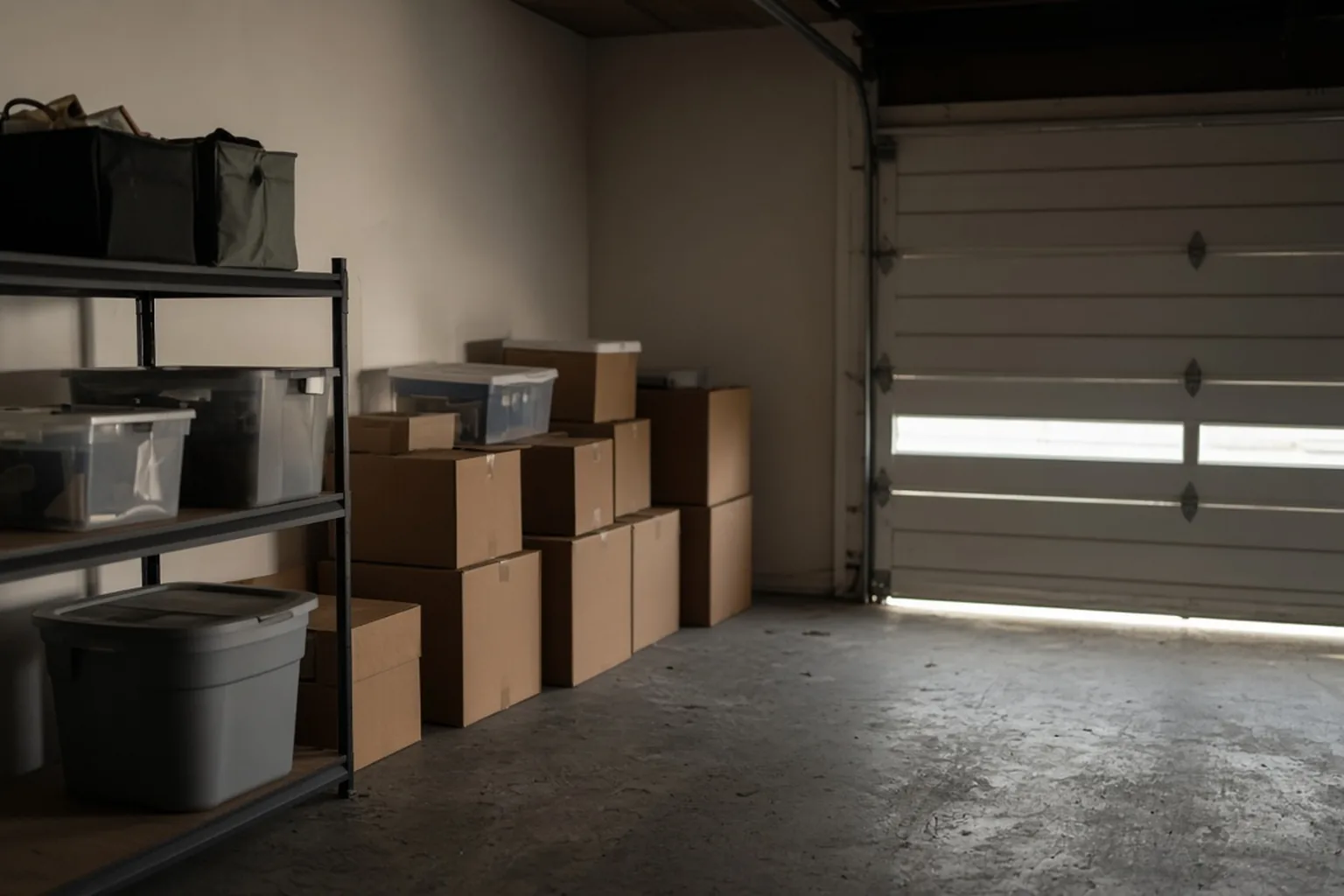 Cardboard boxes make easy nests and the gap under an overhead door makes an easy entrance. Plastic bins and a fresh door seal fix both.
Roof rat, Norway rat or house mouse: which one is in your Warner Robins home?
Across Warner Robins, all three of Georgia's structural rodents are present, according to UGA Extension, and each tends to keep to its own level of the house. Evidence up high, such as noises over the ceiling, droppings along rafters or chewed wiring in the attic, points to roof rats. They are slender climbers with tails longer than their bodies, and they reach the roof by running along limbs, fences and utility lines. Evidence down low, such as burrows by the foundation, gnawed holes at the base of a door or tracks in garage dust, points to Norway rats, which are heavier and dig rather than climb. Small droppings scattered through cabinets, drawers and the back of the pantry usually mean house mice. The fix changes with the species. Roof rats call for sealing the roofline and trimming trees. Norway rats call for work across the yard. Mice call for tight sealing of small gaps and plenty of traps along walls. Plenty of houses have two of the three at once, so check both the attic and the foundation before you decide. Where the evidence shows up is the quickest clue.
When do rodents move indoors in Warner Robins? A month-by-month view.
September through November is the main push. As nights cool toward the winter average low of 37F, mice and Norway rats that spent summer in yards, sheds and drainage areas start probing for warm spaces. This is when kitchens get their first droppings and attics their first scratching. An exterior check before the cold arrives is the best-timed prevention step of the year. December through February, rodents already inside stay put and keep breeding. Because UGA Extension says house mice can have a litter about every 30 days from two months of age, a pair that slipped in during October can become a crowd by late winter. March through May brings outdoor food back, and some activity shifts outside, though established indoor populations rarely leave on their own. June through August, with highs near 93F and humidity around 72%, outdoor rodents have abundant food and cover. Roof rats can still use attics in midsummer, so noises overhead in July deserve the same attention as noises in November. Rodents never fully leave in Warner Robins, but the pressure on your house shifts through the year.
 A metal vent cover with a working flap keeps mice out all winter. Plastic flaps crack in the cold and get chewed open.
How many traps does a house need, and where should they go?
UGA Extension's Circular 970, revised in November 2025, suggests about a dozen traps for rats in a typical house, each set perpendicular to the wall with the trigger end touching the baseboard. Rodents run along edges, so a trap set parallel to the wall or in the middle of the floor gets walked past. For mice, UGA's figure of 5 to 10 feet of travel from a wall tells you how tight the spacing needs to be. Put traps every few feet along the runs where droppings collect: behind the refrigerator, under the sink, inside lower cabinets and along the garage wall. Rats need a wider net. A Norway rat's home range spans 100 to 150 feet, according to UGA, so a Warner Robins lot with a shed, a fence line and thick shrubs may hold several burrows feeding the same colony. Traps or locked stations should cover those outdoor runs as well as the inside of the house. Whatever you set, check traps daily, wear gloves, and keep them out of reach of pets and kids. Once catches stop and no fresh droppings appear, the remaining job is sealing. More than most people set out.
Renting near Robins Air Force Base: who deals with the rodents?
Then tell your landlord or property manager in writing, with dated photos of droppings, chewed packaging or nesting material. A written record helps if the problem drags on. Rodents usually point to the building itself. The CDC says mice need only a 1/4-inch gap, and those gaps sit in foundations, siding, utility lines and garage doors that tenants cannot repair. Closing them is generally the owner's side of the job. What you can control is food: keep it in sealed containers, take trash out often and pick up pet bowls at night. That keeps the infestation from being blamed on housekeeping. For landlords, fixing entry points between tenants is usually the cheaper path. A vacant unit gives you a window to have the exterior sealed and the attic checked without working around anyone's schedule or belongings. Ask the provider for a written report listing what was sealed, and keep it in the property file so the next tenant's complaint, if one comes, starts with a known history. If you rent in Warner Robins, start with your lease, since it often says who handles pests and how to report them.
Cleaning up droppings safely, and what the disease risk looks like here.
Open doors and windows for 30 minutes before you start, and put on rubber gloves. Spray droppings, urine stains and nest material with a mix of 1.5 cups of bleach per gallon of water, give it 5 minutes to soak, then pick everything up with paper towels and seal it in a bag. A broom or shop vac is the wrong tool here, since either one throws dried particles into the air you breathe. Hantavirus is largely a western disease tied to deer mice, but that does not make Warner Robins droppings harmless. The CDC lists leptospirosis, salmonellosis, rat-bite fever and tularemia among the illnesses rodents pass on directly. Leptospirosis spreads through rat urine in water and wet soil, and with about 46 inches of rain a year, puddles and soggy ground near burrows are worth respecting. Wear gloves when you clear brush or debris near a burrow, wash your hands after handling traps, and keep children and pets away from areas where rats have been active until the cleanup is done. Clean up only after the rodents are gone, and follow the CDC's sequence.
What affects the price
- Which rodent you have, since attic roof rats need roofline sealing that kitchen mice may not.
- How many entry points the exterior inspection turns up, and whether they sit at ground level or along the roof.
- The number of trap checks or station service visits written into the plan.
- Attic access, and whether soiled insulation has to be removed and replaced after cleanup.
- Burrows in the yard that call for outdoor stations covering a 100 to 150 foot circle.
- A one-time job versus recurring service that runs through the fall surge.
📊
What's your biggest concern about rodents?
When to call for help
Bring in a provider when you see a live rat indoors, hear the attic come alive several nights in a row, find fresh burrows by the foundation, or keep catching mice after a couple of rounds of trapping. Those patterns usually mean a breeding population and entry points you have not located. Rats in particular are hard to finish off without someone who can work the roofline and the yard at the same time. Across Warner Robins, where activity runs through every season, waiting for cold weather to solve things rarely works. Before hiring, ask for the company's state pest control license, a written plan listing what gets sealed and with what materials, and how many follow-up checks are included.
What you can do yourself
Rats change the math. A Norway rat colony may use a 100 to 150 foot circle around its burrows, and roof rats come in at the roofline, where most homeowners cannot safely work. UGA's suggestion of about a dozen traps for rats in one house shows how much ground has to be covered. A provider brings ladders, an exterior inspection and a written sealing plan, which is usually what ends a rat problem. If you are unsure, start with traps and call once the evidence points to rats. DIY handles a mouse or two in a kitchen or garage well. Buy snap traps, bait them with a dab of peanut butter, and set them perpendicular to the wall with the trigger facing the baseboard, the placement UGA Extension recommends. Close the gaps you can find with steel wool and caulk, or hardware cloth with 1/4-inch squares for larger openings. If catches stop and no new droppings show up, you have probably solved it.
Rodents in Warner Robins
Census housing-age figures were not available for this guide, so rather than guess, ask the provider who inspects your place what its age and construction mean for likely entry points, such as the garage, foundation vents and roof edges. Houses with yards, sheds, fences and mature trees give roof rats travel routes toward the roof and give Norway rats soft soil to dig in. The suburban layout matters as well. For rodents, steady rainfall means dense shrubs, damp ground and easy water near almost every house, so outdoor Norway rats and mice have constant support close to your walls. It sits at 367 feet of elevation in the humid subtropical zone and collects roughly 46 inches of rain a year. Warner Robins is a suburban city of about 81,000 people, founded in 1943 and best known for Robins Air Force Base.
Local research
Rodents in Warner Robins, GA: what the public record shows
Before you compare quotes, it helps to know which rodents actually live in Georgia, when they are busiest around Warner Robins, and what the state figures look like. Everything below links to the agency or university page it came from.
Commensal rodent species established in Georgia
UGA Extension states all three live in Georgia, so identification drives where you place traps.
University of Georgia ExtensionNorway rat home range
A Norway rat may spend its whole life in that circle, so control has to cover the burrow area, not just the house.
University of Georgia ExtensionRodent species recorded in Georgia
- House mouse (Mus musculus) — Enters at 1/4 inch; 5-10 litters per year; eats about 200 small meals a night.
- Norway rat (Rattus norvegicus) — Burrowing rat of basements, sewers and ground floors; tail shorter than head plus body.
- Roof rat (Rattus rattus) — Climber of attics and trees in warm and coastal regions; tail longer than head plus body.
When rodents are busiest around Warner Robins
Year-round, fall surge. Roof rats dominate Florida, Texas and Gulf Coast attics.
Based on Warner Robins’s humid subtropical climate profile.
UGA Circular 970 (revised November 2025) recommends about a dozen traps per house for rats, set perpendicular to walls.
For context, nationally
- 1/4 inch (the width of a pencil) — Smallest gap a mouse can enter. CDC
- 890; 35% fatal; 94% west of the Mississippi — Hantavirus cases reported since 1993 (through 2023). CDC
Sources: University of Georgia Extension; CDC; Pest Notes: House Mouse; Pest Notes: Rats. Figures are quoted as the source prints them. How we check our sources
Simple ways to keep rodents away
- Pack steel wool tightly around pipes, cables and AC lines where they enter, then caulk over it.
- Cover foundation vents and larger openings with hardware cloth that has 1/4-inch squares.
- Add a door sweep, and check the bottom corners of the garage door, a favorite mouse entry.
- Cut tree limbs and shrubs back from the roof so roof rats cannot step onto the shingles.
- Keep pet food and birdseed in metal or heavy plastic bins with locking lids.
- Fix leaky hose bibs and standing water near the slab, because a 72% humidity yard already offers plenty to drink.
- Stack firewood, lumber and yard debris off the ground and away from the house walls.
- Walk the exterior in early fall and recheck your seals before the seasonal move indoors.
 A good rodent quote lists the inspection, the number of trapping visits, each opening to be sealed and the material for it, and any cleanup.
Did you know?
A female Norway rat can raise 4 to 6 litters a year and wean 20 or more young, while roof rats produce 3 to 5 litters of up to 8.
The U.S. averages about 7 human plague cases a year, spread by rodent fleas and concentrated in the Southwest and Far West.
The CDC separates diseases rodents spread directly, like leptospirosis and rat-bite fever, from ones they pass along indirectly, such as plague, Lyme disease and murine typhus.
Questions people ask
What kind of rats live in Warner Robins, Georgia?
Knowing which one you have decides where the traps go. Norway rats burrow at ground level along foundations and sheds. Roof rats climb and usually turn up in attics. UGA Extension lists both as established in Georgia, along with the house mouse. Two rat species live around Warner Robins: the roof rat and the Norway rat.
Is there a rodent season in Warner Robins?
Early fall is the best time to inspect and reseal the outside of your house. Average winter lows of 37F nudge mice and rats toward warm wall voids and attics, while summer highs of 93F keep outdoor populations well fed. Rodents are active year-round in Warner Robins, though most homes notice more indoor activity starting in fall.
How many mouse traps should I put out?
For rats, UGA suggests about a dozen traps for a typical house. Place several in every room where you find droppings. UGA Extension puts mouse travel at 5 to 10 feet from a wall, so traps belong along baseboards, set perpendicular with the trigger toward the wall. Use more than feels necessary.
Do I need to worry about hantavirus in Georgia?
Rodent droppings still carry other diseases, so clean them carefully. Georgia was not among the states on the CDC's provisional 2025 tally. hantavirus cases the CDC has counted since 1993, 94% occurred west of the Mississippi, usually linked to deer mice. Of the 890 U.S. The risk is low here, though not zero.
What size hole can a mouse get through?
That is why Warner Robins homes are best sealed with hardware cloth or metal rather than spray foam alone. Rats need more room but will chew a small hole wider. UGA describes it as an opening the size of a dime. The CDC puts the limit near 1/4 inch, close to a pencil's width.
How should I compare two rodent control quotes in Warner Robins?
With a median home value near $175,000, protecting wiring and insulation is worth weighing. Ask each company to list the gaps it found, the materials it will use, the number of trap checks, and whether cleanup is extra. A cheaper Warner Robins quote that only sets traps or bait can cost more later if the entry points stay open. Compare what gets sealed, not just the total.
Is it safe to vacuum mouse droppings?
Open windows for 30 minutes first, spray the droppings with a bleach solution of 1.5 cups per gallon of water, let it sit 5 minutes, then wipe up with paper towels and seal them in a bag. The CDC warns against sweeping or vacuuming rodent droppings because both raise contaminated dust. No.
Why do I hear something in the attic at night but never see it?
Look for droppings along rafters and greasy rub marks near the gap they use, and cut back branches touching the roof. They are wary animals that rarely show themselves. Nighttime scratching overhead usually means roof rats, which climb trees, fences and wires to reach the roofline and then nest in the attic.
Nearby cities
Related guides
Sources (6)
The facts in this article come from the public sources listed above. Every home is different, so ask the company you talk to about pricing and what’s included. Published by Rodent Exterminator · Updated October 11, 2026 · How we write these guides