The short version
Rodent control in Arlington Heights, Illinois, comes down to two animals: house mice that slip indoors when fall nights turn cold, and Norway rats that burrow in yards and under sheds. Sealing every gap wider than 1/4 inch, trapping what is already inside, and removing outdoor food usually solves it. With 17F winter lows, mice that get in by November tend to stay until spring.
- House mice and Norway rats cause nearly every rodent call in Arlington Heights.
- Fall is the main entry season, and 17F winter lows keep mice indoors until spring.
- A mouse needs only a 1/4-inch opening, so sealing has to be thorough.
- Norway rats forage up to 500 feet from the nest, so nearby yards matter too.
- Illinois logged one provisional hantavirus case in 2025, rare for an eastern state.
- Wet droppings with diluted bleach before wiping; never sweep or vacuum them.
This guide is for Arlington Heights homeowners hearing scratching in the walls after the weather turns, renters who keep finding droppings under the sink, and landlords who want to know what a rodent visit should include. It also helps anyone with a shed, woodpile or vegetable garden where rats have started tunneling along the edges.
What to look for
Two rodents cause nearly all the trouble here. The Norway rat is a heavy, burrowing animal that lives at ground level: under decks, along foundations, beneath sheds and inside woodpiles. The house mouse is small enough to squeeze through a gap the width of a pencil, and it nests inside walls, cabinets and garage clutter. Arlington Heights weather sets their schedule. Summers average about 84F with 70 percent humidity and roughly 37 inches of rain a year, which means lush gardens, fallen fruit, birdseed and plenty of insects for rodents to eat outdoors. Populations grow through the warm months. Then winter lows near 17F arrive and outdoor life gets hard. Mice push into houses from September through November, and rats look for warmth along heated foundations and in garages. Suburban lots add a twist. Norway rats routinely travel 100 to 500 feet from the nest to feed, so the rats in your yard may be living two or three properties away. That is why one household's cleanup can stall when the rest of the block stays the same.
- 1Dark droppings shaped like grains of rice in kitchen drawers, under the sink or along the garage wall.
- 2Larger, blunt-ended droppings about the size of a raisin near the foundation or in the garage, which point to rats.
- 3Smooth-edged burrow openings in the soil beside the foundation, under the deck or beneath a shed.
- 4Scratching inside walls or ceilings after dark, most often starting in October.
- 5Gnawed corners on pet food bags, birdseed sacks or grass seed stored in the garage.
- 6Greasy rub marks along baseboards or the sill plate where rodents run the same path each night.
- 7Narrow runways pressed into the lawn or worn through mulch between the garden and the house.
Why it’s worth acting soon
- House mice can produce a new litter every few weeks, so a handful in October can be dozens by February.
- Rodents gnaw wiring in walls, attics and cars parked in the garage, creating fire and repair risks.
- Droppings and urine contaminate food and counters with germs the CDC ties to salmonellosis and leptospirosis.
- Rats burrowing under patios and slabs can loosen pavers and steps over a few seasons.
- Nests packed into attic or wall insulation flatten it, which costs you heat through a 17F winter.
51 percentMidwestern homeowners who said they had ever encountered rodents at home (Harris Poll for NPMA, September 2022; lifetime, self-reported)NPMA / Harris Poll (2022) 1/4 inch, about the width of a pencilSmallest opening a house mouse can useCDC Treatment options and typical costs
Whole-house exclusion
Quoted after inspection
Sealing every opening a mouse or rat could use, including garage door bottoms, utility line entries, foundation cracks, vents and roofline gaps. Durable materials like steel wool, copper mesh, hardware cloth and metal flashing hold up far better than foam alone. Ask for a written list of every opening sealed so you can recheck it each fall.
- Time
- Depends on how many openings the inspection finds
- Best for
- Homes where mice come back every autumn
Indoor snap trap program
Quoted after inspection
Snap traps set along walls in the kitchen, basement, garage and attic, then checked and moved based on what they catch. Trapping removes the mice already inside while exclusion stops new ones. It works best when traps go out early in fall, before a few mice have had time to raise several litters in a warm wall.
- Time
- Until catches stop; ask how many checks are included
- Best for
- Active mouse signs in one or more rooms
Exterior bait stations for Norway rats
Quoted after inspection
Locked, tamper-resistant stations placed along the foundation, fence lines and near burrows. Because rats roam widely, placement needs to cover the whole lot, not just the spot where you saw one. Anticoagulant baits take several days to work, so ask which product is used and how stations are secured from pets and children.
- Time
- Monthly service through the active season
- Best for
- Yards with burrows, sheds, compost bins or bird feeders
Droppings and nest cleanup
Quoted after inspection
Removal of droppings, nests and soiled insulation using wet disinfection rather than sweeping or vacuuming. In attics and crawlspaces this can include replacing insulation that rodents have tunneled through. Ask whether the crew follows CDC cleanup steps and what protective gear they wear.
- Time
- Depends on how much soiled material has to come out
- Best for
- Attics, garages and basements with heavy contamination
Prices are typical published ranges. Ask what’s included before you compare quotes.
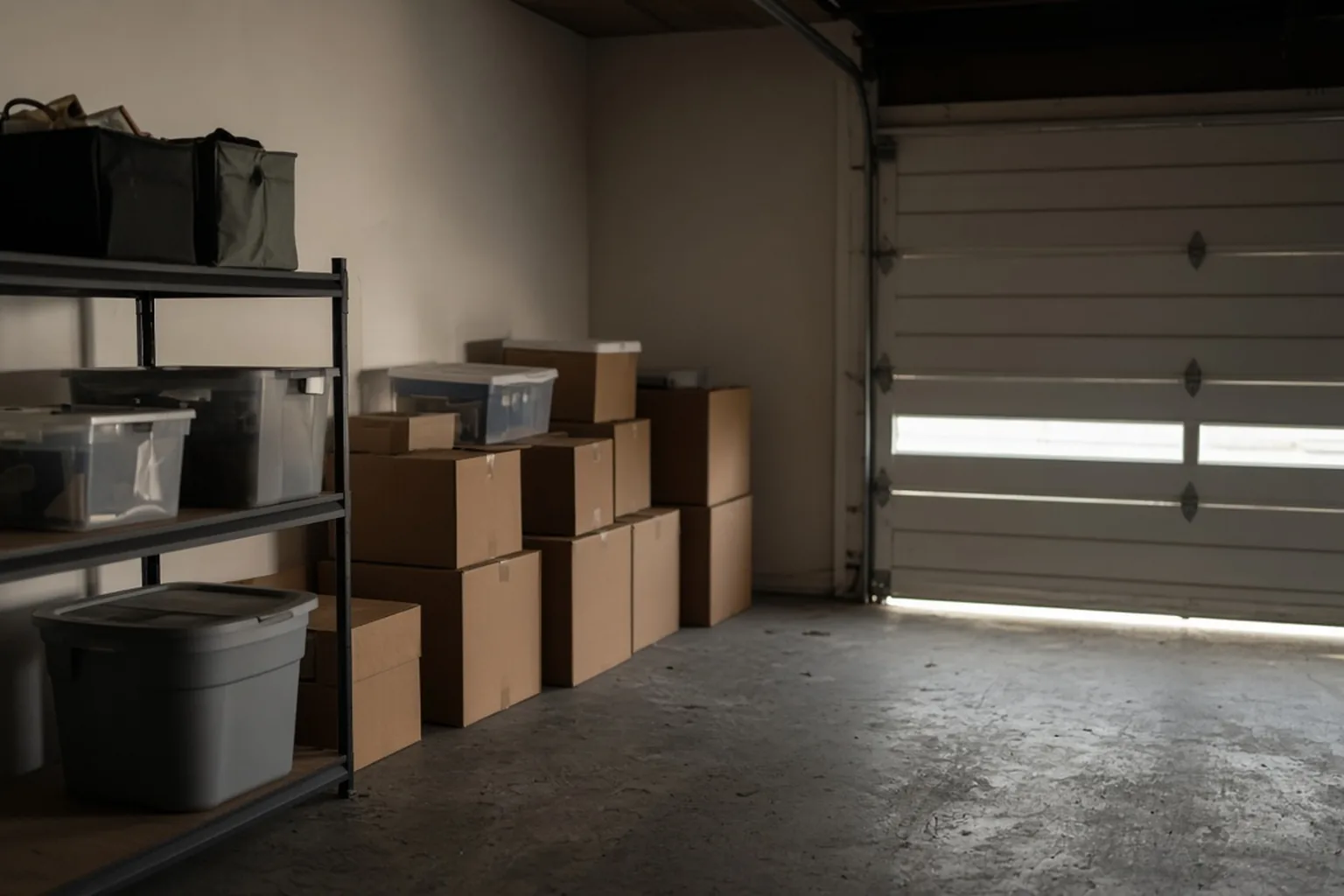 Cardboard boxes make easy nests and the gap under an overhead door makes an easy entrance. Plastic bins and a fresh door seal fix both.
Mouse or rat: which one is in your Arlington Heights home?
Check the droppings and the location, and you will usually know within a minute. House mouse droppings are small, pointed and scattered, like dark rice. Norway rat droppings are much larger and blunt at the ends, and they tend to sit in clusters along a route. Location tells you the rest. In Arlington Heights, house mice show up indoors: kitchen drawers, the back of the pantry, the cabinet under the sink, behind the stove and in boxes stored in the garage. Norway rats mostly stay low and outside. Look for burrows along the foundation, under a deck, beneath a shed floor or at the base of a compost bin. When rats do come inside, it is usually into a garage or basement. Sound helps too. Light, quick skittering in a wall at night fits mice. Heavier thumps or gnawing loud enough to wake you fits rats. The answer matters because the plan changes. Mice are an indoor trapping and sealing job. Rats are an outdoor job first, with the yard, the garbage area and the neighboring yards in play.
A rodent calendar for a Chicago suburb with 17F winters.
Rodent pressure in Arlington Heights rises and falls with the temperature, so timing your effort matters as much as the effort itself. March through May: snowmelt exposes burrows and winter damage. Walk the yard, fill burrow openings and watch whether they reopen, and look for chewed garage door seals. June through August: with highs around 84F and steady rain, gardens, bird feeders and compost feed a growing rat population outdoors. Mice are mostly outside too. Keep seed and pet food sealed and cut back plants touching the house. September through November: this is the main entry window. As nights cool, house mice move into walls, attics and garages. Seal gaps before the end of September if you can, and set traps in the garage and basement as soon as the first droppings appear. December through February: lows average about 17F, and mice that got in stay put and keep breeding. Trapping and hunting for missed entry points continue through winter. Rats stay active as well, often sheltering near heated foundations.
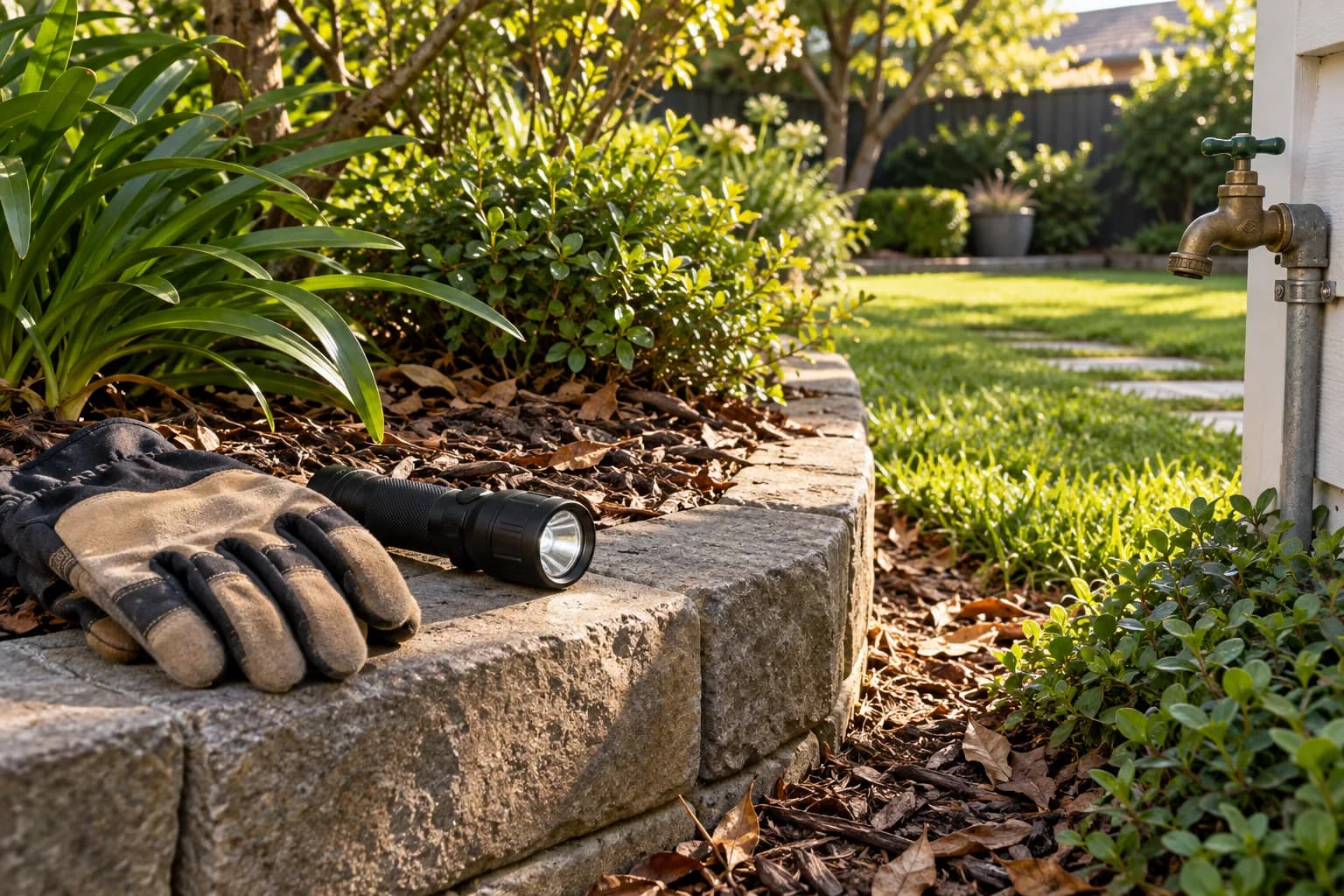 Dense shrubs against the house and a dripping hose bib give rodents cover and water. Trimming back and fixing drips makes the yard less inviting.
What happens during the first rodent inspection?
A good first visit is mostly looking, not spraying. Expect the inspector to spend most of the time walking the outside of the house, then working through the garage, basement, kitchen and attic access. Outside, they should check the foundation line, the gap under the garage door, where gas, water, cable and air conditioning lines enter, dryer and bathroom vents, and the roof edge. Every opening wider than 1/4 inch counts, because that is the mouse entry threshold the CDC gives. Rat burrows, runways in the grass and rub marks along the siding also get noted. Inside, the inspector looks for droppings, gnaw marks, nests and food sources, which shows where activity is heaviest and where traps belong. Before they leave, you should have a written list of entry points, what they propose to seal and with which materials, where traps or bait stations will go, and how many return visits are included. On a home near the Arlington Heights median value of $375,000, ask for photos of each opening so you can check the work later.
Why rats in the neighbor's yard become your problem.
Norway rats ignore property lines. They typically forage 100 to 500 feet from the nest, which on a suburban street can mean several lots in every direction. A rat living under one shed may eat birdseed at a second house and drink from a downspout at a third. That explains a frustrating pattern: you clean up, trap two rats, and a month later there are fresh burrows again. Often the colony was never on your property. A few steps help. Talk to the neighbors on either side, since shared sightings help a provider find the source. Remove what draws rats into your yard specifically: spilled seed, open compost, dog waste, fallen fruit and pet food left outside. Store garbage in bins with lids that close fully. Keep woodpiles and clutter off the ground. When you hire help, ask how far around your lot the inspection extends and whether the plan includes stations along the fence lines. The UC IPM program reports that Norway rats raise 4 to 6 litters a year, so a colony next door refills quickly.
How to compare two rodent control quotes.
Line the quotes up by what is being sealed, not by the total. Two companies can price the same Arlington Heights house very differently because one is sealing the garage, attic vents and foundation gaps while the other is only setting traps. Questions worth asking each provider: Which entry points did you find, and which ones does this price cover? What materials will you use? Steel wool, copper mesh, hardware cloth and metal flashing last; foam on its own gets chewed through. How many follow-up visits are included, and what does an extra visit cost? Will you use traps, bait, or both? If bait, is it in locked stations, and where will those sit relative to pets and play areas? Is droppings cleanup included, and does it follow CDC wet-cleaning steps? What happens if mice return next fall? A lower quote that skips exclusion often costs more over two or three winters, since you end up trapping the same problem again every October.
What affects the price
- How many gaps the inspector finds around the foundation, garage and utility lines.
- Whether you are dealing with mice inside, rats outside, or both at once.
- Lot size and how many exterior bait stations it takes to cover the property.
- Attic or crawlspace insulation that has to be removed and replaced after nesting.
- The number of follow-up visits included before the provider bills again.
- Detached garages and sheds, which count as separate structures to seal.
📊
What's your biggest concern about rodents?
When to call for help
Call a provider when you see signs in more than one room, when two weeks of trapping has not reduced fresh droppings, or when burrows near the foundation reopen after you fill them. Rats are the clearer case for help. They avoid new objects for days, they forage across several yards, and getting bait placement right matters for pets and children. Someone in the household with asthma or a weakened immune system is another reason to have a professional handle cleanup. Before you book in Arlington Heights, ask how the company handles exclusion, whether follow-up visits are part of the price, and what it charges if mice return the next fall.
What you can do yourself
You bring the follow-through on sanitation, which no company can do for you. A provider brings ladders, inspection experience and return visits. The third is heavy contamination in an attic or crawlspace, where the cleanup itself carries health risk. The second is hidden entry points at the sill plate, roofline or behind siding that you cannot reach safely. The first is Norway rats, which avoid new traps for days and need a plan that covers the whole yard. DIY falls short in three situations. That handles many single-room problems. Swap a worn garage door seal and add a sweep to the door between the garage and the house. If you are seeing a few droppings in one area, set traps baited with peanut butter perpendicular to the wall, check them daily, and seal obvious openings with steel wool and caulk. Plenty of mouse problems are solvable with a weekend and about a dozen snap traps.
Rodents in Arlington Heights
Arlington Heights was founded in 1887 and is now a Chicago suburb of roughly 76,000 people, best known for its Arlington Park history. For rodents, the important facts are the suburban layout and the weather. Homes sit on yards that border other yards, so rats move freely along fence lines, gardens and garages. The humid continental climate brings about 37 inches of rain a year, which keeps soil soft and vegetation dense, both helpful to burrowing rats. Illinois data adds context. The CDC's provisional tables show one Illinois hantavirus case for 2025, and the state recorded three leptospirosis cases by early April 2025 compared with one by the same week of 2026, an illness the CDC links to rat urine. With a median home value around $375,000, damage to insulation, wiring and stored belongings is worth stopping early.
Local research
Rodents in Arlington Heights, IL: what the public record shows
Before you compare quotes, it helps to know which rodents actually live in Illinois, when they are busiest around Arlington Heights, and what the state figures look like. Everything below links to the agency or university page it came from.
Leptospirosis cases (YTD 2026 vs 2025, week 13)
Chicago rat exposure.
CDC NNDSSRodent species recorded in Illinois
- House mouse (Mus musculus) — Enters at 1/4 inch; 5-10 litters per year; eats about 200 small meals a night.
- Norway rat (Rattus norvegicus) — Burrowing rat of basements, sewers and ground floors; tail shorter than head plus body.
When rodents are busiest around Arlington Heights
Fall entry; winter infestations. Upper Midwest and Northeast: mice in walls and garages all winter.
Based on Arlington Heights’s humid continental climate profile.
For context, nationally
- 1/4 inch (the width of a pencil) — Smallest gap a mouse can enter. CDC
- 890; 35% fatal; 94% west of the Mississippi — Hantavirus cases reported since 1993 (through 2023). CDC
Sources: CDC National Notifiable Diseases Surveillance System; CDC NNDSS; CDC; Pest Notes: House Mouse; Pest Notes: Rats. Figures are quoted as the source prints them. How we check our sources
Simple ways to keep rodents away
- Walk the foundation in late August and seal every gap a pencil fits into with steel wool and sealant.
- Replace a cracked or curled garage door bottom seal before nights drop below freezing.
- Move birdseed, grass seed and dog food into metal cans with tight lids.
- Hang bird feeders well away from the house and rake up spilled seed every few days.
- Stack firewood on a rack off the ground and away from the siding.
- Trim shrubs and ground cover back from the foundation so rats lose their cover.
- Use a closed compost bin with a solid bottom or hardware cloth underneath.
- Cover the dryer vent and foundation vents with rodent-proof guards or hardware cloth.
 Before you call, sketch where you have seen droppings or heard noise and measure any gaps you found. It makes the first visit faster and the quotes comparable.
Did you know?
A single Norway rat female can wean 20 or more young in a year across 4 to 6 litters.
The CDC's list of illnesses rodents spread directly includes rat-bite fever, tularemia and lymphocytic choriomeningitis, alongside the better-known hantavirus.
Plague still reaches people in the United States, about 7 cases a year on average, almost all in the rural West.
Questions people ask
Why do I get mice every fall in Arlington Heights?
The weather pushes them in. Arlington Heights winter lows average about 17F, and house mice start hunting for warm shelter in September and October. A gap of 1/4 inch is enough for them, so garage door seals, utility line entries and foundation cracks are the usual doorways. Seal those before fall and you break the yearly cycle.
Are Norway rats common in Chicago suburbs?
Yes. The Norway rat is one of the two structural rodents listed for Illinois, along with the house mouse, and it thrives wherever there are gardens, compost, pet food and sheds to dig under. In a suburb like Arlington Heights, a rat from one yard often feeds in three or four others, which is why neighbors sometimes coordinate cleanup.
Is hantavirus a risk in Illinois?
It is rare but not zero. The CDC's provisional 2025 count lists one Illinois case, which put the state among the few eastern ones on that list. About 94 percent of U.S. cases since 1993 occurred west of the Mississippi. Deer mice carry the virus, so take extra care when cleaning out sheds or cabins that sat closed.
How should I clean up mouse droppings safely?
Soak them first. Open doors and windows and let the space air out for 30 minutes. Then wet the droppings with 1.5 cups of bleach per gallon of water and wait 5 minutes. Wipe up with paper towels while wearing rubber gloves, bag everything, and wash your hands. Sweeping or vacuuming throws particles into the air.
How long does it take to get rid of mice in an Arlington Heights house?
Two to four weeks of trapping plus sealing clears most small problems. When mice keep showing up after that, an entry point was usually missed. In Arlington Heights homes with an attached garage, recheck the garage first, since mice often settle there in October before working their way into the walls and kitchen.
Will poison bait solve a rat problem in my yard?
Bait can cut rat numbers, but it works slowly and has side effects. Anticoagulants take several days, so rats may die under a deck or inside a wall. On close suburban lots, dogs, cats and wildlife can find loose bait or poisoned rats. Ask for locked stations, and pair bait with burrow work and food removal.
What should a renter do about mice in an apartment?
Report it to the landlord in writing, with dates and photos of droppings, and keep food in sealed containers meanwhile. Mice move between units along shared walls and pipe runs, so treating one apartment rarely fixes a building. Reporting in October, when the cold-weather push starts, beats waiting until January when the mice have bred.
Nearby cities
Related guides
Sources (6)
The facts in this article come from the public sources listed above. Every home is different, so ask the company you talk to about pricing and what’s included. Published by Rodent Exterminator · Updated October 11, 2026 · How we write these guides