The short version
Rodent control in Schaumburg, Illinois, is mostly a house mouse job, with Norway rats around yards, dumpsters and loading areas. Mice start moving into garages and homes in fall and stay through winter lows near 16F, often nesting in parked cars first. Close every opening of 1/4 inch or more, set snap traps in the garage and basement, and keep stored seed and pet food in metal.
- House mice cause most Schaumburg rodent calls; Norway rats show up outdoors and around businesses.
- Garages are the first stop, and parked cars are a favorite nesting spot.
- Winter lows near 16F keep mice indoors from fall until spring.
- Stores, restaurants and warehouses need documented, ongoing rodent plans.
- Illinois logged one provisional hantavirus case in 2025, unusual east of the Mississippi.
This page is for Schaumburg homeowners finding mice in garages, cars and basements, residents who share walls with neighbors, and managers of stores, restaurants, offices and warehouses who need rodent control that holds up to inspection. It also helps anyone deciding whether a rodent problem is urgent or can wait for a scheduled visit.
What to look for
Illinois's household rodents are the house mouse and the Norway rat, and in a suburban place like Schaumburg the house mouse is the everyday problem. Mice nest in garages, basements, wall voids and kitchen cabinets, and they need only a 1/4-inch gap to get in. Norway rats are bigger, burrowing animals that live outdoors along foundations, under sheds and near dumpsters and loading areas, coming inside to garages, basements and commercial back rooms. The climate sets the calendar. Summers average about 83F with 70 percent humidity and around 37 inches of rain, which keeps lawns and gardens green and full of food. Winter lows near 16F then drive mice indoors from September through November. Garages often come first, since they are less sealed than the house and full of nesting material and stored seed. Parked cars are especially attractive: warm engines, sheltered air intakes and soft insulation. From the garage, mice follow pipes and wiring into the main house. Commercial areas see similar pressure, since shopping centers, restaurants and warehouses offer food, warmth and lots of doors that open many times a day.
- 1Seeds, shredded paper or insulation packed into a car's cabin air filter or engine bay.
- 2Small, pointed droppings on garage shelves, workbenches or along the base of the garage wall.
- 3Chewed corners on bags of birdseed, grass seed or pet food stored in the garage.
- 4Scratching in walls or ceilings as nights get cold in fall.
- 5Droppings in kitchen cabinets, especially under the sink or behind the dishwasher.
- 6Burrows along foundations, sheds or near dumpsters and loading areas.
- 7Gnawed packaging or droppings in a store's stockroom or a restaurant's dry storage.
Why it’s worth acting soon
- Chewed vehicle wiring can mean expensive repairs and a car that will not start.
- Mice that move in during fall keep breeding through a winter with lows near 16F.
- For businesses, droppings near food or merchandise can fail inspections and damage stock.
- Chewed wiring in walls and ceilings creates fire risk.
- Contamination spreads germs the CDC lists, including salmonellosis and leptospirosis.
1/4 inchGap size a mouse can slip throughCDC Treatment options and typical costs
Garage and house exclusion
Quoted after inspection
Sealing the garage door bottom seal and side weatherstripping, gaps around pipes and utility lines, foundation cracks, dryer vents and the door between the garage and the house. Steel wool, copper mesh, hardware cloth and metal flashing hold up better than foam. Ask for a written list of each opening sealed.
- Time
- Depends on how many openings the inspection finds
- Best for
- Homes where mice start in the garage
Garage and basement trapping
Quoted after inspection
Snap traps placed along garage walls, near vehicles, in the basement and along kitchen baseboards, checked on a schedule. Trapping in the garage early in fall catches mice before they reach the house. Ask how often traps are checked and moved.
- Time
- Until catches stop; ask how many checks are included
- Best for
- Active mouse signs in garage, basement or kitchen
Commercial monitoring program
Quoted after inspection
Scheduled service for stores, restaurants, offices and warehouses, with interior traps, exterior locked stations, sealing recommendations and written logs after each visit. Inspectors and corporate auditors often want documentation. Ask what records the provider leaves and how often they visit.
- Time
- Monthly or more often
- Best for
- Businesses that handle food or stored goods
Exterior rat program
Quoted after inspection
Locked bait stations along foundations, fences and dumpster areas, with burrow monitoring and advice on removing food sources. Rats avoid new objects, so expect several weeks. Ask what product is used and how stations are secured from pets and children.
- Time
- Several weeks or longer; ask about the visit schedule
- Best for
- Norway rat burrows near homes or businesses
Prices are typical published ranges. Ask what’s included before you compare quotes.
 Clutter gives mice cover. Keeping stored fabric in lidded bins and off the floor takes away the nesting spots they like best.
Mice in the garage and the car: Schaumburg's fall pattern.
For many Schaumburg households, the first mouse of the year never makes it into the kitchen. It settles in the garage. Garages are less tightly sealed than the house, often have gaps under or beside the door, and are full of nesting material, stored seed, pet food and cardboard. Parked cars are a favorite. The engine bay stays warm after a drive, the cabin air intake is sheltered, and insulation and foam make soft nesting material. Mice also chew wiring while they nest. A car that suddenly smells musty through the vents or shows a warning light may have a nest. The fix starts at the garage door. Replace a worn bottom seal and side weatherstripping, seal gaps where pipes and wires enter, and add a sweep to the door into the house. Store seed and pet food in metal cans. Set a few snap traps along the walls and near the car in September. If you find a nest, wet it with bleach solution before removing it and have a mechanic check the wiring.
What happens through a Schaumburg winter.
Once mice are inside, winter in Schaumburg keeps them there. Lows average about 16F, and nothing outdoors competes with a heated wall void or basement. September through November is the entry season. Mice probe garage doors, utility gaps and foundation cracks. The garage is usually first, then the basement, then the walls and kitchen. December through February, mice stay put and keep breeding. A house mouse can have a new litter every few weeks, so a few in October can become many by February. Trapping should continue, and each catch is a clue to where they are getting in. March through May, activity shifts. Some mice move back outdoors, and snowmelt reveals rat burrows along foundations and sheds. June through August is the quiet window, and the best time to seal. Summer highs near 83F and around 37 inches of rain a year keep outdoor food plentiful, so mice are not yet pressing on the house. Planning around this cycle is cheaper than reacting to it.
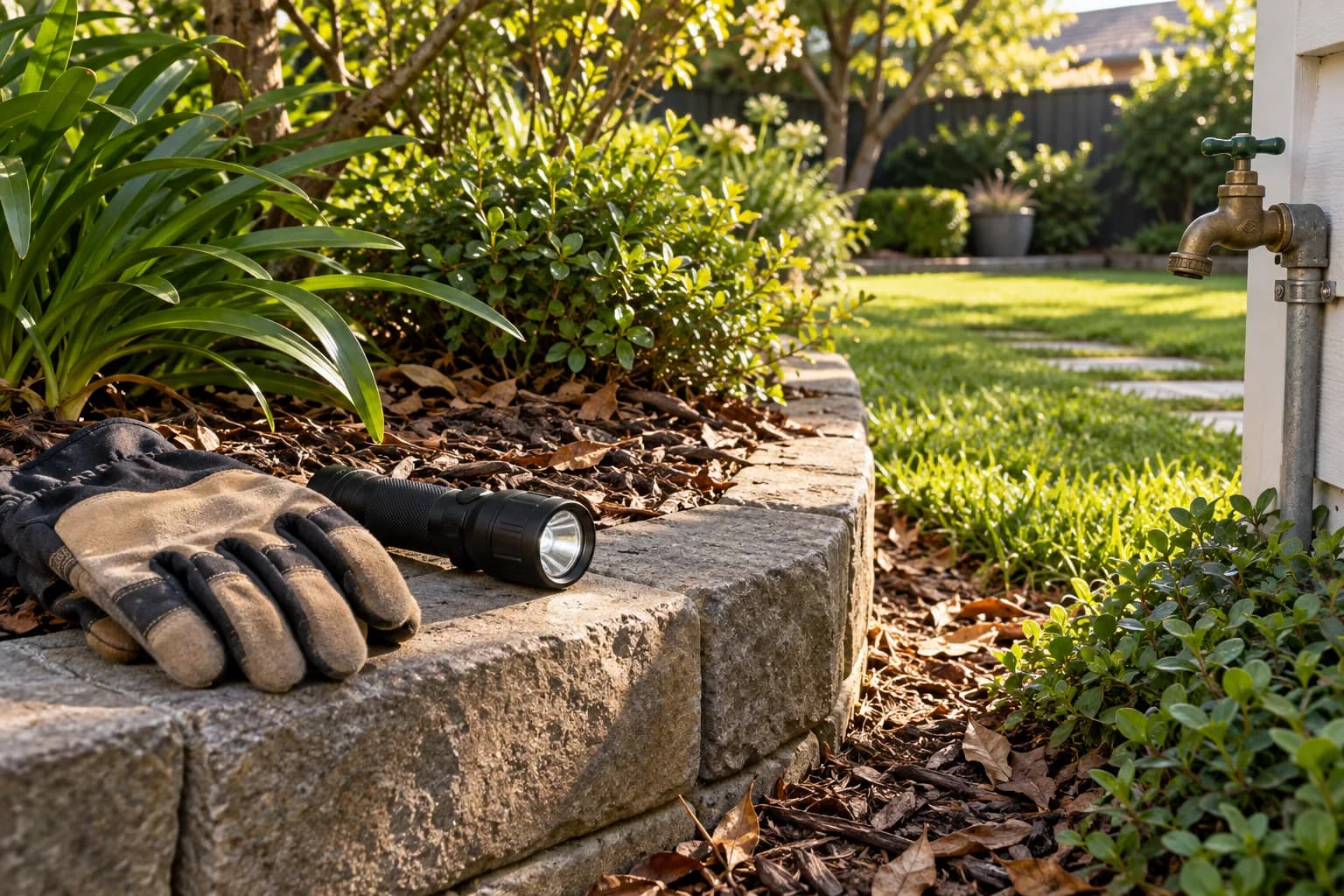 Dense shrubs against the house and a dripping hose bib give rodents cover and water. Trimming back and fixing drips makes the yard less inviting.
Rodent control for stores, restaurants and warehouses.
Schaumburg is known for Woodfield Mall and as a home of Motorola Solutions, and its businesses face rodent pressure that homes do not. Doors open many times a day, deliveries arrive in cardboard, and food or stock sits in back rooms. Start with the building. Fit dock doors with brush seals, add sweeps to back doors, and seal gaps around utility lines, pipes and wall penetrations behind equipment. Keep doors closed when not in use. Then tackle storage. Store food and supplies on shelving off the floor, in sealed containers where possible, and rotate stock so nothing sits for months. Keep dumpster lids closed and the area around them clean, since that is where Norway rats feed. A documented program is worth having. Ask a provider for interior traps, exterior locked stations, written logs after each visit and sealing recommendations. Inspectors and corporate auditors want to see that you are on top of rodent control, and logs show patterns before they become problems. Act quickly in fall, when mice push into every heated building.
What should a good inspection report show?
A useful inspection report tells you where rodents are getting in, where they are living and what will be done about it. If you hire a provider in Schaumburg, ask for it in writing. Entry points should be listed with locations and, ideally, photos: the garage door seal, gaps around pipes and utility lines, foundation cracks, vents, the roofline. Each opening of 1/4 inch or more matters, since the CDC uses that as the mouse threshold. Activity should be mapped. Where were droppings, gnaw marks, nests or burrows found? That shows where traps or stations belong. The plan should be specific. Which openings will be sealed, and with what materials? Where will traps and stations go? What sanitation steps should you take? The follow-up schedule should be clear. How many visits are included, and what does an extra visit cost? For businesses, the report should also explain how logs will be kept and shared. A report that only says rodent activity noted, bait applied is not enough to judge the work.
When is a rodent problem urgent in Schaumburg?
Most rodent problems need prompt attention without being emergencies. A few situations call for faster action. Seeing a rat in a bedroom or living room points to a big opening somewhere and more rats behind it. Call soon. Chewed wiring, a burning smell or flickering lights in an area with rodent activity is a fire risk. Call an electrician as well as a rodent provider. Droppings near a crib, food preparation area or medical equipment, or rodents in a home with an infant, an older adult or someone with a weakened immune system, deserve quick attention. For a Schaumburg restaurant or food business, rodents or droppings in a kitchen or storage area need immediate action before the next inspection. A rodent bite or scratch needs medical attention. The CDC lists rat-bite fever among rodent-borne illnesses. Everything else, like mice in the garage in October, is worth handling within days, not weeks, since winter lows near 16F will keep them indoors and breeding.
What affects the price
- The number of openings around the garage door, utilities and foundation.
- Whether mice have reached walls, ceilings or attics beyond the garage.
- Commercial square footage and the number of doors, docks and storage areas.
- Documentation and visit frequency required for a business.
- Exterior stations needed for Norway rats near dumpsters or yards.
- Cleanup of droppings and nests in garages, attics or stockrooms.
📊
What's your biggest concern about rodents?
When to call for help
Call a provider when mice keep turning up after two weeks of trapping, when you find chewed wiring in a car or wall, or when droppings appear in several rooms. Rats near the house or a business are another clear reason to get help. For Schaumburg stores, restaurants and warehouses, bring in a provider at the first sign of rodents near food or merchandise, since documented service matters. When you call, ask what they will seal, how many visits are included, whether they provide written logs and how bait stations are secured.
What you can do yourself
Garage mice are a good DIY project for most Schaumburg homeowners. Replace the garage door bottom seal and side weatherstripping, add a sweep to the door into the house, store seed and pet food in metal cans, and set snap traps along the garage walls and near parked cars. Check traps daily. If mice have nested in a car, wet the material with bleach solution before removing it, and have a mechanic check for chewed wiring. DIY gets harder once mice reach walls and ceilings, or when you cannot find the entry point. Rats are also a bigger job, since they avoid traps and need a yard-wide plan. Businesses are a different case. Stores, restaurants and warehouses usually need a provider for documented service, interior and exterior coverage, and sealing around doors and docks. Trying to handle that internally often leaves gaps in records that inspectors notice.
Rodents in Schaumburg
With a median home value near $305,000, sealing garages early protects vehicles and homes. Illinois data adds context: the CDC's provisional count shows one Illinois hantavirus case in 2025, and Illinois leptospirosis cases, linked to rat exposure in the Chicago area, stood at one by early April 2026 against three a year earlier. The humid continental climate brings summers near 83F, about 37 inches of rain a year and humidity near 70 percent at roughly 794 feet of elevation, then winter lows around 16F that push mice indoors and keep them there. Residential garages are the first stop for mice each fall, while shopping centers, restaurants, offices and warehouses face constant pressure at doors and loading areas. That mix of homes and large commercial areas shapes its rodent picture. Schaumburg was founded in 1956 and has grown into a suburban community of about 77,000, known for Woodfield Mall and as a home of Motorola Solutions.
Local research
Rodents in Schaumburg, IL: what the public record shows
Before you compare quotes, it helps to know which rodents actually live in Illinois, when they are busiest around Schaumburg, and what the state figures look like. Everything below links to the agency or university page it came from.
Leptospirosis cases (YTD 2026 vs 2025, week 13)
Chicago rat exposure.
CDC NNDSSRodent species recorded in Illinois
- House mouse (Mus musculus) — Enters at 1/4 inch; 5-10 litters per year; eats about 200 small meals a night.
- Norway rat (Rattus norvegicus) — Burrowing rat of basements, sewers and ground floors; tail shorter than head plus body.
When rodents are busiest around Schaumburg
Fall entry; winter infestations. Upper Midwest and Northeast: mice in walls and garages all winter.
Based on Schaumburg’s humid continental climate profile.
For context, nationally
- 1/4 inch (the width of a pencil) — Smallest gap a mouse can enter. CDC
- 890; 35% fatal; 94% west of the Mississippi — Hantavirus cases reported since 1993 (through 2023). CDC
Sources: CDC National Notifiable Diseases Surveillance System; CDC NNDSS; CDC; Pest Notes: House Mouse; Pest Notes: Rats. Figures are quoted as the source prints them. How we check our sources
Simple ways to keep rodents away
- Replace worn garage door seals and side weatherstripping before October.
- Add a sweep to the door between the garage and the house.
- Store birdseed, grass seed and pet food in metal containers with tight lids.
- Set a few snap traps near parked cars in fall as an early warning.
- Keep garage clutter off the floor and in sealed plastic bins.
- Seal gaps around pipes, dryer vents and utility lines with steel wool and caulk.
- For businesses, keep dock doors closed and fit them with brush seals.
- Store food and supplies off the floor in sealed containers.
 A good rodent quote lists the inspection, the number of trapping visits, each opening to be sealed and the material for it, and any cleanup.
Did you know?
Kentucky and West Virginia joined Illinois as the only eastern states in the CDC's provisional 2025 hantavirus count.
The CDC counts plague, Lyme disease and murine typhus as illnesses rodents spread indirectly, through fleas and ticks.
U.S. states reported 21 leptospirosis cases in the first 13 weeks of 2026, one fewer than in the same stretch of 2025.
Questions people ask
Why are mice nesting in my car in Schaumburg?
Wet any nest with bleach solution before removing it. Seal the garage, set traps near the car and check the cabin air filter. When Schaumburg nights cool in fall, mice move into garages, and a parked car's engine bay and cabin air intake make easy nesting spots. Cars are warm, sheltered and full of soft material.
When do mice move into Schaumburg homes?
Sealing in late summer and trapping early in fall gives you the best chance of keeping them out. They usually reach the garage first and then the house. Schaumburg winter lows average about 16F, and mice start looking for shelter as soon as nights cool. Mostly from September through November.
Do Norway rats live in Schaumburg?
Burrows with smooth openings and larger, blunt droppings are the signs to watch for. In Schaumburg, look for rats along foundations, under sheds and decks, and around dumpsters and loading areas behind businesses. The Norway rat is one of Illinois's two main household rodents, along with the house mouse. Yes.
Has Illinois had hantavirus cases?
Clean droppings wet, especially in sheds, garages and closed buildings, and you lower the risk further. cases occur west of the Mississippi. Most U.S. The CDC's provisional 2025 tables list one Illinois case, and Illinois was among only a handful of eastern states with any case that year. Yes, but rarely.
What should a store or restaurant do about mice?
Set up a documented service plan with a provider right away, seal gaps around doors, docks and utility lines, and store food and stock off the floor in sealed containers. Schaumburg businesses with heavy foot traffic and frequent deliveries see a lot of door openings, so door seals and dock brushes matter.
How do I clean a mouse nest out of my car?
Remove the material with paper towels, bag it and replace the cabin air filter. Wearing gloves, spray the nest and droppings with a bleach solution of 1.5 cups per gallon of water and wait 5 minutes. Open the car doors and the garage door and let everything air out for 30 minutes.
Are bait stations safe around dogs?
In a Schaumburg yard with pets, ask the provider to rely on traps where possible and to anchor any stations well away from where your dog plays. Dogs can be exposed if a station is broken or if they eat a poisoned rodent. Locked, tamper-resistant stations reduce the risk, but no rodenticide is risk-free.
Nearby cities
Related guides
Sources (6)
The facts in this article come from the public sources listed above. Every home is different, so ask the company you talk to about pricing and what’s included. Published by Rodent Exterminator · Updated October 11, 2026 · How we write these guides