The short version
The most effective rodent control in Augusta, Georgia combines sealing, trapping and yard cleanup at the same time. UGA Extension confirms roof rats, Norway rats and house mice all live in Georgia, so the first step is identifying which one you have. Mild winters with lows near 35F keep rodents active all year, with a surge each fall.
- Georgia has all three house rodents, so identify the species before setting traps.
- Augusta's mild winters keep rodents active year-round, with a peak in fall.
- UGA Extension suggests about a dozen traps per house for a rat problem.
- Screen openings with 1/4-inch hardware cloth, since rodents fit through dime-sized gaps.
- A Norway rat lives within a 100 to 150 foot circle, so the yard needs attention too.
Use this if you own or rent a house in Augusta and are hearing noises overhead, finding droppings, or seeing gnawed food. It is also for landlords answering a tenant complaint, owners getting a home ready for spring guests, and small restaurant or shop owners who want a straight answer on what rodent work should include.
What to look for
A female mouse can start having litters at two months old and keep going every 30 days, so a small problem grows fast. And because roof rats come in high while Norway rats come in low, a trap line set only in the kitchen misses half the picture. Georgia is one of the states where all three structural rodents are established, according to UGA Extension, and the local climate suits each of them. Roof rats are sleek climbers that travel along tree limbs, fences and utility lines and nest in attics and insulation. Norway rats are bulkier diggers that burrow under slabs, woodpiles and shrubs and come in at ground level. House mice turn up wherever food is stored. The weather keeps all three busy: summer highs average 93F, winter lows sit around 35F, humidity runs 72 percent and 46 inches of rain falls each year, which adds up to thick vegetation, steady water and few hard freezes to knock populations back.
- 1Droppings scattered in attic insulation or along rafters, a common roof rat clue.
- 2Thumping or running overhead in the evening, often starting right after dark.
- 3Burrow openings under shrubs, beside the slab or beneath a woodpile, the Norway rat signature.
- 4Small holes chewed in pantry boxes with tiny droppings nearby, pointing to house mice.
- 5Dark smudge marks on beams, pipes or wall tops where rats run the same route nightly.
- 6Half-eaten fruit, nuts or pet food left on a porch or under a tree.
- 7A sharp ammonia odor in a closet, attic corner or cabinet.
Why it’s worth acting soon
- Mice that start breeding at two months and litter every 30 days outrun a few traps quickly.
- Roof rats chew attic wiring and duct insulation, which can lead to costly repairs or a fire.
- Rodent urine, droppings and bites can pass leptospirosis, salmonellosis or rat-bite fever to people, per the CDC.
- Urine and nests in attic insulation often mean the insulation has to be pulled out and replaced.
- Rats that settle into the yard keep testing the house until the whole lot is dealt with.
Treatment options and typical costs
Roofline-to-foundation exclusion
Quoted after inspection
Because roof rats enter high and Norway rats enter low, sealing an Augusta house properly covers both ends: roof returns, soffit gaps, plumbing vents, AC line openings, crawl space vents and door sweeps. UGA Extension recommends hardware cloth with 1/4-inch squares for screening. Ask for photos of every spot that was sealed.
- Time
- One or two visits depending on how many openings turn up
- Best for
- Homes with attic noise or repeat mouse activity
Species-matched trap grid
Quoted after inspection
UGA Extension suggests roughly a dozen traps per house for rats, set perpendicular to walls along travel routes. Roof rat traps belong in the attic and on rafters; Norway rat traps go at ground level near burrows and doors. Mice need traps spaced closely along baseboards, since they rarely stray far from a wall.
- Time
- Several weeks with scheduled checks
- Best for
- Rats or mice active in the living space or attic
Exterior bait stations around the yard
Quoted after inspection
A Norway rat may spend its whole life inside a circle 100 to 150 feet across, so locked stations placed along fences, sheds and the foundation reach the colony where it lives. Stations should be tamper-resistant and anchored down. Ask which product is used, where each station sits, and how pets and children are protected.
- Time
- Ongoing, serviced on a schedule
- Best for
- Burrowing Norway rats and yards with sheds or woodpiles
Habitat cleanup around the house
Quoted after inspection
Trimming limbs that touch the roof, pulling ivy off walls, raising woodpiles and picking up fallen fruit removes roof rat highways and food. Many providers recommend this work rather than doing it, so ask whether it is part of the quote or a to-do list handed to you.
- Time
- A weekend of yard work, then upkeep
- Best for
- Lots with mature trees and dense shrubs
Prices are typical published ranges. Ask what’s included before you compare quotes.
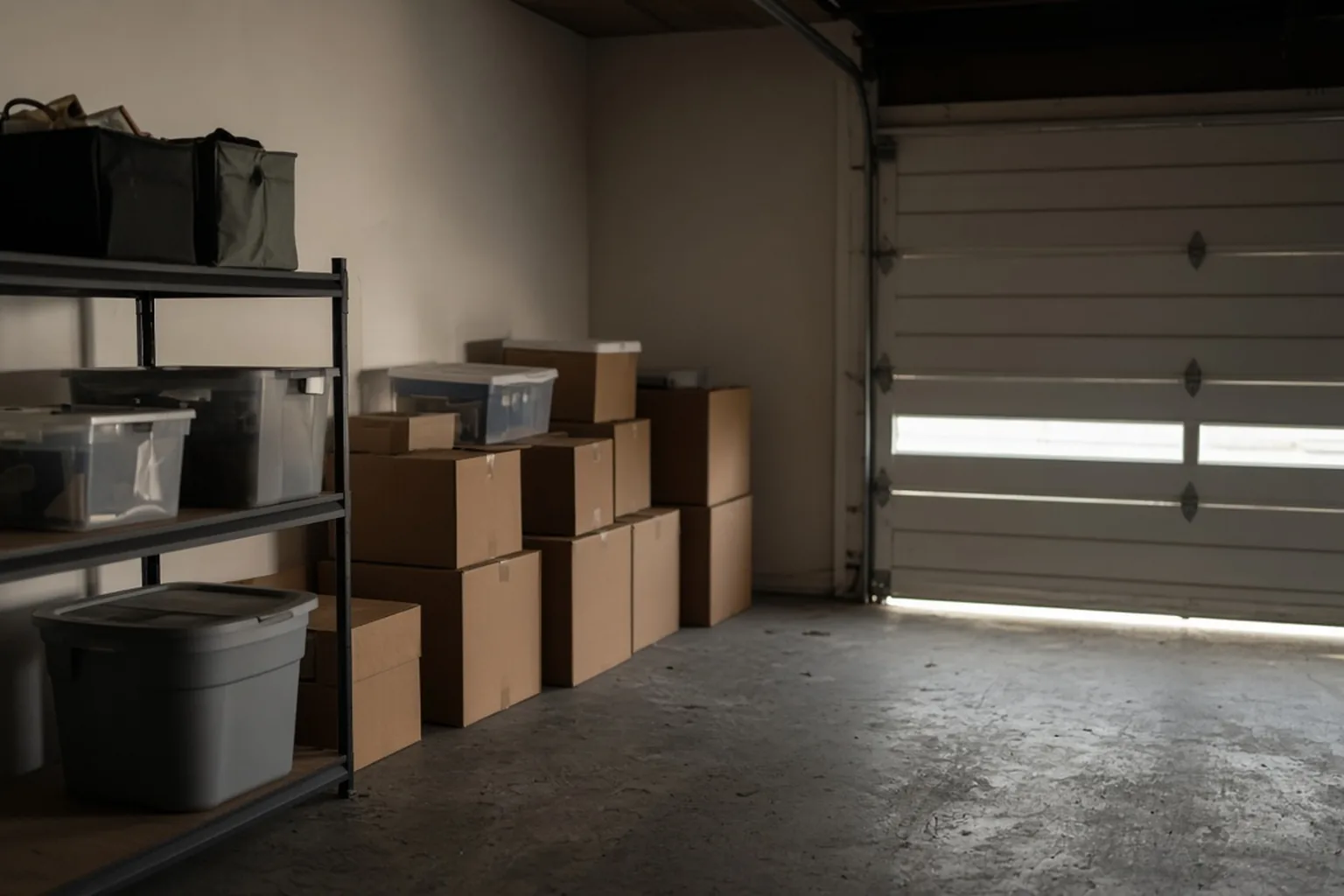 Cardboard boxes make easy nests and the gap under an overhead door makes an easy entrance. Plastic bins and a fresh door seal fix both.
Roof rat, Norway rat or house mouse: which one is in your Augusta home?
Start with where you hear or find them, because location narrows it down fast. Noises overhead, droppings in attic insulation, or a rodent running along a power line or fence top usually means a roof rat. Roof rats are slim, dark and agile, with a tail longer than the head and body combined. Around Augusta homes they use trees and dense shrubs for cover and get in through roof returns, soffit gaps and vents. Burrows in the yard, gnawing at ground-level doors, and activity in a crawl space or garage point to the Norway rat. It is heavier and brown, with a blunt nose and small ears, and UGA Extension notes it can spend its whole life inside a circle 100 to 150 feet across. Small droppings in drawers and chewed boxes in the pantry are house mice. UGA puts their usual travel at 5 to 10 feet from a wall, which is why traps sit flush against baseboards. You can host more than one species at once. If the attic and the crawl space both show activity, plan for two trap lines.
Why do Augusta rodents stay busy all year, and when does the fall surge hit?
In much of the country, cold weather caps rodent breeding for a few months. Augusta rarely gets that break. With average winter lows around 35F and summer highs near 93F, food, water and shelter stay available almost every week of the year. The year tends to run in three phases. Spring and summer bring heavy breeding outdoors: rats nest in ivy, woodpiles and under sheds, young mice spread through yards, and fallen fruit, seed and pet food feed big populations. From September into November the surge moves indoors. Nights cool, vegetation thins, and the summer's young animals look for permanent shelter. This is when attic noises usually begin. December through February is quieter outside, but whatever moved in during fall is now breeding in your attic or walls. House mice can produce a litter every 30 days once they are two months old, so a single autumn arrival can turn into a sizable winter colony. The best time to seal is late summer, before the surge. The second-best time is the night you hear the first scratch.
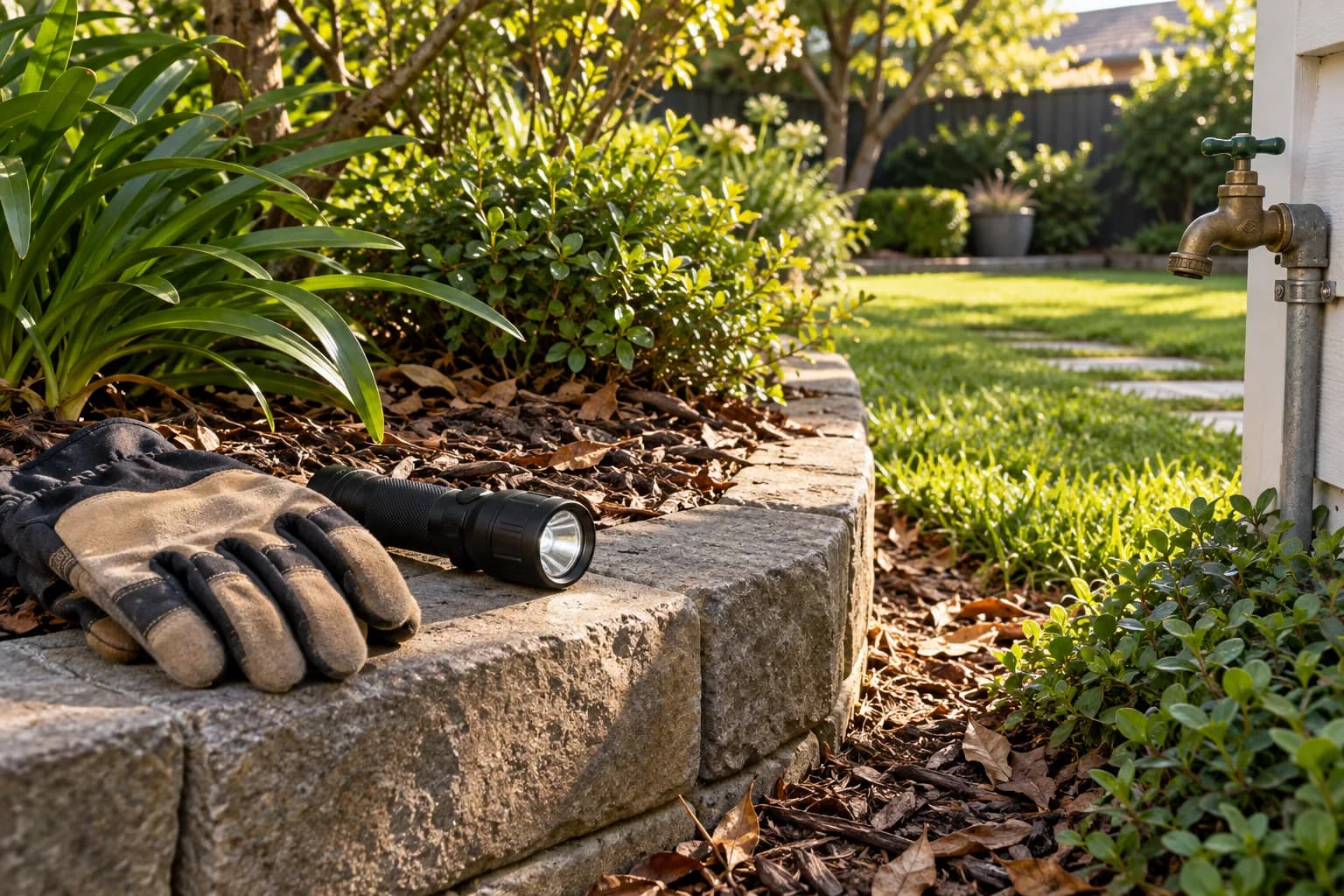 Dense shrubs against the house and a dripping hose bib give rodents cover and water. Trimming back and fixing drips makes the yard less inviting.
What should the first inspection visit look like?
Third, a written scope covering return visits, sealing materials, and whether outdoor bait stations are included. If the inspector cannot show you how rodents are getting into your Augusta home, ask for a second look before you sign anything. A good first visit is mostly looking, not spraying. Expect the inspector to walk the outside first, checking the roofline, soffits, gable vents, AC line openings, crawl space vents and door bottoms. On lots with tall trees they should also note any branches touching the roof. Then comes the inside: attic, garage, kitchen, laundry area and any crawl space. The inspector is looking for droppings, rub marks, gnawing and nesting material, and using those clues to name the species. Roof rats and Norway rats need different trap placement, so identification should come before any trapping plan. You should leave with three things. First, a list of entry points, ideally with photos. Second, a trap plan; UGA Extension's guidance calls for about a dozen traps for a rat problem, so a plan with two or three is thin.
What makes rodent work cost more or less in an Augusta home?
Ask for that as its own line item so you can decide on it separately. With a median home value near $170,000 in Augusta, a large exclusion and insulation job is a real expense, so get two written quotes listing the same items. Price follows effort, and here effort comes down mostly to height, access and species. Height matters because roof rats enter up high. Sealing a roof return or gable vent on a two-story house takes ladders and time, labor that a mouse-only job in a single-story house never needs. Access matters because a house that sits over a crawl space or has an attic full of tight corners slows every step of the work. Every awkward spot adds minutes, and minutes add dollars. Species matters because rats call for more traps, heavier materials and often outdoor bait stations covering a 100 to 150 foot range, while mice call for tighter sealing inside. Mixed infestations cost the most. Damage cleanup is the wild card. Months of roof rat traffic can soil attic insulation badly enough that it has to come out.
When does a rodent problem become an emergency?
Food businesses face inspection consequences, and any contaminated stock has to be thrown out. A bite from a rat or mouse should be washed well and checked by a doctor, since rat-bite fever is on the CDC list of diseases rodents spread directly. Last, a dead rodent inside a wall during a Georgia summer will not wait politely. Finding and removing the carcass quickly limits flies and odor. For everything else, take a day or two to get quotes and a clear plan. Jumping at the first offer is the most common way people overpay. Most rodent problems are urgent rather than emergencies. A few situations do call for action this week. Chewed wiring is the big one. If you find gnawed cables in the attic, smell hot plastic, or have lights or outlets die in a room where you have heard rodents, shut off that circuit and have both an electrician and a rodent provider look at it. Roof rats favor the same warm, hidden attic spaces where wiring runs. A rodent in a kitchen that serves the public is another.
What affects the price
- Number and height of entry points, especially roofline gaps that need tall ladders.
- Whether the job involves roof rats, Norway rats, mice, or a mix of them.
- Soiled attic insulation that needs removal or sanitizing after a long infestation.
- How many trap checks and return trips are built into the quoted price.
- Exterior bait stations, and whether monthly servicing is part of the plan.
- Tight crawl spaces that slow down inspection and sealing.
📊
What's your biggest concern about rodents?
When to call for help
Since the weather here never fully shuts breeding down, the start of the fall surge is a smart time to book an inspection before animals settle in for the cool months. Act right away if you smell burning plastic or spot chewed wires. Call a provider once you hear rodents in the attic or walls, because roof rats rarely leave on their own and their entry points are usually high and awkward. Get help too if you find burrows along the foundation, see rodents in daylight, or are still catching mice after two weeks. Daytime activity often means a crowded population.
What you can do yourself
Do that part yourself even if you hire out the rest, and the professional work will hold longer. Where DIY really pays off is the yard: cutting branches back from the roof, clearing ivy and moving woodpiles. A professional brings the equipment, the hardware cloth and the experience to read rub marks and droppings to find the runway. Roof rats also mean ladders and attic crawling to seal soffits and roof returns, which is where many DIY efforts stall. UGA Extension's guidance of about a dozen traps for a rat problem tells you the scale, and most homeowners set three. Rats are a different job. A few snap traps set at right angles to the baseboard, trigger toward the wall, usually catch it, and steel wool plus caulk closes small gaps under sinks. With one mouse in the kitchen, DIY makes sense.
Rodents in Augusta
Sitting just 148 feet above sea level, the city rarely sees the long hard freezes that thin rodent numbers farther north. The median home value is about $170,000. The city is known for the Masters golf tournament, and the restaurants and businesses that serve its crowds depend on solid rodent exclusion as much as any homeowner does. Augusta was founded in 1736, and any building that has stood through decades of settling and repairs tends to have more gaps for rodents to exploit. About 202,000 people live here at urban density, so shared fences, alleys and dumpsters let rats move between properties. The climate is humid subtropical, with 72 percent average humidity, 46 inches of rain, summer highs near 93F and winter lows around 35F.
Local research
Rodents in Augusta, GA: what the public record shows
Before you compare quotes, it helps to know which rodents actually live in Georgia, when they are busiest around Augusta, and what the state figures look like. Everything below links to the agency or university page it came from.
Commensal rodent species established in Georgia
UGA Extension states all three live in Georgia, so identification drives where you place traps.
University of Georgia ExtensionNorway rat home range
A Norway rat may spend its whole life in that circle, so control has to cover the burrow area, not just the house.
University of Georgia ExtensionRodent species recorded in Georgia
- House mouse (Mus musculus) — Enters at 1/4 inch; 5-10 litters per year; eats about 200 small meals a night.
- Norway rat (Rattus norvegicus) — Burrowing rat of basements, sewers and ground floors; tail shorter than head plus body.
- Roof rat (Rattus rattus) — Climber of attics and trees in warm and coastal regions; tail longer than head plus body.
When rodents are busiest around Augusta
Year-round, fall surge. Roof rats dominate Florida, Texas and Gulf Coast attics.
Based on Augusta’s humid subtropical climate profile.
UGA Circular 970 (revised November 2025) recommends about a dozen traps per house for rats, set perpendicular to walls.
For context, nationally
- 1/4 inch (the width of a pencil) — Smallest gap a mouse can enter. CDC
- 890; 35% fatal; 94% west of the Mississippi — Hantavirus cases reported since 1993 (through 2023). CDC
Sources: University of Georgia Extension; CDC; Pest Notes: House Mouse; Pest Notes: Rats. Figures are quoted as the source prints them. How we check our sources
Simple ways to keep rodents away
- Cut tree limbs well back from the roof so roof rats cannot jump across.
- Pull ivy and vines off exterior walls and fences, since they work as ladders and cover.
- Screen soffit, gable and crawl space vents with 1/4-inch hardware cloth.
- Pick up fallen fruit and nuts, and bring pet food inside at night.
- Raise woodpiles and stored lumber on racks away from the slab.
- Fit doors with sweeps and close the gaps where AC lines and pipes pass through walls.
- Move birdseed and dry goods out of bags into sealed containers.
- Check the attic each September for fresh droppings before the fall wave.
 Before you call, sketch where you have seen droppings or heard noise and measure any gaps you found. It makes the first visit faster and the quotes comparable.
Did you know?
UGA Extension says rodents can squeeze through openings about the size of a dime, which is why 1/4-inch hardware cloth is the standard screening mesh.
Besides leptospirosis and salmonellosis, the CDC's list of diseases rodents spread directly includes tularemia and lymphocytic choriomeningitis.
Of the 17 provisional U.S. hantavirus cases tallied for 2025, nearly all came from western states and none from Georgia.
Questions people ask
Are roof rats common in Augusta?
In Augusta, 72 percent average humidity and winters with lows near 35F suit them well. They nest in attics and travel along branches and power lines, so noises overhead at night are more often a roof rat than a Norway rat. Yes. UGA Extension confirms roof rats are established in Georgia alongside Norway rats and house mice.
Why do rodent problems get worse in the fall?
Augusta's winter lows only reach about 35F, so rodents never fully stop, but the fall surge brings new arrivals into attics and garages. Seal in September or early October to stay ahead of it. Cooler nights push rodents to find shelter, and the summer's young animals are looking for homes of their own.
How many traps does it take to catch rats?
Roof rats need traps in the attic and on rafters, while Norway rats need them low near burrows. Three traps under the sink rarely solve a rat problem. More than most people set. UGA Extension suggests about a dozen traps per house for rats, placed perpendicular to walls along their routes.
What diseases can Georgia rodents carry?
Hantavirus is mainly a western concern, and Georgia did not appear in the CDC's provisional 2025 count. Still, wet down droppings with diluted bleach and never sweep them dry. The CDC lists leptospirosis, salmonellosis, rat-bite fever and tularemia among diseases rodents spread directly, mostly through urine, droppings or bites.
Will rodents leave on their own when it warms up?
Rodents that found a warm attic in fall tend to stay and breed. Sealing the entry points and removing the animals inside is what ends it. Usually not. With 46 inches of rain a year and summer highs in the 90s, Augusta offers food, water and cover in every season.
What should I check before renting my house out during the Masters?
Close gaps under sinks and around doors, and store pet food and birdseed in sealed bins before guests arrive. If you see rat signs in your Augusta home, book an inspection weeks ahead rather than the week before the tournament. Look for droppings in the kitchen, pantry and attic a few weeks ahead, and set traps if you find any.
Is it safe to use poison bait inside the house?
Snap traps let you find and remove the body. Outdoors, bait belongs in locked, anchored stations out of reach of children and pets. It is better kept outside. A rat that eats bait indoors can die in a wall or attic, and in Georgia heat and humidity the smell builds within days.
Nearby cities
Related guides
Sources (6)
The facts in this article come from the public sources listed above. Every home is different, so ask the company you talk to about pricing and what’s included. Published by Rodent Exterminator · Updated October 11, 2026 · How we write these guides