The short version
Rodent control in Avondale, AZ works best in this order: seal entry points, trap what is already inside, then clean up droppings the wet way. Roof rats climb into attics, house mice slip through quarter-inch gaps, and deer mice carry hantavirus. With only about 8 inches of rain a year, leaks and irrigation pull rodents toward your house, so fixing water sources matters too.
- Close every gap a quarter inch or wider, the CDC's size limit for a house mouse.
- In a town with about 8 inches of yearly rain, leaks and drip lines draw rodents in.
- Treat deer mouse droppings in sheds as a hantavirus risk: ventilate, bleach, soak, never sweep.
- Roof rats enter high, so the roofline needs as much attention as the garage door.
- Ask any provider for a written list of entry points and the number of follow-up visits.
Homeowners whose attic has started making noise at night, renters finding droppings under a sink or in a garage, and landlords who want a rodent complaint handled properly the first time. It is also for anyone in Avondale about to empty a shed, storage closet or parked camper that sat closed all summer, since that is where deer mice like to settle in.
What to look for
Arizona's state data lists three rodents that matter around Avondale: the roof rat, the house mouse and the deer mouse. Each one creates a different kind of problem. The roof rat is a lean, dark climber whose tail runs longer than its head and body. They nest up high, in attics, thick shrubs and the tops of fences and walls, and they travel along fences and utility lines. House mice live indoors, in wall voids, cabinets and garage clutter, and they can get by on very little water. Deer mice, with white bellies and two-toned tails, stay near open ground and move into sheds, garages and stored vehicles. The climate ties it together. Humidity averages around 35 percent and summer highs sit near 106F, so a dripping hose bib, a leaking pool pump or a bowl of dog water is a lifeline. Winter lows average about 42F, which is mild enough that nothing knocks the population back. Rodents here stay active all year instead of rushing indoors for one cold season.
- 1Pointed droppings about half an inch long on attic insulation or on top of the water heater suggest roof rats.
- 2Rice-sized droppings in a kitchen drawer or behind the stove usually mean house mice.
- 3Scurrying overhead between dusk and midnight, when roof rats move most.
- 4Oranges or grapefruit hollowed out while still hanging, with only the rind left on the branch.
- 5Drip irrigation tubing with chewed holes, or wet patches in the yard that appear overnight.
- 6Dark, greasy rub marks along the top of a fence or wall, or where a pipe enters the house.
- 7Shredded paper, insulation or fabric bunched in a garage corner or inside a stored camper.
Why it’s worth acting soon
- UC IPM notes a female roof rat can raise three to five litters a year of up to eight young each.
- Gnawed attic and garage wiring is a fire hazard and a costly repair.
- Urine and droppings soak into insulation, so a slow response means a bigger cleanup bill.
- Each time someone disturbs a deer mouse nest in a shed, the hantavirus exposure risk repeats.
- Chewed irrigation and AC drain lines can waste water for weeks before anyone spots the leak.
3Arizona hantavirus cases, 2025 (provisional)CDC NNDSS 52%Homeowners in the West who said they have ever had a rodent encounter (NPMA/Harris Poll of U.S. adults, September 2022; lifetime, not yearly)NPMA / Harris Poll 94% of 890Share of U.S. hantavirus cases since 1993 west of the MississippiCDC Treatment options and typical costs
Exclusion and sealing
Quoted after inspection
Closing every opening a quarter inch or larger with steel wool, hardware cloth, metal flashing or mortar. Around an Avondale house that usually means roof vents, roof-to-wall joints, garage door corners, weep holes and the spots where AC lines and plumbing pass through exterior walls. This is the step that prevents repeat problems.
- Time
- Depends on how many openings the inspection finds
- Best for
- Any home with attic noise or repeat activity
Snap trapping indoors and in the attic
Quoted after inspection
Baited snap traps set along walls, runways and attic beams, checked on a schedule. Trapping removes the animals already inside without leaving a poisoned body in a wall. Rats are wary of new objects, so a careful trapper may leave traps unset for a few days before arming them.
- Time
- Until checks come up empty; ask how many visits are included
- Best for
- Rats or mice already living inside
Exterior bait stations
Quoted after inspection
Locked, tamper-resistant stations placed outside by a licensed applicator along fences and walls. They lower rat numbers on the lot but carry risk for pets and for owls and hawks that eat poisoned rodents. Ask which product is used, where stations go and how often they are checked.
- Time
- Ongoing, on the service schedule written into the contract
- Best for
- Lots backing onto open desert or with heavy outdoor activity
Droppings and nest cleanup
Quoted after inspection
Removing droppings, nests and soiled material using the CDC wet method: air the space out first, saturate everything with a 1:9 bleach solution, let it soak, then wipe and bag. Heavily soiled attic insulation may need to come out and be replaced.
- Time
- Depends on how much material is soiled
- Best for
- After trapping ends, or before clearing a shed
Prices are typical published ranges. Ask what’s included before you compare quotes.
 Crawl spaces are where rats and mice get comfortable. Vent screens, the sill plate and any gap around pipes are worth a careful look.
Which rodents are getting into Avondale homes?
A house mouse in the pantry calls for snap traps and a hard look at the gaps under the sink. A roof rat in the attic calls for sealing at roof height and traps on the rafters. A deer mouse nest in a garage cabinet calls for careful wet cleanup because of hantavirus. The health picture differs too. Deer mice look tidier, with white bellies and feet and a sharply two-toned tail, and they prefer sheds, pump housings and anything stored for a season. House mice are small and gray-brown, nest in walls and cabinets, and leave rice-sized droppings in drawers and along baseboards. Their droppings run about half an inch with pointed ends. Roof rats are slender, with tails longer than head and body combined, and they live up high: attics, dense shrubs, the tops of garden walls. Knowing which one you have changes the plan. Nearly every rodent problem in Avondale comes down to one of three species that Arizona's state data lists: the roof rat, the house mouse and the deer mouse.
A month-by-month rodent calendar for Avondale.
If you travel, check traps and garage corners when you get back. October through December brings another breeding push in mild weather, with fallen fruit outside and holiday storage in the garage. Highs average 106F, so expect chewed drip lines, rats around pool pumps and AC drains, and night visits to fruit trees. June through September is about water. People open sheds, pull out patio cushions and sort stored boxes, stirring up a winter's worth of deer mouse dust. March through May is spring cleaning season and the riskiest stretch for hantavirus. This is a good window for sealing work, while attics are comfortable enough to spend real time in. January and February bring cool nights that push house mice into garages and roof rats deeper into attics. With average winter lows near 42F there is no deep cold to slow them, so what changes through the year is what they are after. Rodents in Avondale never fully shut down.
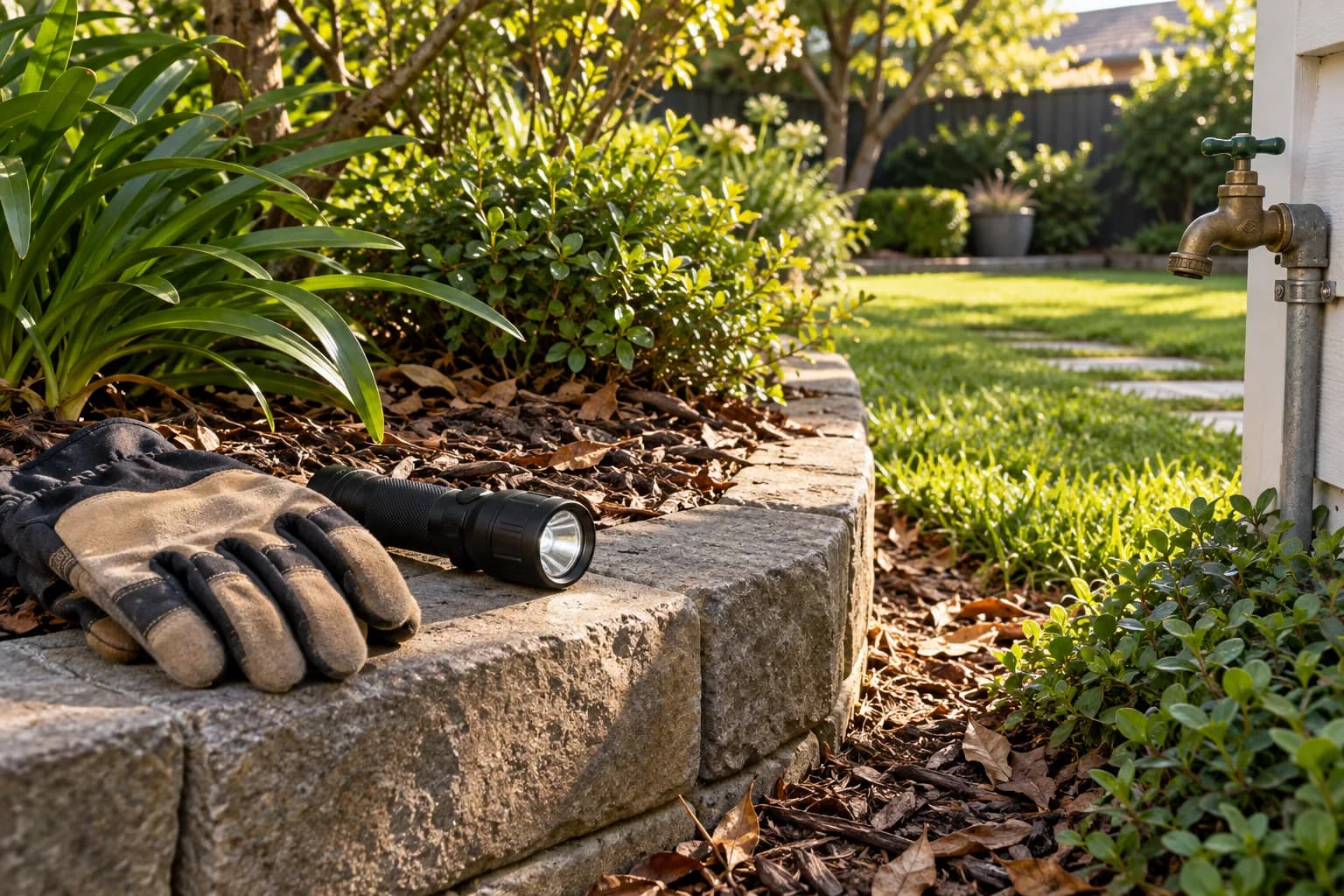 Dense shrubs against the house and a dripping hose bib give rodents cover and water. Trimming back and fixing drips makes the yard less inviting.
Why does water matter more than cold for rodents in Avondale?
Each water source you take away lowers the number of rodents your lot can support. Fix leaks, bury or shield irrigation lines where you can, water early in the morning so the surface dries by dark, and bring water dishes inside at dusk. That is why a good rodent plan here starts with a walk around the yard, not just a look in the attic. Citrus and other fruit add both food and moisture in one bite. Common targets include drip irrigation tubing, which they chew open, leaking hose bibs, pool and spa equipment, evaporative cooler pans, AC condensate lines and dog bowls left out overnight. House mice can pull much of their moisture from food, but rats need to drink, and they are resourceful about it. Around Avondale, with roughly 8 inches of rain a year and humidity averaging 35 percent, the push comes from thirst, and a house with irrigation looks like an oasis. In northern states, rodents move indoors to escape freezing weather.
What should a first rodent inspection cover?
If someone drops a few traps and leaves, you have not had an inspection. On an Avondale job in summer, ask how they will handle attic heat and how many return visits are built in. When they finish, you should have a written list of entry points, a plan for trapping or baiting, and a separate cleanup estimate if insulation is soiled. In the attic, they are hunting for droppings, runways pressed into insulation, chewed wiring and nest material. They should point out tree limbs, vines and fences that give roof rats a path up. Outside, they should be looking at weep holes along the base of exterior walls, gaps where utility lines enter the house, garage door corners and seals, and joints where roof meets wall. The inspector should walk the full perimeter, look at the roof and its vents, then check the attic, the garage and any outbuildings. A useful first visit takes longer than most people expect, and much of it happens outside.
Cleaning out a shed or garage after deer mice.
If the space is badly soiled, or someone at home has lung or immune problems, this is a fair job to hand to a provider. Do not sweep, vacuum or use a leaf blower on droppings, even outdoors. Wash your gloved hands before taking the gloves off. Wipe it all up with paper towels, bag it, and then wipe down nearby surfaces with the same mix. Spray droppings, urine stains and nests with a bleach solution of 1.5 cups per gallon of water, and let it sit for 5 minutes. Put on rubber or plastic gloves. Open doors and windows and leave the space alone for 30 minutes. The CDC method is simple. CDC tables show Arizona with 3 provisional cases in 2025. Deer mice nest in sheds, garages, stored campers and boxes, and when their dried droppings get stirred into the air, hantavirus can be inhaled. It is the spring cleanout. The highest-risk rodent job around an Avondale home is often not the trapping.
What affects the price
- A roofline with many vents, eaves and ridge gaps takes longer to seal than a simple one.
- Attic height, access and summer heat affect labor, and attic visits often get pushed to early morning.
- The number of entry points found on the first visit drives most of the exclusion price.
- Insulation removal and replacement is normally priced apart from trapping.
- How many trap-check visits are included changes the total more than the traps themselves.
- Sheds, detached garages and other outbuildings each add to the scope of the job.
📊
What's your biggest concern about rodents?
When to call for help
Bring in help when you hear activity in the attic, when you have trapped a few mice and fresh droppings keep showing up, or when you see a rat on a fence or roofline in daylight, which usually means a crowded population. A provider also makes sense before you clear out a shed or garage full of deer mouse droppings, since stirring up that dust is how people breathe in hantavirus. Summer attic work in Avondale is hot and hard on the body, and someone with the right gear can do it at dawn while you stay out of the crawl space.
What you can do yourself
Sealing has to be complete, because one missed vent puts you back at the start. What a provider really sells you is the inspection and the exclusion work, not the traps. Skip store-bought poison inside the house. A rat that dies inside a wall in desert heat smells for a long time, and loose bait is a danger to dogs and cats. If you do hire help, ask for an inspection report listing every opening found and what was used to close it. DIY handles a mouse or two well. A dozen snap traps with a dab of peanut butter, set with the trigger end against the wall, will usually clear a small problem in a week, and steel wool with caulk closes the small gaps under sinks. Roof rats are a different job. They are cautious, they live high, and their entry points are often on the roof where climbing in July is a bad idea.
Rodents in Avondale
Arizona's plague activity centers on the northern part of the state, so in the low desert the more practical concern is hantavirus from deer mice, especially during spring cleanups. Elevation matters for disease as well. With a median home value near $370,000, chewed wiring or ruined attic insulation becomes a real repair bill rather than a minor annoyance. Growth matters: when open desert is graded for new homes, the animals that lived there look for the nearest shelter, and that is often a garage or a shed. Most visitors know it for Phoenix Raceway, but the rodent story here plays out in backyards and garages. Avondale is a suburban city of about 92,000 people at 974 feet in the low desert, founded in 1946 and still growing.
Local research
Rodents in Avondale, AZ: what the public record shows
Before you compare quotes, it helps to know which rodents actually live in Arizona, when they are busiest around Avondale, and what the state figures look like. Everything below links to the agency or university page it came from.
Plague reports, previous 52 weeks (week 21 2026 table)
Sporadic rural cases; no YTD cases in 2025 or 2026 through May 30.
CDC NNDSSRodent species recorded in Arizona
- House mouse (Mus musculus) — Enters at 1/4 inch; 5-10 litters per year; eats about 200 small meals a night.
- Roof rat (Rattus rattus) — Climber of attics and trees in warm and coastal regions; tail longer than head plus body.
- Deer mouse (Peromyscus maniculatus) — Primary U.S. hantavirus carrier; lives throughout Washington and the interior West.
When rodents are busiest around Avondale
Spring cleanup exposure; summer. Deer mice and hantavirus in NM/AZ/CO/NV; plague fleas on wild rodents.
Based on Avondale’s hot desert climate profile.
For context, nationally
- 1/4 inch (the width of a pencil) — Smallest gap a mouse can enter. CDC
- 890; 35% fatal; 94% west of the Mississippi — Hantavirus cases reported since 1993 (through 2023). CDC
Sources: CDC National Notifiable Diseases Surveillance System; CDC NNDSS; CDC; Pest Notes: House Mouse; Pest Notes: Rats; Hantavirus. Figures are quoted as the source prints them. How we check our sources
Simple ways to keep rodents away
- Fix dripping hose bibs, pool equipment leaks and AC condensate lines before summer.
- Pick up fallen citrus and other fruit every day, and harvest ripe fruit promptly.
- Cut tree limbs and vines well back from the roof so roof rats lose their bridge.
- Screen weep holes and vents with quarter-inch hardware cloth so they still breathe and drain.
- Move pet food, bird seed and grass seed out of paper bags and into lidded metal bins.
- Stack firewood, pallets and stored items off the ground and away from walls and fences.
- Replace a garage door seal as soon as the sun cracks it.
- Bring pet water and food bowls inside at dusk.
 Before you call, sketch where you have seen droppings or heard noise and measure any gaps you found. It makes the first visit faster and the quotes comparable.
Did you know?
Roof rats often eat citrus right on the tree, scooping out the pulp and leaving an empty rind hanging from the branch.
Rats are suspicious of anything new on their routes, which is why experienced trappers sometimes leave traps unarmed for several days first.
Roughly one in three hantavirus cases reported in the U.S. since 1993 ended in death, which is why the CDC treats dried rodent droppings as a breathing hazard.
Questions people ask
Are roof rats common in Avondale, AZ?
Noise overhead at night is the classic first sign. They climb fences, trees and utility lines to reach attics, raid fruit and pet food, and stay active all year since winter lows average around 42F. Arizona lists roof rats as present along with house mice and deer mice, and irrigated Avondale yards give them food, water and cover. Yes.
Why do rodents show up more in summer when it's 106 degrees out?
Fixing leaks and bringing water dishes in at night takes away much of the pull. Rats will chew straight into irrigation tubing to drink. Avondale averages about 8 inches of rain a year, so from June through September the steadiest moisture is around houses: drip emitters, pool gear, AC drain lines and pet bowls. They are chasing water.
Do deer mice in Arizona really carry hantavirus?
People usually catch it by breathing dust from dried droppings while cleaning a shed, cabin or garage, so wet cleanup is the habit that protects you. hantavirus cases from 1993 through 2023, about 35% of them fatal, and 94% west of the Mississippi. The CDC counts 890 U.S. They are the main carrier in the West.
Is plague something to worry about in Avondale?
Around Avondale itself, hantavirus and sanitation are the bigger issues. If you camp or keep a cabin up north, keep pets on flea control and leave dead rodents alone. plague cases in northern New Mexico, northern Arizona, southern Colorado and the far West, averaging about 7 human cases a year nationally. The CDC places most U.S. Not much in the valley.
How long does it take to clear rats out of an attic?
Ask up front how many trap checks the quote includes. Summer heat in an Avondale attic also limits how long anyone can safely work up there, so visits tend to run early. Rats avoid unfamiliar objects at first, so the opening days may catch nothing. Trapping continues for several rounds of checks after the entry points are sealed.
Is rat poison safe to use if I have dogs?
Ask which active ingredient goes in the stations and whether indoor work will rely on traps instead. If bait is used at all, it belongs in locked, tamper-resistant stations outdoors, set by a licensed applicator. Loose bait is a real hazard to dogs and cats, and a poisoned rat can die somewhere you cannot reach.
What size hole can a mouse fit through?
Around the outside of an Avondale house, check weep holes, garage door corners, and every spot where an AC line, gas pipe or cable enters the wall. That is why sealing has to be thorough. About a quarter inch, roughly a pencil's width, according to the CDC, and rats can chew small holes bigger.
Nearby cities
Related guides
Sources (6)
The facts in this article come from the public sources listed above. Every home is different, so ask the company you talk to about pricing and what’s included. Published by Rodent Exterminator · Updated October 11, 2026 · How we write these guides