The short version
Rodent control in Bethesda, Maryland centers on Norway rats and house mice, and the key season is September through November, when cooling nights push both indoors ahead of a 27F average winter low. Effective work means sealing gaps as small as a quarter inch, trapping inside, and dealing with outdoor burrows and trash so rats have no reason to stay.
- September to November is when Bethesda homes see the most new rodent entries.
- Norway rats burrow outdoors and enter low, while house mice nest inside walls and cabinets.
- The CDC says a mouse can use a gap of only a quarter inch.
- On dense blocks, trash handling and shared walls matter as much as your own sealing.
- Never sweep droppings. Wet them with diluted bleach and wipe them up.
This page is for Bethesda homeowners, condo owners and renters who have spotted droppings, heard scratching in a wall, or found a burrow by the foundation. It also suits landlords with units in multi-family buildings and business owners with kitchens or storage rooms who want to understand what a provider should be doing.
What to look for
Two rodents do nearly all the damage in Bethesda homes. House mice are small, curious and fast breeders that nest in wall voids, behind appliances and inside stored boxes, getting in through gaps around pipes, vents and doors. Norway rats are larger and heavier, digging burrows along foundations, under decks and beside trash areas, then entering at ground level through foundation cracks, utility openings and unscreened vents. Climate sets the calendar. Summers with highs around 87F let both species live outdoors on garden produce, birdseed and trash. When nights slide toward the 27F winter average, they look for warmth and steady food, and a heated house is the obvious answer. Urban density adds pressure: restaurants, apartment trash rooms and shared walls let rodents move between buildings and rebound quickly if only one property acts. With about 41 inches of rain spread across the year, burrow soil stays workable through most months.
- 1Rice-sized black droppings in kitchen drawers, under the sink or along lower-level walls.
- 2Larger, blunt-ended rat droppings near trash cans, the garage or a crawlspace opening.
- 3Burrow holes with fresh soil fanned out beside a deck, patio slab or shed.
- 4Gnawing on plastic storage bins, door corners or the edges of vent covers.
- 5Scratching inside walls or above a dropped ceiling, mostly at night.
- 6Greasy smudges along a baseboard or pipe where rodents pass over and over.
- 7A musky, stale odor in a closet or storage room that airing out does not fix.
Why it’s worth acting soon
- UC IPM says a Norway rat can wean 20 or more young a year, so one burrow becomes a colony.
- Mice chew wiring, insulation and stored belongings, and repairs inside finished rooms are costly.
- The CDC links rodents to leptospirosis, salmonellosis and rat-bite fever.
- In shared buildings, mice from one unit can reinfest the units around it.
- A rodent that dies inside a wall can leave an odor for weeks and draw flies.
1/4 inchSmallest opening a mouse can enterCDC 14%Homeowners in a September 2022 Harris Poll for NPMA who reported ever having a multiple-rodent infestation (lifetime, self-reported)NPMA / The Harris Poll, 2022 Treatment options and typical costs
Inspection and entry-point sealing
Quoted after inspection
A full exterior and interior walk to find every gap, followed by sealing with steel wool, hardware cloth, mortar, metal flashing or sealant. Foundations, utility penetrations, garage doors and vents get the most attention. This is the step that stops the yearly fall return.
- Time
- Depends on how many gaps turn up
- Best for
- Any home with mice or rats getting inside
Interior trapping
Quoted after inspection
Snap traps or enclosed traps set along walls in kitchens, utility rooms, garages and storage areas, then checked and moved based on captures. Traps beat poison indoors because you remove the body instead of waiting for an odor in the wall.
- Time
- Until captures stop after sealing
- Best for
- House mice and rats already inside
Burrow treatment and exterior stations
Quoted after inspection
Rat burrows along foundations, decks and trash areas are located and treated, and locked bait or trap stations are placed around the perimeter. Ask what is in the stations, how they are anchored, and how pets and wildlife are kept away from the bait.
- Time
- Initial setup, then checks on the provider's schedule
- Best for
- Norway rats burrowing outdoors
Building-wide program
Quoted after inspection
For condos, apartment buildings and attached homes, the provider inspects and treats connected units, common areas and trash rooms together. Treating one unit in a shared building often just pushes mice next door, so this approach saves money over time.
- Time
- Several visits, then routine service; ask for the schedule
- Best for
- Multi-unit buildings and rowhouse-style blocks
Prices are typical published ranges. Ask what’s included before you compare quotes.
 Clutter gives mice cover. Keeping stored fabric in lidded bins and off the floor takes away the nesting spots they like best.
Norway rats or house mice: which one is in your Bethesda home?
House mice weigh less than an ounce, have large ears and a tail about as long as their body, and leave droppings the size of rice grains. They nest indoors, in wall voids, under kitchen cabinets and in stored boxes, and rarely travel far from that nest. Norway rats are heavy, brown-gray animals with small ears, a blunt nose and a tail shorter than the body. Their droppings are larger, capsule-shaped and blunt at the ends. They live in burrows outdoors and come inside to feed, entering at ground level through foundation cracks and utility gaps. The difference changes the plan. Across Bethesda, mice call for indoor trapping and sealing small gaps, while Norway rats call for outdoor work too: finding burrows, fixing trash storage, and screening vents and deck skirting. If you cannot tell from droppings alone, a provider can identify the species from tracks, gnaw marks and burrow size on the first visit. Size and location tell you most of what you need.
What does the fall entry season look like in Bethesda?
As average lows head toward the 27F winter norm, mice and Norway rats that spent summer outdoors start testing your house for a way in. September is the best time to prevent trouble. Close gaps, add door sweeps, and set a few traps in the garage as an early warning. October and November are peak entry months, when kitchen sightings and droppings in drawers jump. December through February, rodents that got in are nesting and breeding, and the noise in walls tends to peak on cold nights. March through May, some mice move back outdoors and rats expand burrows as soil softens. That is a good window to inspect decks, sheds and the foundation for new holes. June through August is the quiet season inside, but summer highs near 87F keep rats busy around trash cans, compost and gardens. Use those months to fix trash storage and outdoor food sources before fall starts the cycle again. Across Bethesda, the rodent year turns in September.
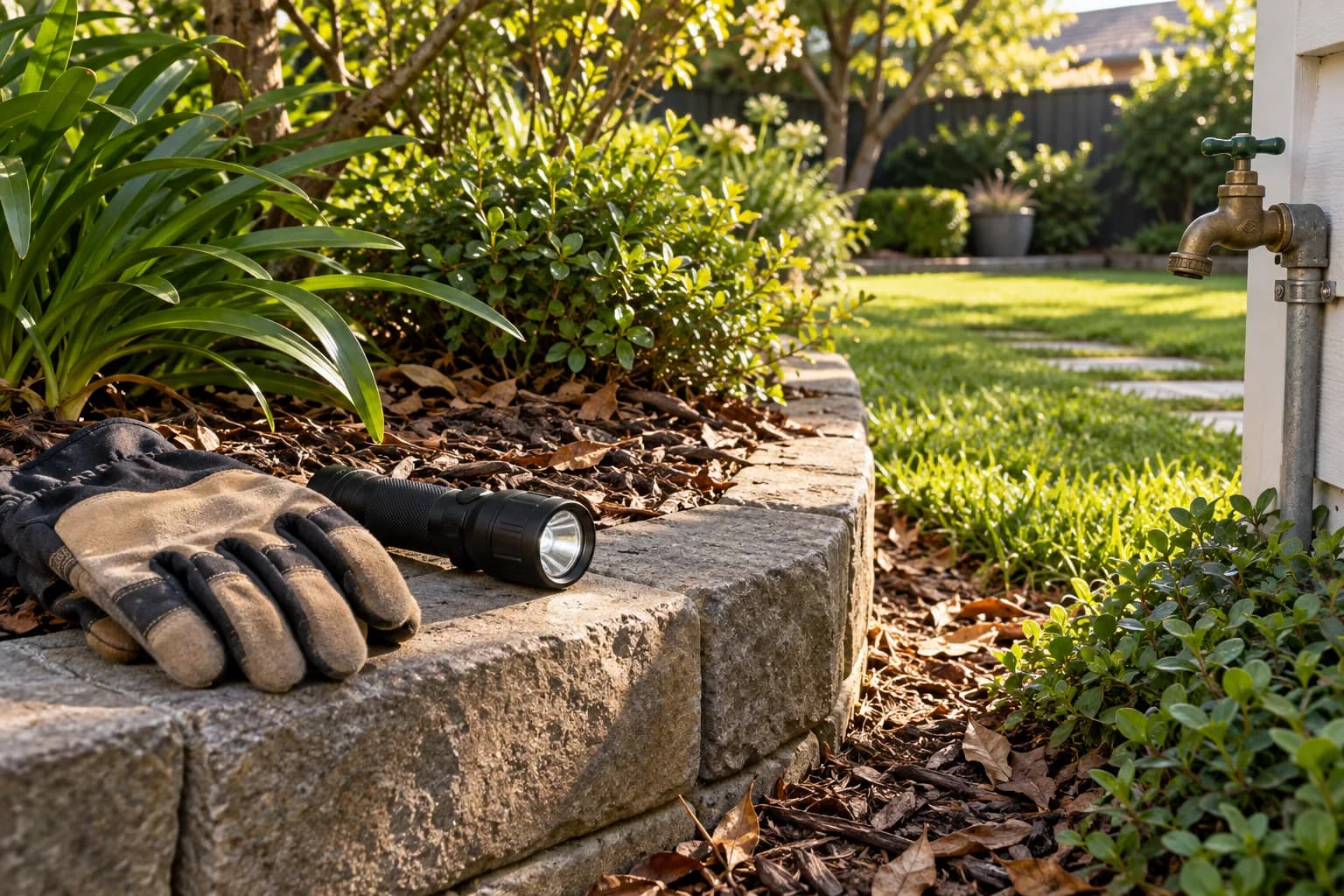 Dense shrubs against the house and a dripping hose bib give rodents cover and water. Trimming back and fixing drips makes the yard less inviting.
What affects the price of rodent work in a high-value home?
Larger houses with finished lower levels, built-in cabinetry and drywall over every wall make it harder to reach the rim joists, pipe chases and voids where mice travel. The more time a technician spends finding hidden gaps, the higher the quote. Foundation type matters next. Stone and block foundations, common on older homes, can have dozens of mortar gaps that each need steel wool and patching, while poured concrete usually has fewer weak spots. Complex rooflines with dormers and many soffit returns add ladder time too. Cleanup can rival the trapping cost. If mice or rats have nested in an attic or crawlspace for a season, soiled insulation may need removal and replacement, along with disinfection using the CDC bleach method. Across Bethesda, ask each provider to separate the quote into inspection, sealing, trapping visits and cleanup. That lets you compare line by line and see whether a lower price is lower because it skips the sealing that actually ends the problem. Access is the biggest driver.
Rats on a dense block: why your neighbors matter.
Burrows can start under one deck, run along a shared fence, and feed from the trash cans two doors down. In an urban place like Bethesda, where homes, apartments and restaurants sit close together, that means your rat problem may be partly your neighbor's. That does not mean you are stuck. Start with what you control: metal cans with tight lids, no pet food or birdseed left out, compost in a closed bin, and hardware cloth around the bottom of decks and sheds. Then talk to neighbors if you see burrows near the property line. A joint effort, where two or three households hire the same provider or coordinate timing, clears a colony faster than each house acting alone. For condos and apartments, raise the issue with the building manager in writing. Trash rooms and loading areas are often the real source, and a building-wide program addresses them in a way one unit cannot. A Norway rat colony does not respect property lines.
Questions to ask before you hire a rodent company.
Ask which species they think you have and why. A provider who has looked closely should point to droppings, gnaw marks or burrows, not guess. Ask how they will find entry points, which materials they will use for each type of gap, and whether sealing is included or priced separately. Steel wool, hardware cloth, mortar and metal flashing are the materials that hold, while expanding foam alone tends to fail. Ask how many follow-up visits are included, how traps will be checked, and what happens if activity continues after the plan ends. Ask whether they use poison indoors, and if so why. Ask for the cleanup method in writing; it should follow the CDC approach of airing out, soaking with diluted bleach and wiping, never sweeping or vacuuming. In a densely built place like Bethesda, also ask about experience with multi-unit buildings, and with stone foundations if your house has one, since both change how the work is done. Good questions sort serious providers from those who will set a few traps and leave.
What affects the price
- House size and how many finished rooms block access to walls, rim joists and pipes.
- Whether the job covers one unit or a whole condo or apartment building.
- Stone or block foundations with mortar gaps that take longer to seal than poured concrete.
- How many follow-up visits are included and how long trap monitoring runs after sealing.
- Attic or crawlspace cleanup and any insulation that needs replacing.
- Outdoor work such as burrow treatment, hardware cloth skirting under decks, or trash area fixes.
📊
What's your biggest concern about rodents?
When to call for help
Call a professional when you see a rat rather than a mouse, or find burrows near the foundation. Rats are harder to trap, and their tunnels run under decks and slabs where only steady, systematic work clears them. Call too if mice keep showing up after you seal the obvious gaps, if activity spreads to more than one room, or if you share walls and the problem keeps coming back. In Bethesda's closely built blocks, a provider who can coordinate with a building manager or the household next door often gets further than any single owner. Ask for a written plan before work begins.
What you can do yourself
Hire help for Norway rats, for repeat mouse problems, and for anything in a multi-unit building. Rats shy away from new objects for days, so a few traps tossed out often catch nothing and teach the colony to avoid them. Burrows have to be found across the whole yard, and sealing masonry and rim joists takes the right materials. A pro also knows where mice hide inside finished rooms, which keeps you from opening walls on a guess. Doing it yourself is reasonable for a mouse or two in fall. Buy a dozen snap traps rather than three, set them along walls with the trigger facing the baseboard, bait with a small dab of peanut butter, and check them every morning. While they work, find and close gaps around pipes under sinks, the dryer vent and the garage door, packing steel wool tight and sealing over it with caulk.
Rodents in Bethesda
And because Bethesda is densely built, how well your neighbors, restaurants and building managers handle trash affects your rodent pressure almost as much as your own sealing does. High home values raise the stakes, since chewed wiring and soiled insulation inside finished spaces are costly to fix. The temperate climate brings average humidity around 65%, warm summers and real winters, which means a clear fall entry season rather than year-round attic activity. Whatever the age of your own building, rodents will exploit the gaps its construction leaves, so an inspection should start with how your foundation and utility lines are actually built. Bethesda dates to 1871, and the median home value runs about $1,050,000. Bethesda is an urban community of about 68,000 people at roughly 318 feet of elevation, an affluent suburb of Washington, DC known for the NIH campus and Walter Reed.
Local research
Rodents in Bethesda, MD: what the public record shows
Before you compare quotes, it helps to know which rodents actually live in Maryland, when they are busiest around Bethesda, and what the state figures look like. Everything below links to the agency or university page it came from.
Leptospirosis cases (YTD 2026 vs 2025, week 13)
CDC NNDSSRodent species recorded in Maryland
- House mouse (Mus musculus) — Enters at 1/4 inch; 5-10 litters per year; eats about 200 small meals a night.
- Norway rat (Rattus norvegicus) — Burrowing rat of basements, sewers and ground floors; tail shorter than head plus body.
When rodents are busiest around Bethesda
Fall entry (Sept-Nov). Norway rats and house mice move indoors as temperatures drop.
Based on Bethesda’s humid subtropical climate profile.
For context, nationally
- 1/4 inch (the width of a pencil) — Smallest gap a mouse can enter. CDC
- 890; 35% fatal; 94% west of the Mississippi — Hantavirus cases reported since 1993 (through 2023). CDC
Sources: CDC NNDSS; CDC; Pest Notes: House Mouse; Pest Notes: Rats. Figures are quoted as the source prints them. How we check our sources
Simple ways to keep rodents away
- Seal gaps around pipes, cables and AC lines with steel wool and caulk before September.
- Cover foundation and crawlspace vents with 1/4-inch hardware cloth.
- Skirt decks and porches with hardware cloth buried several inches into the soil to stop burrowing.
- Use metal trash cans with tight lids and keep them on pavement, not bare ground.
- Bring pet food in at night and keep bulk dry goods in glass or metal containers.
- Keep firewood, leaf piles and spare lumber away from the walls of the house.
- Trim shrubs back to leave a clear strip next to the foundation.
- Add door sweeps and replace cracked garage door seals.
 Before you call, sketch where you have seen droppings or heard noise and measure any gaps you found. It makes the first visit faster and the quotes comparable.
Did you know?
Through the first 13 weeks of 2026, Puerto Rico logged 46 leptospirosis cases, more than double the 21 reported across all U.S. states combined.
Human plague in the U.S. averages about seven cases a year, but the yearly count has ranged from zero to 17.
The CDC counts Lyme disease among the illnesses rodents spread indirectly, since mice host the ticks that carry it.
Questions people ask
When do mice come inside in Bethesda?
Seal gaps in late summer and put a few traps in the garage and kitchen in early fall so you catch the first arrivals before they breed. As nights cool toward Bethesda's 27F average winter low, house mice and Norway rats go looking for heat and food indoors. Most entries happen from September through November.
Are rats a problem in Bethesda, MD?
If you see a burrow with fresh dirt or droppings by the cans, act fast, since UC IPM says a female can raise 4 to 6 litters a year. Norway rats are the species to expect in Bethesda, living in burrows along foundations, under decks and beside trash areas. They can be, especially near restaurants and apartment trash rooms.
How small a gap can a mouse use?
Pack them with steel wool or hardware cloth, then finish with mortar or caulk. Crumbling mortar and gaps where pipes pass through stone or block are classic entry points on older foundations. The CDC puts the limit for a mouse at a quarter inch, and rats gnaw small holes into bigger ones. Smaller than most people guess.
Is rat poison safe to use around my home?
In a dense Bethesda neighborhood with pets and children close by, locked, tamper-resistant stations placed by a licensed provider are the safer route. Outdoors, loose bait can be eaten by dogs, and poisoned rats can be eaten by hawks, owls and foxes. Indoors, poisoned rodents often die inside walls. Use it carefully, if at all.
Should I worry about hantavirus in Maryland?
Around Bethesda, the more practical rodent health concerns are salmonella from contaminated food and leptospirosis from rat urine in wet areas. The CDC cleanup steps still make sense for any droppings. cases from 1993 through 2023, with 94% west of the Mississippi. CDC figures show 890 U.S. The risk is low.
Who pays for rodent control in a rental or condo?
In urban Bethesda buildings, mice travel through shared walls and pipe chases, so pushing for a building-wide plan usually works better than treating a single unit. Owners or associations often handle structural sealing and building-wide problems, while tenants keep food stored and trash out. Check your lease or condo documents first.
How long does it take to clear mice or rats?
Starting in late summer rather than mid-winter shortens the job, because fewer animals have moved in and started breeding. Norway rats take longer because they avoid new objects, so traps may sit baited but unset for a few days. Mice usually clear faster than rats. It depends mostly on the species and how long the animals have been inside.
Do I need new insulation after a mouse problem?
Ask the provider to show you photos before agreeing to replacement. Insulation that is matted with urine, full of tunnels or smells strongly usually needs to come out. Light droppings in a small area can be cleaned using the CDC method: ventilate 30 minutes, soak with a 1:9 bleach mix for five minutes, then wipe up. Not always.
Nearby cities
Related guides
Sources (6)
The facts in this article come from the public sources listed above. Every home is different, so ask the company you talk to about pricing and what’s included. Published by Rodent Exterminator · Updated October 11, 2026 · How we write these guides