The short version
In Chandler, the rodents that cause most trouble are roof rats nesting in trees, palms and attics, plus house mice and deer mice around garages and storage. Control here means removing water and fruit sources, sealing roof and vent gaps, trapping, and cleaning droppings with bleach. Deer mice carry hantavirus, and Arizona logged three provisional cases in 2025.
- Roof rats climb, so Chandler inspections should cover the roofline, trees and attic, not just the ground.
- With about 9 inches of rain a year, water from irrigation and pools draws rodents to yards.
- Deer mice carry hantavirus; clean sheds and garages with bleach, never a broom.
- Rodents breed nearly year-round because Chandler winters average a mild 41F low.
- Seal any gap wider than 1/4 inch, the width of a pencil.
This guide is for Chandler homeowners hearing scurrying in the attic at night, renters who found droppings in a pantry or garage, and anyone about to clear out a shed or storage room that has sat closed. It also helps landlords and HOA boards sorting out who handles rodents in shared walls and landscaping.
What to look for
Three rodents matter in Chandler. Roof rats are slim, dark and agile, with tails longer than their bodies. They prefer to live off the ground in dense trees, palms, vines and attics, and they travel along walls, fences and utility lines. House mice are small and live close to food inside garages, kitchens and wall voids. Deer mice have white bellies and bicolored tails, and they are the main carriers of hantavirus in the West. The desert shapes their behavior. Summer highs average 106F and humidity sits around 35%, so water is the main thing rodents seek. Drip irrigation, leaky hose bibs, pool equipment, pet bowls and AC condensate lines all become drinking spots. Fruit trees and bird feeders supply food. Winter lows average only 41F, which means rodents never face a hard freeze. Roof rats can breed most of the year, producing three to five litters with up to eight young each, according to UC IPM. A small group in a backyard tree can become a neighborhood problem fast.
- 1Scratching or running in the attic or ceiling at night, often right after dark.
- 2Fruit hollowed out while still hanging on the tree, with only the rind left.
- 3Droppings in the garage, pool equipment area, or along the top of block walls.
- 4Chewed irrigation tubing or drip emitters, which rodents bite into for water.
- 5Greasy rub marks along eaves, roof vents or where a tree branch touches the house.
- 6Nests of shredded paper, fabric or insulation in stored boxes, sheds or attic corners.
- 7Rodents seen running along fence tops or power lines at dusk.
Why it’s worth acting soon
- Roof rats chew wiring in attics, which can damage AC systems and create fire hazards.
- Droppings in stored items raise hantavirus exposure when you finally clean them out.
- Chewed irrigation lines waste water and drive up bills during the hottest months.
- Attic insulation fouled with urine and droppings may need full removal and replacement.
- A tree colony can spread to neighbors' attics through shared walls and overhanging branches.
Treatment options and typical costs
Roofline and attic exclusion
Quoted after inspection
Sealing gaps at eaves, roof vents, plumbing stacks, and where pipes or cables enter. Hardware cloth over vents and sealant around penetrations are typical. Because roof rats come from above, this is often the most important step in Chandler homes. Ask the provider to show you photos of each sealed spot.
- Time
- One to two days
- Best for
- Roof rats in attics or ceilings
Trapping program
Quoted after inspection
Snap traps placed in the attic, garage and along rodent paths, checked on a set schedule. Trapping removes rodents already inside and avoids poisoned rats dying in walls or attics. A provider usually returns several times over a few weeks.
- Time
- Two to four weeks
- Best for
- Active rodents inside living space or attic
Exterior bait stations
Quoted after inspection
Locked stations along block walls and near trees where rats travel. Since rats forage 100 to 500 feet from the nest, stations may be placed around the whole lot. Ask which products are used and how stations are secured from pets and kids.
- Time
- Monthly or quarterly service
- Best for
- Ongoing roof rat pressure from yards and trees
Sanitation and decontamination
Quoted after inspection
Removing droppings, nests and contaminated insulation using disinfectant and protective gear. This is important for deer mouse activity because of hantavirus risk. Some providers include insulation replacement; others refer it out.
- Time
- One to three days
- Best for
- Heavy attic, garage or shed contamination
Prices are typical published ranges. Ask what’s included before you compare quotes.
 Clutter gives mice cover. Keeping stored fabric in lidded bins and off the floor takes away the nesting spots they like best.
Why roof rats are the rat you meet in Chandler.
Roof rats are the most common rat problem in Chandler homes. They are excellent climbers and prefer to live above ground in trees, palms, vines and attics, not in burrows. They travel along block walls, fence tops and utility lines, and enter homes through small gaps at roof vents, eaves, and where pipes come through the wall. Once inside an attic, they nest in insulation and come out at night to feed. In the desert, roof rats are drawn to watered landscaping and fruit trees. Fruit is a favorite: you may find it hollowed out on the branch with only the peel left. They also eat pet food, birdseed and garden produce. UC IPM reports roof rats have three to five litters a year with up to eight young each. With Chandler's mild winters, breeding can continue through much of the year. Control works best when you combine sealing the roofline, trimming trees, and trapping in the attic.
Hantavirus and the spring garage cleanout.
Spring is cleanout season in Chandler, and that is when hantavirus exposure is most likely. Deer mice nest in sheds, garages, storage rooms and closed-up cabins. Their droppings and urine dry out, and sweeping or vacuuming stirs virus particles into the air. The CDC has recorded 890 hantavirus cases nationally since 1993, with 94% west of the Mississippi and 35% fatal. Arizona logged three provisional cases in 2025. Before you clean, open doors and windows and let the space air out for 30 minutes. Wear rubber gloves, and consider a respirator. Spray droppings, nests and dead mice with a bleach solution of 1.5 cups per gallon of water. Let it soak five minutes, then wipe with paper towels and bag everything. Mop floors with the same solution. If the space is heavily contaminated, or you are unsure, consider hiring a provider with proper equipment. Symptoms like fever, muscle aches and shortness of breath after cleaning need prompt medical care.
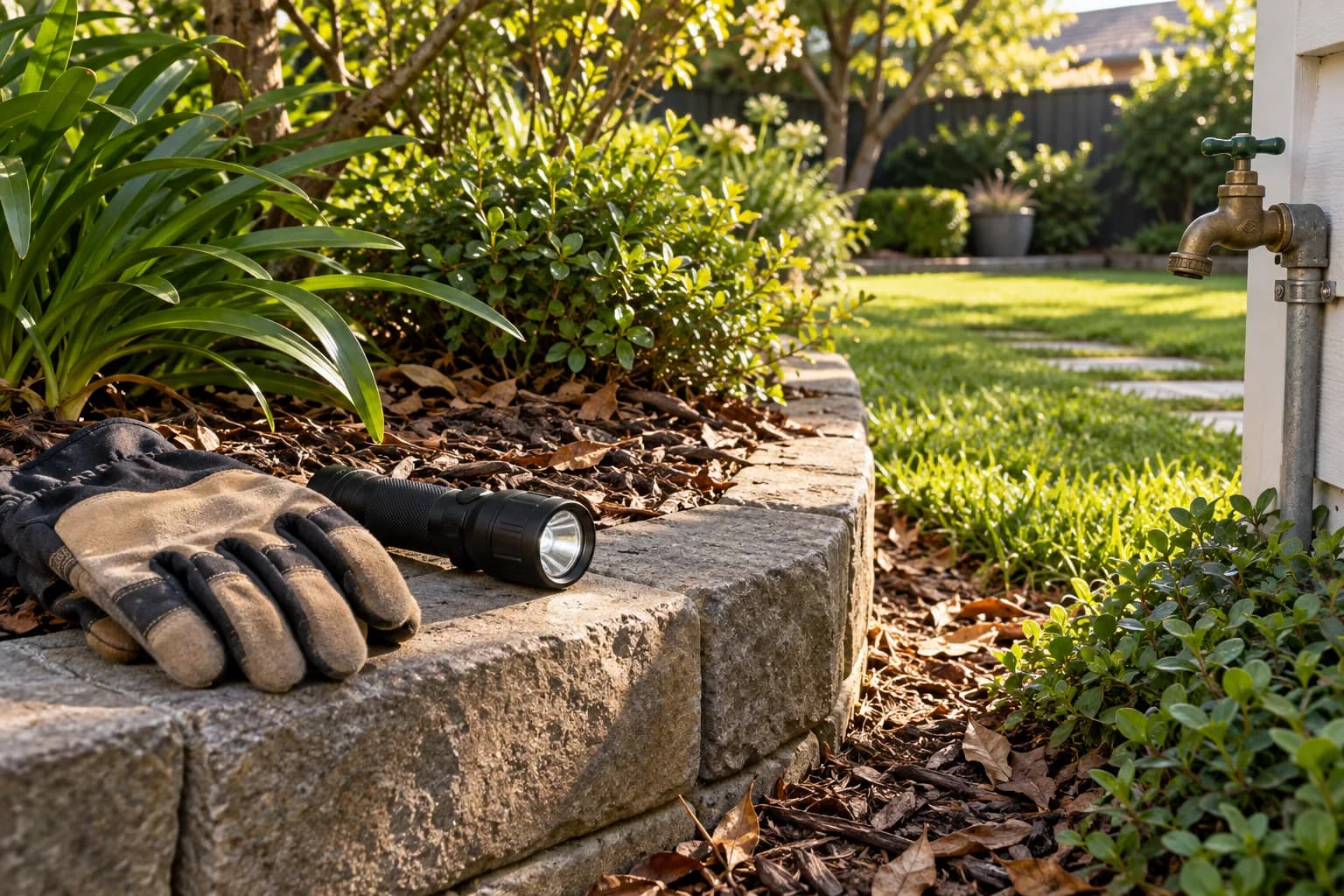 Dense shrubs against the house and a dripping hose bib give rodents cover and water. Trimming back and fixing drips makes the yard less inviting.
Water is the real bait in a desert yard.
In a place that averages about 9 inches of rain a year, water is often more important to rodents than food. Chandler yards provide plenty of it. Drip irrigation lines are a common target: rodents chew through tubing to drink. Leaky hose bibs, pool equipment, AC condensate lines, fountains and pet bowls all provide reliable water. Dense plantings near these spots give cover. If you want fewer rodents, start with water. Walk your yard in the evening and look for drips, puddles and wet soil. Fix leaks, cover or protect irrigation lines, and bring pet water bowls in at night. Then look at food. Pick fruit when ripe, clean up fallen fruit and birdseed, and store pet food in sealed containers. Finally, reduce cover: trim shrubs off the ground, cut vines off walls, and keep stored items off the ground. These steps make your yard less attractive and help any treatment work better.
What the first inspection should include.
Ask for photos of entry points. A vague plan makes it harder to compare quotes. A good first inspection in Chandler should look both up and down. Because roof rats come from above, the inspector should check the roofline, eaves, vents, and where tree branches touch the house. If you have a tile roof, ask them to check under tile edges and at the ends of rows. Inside, expect them to look in the attic for droppings, nests, runways in insulation and chewed wires. They should also check the garage, pantry, under sinks and around the water heater. Outside, a thorough inspection covers block walls, fruit trees, palms, vines, pool equipment and irrigation lines. At the end, ask for a clear written report: what rodent they found, how they think it is getting in, which gaps they will seal, how many traps or stations they will place, and how many follow-up visits are included.
What affects the price in Chandler homes.
Rodent control prices in Chandler depend on how much work your house needs, so expect a quote after inspection. Roofline exclusion is often the biggest factor. Homes with many vents, roof penetrations, or tile roofs with open ends can take more time and materials to seal. Two-story homes need more ladder work. Attic cleanup can also add up. If roof rats have nested in insulation, removing and replacing it may be needed. With median home values around $485,000, many homeowners want that done right to protect the house and AC system. Yard conditions matter. Lots of fruit trees, palms and dense plantings mean more rat travel routes and may call for more bait stations or trapping. Finally, ask whether follow-up visits are included. A one-time visit may not finish the job if rats keep coming in from neighboring trees. Compare quotes based on what is included, not only the total.
What affects the price
- Roof type and how many vents, gaps and penetrations need sealing.
- Attic access and size, since insulation removal adds time and materials.
- Number of fruit trees, palms and vines near the house that roof rats use.
- Whether bait stations are part of an ongoing service or a one-time setup.
- Extent of cleanup needed for droppings in garages, sheds or storage areas.
- Two-story homes, which need ladders or lifts to reach the roofline.
📊
What's your biggest concern about rodents?
When to call for help
Bring in a professional if you hear rodents in the attic, find droppings in more than one area, or see fruit damage on several trees. Roof rats are hard to catch because they avoid new objects, live high up and roam widely. A pro is also wise before cleaning a shed, garage or storage room with lots of mouse droppings, since deer mice carry hantavirus. In Chandler, call promptly in late spring and summer, when rodents gather around water sources and attic temperatures can make dead rodents smell quickly.
What you can do yourself
Set snap traps along walls, seal the gap they came through with steel wool and sealant, and keep pet food and birdseed in sealed bins. You can handle a few mice in a garage yourself. Hantavirus is rare but serious, with the CDC reporting 35% of cases since 1993 were fatal. If you are cleaning up after deer mice, consider professional help. A provider has the equipment and experience to do that safely, and can map where rats move across the property. Finding every entry point along a roofline means ladder work and an eye for small gaps around vents and tile edges. They nest in trees and attics, travel on walls and lines, and learn to avoid traps. Roof rats are a different job. Clean droppings using CDC steps: air out the area for 30 minutes, wear gloves, spray with bleach solution, wait five minutes, then wipe.
Rodents in Chandler
Yards with block walls, mature trees and pools give roof rats travel routes, shade and water. Median home values around $485,000 mean many homeowners have a lot invested in roofs, attics and AC systems that rodents can damage. Deer mice and roof rats both appear on Arizona's species list, along with the house mouse. Chandler sits at about 1,214 feet in a hot desert climate, with summer highs averaging 106F, winter lows near 41F, roughly 35% humidity and about 9 inches of rain a year. That means rodents never face a long freeze and depend heavily on watered yards. The city has around 280,000 residents and has grown since its founding in 1912 into a tech manufacturing hub known for the Intel campus.
Local research
Rodents in Chandler, AZ: what the public record shows
Before you compare quotes, it helps to know which rodents actually live in Arizona, when they are busiest around Chandler, and what the state figures look like. Everything below links to the agency or university page it came from.
Plague reports, previous 52 weeks (week 21 2026 table)
Sporadic rural cases; no YTD cases in 2025 or 2026 through May 30.
CDC NNDSSRodent species recorded in Arizona
- House mouse (Mus musculus) — Enters at 1/4 inch; 5-10 litters per year; eats about 200 small meals a night.
- Roof rat (Rattus rattus) — Climber of attics and trees in warm and coastal regions; tail longer than head plus body.
- Deer mouse (Peromyscus maniculatus) — Primary U.S. hantavirus carrier; lives throughout Washington and the interior West.
When rodents are busiest around Chandler
Spring cleanup exposure; summer. Deer mice and hantavirus in NM/AZ/CO/NV; plague fleas on wild rodents.
Based on Chandler’s hot desert climate profile.
For context, nationally
- 1/4 inch (the width of a pencil) — Smallest gap a mouse can enter. CDC
- 890; 35% fatal; 94% west of the Mississippi — Hantavirus cases reported since 1993 (through 2023). CDC
Sources: CDC National Notifiable Diseases Surveillance System; CDC NNDSS; CDC; Pest Notes: House Mouse; Pest Notes: Rats; Hantavirus. Figures are quoted as the source prints them. How we check our sources
Simple ways to keep rodents away
- Pick ripe fruit promptly and clear fallen fruit from the ground every few days.
- Trim tree branches and palm fronds so they stay at least a few feet from the roof.
- Fix leaky hose bibs, drip lines and pool equipment so rodents lose easy water.
- Store pet food and birdseed in metal containers with tight lids.
- Put hardware cloth over roof and foundation vents.
- Keep storage boxes off the garage floor and use plastic bins instead of cardboard.
- Cut back dense vines and hedges along walls where rats hide.
- Empty pet water bowls at night or bring them indoors.
 A good rodent quote lists the inspection, the number of trapping visits, each opening to be sealed and the material for it, and any cleanup.
Did you know?
Human plague cases in the United States average about seven a year, ranging from zero to 17.
A female Norway rat can wean 20 or more young in a single year.
The CDC has counted 890 hantavirus cases in the United States since 1993.
Questions people ask
What kind of rats are in Chandler?
They eat fruit, seeds and pet food. Arizona's state rodent list centers on roof rats, house mice and deer mice rather than Norway rats. Most rats in Chandler are roof rats. They are slim, dark brown or black, with tails longer than their bodies, and they live up high in trees, palms, vines and attics.
Is hantavirus a risk in Arizona?
Deer mice carry the virus in droppings and urine. Risk rises when you clean closed spaces like sheds, garages and storage rooms. Ventilate for 30 minutes, wet everything with bleach, and never sweep. Yes, though it is rare. The CDC's provisional 2025 count lists three hantavirus cases in Arizona.
Why do rodents come into my yard in Chandler?
Fruit trees, bird feeders and dense shrubs add food and cover. Fixing leaks and picking up fruit make a big difference. Water is the main draw. Chandler gets only about 9 inches of rain a year, so irrigation, pools, pet bowls and AC drips attract rodents.
When are rodents most active in Chandler?
Rodents in Chandler are active all year because winters are mild. Activity often rises in spring, when people clean out garages and sheds, and in summer, when heat drives rodents to water and shade.
How do I clean rodent droppings safely?
Spray droppings and nests with a bleach mix of 1.5 cups per gallon of water and let it soak five minutes. Wipe with paper towels and bag them. Do not sweep or vacuum, which can spread virus particles. Open doors and windows for 30 minutes before you start. Wear gloves.
Is plague a concern in Chandler?
Plague in Arizona is concentrated in the northern part of the state, and CDC weekly tables show at most one Arizona report in the previous 52 weeks. It spreads through fleas on wild rodents, not the mice and rats in a typical Chandler garage. Very unlikely.
Should I use poison for roof rats?
If bait is used, keep it in locked stations outdoors. Trapping and sealing entry points are often more effective in Chandler homes. Use it carefully, if at all. Poisoned rats can die in attics or walls and cause odors, and owls, hawks and pets can be poisoned by eating them.
Nearby cities
Related guides
Sources (6)
The facts in this article come from the public sources listed above. Every home is different, so ask the company you talk to about pricing and what’s included. Published by Rodent Exterminator · Updated October 11, 2026 · How we write these guides