The short version
Rodent control in Scottsdale, Arizona, means cutting rodents off from water and shelter, then sealing and trapping. With only about 10 inches of rain a year, roof rats and mice gather around pools, irrigation, fruit trees and AC lines, and they enter through gaps as small as a quarter inch. Deer mice also live here, so clean garage and storage droppings with the CDC wet method.
- In a desert with 10 inches of rain, pools, drip lines and leaks pull rodents close.
- Roof rats climb palms and fruit trees, then enter attics and eaves.
- Arizona reported 3 hantavirus cases in 2025, second only to California.
- In air this dry, near 36 percent humidity, never sweep old droppings; soak them first.
- Plague is a northern Arizona concern, with only sporadic rural cases recently.
This is for Scottsdale homeowners finding rats in fruit trees, palms or attics, anyone with droppings in a garage or storage room, and owners of larger properties with pools, water features or extensive irrigation. It also helps renters and second-home owners who return after time away and find signs of activity, and anyone curious whether hantavirus or plague is a real concern here.
What to look for
Three rodents matter most in Scottsdale: roof rats, house mice and deer mice. Roof rats are the climbers. They live in palms, fruit trees, dense shrubs and attics and eat fruit, seeds, pet food and nuts. UC IPM notes they raise three to five litters a year of up to eight young. House mice nest in garages, cabinets and walls. Deer mice are native desert rodents that move into garages, sheds and storage rooms, and they are the hantavirus carrier in the Southwest. Water is what pulls all of them toward homes. With only about 10 inches of rain a year and humidity averaging 36 percent, irrigation lines, pool equipment, misters, fountains, pet bowls and AC condensate lines are the most reliable water around. Summer highs of 105F push rodents into shade and cooler shelter, which often means garages, wall voids, pool equipment enclosures and dense landscaping near the house. Winter lows around 43F are mild, so activity continues through the year.
- 1Grapefruit or oranges emptied out on the branch, leaving just the rind.
- 2Chewed drip lines, mister tubing or irrigation emitters.
- 3Droppings near the pool pump, AC unit or garage freezer.
- 4Rats moving along block walls, palm fronds or rooflines at dusk.
- 5Nesting material in palm skirts, dense shrubs or stored boxes.
- 6Scratching in the attic or walls in the first hours after dark.
- 7Dry, crumbly droppings in a garage or storage room.
Why it’s worth acting soon
- Roof rats can raise three to five litters a year, so a few become many quickly.
- Chewed irrigation and mister lines waste water and cause repair bills.
- Deer mouse droppings in storage areas raise hantavirus risk during cleanup.
- Attic and garage wiring, including vehicle wiring, can be damaged.
- Rodents nesting in pool equipment or AC units can cause breakdowns.
Treatment options and typical costs
Exclusion
Quoted after inspection
Gaps at roof vents, eaves, garage doors, pipe penetrations and AC lines are sealed with hardware cloth, sheet metal or mortar. The CDC says a mouse needs only about a quarter inch. On tile roofs, open ends along the eaves may need closures. This step keeps new rodents from moving in.
- Time
- One to three days
- Best for
- Homes with attic or garage activity
Trapping
Quoted after inspection
Snap traps placed in attics, garages and along walls remove rodents already inside. Follow-up visits reset traps until catches stop. Trapping lets you remove carcasses quickly, which matters in desert heat.
- Time
- Two to four weeks
- Best for
- Roof rats and mice inside the home
Water and yard changes
Quoted after inspection
Fixing leaks, raising drip lines, trimming palm skirts and thinning dense shrubs near the house take away water and nesting cover. Picking fruit as it ripens and clearing drops removes a major roof rat food source. Some of this work falls to a landscaper.
- Time
- One day or more
- Best for
- Yards with fruit trees, palms, pools or heavy irrigation
Hantavirus-safe cleanup
Quoted after inspection
Garages, storage rooms and sheds with droppings are cleaned using the CDC method: ventilate 30 minutes, soak with a bleach solution of 1.5 cups per gallon, wait 5 minutes, then wipe and bag. Heavy contamination is worth hiring out.
- Time
- A few hours to a day
- Best for
- Storage areas with possible deer mouse droppings
Prices are typical published ranges. Ask what’s included before you compare quotes.
 Rats can travel plumbing, so a sink or floor drain with a missing strainer is worth fixing; a tight strainer or grate keeps them out.
Roof rats in Scottsdale yards: palms, fruit and pool equipment.
Trim palms, pick fruit, thin shrubs and keep equipment areas clean, then seal the roofline. The fix is to cut routes and remove resources. On tile roofs, open ends along the eaves can let them in. From the yard, roof rats move to the house along walls, fences and palm fronds, entering through roof vents, eaves and gaps around pipes. Rats nest around pumps and filters and chew wiring and hoses. They are shaded, often near water, and rarely disturbed. Pool equipment enclosures are another hot spot. Dense shrubs and hedges near the house give them cover from heat and predators. Fruit trees, especially citrus, provide food and moisture in a climate with only about 10 inches of rain a year. Rats nest in the skirt of dead fronds and use the trunk as a ladder to the roof. Palms are a favorite. Roof rats are the main rat in Scottsdale, and they live where desert yards offer food, water and shade.
Hantavirus and the desert garage.
For heavy contamination, hire a provider with protective gear rather than doing it yourself. Then wipe up with paper towels and bag everything. Put on gloves, spray droppings and nests with a bleach solution of 1.5 cups per gallon of water, and let it soak 5 minutes. Open the doors for 30 minutes first. If you find droppings, do not sweep or vacuum. Garages and storage rooms are where most people run into deer mouse droppings. Scottsdale's dry air, with humidity around 36 percent, makes droppings dry and crumble quickly, which raises that risk. Infection happens when someone stirs up dried droppings, urine or nesting material and inhales the dust. Across the country, 890 cases were reported between 1993 and 2023, and 35 percent of those patients died, according to the CDC. Arizona reported 3 cases in 2025, the second-highest state count in provisional CDC data. Deer mice are native to the desert around Scottsdale, and they carry hantavirus.
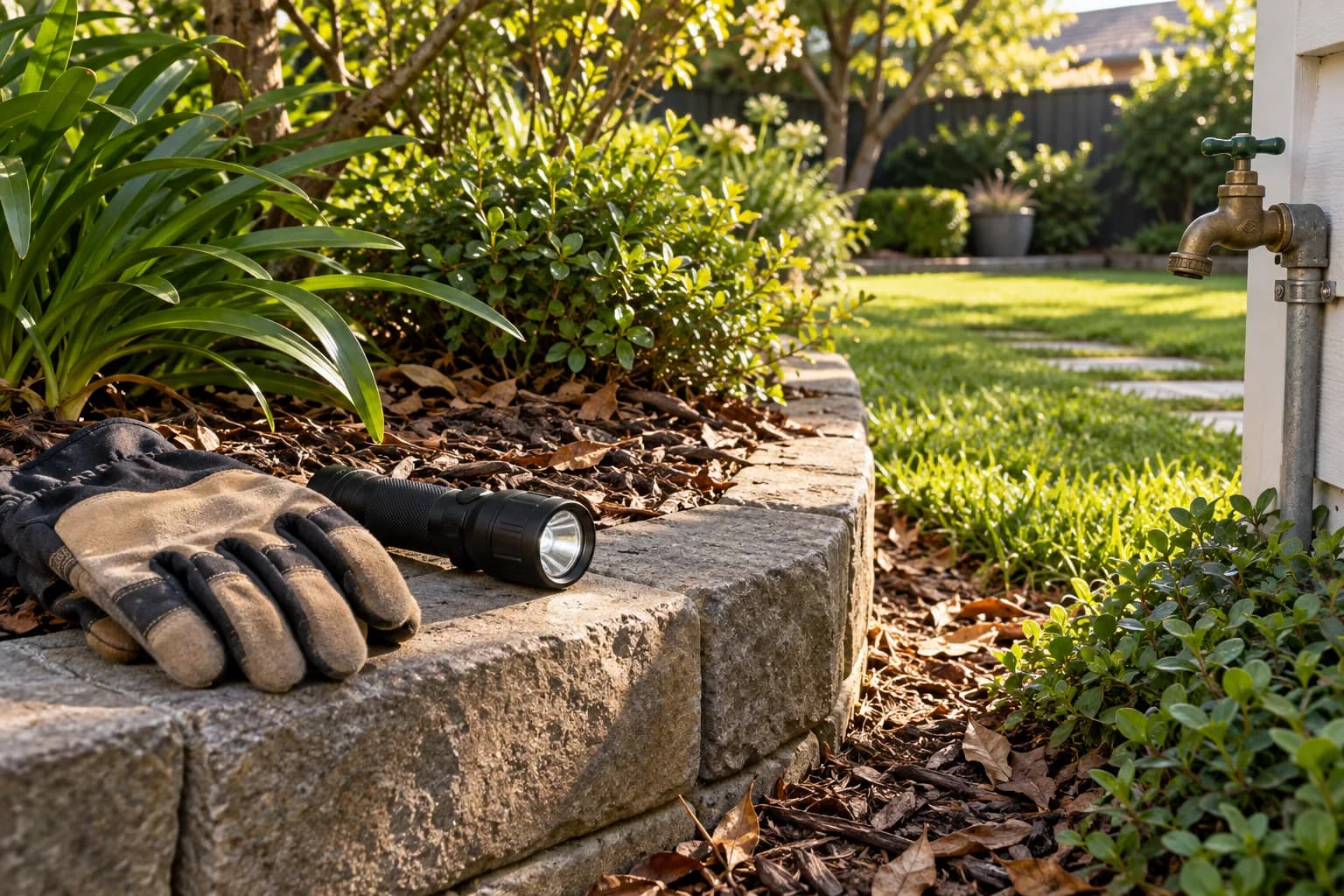 Dense shrubs against the house and a dripping hose bib give rodents cover and water. Trimming back and fixing drips makes the yard less inviting.
Is plague a concern in Scottsdale?
If you travel to northern Arizona for camping or hiking, take the same precautions there. The practical steps are simple: keep pets on flea control, do not let them hunt rodents, and do not handle sick or dead wild rodents. Plague spreads through fleas on wild rodents. Cases tend to be sporadic and rural. Recent CDC tables show Arizona had at most 1 plague report in the previous 52 weeks, with no cases year to date in 2025 or 2026 through late May. Scottsdale sits in central Arizona, outside that northern focus. Cases concentrate in northern New Mexico, northern Arizona, southern Colorado, and parts of California, southern Oregon and far western Nevada. The CDC averages about 7 human plague cases a year nationwide, ranging from 0 to 17. But the risk in Scottsdale is very low. Plague still turns up in the western U.S., and Arizona is part of that picture.
Golf, resorts and water features: why irrigated land draws rodents.
Seal entry points along the roofline and garage, so rodents attracted to the yard stay outside. Fix leaks quickly, raise drip lines where you can, keep plantings trimmed away from walls, and bring pet water in at night. It means managing water and cover near the house. That does not mean you need to rip out your landscaping. The same is true for any property with large lawns, fountains, misters or extensive drip irrigation. Homes that back onto these areas can see more roof rat and mouse activity, especially along the edges where turf meets backyard walls. Rodents gather where water and cover meet, and golf courses and resort grounds offer both. In a city with about 10 inches of rain and summer highs around 105F, irrigated turf, water features and dense plantings are the wettest, coolest places around. Scottsdale is known for golf courses and resorts, and those landscapes affect nearby homes.
Inspecting a larger Scottsdale property.
On a larger property, ask how often the provider will return and whether service covers all buildings or just the main house. You should leave with a written plan covering each structure: openings to seal, materials, trap locations, follow-up visits, yard recommendations and any cleanup. If they find possible deer mouse droppings, they should explain cleanup precautions. Inside, they should check the attic, garage and storage rooms. On the house, they should look at roof vents, eaves, tile ends, garage doors and every pipe and line penetration. Expect the provider to check palms, fruit trees, shrubs, pool equipment, AC units and irrigation for signs of activity. A thorough first visit should cover the whole property. With a median home value around $780,000, a Scottsdale property may include a pool, water features, a detached garage or guest quarters, and each one adds places to inspect.
What affects the price
- Property size and the number of structures, such as detached garages or guest rooms.
- The number of roof vents, eaves and penetrations to seal.
- Tile roofs that need eave closures in addition to vent screening.
- Fruit trees, palms and dense landscaping that need trimming.
- How much cleanup is needed in garages and storage areas.
- The number of follow-up trap visits included.
📊
What's your biggest concern about rodents?
When to call for help
Call a professional if you hear rodents in the attic, see repeated fruit damage, or find droppings in more than one area. Around Scottsdale, also call before cleaning a garage or storage room with heavy droppings, since deer mice live here and Arizona reported 3 hantavirus cases in 2025. Larger properties with pools, water features and extensive landscaping have more places for rodents to hide, and a provider can map activity across the property. Roofline and tile work is also safer to hand off.
What you can do yourself
A lot of rodent prevention in Scottsdale is yard and water management, which homeowners can handle. Pick fruit as it ripens, clear drops, trim palm skirts, fix irrigation leaks and bring pet water in at night. Snap traps along garage walls take care of a few mice. Roof rats in the attic are usually a job for a provider. Entry points along eaves, vents and roof tiles are hard to find and need the right materials. Trapping an attic in desert heat also means checking often and removing carcasses quickly. If deer mouse droppings are heavy in a garage or storage room, a provider with protective gear can clean safely. For larger properties, a provider can coordinate sealing, trapping and yard recommendations as one plan.
Rodents in Scottsdale
Scottsdale is a city of about 243,000 people, founded in 1951 and known for luxury resorts, golf and art galleries. Several of those details matter for rodents. The hot desert climate, with summer highs around 105F, about 10 inches of rain a year and humidity near 36 percent, makes water the scarcest resource, so irrigated landscaping, pools, fountains and golf courses become rodent magnets. Resorts and golf courses can put large areas of turf, water features and dense plantings right next to neighborhoods. Winter lows near 43F keep rodents active through the year. At about 1,257 feet in central Arizona, the city sits outside the northern Arizona plague focus, though deer mice and hantavirus are part of the regional picture. With a median home value around $780,000, a larger lot with a pool or extra structures means more ground to inspect and more value to protect.
Local research
Rodents in Scottsdale, AZ: what the public record shows
Before you compare quotes, it helps to know which rodents actually live in Arizona, when they are busiest around Scottsdale, and what the state figures look like. Everything below links to the agency or university page it came from.
Plague reports, previous 52 weeks (week 21 2026 table)
Sporadic rural cases; no YTD cases in 2025 or 2026 through May 30.
CDC NNDSSRodent species recorded in Arizona
- House mouse (Mus musculus) — Enters at 1/4 inch; 5-10 litters per year; eats about 200 small meals a night.
- Roof rat (Rattus rattus) — Climber of attics and trees in warm and coastal regions; tail longer than head plus body.
- Deer mouse (Peromyscus maniculatus) — Primary U.S. hantavirus carrier; lives throughout Washington and the interior West.
When rodents are busiest around Scottsdale
Spring cleanup exposure; summer. Deer mice and hantavirus in NM/AZ/CO/NV; plague fleas on wild rodents.
Based on Scottsdale’s hot desert climate profile.
For context, nationally
- 1/4 inch (the width of a pencil) — Smallest gap a mouse can enter. CDC
- 890; 35% fatal; 94% west of the Mississippi — Hantavirus cases reported since 1993 (through 2023). CDC
Sources: CDC National Notifiable Diseases Surveillance System; CDC NNDSS; CDC; Pest Notes: House Mouse; Pest Notes: Rats; Hantavirus. Figures are quoted as the source prints them. How we check our sources
Simple ways to keep rodents away
- Pick citrus and other fruit as it ripens and clear drops daily.
- Trim palm skirts and keep palm fronds away from the roof.
- Fix irrigation, mister and pool leaks quickly.
- Bring pet water and food inside at night.
- Screen roof vents and seal eave gaps with hardware cloth or metal.
- Replace worn garage door seals.
- Store items in sealed plastic bins rather than cardboard.
- Air out garages and storage rooms for 30 minutes before cleaning.
 A good rodent quote lists the inspection, the number of trapping visits, each opening to be sealed and the material for it, and any cleanup.
Did you know?
Northern Arizona is one of the few U.S. regions where plague is concentrated, spread by fleas on wild rodents.
The CDC lists Lyme disease among illnesses rodents spread indirectly, through ticks that feed on them.
Provisional CDC data counted 17 hantavirus cases nationwide in 2025, and Arizona and California together accounted for 7 of them.
Questions people ask
Why are rats eating my citrus in Scottsdale?
Roof rats eat fruit, and in a desert city like Scottsdale with about 10 inches of rain a year, juicy fruit is also a water source. They climb trees, hollow out fruit on the branch, and often nest in palms or dense shrubs nearby. Pick fruit as it ripens, clear drops, and trim branches away from the roof.
Is hantavirus a risk in Arizona?
It is rare but real. Arizona reported 3 hantavirus cases in 2025, second only to California in provisional CDC data. Deer mice carry the virus, and in Scottsdale they can turn up in garages and storage rooms. Ventilate before cleaning, soak droppings with bleach solution and never sweep.
Should I worry about plague in Scottsdale?
The risk is very low. CDC tables show Arizona had at most 1 plague report in the previous 52 weeks and none year to date in 2025 or 2026 through late May. Northern Arizona is the focal region. Keep pets on flea control and avoid handling wild rodents.
Where do rats hide in desert yards?
Palm skirts, dense shrubs, fruit trees, woodpiles and pool equipment enclosures are common spots. In Scottsdale's 105F summers, rats look for shade and water, so anything near irrigation, misters or a pool draws them. Trim palms, thin shrubs and keep equipment areas clean.
How small a gap can a mouse use?
Roughly a quarter inch. The CDC compares that to the width of a pencil. Rats chew small openings larger. Seal with hardware cloth, sheet metal or mortar, and check eaves, vents, garage door seals and pipe penetrations.
How fast do roof rats breed?
UC IPM says roof rats have three to five litters a year with up to eight young each. In a mild-winter climate with lows near 43F, breeding continues most of the year. Sealing entry points matters more than trapping alone, since new rats keep arriving.
What diseases do rodents spread?
Direct spread, per the CDC, covers hantavirus, leptospirosis, salmonellosis, rat-bite fever, tularemia and LCM. Plague and murine typhus spread indirectly through fleas. Avoid touching rodents or droppings, clean with bleach solution, and keep pets on flea control.
Nearby cities
Related guides
Sources (6)
The facts in this article come from the public sources listed above. Every home is different, so ask the company you talk to about pricing and what’s included. Published by Rodent Exterminator · Updated October 11, 2026 · How we write these guides