The short version
Rodent control in Concord, NC works best as sealing first and trapping second. Norway rats, roof rats and house mice stay active all year, surging in fall as nights near the 30F winter low. Seal every gap of 1/4 inch or more and expect wary rats to ignore new traps for days.
- Concord homes face Norway rats, roof rats and house mice.
- NC State says juvenile rats pass 1/4-inch gaps, so seal to that size.
- Rats may skip new traps for up to a week, so slow starts are normal.
- Air the space out 30 minutes, then clean droppings wet with bleach.
Concord homeowners hearing attic noise, renters finding droppings in a kitchen drawer, and landlords judging a rodent plan. It also fits anyone who caught one mouse and wonders whether that was the last.
What to look for
Three rodents cause nearly all the trouble here. Norway rats burrow along foundations, roof rats climb fences and utility lines into attics, and house mice settle into kitchens and wall voids. About 44 inches of yearly rain and 70 percent humidity keep soil soft for burrows and cover thick for runways. Winter lows near 30F rarely thin outdoor numbers, so the fall push indoors starts from a large base.
- 1Pellets 1/2 to 3/4 inch long by baseboards, which NC State ties to rats.
- 2Rice-sized droppings in drawers or under the sink, the house mouse signature.
- 3Quick footsteps overhead after dark, typical of a roof rat on attic rafters.
- 4Greasy gray rub marks where pipes enter the siding.
- 5Fresh burrow holes with packed edges beside the foundation.
Why it’s worth acting soon
- UC IPM says one Norway rat can wean 20 or more young a year.
- Gnawed attic wiring is a fire hazard and a costly repair.
- The CDC lists leptospirosis and salmonellosis among diseases rodents spread directly.
- Rats widen entry holes over time, so sealing later becomes a bigger job.
43%Southern U.S. homeowners who say they have ever had a rodent encounter (NPMA/Harris Poll, Sept. 2022, self-reported)NPMA / Harris Poll Treatment options and typical costs
Exclusion (sealing entry points)
Quoted after inspection
Every opening gets closed with steel wool, hardware cloth, flashing and sealant. NC State's quarter-inch standard matters because juvenile rats squeeze through gaps adults cannot.
- Time
- Depends on the number of openings
- Best for
- Every active infestation
Indoor snap trapping
Quoted after inspection
Traps go along walls, in the attic and in the crawl space where droppings show a route. Some providers leave them unset at first so wary rats start feeding.
- Time
- Until a week passes with no captures
- Best for
- Kitchen mice and attic roof rats
Exterior bait stations
Quoted after inspection
Locked, tamper-resistant stations around the perimeter cut the outdoor population feeding toward the house. Ask which active ingredient is used and how often stations get serviced.
- Time
- Ongoing service
- Best for
- Yards with Norway rat burrows
Prices are typical published ranges. Ask what’s included before you compare quotes.
 Bathroom vanities hide the same plumbing gaps as the kitchen. A quick look with a flashlight shows droppings or rub marks long before you see a mouse.
Roof rat, Norway rat or house mouse: which one is in your Concord home?
The answer changes the fix: roofline sealing for roof rats, ground-level exclusion for Norway rats, and tight sealing of pencil-width gaps for mice. Rice-sized droppings in a drawer mean house mice. Burrows by the foundation and droppings in the crawl space point to Norway rats. Around Concord, noise in the attic at night points to roof rats, which reach the roofline along trees, fences and power lines. Where the signs show up usually names the rodent.
Month by month: when rodent pressure peaks in Concord.
If you seal once a year, late summer is the time. October through December brings the Concord surge into garages and crawl spaces. July through September, rats stay busy outside at night, drawn to leaky spigots and pet bowls. April through June, outdoor numbers climb as rain-softened soil makes burrowing easy. January through March, rodents that got in last fall nest and breed indoors while lows near 30F keep them there.
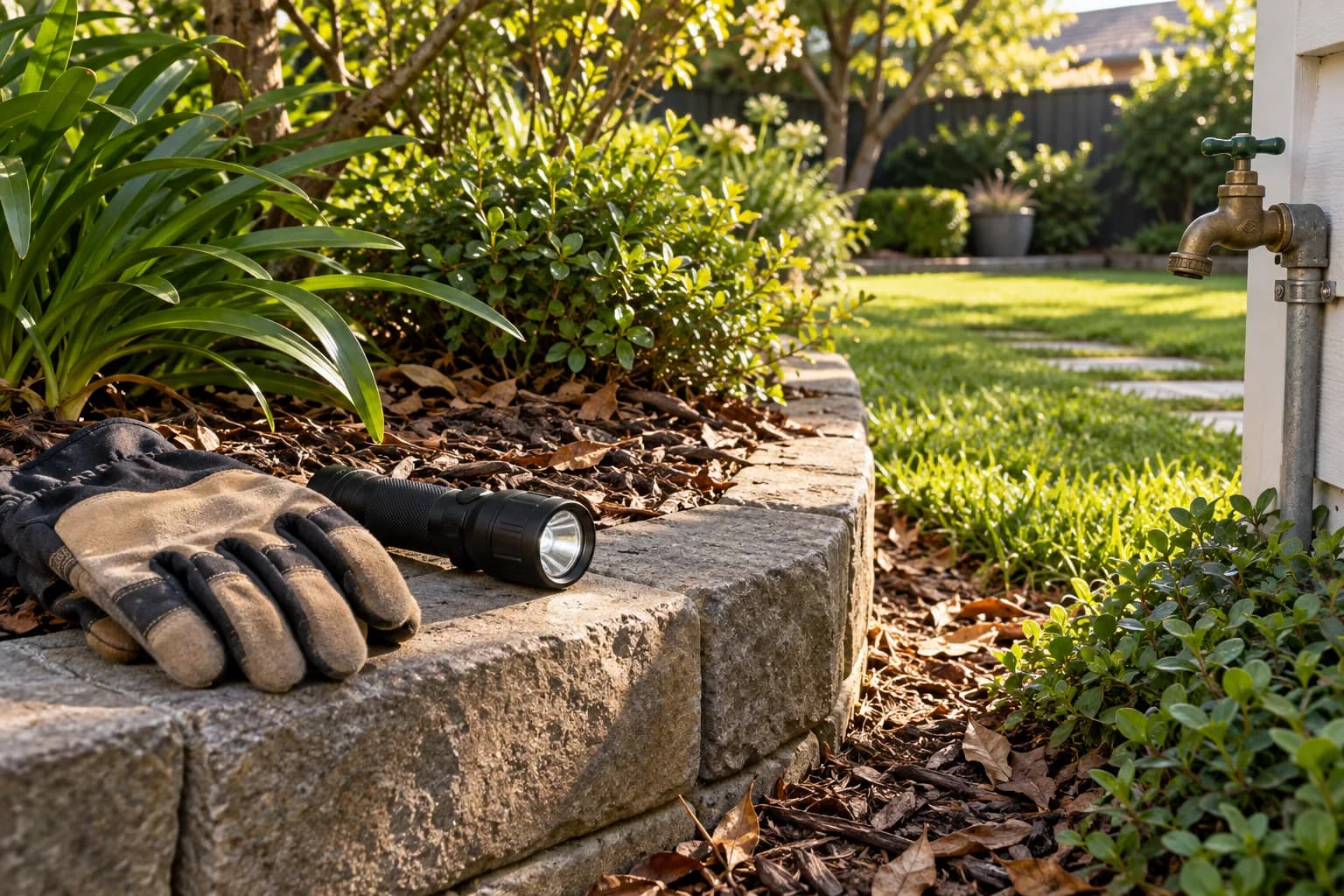 Dense shrubs against the house and a dripping hose bib give rodents cover and water. Trimming back and fixing drips makes the yard less inviting.
Why do rat traps sit untouched for a week?
Empty traps after a few days do not mean the wrong spots were picked. NC State notes rats may take up to a week to start hitting new traps in established runways. Some providers pre-bait traps unset, then arm them. Ask how often traps get checked, since a dead rat left in place warns others off and smells fast in a humid crawl space. A week with no fresh droppings is a fair test, easy to judge when one rat leaves 30 to 50 a day.
Sealing is the part that lasts in Concord.
Around Concord, NC, 44 inches of rain a year and 70% humidity keep exterior wood soft, so gaps open again seasonally and need re-checking. A mouse fits through a gap the width of a pencil, and a rat through a quarter-sized hole, so the inspection should map every opening — around pipes, under doors, and where utilities enter. Traps and bait remove the rodents you have; sealing removes the ones that would come in next.
What rodent control costs in Concord.
Ask for the sealing and the trapping as separate line items, and what the re-service covers. Around Concord, NC, the timing matters too — most activity starts in fall as 30°F winter lows push rodents indoors, which is when providers are busiest. A simple kitchen mouse job is at the low end; a multi-floor rat colony with a sanitation cleanup is at the high end. Rodent control is priced by the size of the job: how many entry points need sealing, how much baiting and trapping the colony needs, and whether a cleanup is involved.
What affects the price
- How many entry points need sealing, from crawl space vents to garage door corners.
- Roof rats in the attic, which means soffit work from a ladder.
- Follow-up visits needed before cautious rats hit traps.
- Whether soiled insulation has to be replaced.
- Ongoing station service versus a single cleanout.
📊
What's your biggest concern about rodents?
When to call for help
Bring in a professional when the noise is in the attic, when droppings are rat-sized, or when trapping keeps catching rodents week after week. Rats shy away from new traps, roam widely and chew bigger holes than mice, which makes them a harder fight than a kitchen mouse.
What you can do yourself
A mouse or two in a Concord kitchen is a fair DIY job: snap traps baited with peanut butter, trigger end against the wall, plus steel wool around pipe holes. Rats are harder. Roof rats mean ladder work at soffits, and Norway rats under a slab need a plan for the whole lot. Many homeowners quit before the week NC State says wary rats can take to approach a trap.
Rodents in Concord
NC State's rat guide covers both the Norway rat and the roof rat, so inspections should run from crawl space to roofline. Median home values near $340,000 make chewed wiring and fouled insulation expensive repairs. Winter lows around 30F push rodents inside each fall without thinning them outdoors. At 735 feet, summer highs near 89F, 70 percent humidity and 44 inches of yearly rain keep cover thick and water easy to find. Concord, known for Charlotte Motor Speedway, is a suburban city of about 110,000 that dates to 1796. In Concord, comparing a couple of written quotes side by side is the easiest way to see what is actually included, because the scope, prep steps, and follow-up terms vary a lot between providers.
Local research
Rodents in Concord, NC: what the public record shows
Before you compare quotes, it helps to know which rodents actually live in North Carolina, when they are busiest around Concord, and what the state figures look like. Everything below links to the agency or university page it came from.
Droppings a rat leaves per day
Pellets run roughly 1/2 to 3/4 inch, which is how NC State separates rat activity from mouse activity.
NC State ExtensionGap size that admits rats
Seal to the quarter-inch standard or young rats still get in.
NC State ExtensionTime before rats start hitting new traps
Check traps daily; rats are wary of new objects in established runways.
NC State ExtensionRodent species recorded in North Carolina
- House mouse (Mus musculus) — Enters at 1/4 inch; 5-10 litters per year; eats about 200 small meals a night.
- Norway rat (Rattus norvegicus) — Burrowing rat of basements, sewers and ground floors; tail shorter than head plus body.
- Roof rat (Rattus rattus) — Climber of attics and trees in warm and coastal regions; tail longer than head plus body.
When rodents are busiest around Concord
Year-round, fall surge. Roof rats dominate Florida, Texas and Gulf Coast attics.
Based on Concord’s humid subtropical climate profile.
NC State's structure-invading rat guide covers both the Norway rat and the roof rat.
For context, nationally
- 1/4 inch (the width of a pencil) — Smallest gap a mouse can enter. CDC
- 890; 35% fatal; 94% west of the Mississippi — Hantavirus cases reported since 1993 (through 2023). CDC
Sources: NC State Extension; CDC; Pest Notes: House Mouse; Pest Notes: Rats. Figures are quoted as the source prints them. How we check our sources
Simple ways to keep rodents away
- Seal gaps down to 1/4 inch with steel wool or flashing, not foam alone.
- Screen crawl space vents with hardware cloth.
- Trim limbs back from the roofline so roof rats lose their bridge.
- Store pet food and bird seed in lidded metal bins.
- Stack firewood off the ground and away from the foundation.
- Fix dripping spigots so rats find less water during 89F summer stretches.
 A good rodent quote lists the inspection, the number of trapping visits, each opening to be sealed and the material for it, and any cleanup.
Did you know?
The CDC says a mouse can slip through a gap about the width of a pencil.
UC IPM says roof rats produce 3 to 5 litters a year of up to 8 young.
The CDC says plague, Lyme disease and murine typhus reach people from rodents indirectly, through fleas and ticks.
Questions people ask
Are roof rats common in Concord, NC?
Noise overhead at night, rather than under the floor, usually points to a roof rat. NC State's rat guide covers the roof rat alongside the Norway rat, and mild Concord winters suit both. Yes.
How can I tell rat droppings from mouse droppings?
One rat leaves 30 to 50 a day, so rat sign piles up along runways. NC State puts rat pellets at roughly 1/2 to 3/4 inch, while mouse droppings look like rice grains. Size settles it.
Why do mice show up in Concord houses every October?
Cooling weather drives it. As Concord nights slide toward 30F winter lows, rodents that spent the summer outdoors hunt for warmth through garages, crawl spaces and pipe openings.
Is hantavirus a concern in North Carolina?
Still ventilate for 30 minutes, soak droppings in bleach solution, and never sweep them. cases since 1993, with 94 percent west of the Mississippi. The CDC counts 890 U.S. It is rare here.
Should I put poison bait inside my house?
Indoor traps let you remove the body; bait belongs in locked exterior stations. A rodent that eats bait indoors often dies inside a wall, and in a humid Concord summer the odor lingers. Usually not.
Nearby cities
Related guides
Sources (6)
The facts in this article come from the public sources listed above. Every home is different, so ask the company you talk to about pricing and what’s included. Published by Rodent Exterminator · Updated October 11, 2026 · How we write these guides