The short version
Rodent control in Duluth, Minnesota is mostly about house mice that move indoors in fall and stay through winters with average lows near 2F. Seal any opening a pencil fits through, trap along walls where you find rice-sized droppings, and clean cabins and sheds carefully, since deer mice, not house mice, carry hantavirus in Minnesota.
- House mice are the main indoor rodent; deer mice cause most shed and cabin trouble.
- Minnesota health officials say if a pencil fits an opening, so does a mouse.
- Only deer mice carry hantavirus here, and Minnesota has had 2 local cases since 1999.
- Seal before October, because mice that get in for winter rarely leave on their own.
- Mouse droppings and urine are an indoor asthma trigger, so cleanup matters.
This is for Duluth homeowners and renters who've found droppings in a drawer or heard scratching in the ceiling, for landlords fielding tenant complaints in winter, and for anyone opening a garage, shed or cabin that sat closed for months. It also helps if you're deciding between traps you set yourself and a rodent exterminator.
What to look for
In Minnesota, the house mouse is the rodent that lives in buildings, and the deer mouse is the one that turns up in cabins, garages and outbuildings. Duluth gets both, along with Norway rats, but mice drive most of the problems. The reason is the cold. With average winter lows around 2F and a long stretch of freezing weather, outdoor life gets hard for small mammals, so mice push into whatever warm space they can reach in fall and stay until spring. House mice need only a gap a pencil can slide into, nest in wall voids, insulation and cabinet bases, and keep breeding indoors right through the winter. Deer mice are more likely to settle in unheated outbuildings and seasonal places, where they leave droppings and nests in stored gear. The Minnesota Department of Health points out that only the deer mouse carries hantavirus here, which is why it pays to know which one you have before you start cleaning.
- 1Black or brown droppings about the size of a grain of rice in drawers, cupboards or along baseboards.
- 2Light running or scratching in walls and ceilings at night, especially once the heat is on.
- 3Nests of shredded insulation, paper or fabric in basement corners or stored boxes.
- 4Chewed holes in bags of birdseed, pet food or grass seed in the garage.
- 5Tiny tracks across a dusty basement floor or a snowy step near a foundation gap.
- 6A strong, stale smell when you open a closed cabin, shed or camper in spring.
- 7Gnawed wiring under the hood of a car that's been parked in the garage for weeks.
Why it’s worth acting soon
- Mice that move in during October can raise several litters before the snow melts.
- Droppings and urine are an indoor asthma trigger, according to the Minnesota Department of Health.
- Nests in wall and rim joist insulation cut its value right when you need it most.
- Chewed wires in walls, appliances and vehicles create fire and repair risks.
- Sweeping up deer mouse droppings in a closed cabin can expose you to hantavirus.
Treatment options and typical costs
Fall exclusion
Quoted after inspection
A provider seals the gaps mice use before winter: around utility lines, the sill and rim joist, garage door corners, vents and siding joints. Steel wool, copper mesh, hardware cloth and metal flashing hold up better than foam alone, which mice chew through. Around Duluth, finishing this by early fall keeps the winter population outside.
- Time
- One visit for most houses
- Best for
- Homes that get mice every fall
Winter indoor trapping
Quoted after inspection
Snap traps go along walls, in basements and behind appliances and get checked on a schedule through the cold months. Trapping indoors avoids mice dying inside walls after eating bait. Ask how many traps will go in, where they'll sit, and how often the provider returns to check them.
- Time
- Several visits across the winter
- Best for
- Mice already living in walls and basements
Outbuilding and cabin cleanout
Quoted after inspection
Removal of droppings, nests and contaminated materials from garages, sheds and seasonal places where deer mice spent the winter, followed by disinfection and sealing. Crews should air the space out first and wet everything down rather than sweeping. Ask whether they bag and dispose of contaminated items.
- Time
- Set by the size of the space and the mess
- Best for
- Garages, sheds and cabins with deer mouse activity
Exterior rat stations
Quoted after inspection
Locked bait or trap stations go around foundations, dumpster areas or outbuildings where Norway rats are burrowing. Rats forage 100 to 500 feet from their nests, so placement covers far more ground than mouse work does. Ask what the stations contain and how they're secured against pets and wildlife.
- Time
- Ongoing, serviced on a schedule
- Best for
- Norway rat activity around buildings
Prices are typical published ranges. Ask what’s included before you compare quotes.
 Roof rats and mice love attic insulation. Tunnels through the fluff, flattened runways and droppings along the eaves are the signs to look for.
House mouse or deer mouse: which one is in your Duluth home?
If you can't tell which you have, a provider can identify it from droppings, nests and the animals caught. Second, the two species need slightly different control: house mice respond to dense indoor trapping and sealing, while deer mice call for closing up outbuildings, removing nesting material and cleaning before you use the space. First, the health department says only the deer mouse carries hantavirus in Minnesota, so deer mouse droppings call for a more careful cleanup. The distinction matters for two reasons. Around Duluth, that often means house mice inside the home and deer mice in the detached garage or the storage shed out back. The Minnesota Department of Health describes the house mouse as the state's structural rodent and the deer mouse as the rural cabin and outbuilding problem. Deer mice are brown on top with a crisp white belly and white feet, and they're more likely to show up in garages, sheds, cabins and other spaces that aren't heated all the time. House mice are a dull gray-brown all over, live in heated buildings, and leave droppings in kitchens, drawers and basements. Look at the belly and the location.
What a Duluth winter looks like from a mouse's point of view.
Use these months to fix whatever let them in. June through August: highs near 76F draw mice back outdoors. This is the main window for deer mouse cleanup, and the CDC's steps apply: air the space out for 30 minutes, soak droppings in bleach solution for 5 minutes, and keep the broom away. April and May: snow melts and people open sheds, garages and cabins that sat closed all winter. Droppings appear in new rooms as young mice spread out, and garage and vehicle damage often gets noticed now. February and March: indoor populations peak. They keep breeding indoors, so the occasional scratching you heard in fall can become nightly activity by the holidays. November through January: average lows slide toward 2F, and mice that got inside settle into walls, basements and insulation. This is the last easy window to seal from outside before snow and frozen ground make the work harder. September and October: nights cool off and mice begin probing foundations, garage doors and utility gaps. From October through April, Duluth's cold sets the rhythm, and the season unfolds in a fairly predictable order.
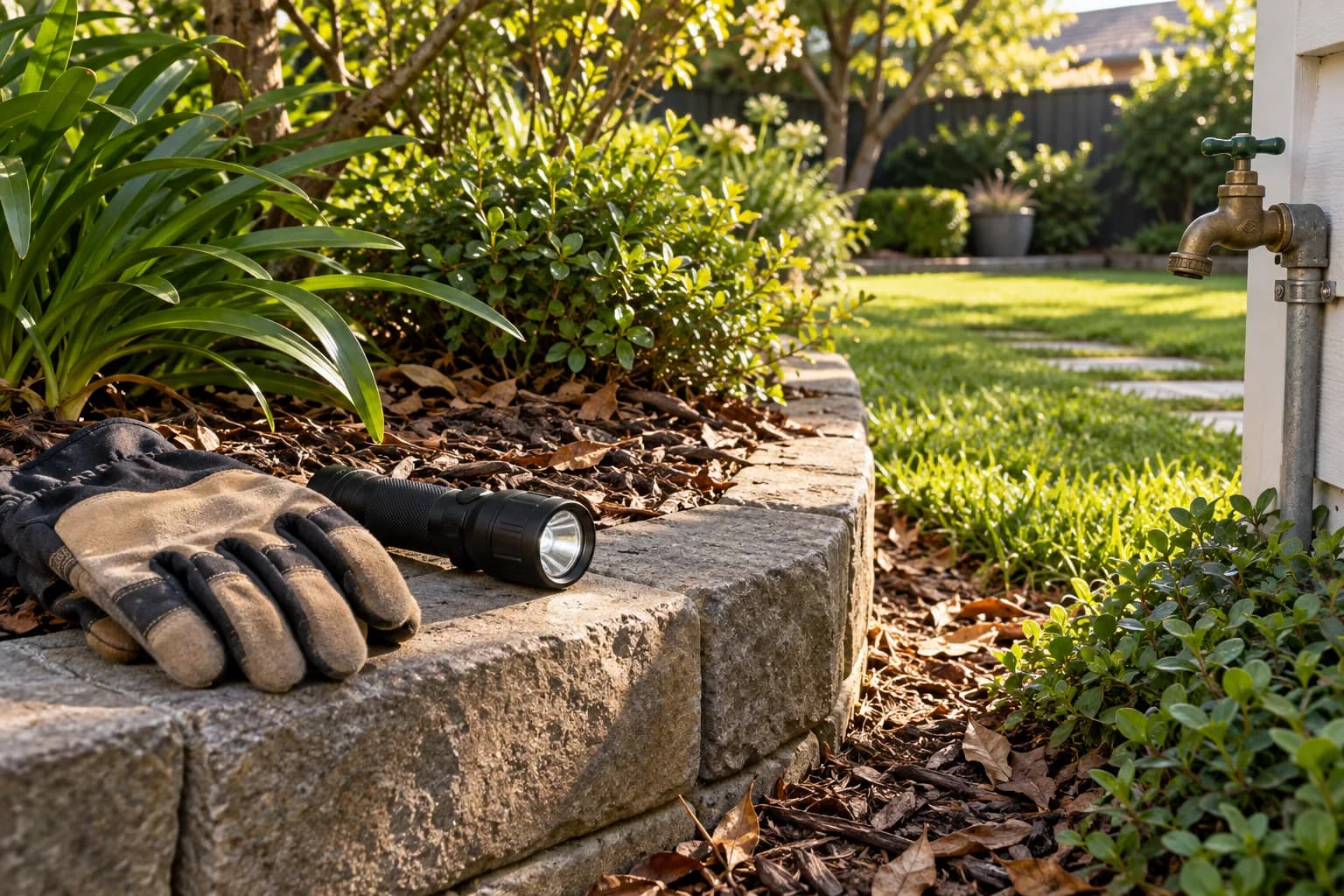 Dense shrubs against the house and a dripping hose bib give rodents cover and water. Trimming back and fixing drips makes the yard less inviting.
Why Minnesota health officials treat mice as an asthma problem.
If asthma is part of the picture, tell the provider so they can plan cleanup around the rooms that matter most. Afterward, wash bedding and soft items that mice reached, keep food in hard containers, and keep clutter off floors so any new droppings are easy to spot. Wet the area with a bleach solution, let it sit, then wipe with paper towels. For cleanup, follow the CDC method instead of sweeping or vacuuming dry droppings, which lifts particles into the air. Trapping and sealing stop new droppings from piling up. The order of operations matters: get the mice out first, then clean. Around Duluth, where mice can live indoors for a good part of the year, droppings build up in kitchens, closets and bedrooms over many weeks. That turns a long winter infestation into a real concern for any household with asthma. Its guidance says to watch for black or brown droppings about the size of a grain of rice. The Minnesota Department of Health lists mice and rats among asthma triggers, because their droppings and urine can set off symptoms in sensitive people. Indoors, mice are a breathing issue as well as a food-safety one.
Opening a cabin, shed or garage after a Minnesota winter.
For Duluth households with a lot of outbuilding space, a provider can handle the cleanout and the sealing together. Seal gaps around doors, vents and siding, and keep anything soft, like cushions and sleeping bags, in sealed bins. Once it's clean, find out how they got in. Wipe hard surfaces with the same solution. Spray droppings, nests and dead mice with 1.5 cups of bleach in a gallon of water until soaked, wait 5 minutes, then pick everything up with paper towels and bag it. Wear rubber or plastic gloves. Prop open doors and windows and leave for at least 30 minutes before you start. Small odds still deserve a careful routine. Nationally, the CDC counts 890 cases since 1993, with 94% west of the Mississippi. The numbers in Minnesota are small: the Minnesota Department of Health reports 2 cases likely acquired in the state since 1999, plus one resident infected out West, and it notes that Minnesota rodents are far less likely to carry the virus. Spring is when most hantavirus exposures happen, because people walk into closed spaces where deer mice spent the winter and start sweeping.
Sealing a house for winter: how the pencil test works.
If you can't reach the roofline or don't trust your own eye, a provider's inspection can turn up openings you'd miss. A gap that admits a mouse also admits winter air, so the same work makes the house less drafty. The cold is a reason to be thorough. Foam on its own is easy chewing. Fill each gap with something mice can't chew easily, such as steel wool, copper mesh or hardware cloth, then seal over it with caulk or mortar. Inside, look under sinks, behind the stove and dryer, and where plumbing passes through the basement ceiling. Check the corners of the garage door, the sill where the house rests on the foundation, the bottom edge of the siding and the area around window wells. Walk the foundation slowly and test every gap where pipes, gas lines, cables and dryer vents enter. Start outside in early fall, before snow. The Minnesota Department of Health's rule is that if a pencil fits in an opening, a mouse will too, which lines up with the CDC's 1/4-inch figure. The simplest inspection tool you own is a pencil.
What affects the price
- Number of entry points around the foundation, sill and utility lines.
- Whether trapping runs through the whole winter or only a short stretch in fall.
- Garages, sheds and cabins that need their own cleanout and sealing.
- Snow and frozen ground, which can limit outdoor sealing in midwinter.
- The amount of contaminated insulation that has to come out.
- Multi-unit buildings, where shared walls and basements need coordinated work.
📊
What's your biggest concern about rodents?
When to call for help
Call a professional when mice keep turning up despite your traps, when you hear them in several walls or between floors, or when you find signs of Norway rats. Timing matters in Duluth. Sealing is easiest before the ground freezes, and once mice have spent a few weeks inside, they've usually found more than one way in. A pro is also a good idea for cleaning a cabin, garage or shed with heavy deer mouse droppings, or for any household where someone has asthma and the droppings are in living space. Ask for a written list of entry points and a schedule of follow-up visits.
What you can do yourself
Plenty of Duluth households handle a mouse or two themselves, and that's fine. Snap traps baited with peanut butter and set along the wall near droppings catch house mice well, and the Minnesota Department of Health's pencil test gives you a simple way to find and close openings. Do the outside work in early fall while the weather allows. DIY runs out of steam when you can't find the entry point, when mice are in ceilings and walls you can't reach, or when the problem returns every winter. A provider brings experience reading rub marks and droppings, finds gaps at the rim joist and roofline, and can treat garages and outbuildings in the same visit. Large cleanups of deer mouse droppings are another reason to hire out, since the cleaning method matters more than the effort. You can also split it: hire out the sealing and keep up the trapping yourself.
Rodents in Duluth
Duluth sits on Lake Superior at about 702 feet of elevation, a city of roughly 87,000 known for its Aerial Lift Bridge and its shipping port. Founded in 1857, it has a dense urban core and a humid continental climate with summer highs around 76F, winter lows averaging about 2F, humidity near 72% and about 31 inches of precipitation a year. For rodents, the winter number is the one that matters. Severe cold makes heated buildings the only comfortable place for a mouse from late fall to spring, so the fall entry season is intense and indoor infestations tend to last all winter. Whatever the age of your house, foundations, additions and utility entries are where those gaps tend to hide. With a median home value around $255,000, basic sealing costs far less than replacing insulation or wiring. Minnesota's health department tracks hantavirus closely, and deer mice are the species it watches.
Local research
Rodents in Duluth, MN: what the public record shows
Before you compare quotes, it helps to know which rodents actually live in Minnesota, when they are busiest around Duluth, and what the state figures look like. Everything below links to the agency or university page it came from.
Hantavirus cases likely acquired in Minnesota since 1999
Plus one resident infected in the western US; Minnesota rodents are far less likely to carry the virus.
Minnesota Department of HealthWhich mouse carries hantavirus here
Minnesota Department of Health states plainly that the house mouse does not carry hantavirus.
Minnesota Department of HealthRodent species recorded in Minnesota
- House mouse (Mus musculus) — Enters at 1/4 inch; 5-10 litters per year; eats about 200 small meals a night.
- Norway rat (Rattus norvegicus) — Burrowing rat of basements, sewers and ground floors; tail shorter than head plus body.
- Deer mouse (Peromyscus maniculatus) — Primary U.S. hantavirus carrier; lives throughout Washington and the interior West.
When rodents are busiest around Duluth
Fall entry; winter infestations. Upper Midwest and Northeast: mice in walls and garages all winter.
Based on Duluth’s humid continental climate profile.
In Minnesota the house mouse is the structural problem; the deer mouse is the rural cabin and outbuilding problem.
For context, nationally
- 1/4 inch (the width of a pencil) — Smallest gap a mouse can enter. CDC
- 890; 35% fatal; 94% west of the Mississippi — Hantavirus cases reported since 1993 (through 2023). CDC
Sources: Minnesota Department of Health; CDC; Pest Notes: House Mouse; Pest Notes: Rats; Hantavirus. Figures are quoted as the source prints them. How we check our sources
Simple ways to keep rodents away
- Run the pencil test around the foundation in September and seal anything a pencil slips into.
- Pack gaps around pipes, cables and dryer vents with steel wool or copper mesh, then caulk.
- Add door sweeps and replace the worn rubber seal along the bottom of the garage door.
- Keep birdseed, pet food and grass seed in metal containers with lids.
- Stack firewood away from the house so it doesn't shelter mice right against the wall.
- Before closing a cabin for the season, remove all food and seal the openings you find.
- Store holiday decorations and seasonal gear in sealed plastic totes, not cardboard.
- Set a few traps in the garage each fall as an early warning.
 Shared basements and utility rooms are where rodent problems in rentals usually start. Landlords should walk them each fall and after every tenant turnover.
Did you know?
A single female Norway rat can have 4 to 6 litters in a year and wean 20 or more young.
Leptospirosis, a bacterial illness rats help spread, was reported 21 times among U.S. residents in the first 13 weeks of 2026.
Plague still infects an average of 7 people a year in the U.S., but the CDC's case map centers on the Southwest and Far West rather than the Upper Midwest.
Questions people ask
When do mice come into houses in Duluth?
Mostly in fall, from the first cold nights through the start of real winter. With average lows near 2F later in the season, mice that get inside in October or November usually stay until spring. Sealing gaps in late summer or early fall, before that push, is the best timing in Duluth.
Do house mice carry hantavirus in Minnesota?
No. The Minnesota Department of Health says plainly that the house mouse doesn't carry hantavirus. The deer mouse does, and it's more common in cabins, garages and outbuildings than in heated homes. Minnesota has had just 2 cases likely acquired in the state since 1999, so the risk is low but real.
How do I know if an opening is big enough for a mouse?
Try a pencil. The Minnesota Department of Health's rule is that if a pencil fits in the opening, a mouse can get through it. The CDC puts the size at about 1/4 inch. Check where pipes, wires and vents pass through your walls, and along the bottom edge of the garage door.
Can mice make asthma worse?
Yes. The Minnesota Department of Health lists mice and rats as an indoor asthma trigger and suggests looking for black or brown droppings about the size of a grain of rice. If someone in your Duluth home has asthma, getting rid of mice and cleaning up droppings carefully belongs near the top of the list.
How should I clean up a cabin or shed after mice?
Ventilate first, for at least 30 minutes, with doors and windows open. Then put on gloves, soak droppings and nests with 1.5 cups of bleach per gallon of water, wait 5 minutes, and wipe up with paper towels. The CDC warns against sweeping or vacuuming, both of which throw dust into the air.
Are there rats in Duluth?
Norway rats are on Minnesota's list of structural rodents, so yes, though mice cause far more complaints in Duluth homes. Rats burrow along foundations and around garbage areas and can travel hundreds of feet to feed. If you see burrows or large droppings, ask a provider about exterior trapping or locked stations.
Will the cold kill mice living in my garage?
Usually not. Mice get by in garages by nesting in insulation, stored boxes and even engine bays, and warmth leaking from an attached house helps them along. A deep cold snap mostly drives them closer to the heated part of the building, which is why garage mice so often end up in the kitchen.
Nearby cities
Related guides
Sources (6)
The facts in this article come from the public sources listed above. Every home is different, so ask the company you talk to about pricing and what’s included. Published by Rodent Exterminator · Updated October 11, 2026 · How we write these guides