The short version
Rodent control in Olathe, Kansas is mostly a house mouse job, with Norway rats as the second concern. K-State research says house mice stay within 10 to 30 feet of their nest, so traps should sit no more than 6 to 8 feet apart, and results can take up to 10 days. Seal every opening slightly larger than 1/4 inch before fall.
- Olathe house mice usually live within 10 to 30 feet of the nest.
- Space traps no more than 6 to 8 feet apart, per K-State.
- Give a trapping plan up to 10 days before judging it.
- Kansas sees zero to two hantavirus cases a year.
This guide is for Olathe homeowners finding mice in garages or pantries, families with kids or pets who want to avoid loose bait, landlords, and anyone whose traps have sat empty for a week.
What to look for
House mice are the main rodent in Olathe homes. K-State describes them at about half an ounce, able to squeeze through openings slightly larger than 1/4 inch, with a home range of just 10 to 30 feet. That is why a single trap in a garage corner often catches nothing. Norway rats burrow near foundations and sheds. Summer highs near 89 build the outdoor population, and lows near 22 push it inside.
- 1Droppings along garage walls or in pantry corners.
- 2Chewed corners on bags of grass seed or dog food.
- 3Chewed paper or insulation tucked behind the water heater.
- 4Light scratching in walls once the furnace runs.
- 5Burrows near the patio or shed, a Norway rat sign.
Why it’s worth acting soon
- Mice breed fast enough that a few in October can crowd a garage by spring.
- Mice chew wiring in walls and in cars parked in garages.
- The CDC counts LCM among diseases house mice spread directly.
- Norway rats settled under a slab are harder to remove later.
51%Homeowners in the Midwest who said they had ever encountered rodents, NPMA and Harris Poll, fall 2022NPMA and The Harris Poll 73%Homeowners who said finding mice at home would concern them, in a March 2022 online survey by a pest control companyHomeTeam Pest Defense Treatment options and typical costs
Exclusion and sealing
Quoted after inspection
Openings slightly larger than 1/4 inch around pipes, dryer vents, garage door corners and foundation cracks get steel wool, hardware cloth or flashing. K-State puts sanitation and sealing first.
- Time
- Usually one visit
- Best for
- Fall mice in garages and basements
Close-spaced trapping
Quoted after inspection
Snap traps go no more than 6 to 8 feet apart along walls near droppings, matching the mouse's short range. Expect up to 10 days before results are clear.
- Time
- One to three weeks
- Best for
- Active mice indoors
Professional bait program
Quoted after inspection
K-State limits single-dose bait to 3 to 4 days of exposure and offers multiple-dose bait for at least 2 weeks. A licensed provider keeps it in locked stations.
- Time
- Two weeks or more
- Best for
- Heavy activity or outdoor rats
Prices are typical published ranges. Ask what’s included before you compare quotes.
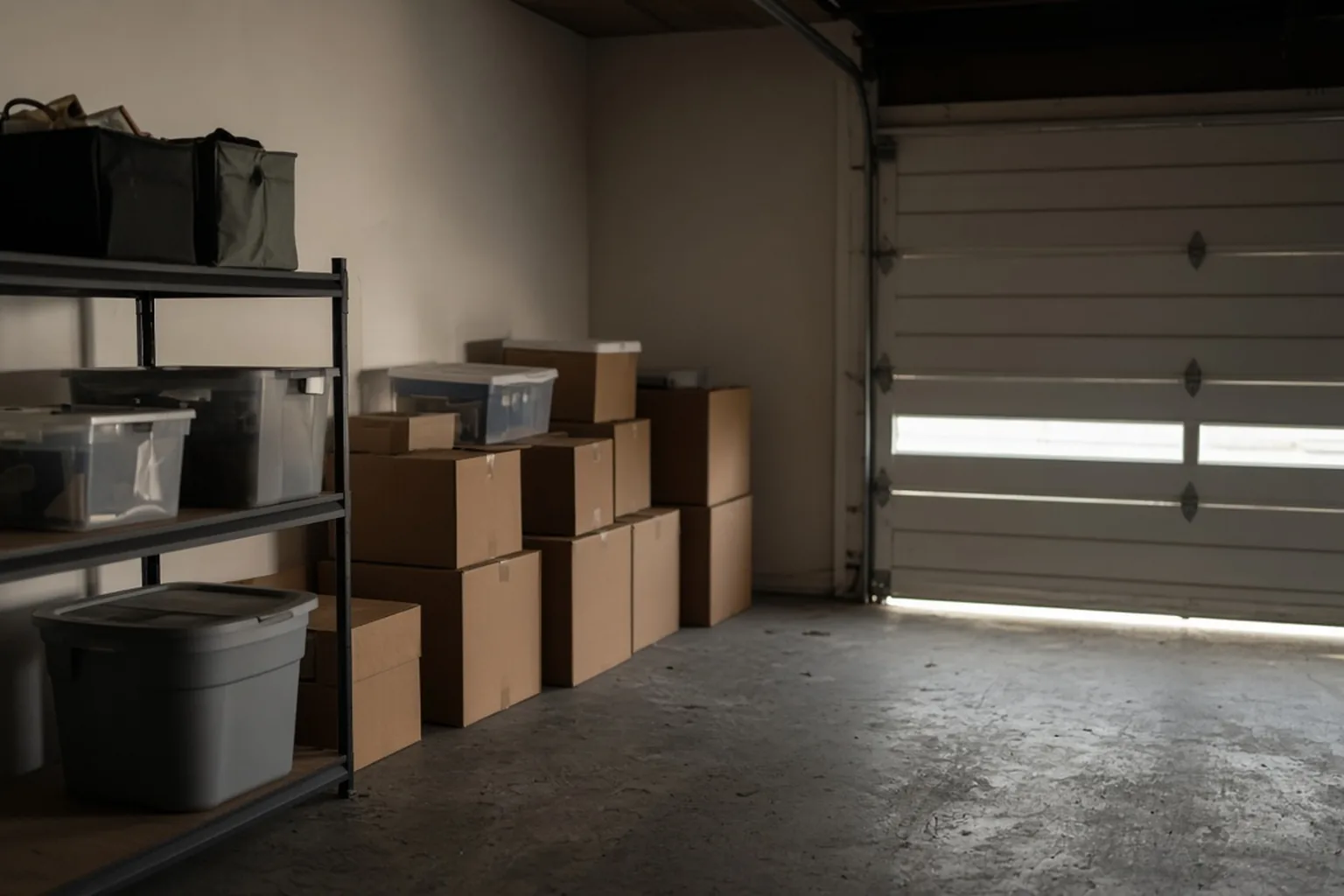 Cardboard boxes make easy nests and the gap under an overhead door makes an easy entrance. Plastic bins and a fresh door seal fix both.
Why K-State says mouse traps belong 6 to 8 feet apart.
A handful of traps scattered around a large basement rarely matches that spacing, so ask any provider how they place theirs. Start where droppings or chewed packaging show up, set traps along walls with the trigger toward the wall, and give them up to 10 days. K-State's rule is 6 to 8 feet between traps, because a house mouse covers only 10 to 30 feet around its nest. If traps in an Olathe garage have caught nothing, spacing may be the reason.
How worried should Olathe residents be about hantavirus?
Fever or shortness of breath afterward deserves a call to your doctor. For an Olathe cleanout, ventilate for 30 minutes, soak droppings with 1.5 cups of bleach per gallon for five minutes, and wipe up with gloves. Infections peak in spring and summer, when people clear out sheds and garages. KDHE calls Sin Nombre virus endemic in Kansas, yet the state averages zero to two cases a year, with most exposure in the western half. Not very, but clean carefully.
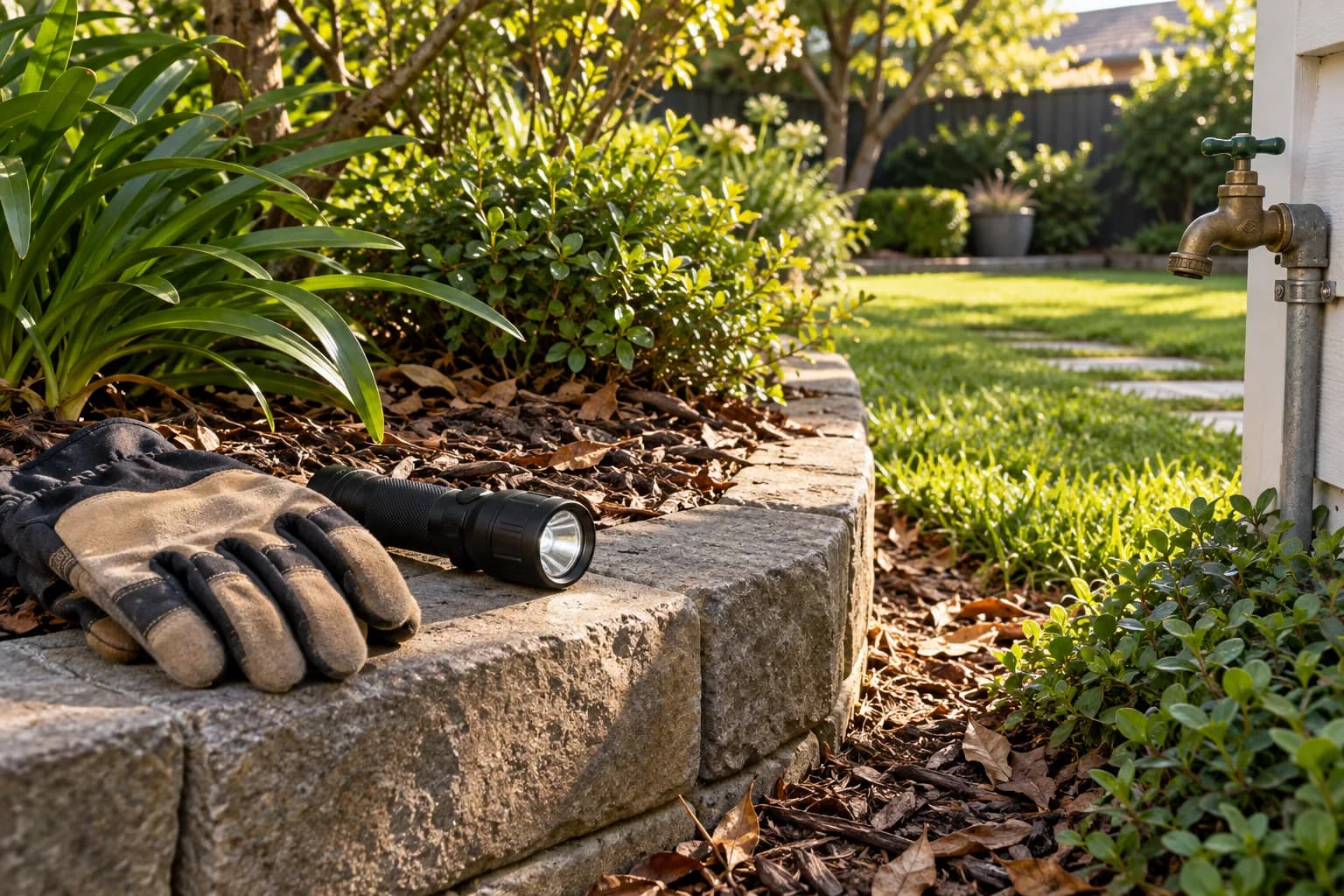 Dense shrubs against the house and a dripping hose bib give rodents cover and water. Trimming back and fixing drips makes the yard less inviting.
Bait in Kansas: what the timing rules mean for your home.
If a provider recommends bait, ask which type, how long it stays out, and where the locked stations go. In an Olathe home with kids or pets, loose bait is a poor choice, and poisoned mice can die in walls. The same guide limits single-dose bait to 3 to 4 days of exposure and keeps multiple-dose bait out for at least 2 weeks. Kansas had 118 products registered for house mouse control when K-State published its guide, so bait is easy to find.
Sealing is the part that lasts in Olathe.
Around Olathe, KS, 40 inches of rain a year and 68% humidity keep exterior wood soft, so gaps open again seasonally and need re-checking. A mouse fits through a gap the width of a pencil, and a rat through a quarter-sized hole, so the inspection should map every opening — around pipes, under doors, and where utilities enter. Traps and bait remove the rodents you have; sealing removes the ones that would come in next.
What rodent control costs in Olathe.
Ask for the sealing and the trapping as separate line items, and what the re-service covers. Around Olathe, KS, the timing matters too — most activity starts in fall as 22°F winter lows push rodents indoors, which is when providers are busiest. A simple kitchen mouse job is at the low end; a multi-floor rat colony with a sanitation cleanup is at the high end. Rodent control is priced by the size of the job: how many entry points need sealing, how much baiting and trapping the colony needs, and whether a cleanup is involved.
What affects the price
- Openings around pipes, vents, garage doors and foundations.
- Floor area to cover at 6 to 8 foot trap spacing.
- Norway rats outside as well as mice inside.
- Bait station service visits.
- Cleanup in garages, basements or attics.
📊
What's your biggest concern about rodents?
When to call for help
Call a professional if activity continues after 10 days of well-spaced trapping, if you see Norway rat burrows, or if droppings turn up in several rooms. In Olathe homes with young children or pets, call before using bait, since a licensed provider can use locked stations and follow K-State's exposure limits.
What you can do yourself
K-State's guide is written for homeowners: seal openings just over 1/4 inch, move seed and pet food into bins, and set traps 6 to 8 feet apart along walls. That clears many Olathe garages and kitchens. Professionals help when trapping stalls, which usually means a hidden gap, and with Norway rats, which are warier and range farther.
Rodents in Olathe
With a median home value near $330,000, wiring and insulation are worth protecting. About 40 inches of rain a year and humidity near 68 percent keep lawns and gardens productive, feeding a large outdoor mouse population. In this suburban city, summer highs reach about 89 degrees and winter lows fall near 22, so the fall move indoors is reliable. Olathe was founded in 1857 and serves as the Johnson County seat, with about 145,000 people and Garmin's headquarters. In Olathe, comparing a couple of written quotes side by side is the easiest way to see what is actually included, because the scope, prep steps, and follow-up terms vary a lot between providers. Most providers include a follow-up visit in the plan, but the terms differ, so ask exactly what is covered and for how long before you decide.
Local research
Rodents in Olathe, KS: what the public record shows
Before you compare quotes, it helps to know which rodents actually live in Kansas, when they are busiest around Olathe, and what the state figures look like. Everything below links to the agency or university page it came from.
Rodent species recorded in Kansas
- House mouse (Mus musculus) — Enters at 1/4 inch; 5-10 litters per year; eats about 200 small meals a night.
- Norway rat (Rattus norvegicus) — Burrowing rat of basements, sewers and ground floors; tail shorter than head plus body.
When rodents are busiest around Olathe
Hantavirus infections occur year-round but peak spring–summer with increased rodent exposure.
K-State's house mouse guide: one pair can produce more than 100,000 offspring in a year; control starts with sanitation and sealing openings larger than 1/4 inch.
Rules that apply in Kansas
For context, nationally
- 1/4 inch (the width of a pencil) — Smallest gap a mouse can enter. CDC
- 890; 35% fatal; 94% west of the Mississippi — Hantavirus cases reported since 1993 (through 2023). CDC
Sources: Kansas Department of Health and Environment; K-State Research and Extension; CDC; Pest Notes: House Mouse; Pest Notes: Rats. Figures are quoted as the source prints them. How we check our sources
Simple ways to keep rodents away
- Walk the foundation in September and seal any gap over 1/4 inch.
- Move grass seed, bird seed and pet food into sealed bins.
- Replace the weather seal on garage doors before fall.
- Keep firewood off the ground and away from the house.
- Set a few snap traps 6 to 8 feet apart in the garage each October.
- Air out sheds for 30 minutes before spring cleaning.
 A good rodent quote lists the inspection, the number of trapping visits, each opening to be sealed and the material for it, and any cleanup.
Did you know?
A house mouse weighs only about half an ounce.
K-State's house mouse guide says a single pair can produce more than 100,000 offspring in a year.
Kansas health officials say hantavirus infections can happen in any month but peak in spring and summer.
Questions people ask
How far apart should mouse traps be in an Olathe home?
No more than 6 to 8 feet, according to K-State's house mouse guide. Mice usually stay within 10 to 30 feet of the nest, so in an Olathe garage, set traps along walls where droppings collect.
How long does it take to get rid of mice?
Ongoing activity after that points to an open gap. Mice are wary at first, so a well-placed trap may sit a few nights before the first catch. K-State says trapping can take up to 10 days to show results.
Is hantavirus a risk in Olathe?
Olathe homeowners should still wet-clean shed droppings, especially in spring. KDHE calls Sin Nombre hantavirus endemic in Kansas but counts zero to two cases a year, mostly from the western half of the state. The risk is low.
Is mouse bait safe around kids and pets?
Loose bait is risky in homes with children or pets. K-State caps single-dose bait exposure at 3 to 4 days, and multiple-dose bait stays out at least 2 weeks, so locked stations matter.
How do I check a pest control company's license in Kansas?
Ask for the license and the applicator's name. 2-2440, requires a pesticide business license at $140 per category, plus certified commercial applicators in each licensed category. Kansas law, K.S.A.
Nearby cities
Related guides
Sources (6)
The facts in this article come from the public sources listed above. Every home is different, so ask the company you talk to about pricing and what’s included. Published by Rodent Exterminator · Updated October 11, 2026 · How we write these guides