The short version
Rodent control in Rochester, MN is mostly about house mice that move indoors in fall and stay all winter, with lows averaging 5F. The fix is sealing every opening a pencil fits through, trapping what is already inside, and cleaning droppings wet. Deer mice in sheds and cabins are the hantavirus concern, not the house mouse, per the Minnesota Department of Health.
- In Minnesota the house mouse is the main indoor rodent; deer mice favor sheds and cabins.
- MDH's rule: if a pencil fits in an opening, a mouse can get through.
- The house mouse does not carry hantavirus, according to the Minnesota Department of Health.
- Seal in late summer, because Rochester mice settle into walls for the whole winter.
- Mouse droppings and urine are an indoor asthma trigger worth cleaning up properly.
This is for Rochester homeowners hearing scratching in the walls once the furnace kicks on, renters who found droppings in a cupboard, and anyone with a shed, cabin or detached garage that sat closed all winter. It also helps households with asthma, where mouse allergens in the home are more than an annoyance.
What to look for
Three rodents matter in Minnesota, and they cause different problems. The house mouse is the structural pest: small, gray-brown and uniform in color, it lives inside walls, cabinets and attached garages and breeds there all winter. The deer mouse, with its white belly and feet, is the cabin and outbuilding rodent, turning up in sheds, campers and seasonal cabins, and it is the species linked to hantavirus. Norway rats are larger ground burrowers that show up along foundations, in garages and near trash or feed. Rochester's climate drives the timing. Summers top out around 82F and give mice months of easy outdoor living, then winter lows average 5F, which makes a heated house the best shelter for miles. Mice start probing for openings as fall cools and keep at it until the ground freezes. The Minnesota Department of Health notes that a mouse can get through any opening a pencil fits into, so a house that looks tight to you can still have plenty of usable gaps.
- 1Black or brown droppings about the size of a grain of rice in drawers, cupboards or along baseboards.
- 2Scratching or light scurrying inside walls or the ceiling at night once the heat is on.
- 3Shredded paper, insulation or fabric pulled into a loose ball in a hidden corner.
- 4Gnaw marks on cereal boxes, pet food bags or birdseed stored in the garage.
- 5A musky, stale smell in a closet, cabinet or under the sink.
- 6Tiny tracks in the dust on garage shelves or along the basement floor.
Why it’s worth acting soon
- Mice breed through the winter indoors, so a few in October can be many more by March.
- Droppings and urine build up as allergens, which MDH flags as an asthma trigger.
- Gnawing on wiring in walls and attached garages creates a fire risk.
- Nests in wall insulation reduce its value just when Rochester winters demand it most.
- An outbuilding left to deer mice becomes riskier to clean the longer it goes.
1/4 inchSmallest gap a house mouse can useCDC 890, 94 percent west of the MississippiU.S. hantavirus cases since 1993CDC Treatment options and typical costs
Exclusion before freeze-up
Quoted after inspection
A provider inspects the foundation, sill, siding, utility entries, dryer and bath vents, and garage door seals, then closes every opening a pencil fits through. Good materials are steel wool packed tight, hardware cloth and metal flashing. Ask for a list of what was sealed and where, so you can check it each fall.
- Time
- Depends on the gaps found
- Best for
- Homes with mice every fall
Indoor snap trapping
Quoted after inspection
Snap traps along walls, behind appliances and in cabinets remove the mice already inside. Because mice keep breeding over winter, trapping should continue until a full week passes with no catches. Ask how many follow-up visits are included and who checks the traps in between.
- Time
- Until a week passes with no catches
- Best for
- Active house mice in the living space
Exterior and garage bait stations
Quoted after inspection
Locked, tamper-resistant stations along the foundation and inside the garage can cut down Norway rats and outdoor mice before they reach the house. Ask what product is used, how stations are secured from pets, and how the provider handles winter servicing when snow covers the ground.
- Time
- Regular checks while activity lasts
- Best for
- Norway rats or heavy activity around the garage
Shed, cabin and garage cleanout
Quoted after inspection
For buildings where deer mice have nested, a careful cleanout follows CDC guidance: air the space out, soak droppings and nests with diluted bleach, then remove them by hand with gloves. Heavy contamination may call for respirators and disposal of soiled stored items.
- Time
- Depends on the building
- Best for
- Closed outbuildings and seasonal cabins
Prices are typical published ranges. Ask what’s included before you compare quotes.
 Bathroom vanities hide the same plumbing gaps as the kitchen. A quick look with a flashlight shows droppings or rub marks long before you see a mouse.
House mouse or deer mouse: which one is in my Rochester home?
The species matters more here than most homeowners realize. In Rochester, the mouse in your kitchen cabinet or wall is almost always a house mouse, a uniform gray-brown animal that has lived alongside people for centuries. The Minnesota Department of Health states plainly that house mice do not carry hantavirus. They are still a problem, for allergens, contamination and chewed wiring, but they are not the hantavirus concern. The deer mouse is different. It has a white belly, white feet and a two-toned tail, and in Minnesota it is mostly a problem in cabins, sheds, campers and outbuildings that sit closed for months. It is the carrier of hantavirus. MDH counts two cases likely acquired in the state since 1999, plus one resident infected out west, so the risk is low, but the virus spreads through dust from droppings and urine. If you find mice in a closed building, treat the cleanup with care. If they are in your kitchen, focus on trapping and sealing.
Rochester's rodent calendar, from first frost to spring thaw.
Rodent season in Rochester follows the thermometer closely. Through a summer averaging around 82F, house mice and Norway rats live outdoors in yards, gardens, fields and under decks, breeding and building up numbers. As fall arrives, usually from September onward, mice start probing foundations, garage doors and utility openings for a way in. This is the busiest stretch for new infestations. By the time Rochester reaches its 5F winter average lows, the mice that made it inside have settled into wall voids, attached garages and basements, and they keep breeding there all winter. Winter is when most people notice them, through scratching at night, droppings in a drawer or a chewed bag in the pantry. Spring brings some mice back outdoors, and it is also when cabins and sheds get opened up after sitting closed. That is the moment for careful deer mouse cleanup. The plan that matches this calendar: seal in late summer, keep traps ready through fall and winter, and do a careful cleanup and recheck when the snow melts.
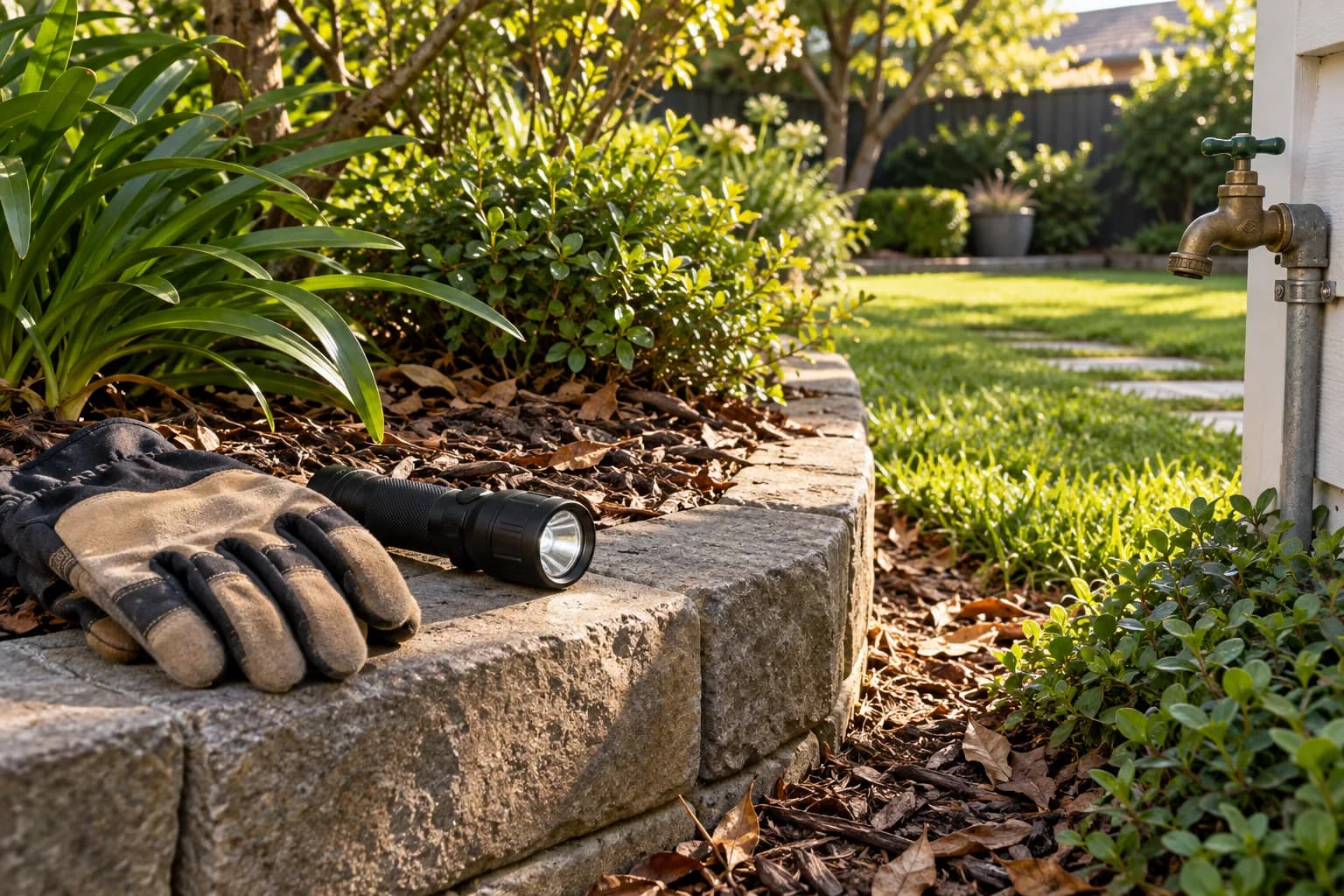 Dense shrubs against the house and a dripping hose bib give rodents cover and water. Trimming back and fixing drips makes the yard less inviting.
Sealing a Rochester house with the pencil test.
The Minnesota Department of Health gives homeowners an easy rule: if a pencil slides into an opening, a mouse can use it. The CDC puts the size at about 1/4 inch. That standard rules out a lot of gaps you might have ignored. Start outside, low, and work around the house. Check where gas lines, water pipes, cable and AC lines enter the wall, the joint where siding meets the foundation, dryer and bath vents, and the garage door corners and bottom seal. Inside, look under sinks, behind the stove and dishwasher, and wherever pipes pass through the floor into a basement. Use materials mice cannot chew through. Steel wool packed tight and sealed over with caulk works for small holes. Hardware cloth or metal flashing covers larger openings and vents. Expanding foam alone does not hold up. For a Rochester home, the best time is late summer, while it is still comfortable to work outside and before mice start testing the house.
Mice, asthma and the allergens you can't see.
The order that works is simple: remove the source, clean the space, then seal it so the problem does not come back. Avoid sweeping or vacuuming, which puts the particles back in the air. Use the CDC approach: ventilate for 30 minutes, wear gloves, soak droppings with a 1-to-9 bleach solution for 5 minutes, then wipe up and dispose of everything. Cleaning matters as much as removing the mice. Finding them in kitchens, bedrooms or around heating vents is a cue to act, not to wait. The droppings MDH tells people to look for are black or brown and about the size of a grain of rice. For someone with asthma, a winter-long mouse problem in the walls can mean months of exposure. The Minnesota Department of Health lists mice and rats as an asthma trigger, because proteins in their urine, droppings and hair mix into household dust. Droppings are the obvious sign of mice, but the bigger indoor health issue is often invisible.
What a good rodent plan in Rochester should include.
A solid quote has four parts, and it is worth checking for each one. First, an inspection that covers the foundation, siding joints, utility entries, vents, attic and garage, with the provider showing you the openings they found. Second, exclusion: a plan for sealing those openings with steel wool, hardware cloth or flashing, not foam alone. Third, trapping or stations to remove the mice already inside, with a set number of follow-up visits. Fourth, cleanup of droppings and nests, which some companies include and others price separately. For Rochester homes, ask two extra questions. Will the plan account for winter, when mice already inside keep breeding and trapping may take longer? And does it cover the garage and any outbuildings, since a shed full of deer mice needs a different cleanup than a kitchen with house mice? When comparing two quotes, line up those parts side by side. A lower price that skips sealing usually means paying again next fall.
What affects the price
- The number of gaps found around the foundation, sill and utility lines.
- Attached garages, which add door seals, corners and wall penetrations to the job.
- How many follow-up trap checks a winter infestation needs.
- Outbuildings or cabins that need deer mouse cleanout as well as the house.
- Wall or attic insulation that has to be removed after nesting.
- Whether you want a fall inspection every year as a standing plan.
📊
What's your biggest concern about rodents?
When to call for help
Call a provider if you keep catching mice after two weeks of trapping, find droppings in more than one room, or hear activity in the walls night after night. In Rochester, a mouse problem found in November usually means several animals settled in for winter, not a single visitor. Call sooner if you see a Norway rat, find chewed wiring, or have a shed or cabin full of deer mouse droppings that needs cleaning. Anyone with asthma in the home is a good reason to act early, since droppings and urine keep accumulating. Late August or early September is the best time to book sealing work.
What you can do yourself
Plenty of Rochester households handle a few mice themselves, and that is reasonable. Snap traps set flush against the wall, baited lightly, work better than glue boards or live traps, and steel wool plus caulk will close small gaps around pipes. Clean up droppings with the CDC wet method rather than a vacuum. Where a provider helps is in finding the openings you cannot see: the sill plate behind the deck, gaps where siding meets the foundation, unscreened vents, and corners of the garage door. A house can have many of these, and missing one leaves the door open for the next mouse. A provider also makes sense for deer mouse cleanups in closed buildings, where the dust from droppings is the main concern, and for Norway rats, which need exterior stations and foundation work. Many people split the work: trap inside themselves and hire out the sealing.
Rodents in Rochester
With a median home value near $310,000 in the data we compiled, sealing is a modest cost compared with replacing chewed wiring or soiled wall insulation. The city dates to 1854, and if your house is one of the older ones, settled sills and worn siding joints are worth extra attention. Humidity around 72 percent and about 34 inches of precipitation a year keep basements, window wells and crawlspaces on the damp side, which mice tolerate easily as long as food is close. The 82F summer average gives mice a long, easy outdoor stretch to build up numbers, and the 5F winter low makes every heated building a target by late fall. Two climate numbers shape rodent season here. Rochester is a city of about 122,000 people, known as a healthcare hub and the home of Mayo Clinic, and it has a humid continental climate.
Local research
Rodents in Rochester, MN: what the public record shows
Before you compare quotes, it helps to know which rodents actually live in Minnesota, when they are busiest around Rochester, and what the state figures look like. Everything below links to the agency or university page it came from.
Hantavirus cases likely acquired in Minnesota since 1999
Plus one resident infected in the western US; Minnesota rodents are far less likely to carry the virus.
Minnesota Department of HealthWhich mouse carries hantavirus here
Minnesota Department of Health states plainly that the house mouse does not carry hantavirus.
Minnesota Department of HealthRodent species recorded in Minnesota
- House mouse (Mus musculus) — Enters at 1/4 inch; 5-10 litters per year; eats about 200 small meals a night.
- Norway rat (Rattus norvegicus) — Burrowing rat of basements, sewers and ground floors; tail shorter than head plus body.
- Deer mouse (Peromyscus maniculatus) — Primary U.S. hantavirus carrier; lives throughout Washington and the interior West.
When rodents are busiest around Rochester
Fall entry; winter infestations. Upper Midwest and Northeast: mice in walls and garages all winter.
Based on Rochester’s humid continental climate profile.
In Minnesota the house mouse is the structural problem; the deer mouse is the rural cabin and outbuilding problem.
For context, nationally
- 1/4 inch (the width of a pencil) — Smallest gap a mouse can enter. CDC
- 890; 35% fatal; 94% west of the Mississippi — Hantavirus cases reported since 1993 (through 2023). CDC
Sources: Minnesota Department of Health; CDC; Pest Notes: House Mouse; Pest Notes: Rats; Hantavirus. Figures are quoted as the source prints them. How we check our sources
Simple ways to keep rodents away
- Run the pencil test around pipes, cables and vents each August and seal anything that passes.
- Pack small gaps with steel wool and cap them with caulk or sealant.
- Cover larger openings and foundation vents with hardware cloth or metal flashing.
- Replace worn garage door bottom seals before the first hard frost.
- Store birdseed, pet food and grass seed in metal cans with tight lids.
- Keep firewood outside, off the ground, and bring in only what you will burn that day.
- Close up sheds and cabins tightly in fall and store bedding and cushions in sealed bins.
 After sealing, a few monitors or unset traps left along the walls tell you whether anything is still getting in before you hear it again.
Did you know?
Minnesota's health department uses a pencil as its sealing test: if one fits in a gap, so can a mouse.
About 35 percent of the hantavirus cases the CDC has tracked since 1993 were fatal.
Some rodent diseases travel indirectly: the CDC lists plague, Lyme disease and murine typhus among those spread through rodents' fleas and ticks.
Questions people ask
Why do I get mice every winter in Rochester?
The fix that lasts is sealing in late summer, before they start looking, rather than trapping after they arrive. Rochester mice start searching for openings as fall cools, and once inside a wall or attached garage they stay and breed until spring. Because a warm house is the best shelter around when winter lows average 5F.
Do house mice carry hantavirus in Minnesota?
MDH counts only two hantavirus cases likely acquired in Minnesota since 1999, so the risk is low but worth respecting during cleanup. The deer mouse is the carrier, and it tends to live in sheds, cabins and outbuildings rather than inside homes. The Minnesota Department of Health says plainly that the house mouse does not carry hantavirus. No.
How can I tell a deer mouse from a house mouse?
In Rochester, a mouse in the kitchen is usually a house mouse, while one in the cabin or shed is often a deer mouse. A house mouse is gray-brown all over with a plain, nearly hairless tail. A deer mouse has a white underside, white feet and a tail that is dark on top and light underneath. Look at the belly and tail.
How small an opening can a mouse get into?
Check those spots on a Rochester house before cold weather sets in. That rules out nearly every gap around a pipe or cable. The CDC puts it at about 1/4 inch, and the Minnesota Department of Health offers an easier test: if a pencil fits in the opening, a mouse fits too. Smaller than most people guess.
Can mice in the house make asthma worse?
Clean droppings wet, wash bedding in affected rooms, and seal entry points so the allergens do not build back up. If someone in your home has asthma, removing the mice is only half the job. The Minnesota Department of Health lists mice and rats among indoor asthma triggers, because their droppings, urine and hair carry allergens that settle into dust. They can.
Is it safe to clean up mouse droppings myself?
For a heavily used Rochester shed or cabin with deer mouse signs, consider hiring the cleanout. Never sweep or vacuum. Air the space out for 30 minutes, wear gloves, soak droppings with 1.5 cups of bleach per gallon of water, wait 5 minutes, then wipe up and bag everything. Usually, if you follow the CDC steps.
How much does a Rochester rodent exterminator cost?
Ask for sealing, trapping and cleanup listed separately so two quotes compare fairly. Most providers serving Rochester quote after an inspection, since the total depends on how many openings need sealing, whether the garage and outbuildings are included, and how many winter trap checks it takes. Each company sets its own price, and this site does not.
Nearby cities
Related guides
Sources (6)
The facts in this article come from the public sources listed above. Every home is different, so ask the company you talk to about pricing and what’s included. Published by Rodent Exterminator · Updated October 11, 2026 · How we write these guides