The short version
Rodent control in Sparks, NV starts with deer mice, which carry hantavirus, plus house mice and Norway rats that move into garages and walls once 23F winter nights arrive. Seal every gap of 1/4 inch or more, trap indoors, and clean droppings wet after airing the space out for 30 minutes. Far western Nevada also sits in the CDC's plague region, so watch for fleas.
- Deer mice matter most for health in Sparks because they carry hantavirus.
- The CDC's provisional 2025 table shows 1 hantavirus case in Nevada.
- Far western Nevada falls inside the CDC's U.S. plague region.
- Opening closed sheds, garages and campers in spring is the peak exposure moment.
- Exclusion has to close gaps down to 1/4 inch, about a pencil's width.
This page is for Sparks homeowners clearing out a garage or shed after winter, renters who have spotted droppings under the sink, landlords handling a tenant complaint, and small businesses in the city's industrial parks with stock rooms or break rooms to protect. It also helps anyone trying to decide whether a few droppings are a health problem or a weekend project.
What to look for
Neither is common. Both explain why the way you clean up matters as much as the traps you set. Three rodents account for most trouble in Sparks. Deer mice are native to open ground in the West and drift into garages, sheds, campers and storage rooms. House mice live with people year-round, nesting in wall voids, cabinets and insulation. Norway rats dig burrows along foundations, fences and woodpiles and raid trash, compost and pet food. The climate pushes all three toward your house. Sparks averages roughly 7 inches of rain and 42 percent humidity, so a dripping hose bib, a pet water bowl or a leaking irrigation line becomes a magnet. Summer highs around 91F send rodents into shade, and winter lows near 23F send them looking for warmth inside. The health side is what sets this region apart. The CDC's provisional weekly table lists 1 Nevada hantavirus case for 2025, and the agency places far western Nevada inside the area where human plague turns up, carried by fleas on wild rodents.
- 1Rice-sized droppings in garage corners, along baseboards or inside kitchen drawers.
- 2Shredded paper, insulation or fabric balled into nests in stored boxes or camper cushions.
- 3Gnaw marks on pet food bags, birdseed sacks or plastic storage bins.
- 4Scratching inside walls or ceilings after dark, mostly on cold nights.
- 5Burrow openings along the foundation, a fence line or under a shed, which usually means Norway rats.
- 6Dark, greasy rub marks where rodents run the same path along a wall.
- 7A sharp, musky smell in a shed or storage room that has been shut for months.
Why it’s worth acting soon
- About 35 percent of the hantavirus cases the CDC has tracked since 1993 were fatal.
- A single female Norway rat can wean 20 or more young a year, according to UC IPM.
- Mice chewing wiring in walls or vehicle engine bays can lead to expensive repairs.
- Droppings in food areas carry a risk of salmonellosis, which the CDC lists among rodent-spread diseases.
- Fleas on wild rodents near the house raise the small plague risk that exists in far western Nevada.
890, about 35% fatalU.S. hantavirus cases reported 1993 to 2023CDC 94%Share of U.S. hantavirus cases west of the MississippiCDC Treatment options and typical costs
Exclusion and sealing
Quoted after inspection
Closing gaps at garage door seals, utility penetrations and foundation vents with steel wool, hardware cloth and metal flashing. The CDC puts the usable gap for a mouse at 1/4 inch, so the work has to be tight. In Sparks, the scope should include sheds and detached garages, where deer mice like to spend the winter.
- Time
- Depends on how many openings the inspection finds
- Best for
- Any home with mice returning year after year
Indoor snap trapping
Quoted after inspection
Snap traps set along walls where droppings show up, checked often so carcasses come out quickly. Trapping lets you confirm each catch and avoids rodents dying inside a wall. Ask how often the provider checks traps, who handles the carcasses, and whether follow-up checks are part of the quoted price.
- Time
- Until traps stay empty
- Best for
- House mice and deer mice already indoors
Exterior stations for rats
Quoted after inspection
Locked, tamper-resistant stations placed along the foundation and fence lines. Norway rats forage 100 to 500 feet from the nest, so placement has to cover the whole lot rather than just the back door. Ask what goes inside each station, how pets and wildlife are protected, and who services them.
- Time
- Ongoing, serviced on a schedule
- Best for
- Norway rats and properties with burrows
Protected droppings cleanup
Quoted after inspection
Ventilating the space, soaking droppings and nests in a 1:9 bleach solution, wiping, bagging and disinfecting surfaces. Crews may wear respirators where contamination is heavy. Hiring this part out makes sense after opening a Sparks shed or camper that sat closed through the cold months.
- Time
- Depends on the size and condition of the space
- Best for
- Sheds, garages, campers and crawl spaces with heavy droppings
Prices are typical published ranges. Ask what’s included before you compare quotes.
 Clutter gives mice cover. Keeping stored fabric in lidded bins and off the floor takes away the nesting spots they like best.
Which rodents are getting into Sparks homes?
Deer mice, house mice and Norway rats are the three you are most likely to meet in Sparks, and telling them apart changes how careful you need to be. Deer mice have a sharp two-tone look: brown or gray on top, white underneath, with a tail that is dark above and pale below. They are the species Nevada's state data flags, and they carry hantavirus. You usually find them in garages, sheds, campers and storage rooms rather than the kitchen. House mice are a duller, even gray-brown with a scaly, nearly hairless tail. They settle into walls and cabinets year-round, breed quickly and contaminate food, but they are not the hantavirus concern deer mice are. Norway rats are much bigger, with blunt noses and thick tails, and they dig. Burrows by a foundation, fence or woodpile point to rats. Because they forage 100 to 500 feet from the nest, the source may sit on a neighbor's lot. If you cannot tell which one left the droppings, assume deer mouse and clean the wet way.
When are rodents worst in Sparks? A season-by-season look.
Spring, roughly March through May, is the riskiest stretch in Sparks. Rodents do not surge then, but people start cleaning. Sheds, garages and campers that sat closed all winter often hold months of deer mouse droppings and nests, and that is the exposure the state data calls the peak. Summer, June through August, brings highs around 91F and very little rain. Rodents spend hot hours in shade and travel at night toward water: irrigation lines, pet bowls, leaky spigots and garden beds. Outdoor sanitation pays off most now. Fall, September through November, is move-in season. As nights cool, mice test every gap in garage doors, foundation vents and utility lines. Sealing done in late August or September saves a winter of trapping. Winter, December through February, brings lows near 23F that keep mice and Norway rats inside walls and outbuildings. The nests they build become next spring's cleanup job. The cycle repeats every year, so timing is the cheapest tool you have: seal before the cold, trap through winter, and clean carefully in spring.
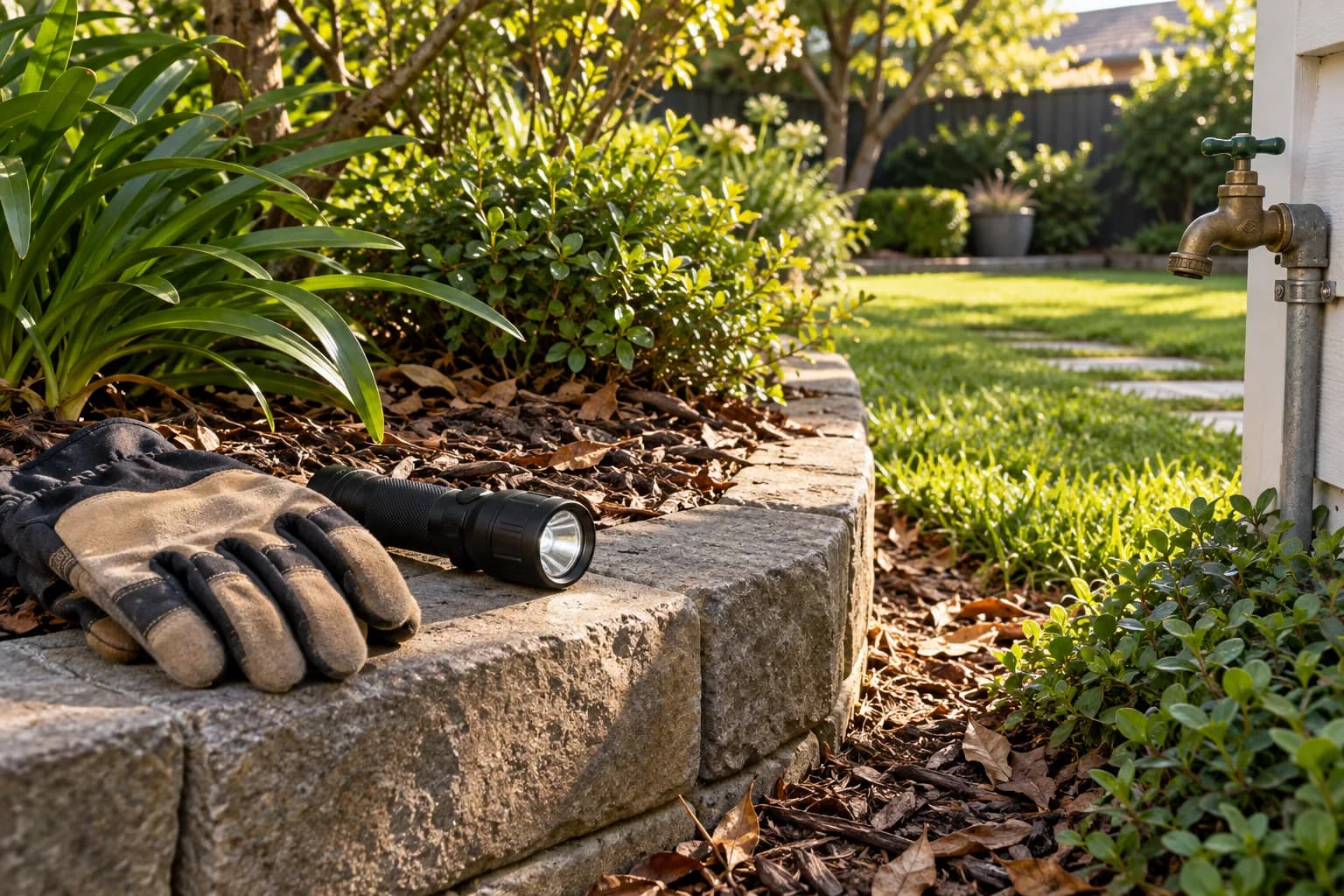 Dense shrubs against the house and a dripping hose bib give rodents cover and water. Trimming back and fixing drips makes the yard less inviting.
How do you clean up mouse droppings without breathing them in?
Wet everything first and never sweep. That is the core of the CDC's cleanup method, and it matters more in a dry place than a humid one. With 42 percent humidity and about 7 inches of yearly rain, droppings in a Sparks garage dry out and crumble, and dry dust is how hantavirus reaches your lungs. The CDC sequence goes like this. Open doors and windows and leave the space alone for 30 minutes. Put on rubber or plastic gloves. Mix 1.5 cups of bleach per gallon of water, a 1:9 ratio, or use a commercial disinfectant. Spray droppings, urine spots and nests until soaked, wait 5 minutes, then wipe up with paper towels and bag everything. Mop floors and wipe counters with the same solution, and wash your gloved hands before taking the gloves off. Skip the vacuum, the broom and the leaf blower. If the space is badly soiled, such as a camper or shed shut since fall, hiring a crew with respirators is a reasonable call. Ask whether cleanup is in the quote or billed on its own.
Plague, fleas and pets in far western Nevada.
Far western Nevada, where Sparks sits, falls inside the area where the CDC says U.S. human plague cases concentrate. The national average is about 7 cases a year, so this is a rare disease, but it is one more reason to treat wild rodents with respect. Plague moves from wild rodents to people mostly through fleas. When rodents die or get trapped, their fleas go looking for a new host, and a dog or cat that roams open ground can bring those fleas home. A few habits cut the risk. Keep pets on a vet-recommended flea product. Do not let them hunt, chew or roll on dead rodents. Pick up carcasses with gloves or a shovel and seal them in a bag. This also shapes how you want rodent work done. Ask a provider how they deal with fleas when they clear rodents out of a shed or crawl space, and whether they suggest treating the area. Anyone in the house who gets a sudden fever with swollen, painful glands after flea bites or rodent contact should see a doctor and mention it.
How should you compare two rodent quotes in Sparks?
Line the quotes up by what they seal, not just by the total. A low quote that sets traps without closing entry points often means paying again next year, when 23F nights send the next round of mice toward your garage. Ask each company for its inspection findings in writing: which openings it found, where they are, and what material it will use. Steel wool with sealant, hardware cloth and sheet metal hold up, while foam alone does not. Ask whether the garage, shed and any camper are included, since deer mice around Sparks favor outbuildings over kitchens. Then compare the follow-up. How many trap checks are included, who removes carcasses, and what happens if activity continues after the last visit? For rats, ask how far the station layout reaches, because Norway rats forage well past the back door. Finally, ask whether droppings cleanup is part of the price or an add-on. In a city where the median home is valued near $440,000, the wiring and insulation at stake justify a clear written scope over the cheapest number.
What affects the price
- How many entry points the inspection finds across the house, garage and outbuildings.
- Whether the problem is deer mice in a shed, house mice in walls, or rats with burrows.
- The size and contamination level of any space that needs protected cleanup.
- How many follow-up trap checks are written into the quote.
- Commercial space in an industrial park, which has more doors and stored goods than a house.
- Whether nesting has ruined attic or wall insulation that must come out.
📊
What's your biggest concern about rodents?
When to call for help
Bring in a professional when droppings cover more than a corner, when a shed, garage or camper sat closed all winter and needs cleaning, or when you see rats or burrows. Call too when mice in a Sparks home keep coming back despite steady trapping, which usually points to an opening nobody has found yet. Anyone who develops fever and muscle aches, followed by trouble breathing, after cleaning up rodent droppings should see a doctor and mention the exposure. Unexplained dead rodents around a yard are worth reporting to local public health, given that far western Nevada is a plague area.
What you can do yourself
Plenty of rodent work in Sparks is homeowner-friendly. You can set snap traps along walls, store pet food and birdseed in metal cans, fix a dripping spigot, and pack small gaps with steel wool before sealing over them. One or two house mice in the kitchen is a fair weekend project. The line moves when the job involves deer mice in a closed space, rats, or openings that are hard to reach. Deer mouse cleanup has to follow the CDC's wet method, and some people would rather not stand in a shed full of droppings even with gloves on. Rats are wary of new objects and often need stations placed across the property. Rooflines, foundation vents and garage door seals can mean ladders and sheet metal. Hire out the parts you dislike and keep the rest: a provider can inspect and seal while you handle trapping and sanitation.
Rodents in Sparks
The setting is semi-arid at 4,413 feet, with about 7 inches of rain a year, so a leaky irrigation line or a pet water bowl draws rodents from some distance. Winter lows near 23F then drive them indoors. With a median home value around $440,000, homeowners have a lot riding on the wiring, insulation and stored belongings that mice ruin. Far western Nevada also sits inside the CDC's plague region, which adds one more reason to keep pets on flea control and handle dead rodents with gloves. Sparks was founded in 1904, still goes by the Rail City, and has grown into a suburban city of about 112,000 people next to Reno. That mix shapes its rodent problems. Deer mice are native to the open, dry ground of the region, while the city's industrial parks give house mice and rats stored goods and shelter.
Local research
Rodents in Sparks, NV: what the public record shows
Before you compare quotes, it helps to know which rodents actually live in Nevada, when they are busiest around Sparks, and what the state figures look like. Everything below links to the agency or university page it came from.
Rodent species recorded in Nevada
- Deer mouse (Peromyscus maniculatus) — Primary U.S. hantavirus carrier; lives throughout Washington and the interior West.
When rodents are busiest around Sparks
Spring cleanup exposure; summer. Deer mice and hantavirus in NM/AZ/CO/NV; plague fleas on wild rodents.
Based on Sparks’s semi-arid climate profile.
For context, nationally
- 1/4 inch (the width of a pencil) — Smallest gap a mouse can enter. CDC
- 890; 35% fatal; 94% west of the Mississippi — Hantavirus cases reported since 1993 (through 2023). CDC
Sources: CDC National Notifiable Diseases Surveillance System; CDC; Hantavirus. Figures are quoted as the source prints them. How we check our sources
Simple ways to keep rodents away
- Fix dripping hose bibs and irrigation leaks, since water is the scarce resource here.
- Replace worn garage door bottom seals before the first freezing nights.
- Pack steel wool into gaps around pipes, then cover it with sealant or metal.
- Store birdseed, pet food and grass seed in metal cans with tight lids.
- Keep woodpiles and stored items off the ground and away from the house.
- Air out sheds and campers for 30 minutes before any spring cleaning starts.
- Keep pets on flea control if they roam open lots, given the regional plague risk.
- Cover foundation vents with hardware cloth rather than window screen.
 Before you call, sketch where you have seen droppings or heard noise and measure any gaps you found. It makes the first visit faster and the quotes comparable.
Did you know?
A female Norway rat can have 4 to 6 litters a year and wean 20 or more young in that time.
Roof rats, the climbing relative of the Norway rat, average 3 to 5 litters a year with up to 8 young each.
The CDC separates diseases rodents spread directly, such as tularemia and lymphocytic choriomeningitis, from ones passed along by their fleas or ticks, such as plague and murine typhus.
Questions people ask
Do deer mice in Sparks carry hantavirus?
cases since 1993 west of the Mississippi. You cannot tell an infected deer mouse by looking, so around Sparks treat every pile of droppings as if it could make you sick, and clean it wet rather than dry. Some do. Deer mice are the main hantavirus carrier in the West, and the CDC places 94 percent of U.S.
How many hantavirus cases has Nevada had recently?
That is a small number for a serious illness: roughly 35 percent of the 890 cases reported since 1993 ended in death. The low count is a reason for care during cleanup, not a reason to sweep droppings. The CDC's provisional weekly table lists 1 Nevada case for 2025, out of 17 nationwide.
Is plague a concern around Sparks, NV?
Fleas on wild rodents spread it. In Sparks that means keeping pets on flea control, leaving burrows alone, and never picking up a dead rodent bare-handed. It is rare, but the CDC includes far western Nevada in the area where U.S. human cases cluster, averaging about 7 a year nationwide.
When do mice move into houses in Sparks?
Spring brings a second peak of trouble, mostly from people opening sheds, garages and campers that mice used all winter. Summer heat near 91F can draw rodents toward shaded, watered spots by the house. Mice usually move in as nights turn cold in fall, and activity holds through winter while lows sit near 23F.
Can I vacuum mouse droppings?
The CDC method is to ventilate for 30 minutes, soak droppings with a 1:9 bleach solution for 5 minutes, then wipe with paper towels while wearing gloves. Dry Sparks air leaves droppings dusty, so this step matters. No. Vacuuming or sweeping lifts dried droppings into the air, which is how hantavirus gets inhaled.
What size gap do I need to seal against mice?
Use steel wool topped with sealant for small holes and hardware cloth or metal flashing for vents and larger openings. Foam on its own gets chewed through. Anything 1/4 inch or wider, about the width of a pencil, according to the CDC. Rats can chew a hole that size into a bigger one.
Why do businesses in industrial parks get rodents?
Sparks is known for its industrial parks, and stock rooms and break rooms there can offer mice the same food and cover. Ask a provider about door sweeps, exterior stations and a written monitoring schedule. Large buildings with stored goods, outdoor trash areas and doors that open all day give rodents food and cover.
Nearby cities
Related guides
Sources (6)
The facts in this article come from the public sources listed above. Every home is different, so ask the company you talk to about pricing and what’s included. Published by Rodent Exterminator · Updated October 11, 2026 · How we write these guides