The short version
Rodent control in San Bernardino, California, centers on trapping and sealing, since state law blocks most anticoagulant baits. Close every hole wider than a quarter inch and any door gap of half an inch, trap rodents already inside, and remove water sources that draw them through 96F summers. Treat droppings in sheds and garages with care, because deer mice here can carry hantavirus.
- With only 16 inches of rain a year, leaks and irrigation become rodent magnets.
- Most anticoagulant rat baits are prohibited in California, so trapping leads.
- Seal holes over a quarter inch and door gaps of half an inch, per UC IPM.
- Spring cleanup of sheds and garages is the main hantavirus exposure risk.
- Keep pets on flea control, since California is one of the plague regions.
This is for San Bernardino homeowners finding rats near pools, irrigation or fruit trees, renters seeing droppings in garages and kitchens, and anyone about to clean out a shed or garage that has been closed for months. It also fits households with dogs and cats, since rodent fleas and wild rodents matter in this part of California.
What to look for
Four rodents show up in San Bernardino: roof rats, Norway rats, house mice and deer mice. Roof rats climb fences, trees and utility lines into attics, and UC IPM notes they will travel more than 300 feet for food. Norway rats burrow under slabs, sheds and dense plantings and come in at ground level. House mice nest in walls, cabinets and garages. Deer mice live in open ground and move into sheds, garages and storage buildings, and they are the main hantavirus carrier in the West. The semi-arid climate shapes their behavior. With only about 16 inches of rain a year and humidity averaging 51 percent, water is scarce, so rodents concentrate around irrigation, pools, pet water and leaks. Summer highs near 96F push them toward shade and water near houses. Winter lows around 42F never slow them much. Dry conditions also mean droppings dry and crumble quickly, which matters during cleanup because dust from deer mouse droppings is how hantavirus spreads.
- 1Chewed drip lines, sprinkler heads or hose bibs, especially in summer.
- 2Droppings near pool equipment, AC units or garage freezers.
- 3Rats running along block walls or fence tops at dusk.
- 4Burrows under slabs, sheds or dense groundcover near irrigated beds.
- 5Gnawing or scratching in the attic soon after dark.
- 6Dry, crumbly droppings in a shed or garage that has been closed for months.
Why it’s worth acting soon
- Norway rats can wean 20 or more young a year, according to UC IPM.
- Chewed irrigation and pool lines lead to leaks and water bills.
- Deer mouse droppings build up in sheds and garages, raising hantavirus risk during cleanup.
- Attic wiring and AC lines can be damaged, creating fire and repair risks.
- Rodent fleas can move to pets, and California is among the U.S. plague regions.
Treatment options and typical costs
Exclusion
Quoted after inspection
Every hole wider than a quarter inch is sealed with hardware cloth, sheet metal or mortar, and door bottoms get sweeps, since UC IPM says a rat can slip under a half-inch gap. Common targets include roof vents, eaves, garage door corners, pipe penetrations and gaps around AC lines.
- Time
- One to three days
- Best for
- Homes with attic or garage activity
Trapping
Quoted after inspection
With most anticoagulant baits off the table in California, snap and multi-catch traps do most of the removal. Traps go along walls, in attics and garages, and follow-up visits reset them until catches stop. Trapping also lets you remove bodies before they cause odor in summer heat.
- Time
- Two to four weeks
- Best for
- Rodents already inside
Water source removal
Quoted after inspection
Fixing irrigation leaks, raising drip lines, covering pool equipment gaps and bringing pet water in at night takes away what draws rodents in a dry climate. Some providers include recommendations, and the repairs may fall to the homeowner or a landscaper.
- Time
- A day or less
- Best for
- Yards with irrigation, pools or fruit trees
Deer mouse cleanup
Quoted after inspection
Sheds, garages and storage areas with droppings are cleaned using the CDC method: ventilate 30 minutes, soak with a bleach solution of 1.5 cups per gallon, wait 5 minutes, then wipe up and bag everything. Heavy contamination is worth hiring out with protective gear.
- Time
- A few hours to a day
- Best for
- Outbuildings with deer mouse signs
Prices are typical published ranges. Ask what’s included before you compare quotes.
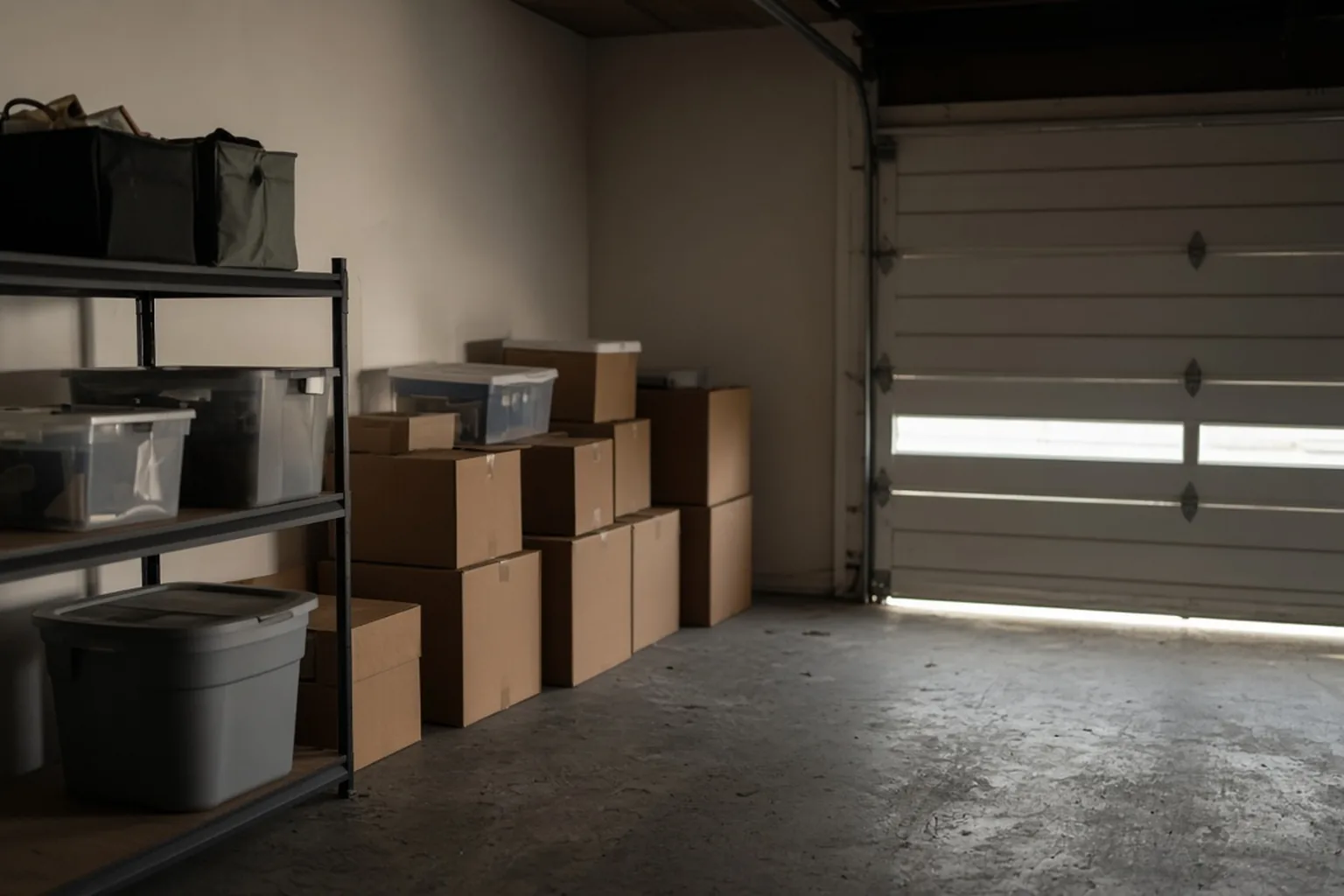 Cardboard boxes make easy nests and the gap under an overhead door makes an easy entrance. Plastic bins and a fresh door seal fix both.
Water is the bait: rodents in a semi-arid city.
If you see damage to irrigation or pool lines, check nearby walls, fences and shrubs for burrows and runways, and check where lines enter the house for gaps rodents could use. Water sources also tell you where to look. Rodents that cannot find water near your house are less likely to settle there. Fixing leaks, raising drip lines, bringing pet water in at night and draining standing water make a yard much less attractive. It also changes how you prevent problems. Chewed drip lines and rats seen at the pool edge at night are often the first clues. Irrigation lines, sprinkler heads, drip emitters, hose bibs, pool equipment, AC condensate lines and pet water bowls all become targets. That changes where rodents show up. With about 16 inches of rain a year, humidity near 51 percent and summer highs around 96F, water is the scarce resource for much of the year. Around San Bernardino, rodents follow water.
Spring cleanup and hantavirus in the Inland Empire.
If a building is heavily contaminated, hiring a provider with protective gear is a reasonable choice. Never sweep or vacuum. Wait 5 minutes, then wipe up and bag everything. Spray droppings and nests with a bleach solution of 1.5 cups per gallon of water. Put on gloves. Open doors and windows and leave for 30 minutes. The CDC method is simple. San Bernardino's dry air makes droppings crumble quickly, which raises that risk. Breathing dust kicked up from dried droppings or old nests is how people catch it. Nationally, the CDC counted 890 cases from 1993 through 2023, and about 35 percent were fatal. California reported 4 cases in 2025, the highest state count in the CDC's provisional table. Deer mice are the main hantavirus carrier in the West. Sheds, garages and storage buildings that sat closed through winter can hold a season of deer mouse droppings. For many San Bernardino households, the riskiest rodent moment is spring cleanup.
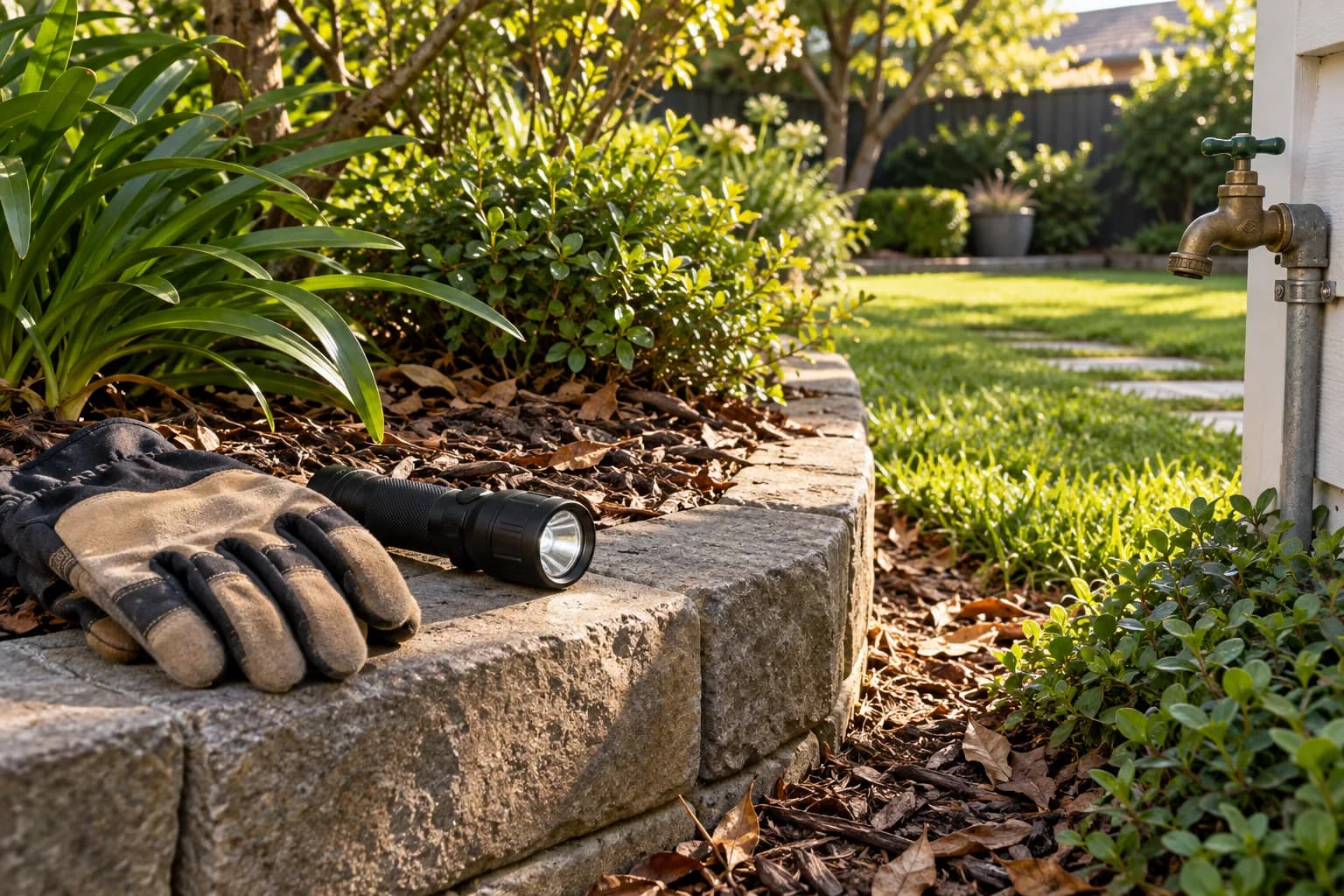 Dense shrubs against the house and a dripping hose bib give rodents cover and water. Trimming back and fixing drips makes the yard less inviting.
Trap-first rodent control under California law.
A plan that is mostly bait and little sealing does not fit current California rules well. If a provider proposes bait, ask which product, where stations go and why trapping alone will not finish the job. It should also say how many traps will be set and how many follow-up visits are included. A good San Bernardino quote should list specific openings to seal, such as roof vents, eaves, garage door corners and pipe penetrations, and name materials like hardware cloth and sheet metal. That has shifted the job toward exclusion and trapping. Bromethalin, cholecalciferol and zinc phosphide are still allowed, but they carry risks for pets and wildlife. The banned list includes brodifacoum, bromadiolone, difethialone, diphacinone, chlorophacinone and warfarin. California prohibits most uses of first- and second-generation anticoagulant baits, which used to be standard. If you are getting rodent quotes in San Bernardino, expect traps and sealing to lead.
Fleas, plague and wild rodents.
Around the house, the same steps that keep rats and mice out also help: seal gaps, clear dense brush near the house, and keep pet food and birdseed in sealed containers so wild rodents are not drawn close. If you see several dead rodents in one area, avoid it and report it to local health officials. Do not let them hunt or play with rodents, and do not handle sick or dead wild rodents yourself. Keep pets on year-round flea control. Dogs and cats that roam or hunt can pick up fleas from wild rodents and bring them home. The main concern is pets. For San Bernardino households, the risk is low but worth managing. Fleas on wild rodents are the carrier. The CDC averages about 7 human cases a year, ranging from 0 to 17, and California is one of the regions where it is concentrated. Plague sounds like history, but it still turns up in the western U.S.
What to expect on a first visit.
Under California rules, if bait is included, ask what product and why. You should leave with a written plan listing openings to seal, materials, number of traps, follow-up visits and any cleanup. If they find deer mouse droppings, they should explain how cleanup will be handled safely. Inside, they should check the attic, garage, kitchen and any sheds or storage buildings. UC IPM says to seal holes larger than a quarter inch and door gaps of half an inch, so the provider should point out each gap. Expect a check of roof vents, eaves, garage door corners and pipe and AC line penetrations. Next comes the house itself. The provider should walk the property and look at irrigation, pool equipment, fences, block walls and dense plantings, since that is where rodents gather in a dry climate. A first rodent visit to a San Bernardino home should start outside.
What affects the price
- The number of vents, eaves and pipe openings that need sealing.
- Whether sheds, detached garages or storage buildings are included.
- The extent of droppings cleanup and whether insulation must be replaced.
- Irrigation, pool and AC line repairs needed to cut off water.
- How many trap check visits are included.
- Whether non-anticoagulant bait stations are added outdoors.
📊
What's your biggest concern about rodents?
When to call for help
Call a professional if you hear rodents in the attic, find droppings in more than one area, or see rats around pools or irrigation repeatedly. Around San Bernardino, also call before cleaning a shed, garage or storage building with heavy droppings, since deer mice carry hantavirus and dusty, dry droppings make cleanup riskier. California bait rules mean providers lean on trapping and sealing, so ask how many follow-up visits they plan and what materials they use.
What you can do yourself
You can handle a lot of rodent prevention yourself in San Bernardino. Fix irrigation leaks, bring pet water in at night, trim branches back from the roof, and store pet food and birdseed in metal containers. For a mouse or two, snap traps along kitchen and garage walls usually work. Store-bought anticoagulant baits are largely off limits in California anyway. A provider becomes worth it with attic rats, shed cleanup or repeat activity. Roof rats need roofline sealing that involves ladders and sheet metal. Deer mouse cleanup needs careful wet methods and protective gear when contamination is heavy. And with bait limited, a provider's trapping plan and follow-up visits do much of the work.
Rodents in San Bernardino
San Bernardino is an Inland Empire anchor city of about 221,000 people, founded in 1854 and known for its place on Route 66. Its climate is semi-arid, which shapes the rodent picture more than anything else. With only about 16 inches of rain a year and humidity near 51 percent, water is the scarce resource, so rodents gather around irrigation, pools and anything that leaks. Summer highs around 96F push them toward shade and water near homes. Winter lows near 42F never slow them much, and UC IPM notes rats are active year-round in California. At 1,053 feet, the city sits inland, where deer mice and wild rodents are part of the mix, raising hantavirus and plague-flea concerns. Urban density keeps homes, businesses and trash areas close together. With a median home value around $420,000, sealing a house properly protects a significant investment.
Local research
Rodents in San Bernardino, CA: what the public record shows
Before you compare quotes, it helps to know which rodents actually live in California, when they are busiest around San Bernardino, and what the state figures look like. Everything below links to the agency or university page it came from.
Rodenticide restriction
Bromadiolone, brodifacoum, difethialone, diphacinone, chlorophacinone and warfarin cannot be applied in most areas; bromethalin, cholecalciferol and zinc phosphide remain.
UC IPMGap a rat can squeeze under a door
Roof rats travel 300+ feet for food.
UC IPMRodent species recorded in California
- House mouse (Mus musculus) — Enters at 1/4 inch; 5-10 litters per year; eats about 200 small meals a night.
- Norway rat (Rattus norvegicus) — Burrowing rat of basements, sewers and ground floors; tail shorter than head plus body.
- Roof rat (Rattus rattus) — Climber of attics and trees in warm and coastal regions; tail longer than head plus body.
- Deer mouse (Peromyscus maniculatus) — Primary U.S. hantavirus carrier; lives throughout Washington and the interior West.
When rodents are busiest around San Bernardino
Rats active year-round; check periodically.
California's rodenticide law pushes work toward trapping and exclusion.
Rules that apply in California
For context, nationally
- 1/4 inch (the width of a pencil) — Smallest gap a mouse can enter. CDC
- 890; 35% fatal; 94% west of the Mississippi — Hantavirus cases reported since 1993 (through 2023). CDC
Sources: CDC National Notifiable Diseases Surveillance System; Pest Notes: Rats; CDC; Pest Notes: House Mouse; Hantavirus. Figures are quoted as the source prints them. How we check our sources
Simple ways to keep rodents away
- Repair irrigation leaks and raise drip lines off the ground where possible.
- Bring pet water and food inside at night during summer.
- Seal every hole larger than a quarter inch with hardware cloth or sheet metal.
- Add door sweeps so no gap is half an inch or larger.
- Trim tree branches and vines back from the roof and walls.
- Store items in garages and sheds in sealed plastic bins, not cardboard.
- Open sheds and garages for 30 minutes before spring cleanup.
- Keep pets on flea control and keep them away from wild rodents.
 Before you call, sketch where you have seen droppings or heard noise and measure any gaps you found. It makes the first visit faster and the quotes comparable.
Did you know?
UC IPM notes roof rats will travel more than 300 feet from the nest to find food.
California reported 2 leptospirosis cases through early 2026, with urban rats and dogs among common exposure routes.
Of the 890 U.S. hantavirus cases reported from 1993 through 2023, 94 percent occurred west of the Mississippi.
Questions people ask
Why are rats chewing my irrigation lines?
They are after water. San Bernardino gets about 16 inches of rain a year, and summers average 96F, so drip lines, sprinklers and hose bibs are easy sources. Repair chewed lines, raise them off the ground where you can, and seal gaps where lines enter the house.
Can I use rat poison in California?
Most anticoagulant rat poisons are prohibited in California, including brodifacoum, bromadiolone, difethialone, diphacinone, chlorophacinone and warfarin. Bromethalin, cholecalciferol and zinc phosphide remain available. In practice, the law steers San Bernardino jobs toward traps and exclusion, and bait plays a small supporting role.
Is hantavirus a risk in San Bernardino?
It is rare but real. Deer mice carry hantavirus, and California reported 4 cases in 2025, the highest state count in provisional CDC data. Around San Bernardino, spring cleanup of sheds and garages is the main risk. Ventilate first, soak droppings with bleach solution, and never sweep or vacuum.
What size gaps should I seal?
UC IPM says to seal every hole larger than a quarter inch, and notes rats can squeeze under a door with a half-inch gap. Use hardware cloth, sheet metal or mortar, since rodents chew through foam and plastic.
Should I worry about plague?
Plague is rare. The CDC averages about 7 U.S. cases a year, with California among the regions where rodent fleas carry it. Keep pets on flea control, do not handle wild rodents, and avoid areas with sick or dead rodents.
When are rodents most active in San Bernardino?
Rats are active year-round, according to UC IPM. Around San Bernardino, summer heat pushes rodents toward water and shade around homes, and spring is when people clean out sheds and find a winter's worth of droppings. Check periodically, especially before and after summer.
How do I clean up dry droppings in a garage?
Do not sweep them. Open the garage for 30 minutes, then spray droppings with a solution of 1.5 cups of bleach per gallon of water. Wait 5 minutes, wipe up with paper towels while wearing gloves, and bag everything. Dry droppings crumble into dust, which is how hantavirus spreads.
Nearby cities
Related guides
Sources (6)
The facts in this article come from the public sources listed above. Every home is different, so ask the company you talk to about pricing and what’s included. Published by Rodent Exterminator · Updated October 11, 2026 · How we write these guides